

The Wall Street Journal once used ‘Read Ambitiously’ as a slogan, but it became a challenge I took to heart. If that old slogan still speaks to you, this weekly curated newsletter is for you. Every week, I will summarize the most important and impactful headlines across technology, finance, AI and enterprise SaaS. Together, we can read with an intent to grow, always be learning, and refine our lens to spot the best opportunities. As Jamie Dimon says, “Great leaders are readers.”
Thanks to GenerativeAI and our friends at GoogleNotebookLM, you can enjoy this week’s Reading Ambitiously as a podcast entirely generated by AI.

In the news:
Biggest Nvidia takeaways from Jensen Huang’s CES 2025 keynote (AP News)
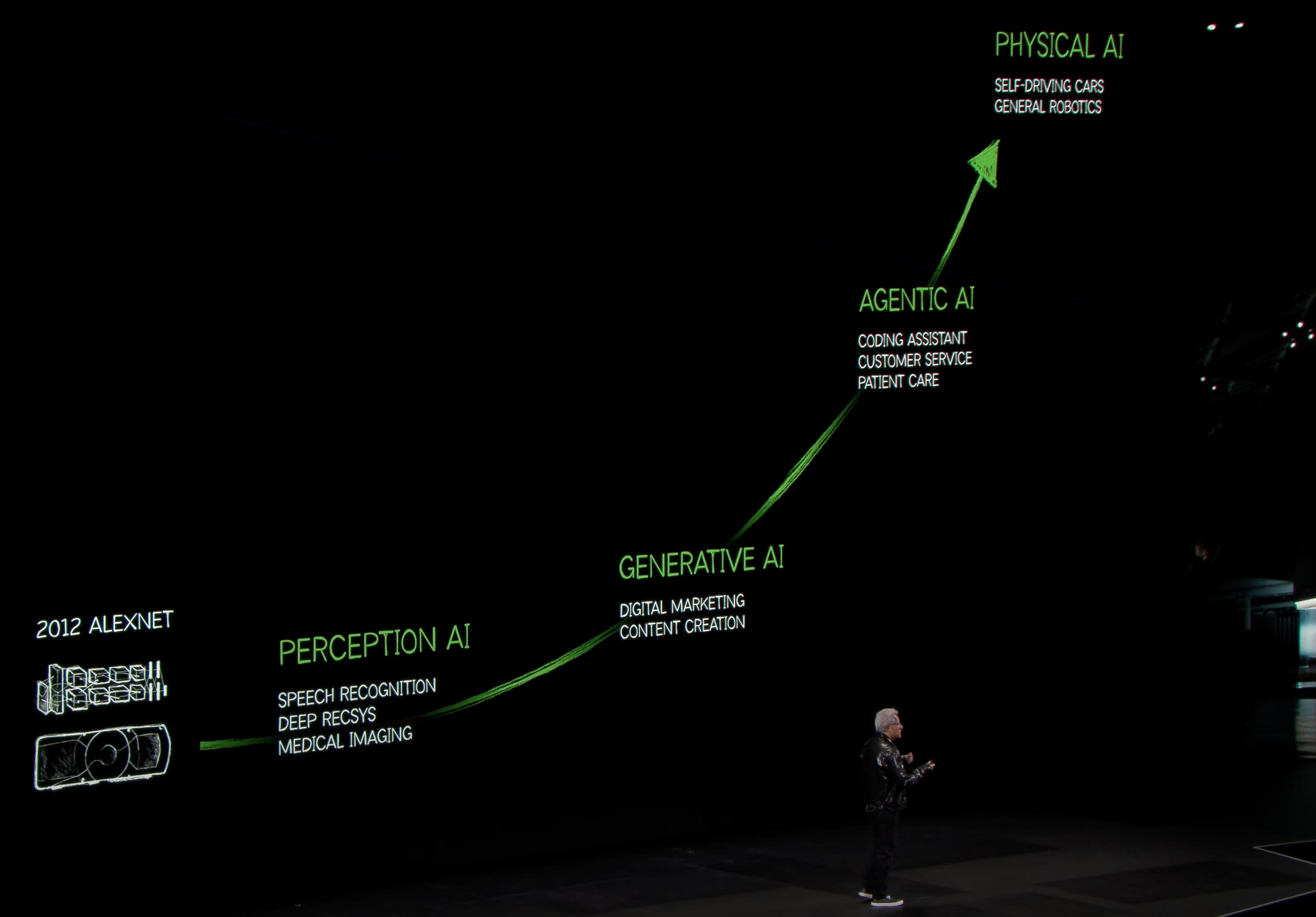
→ Why does it matter? Earlier this week, Nvidia founder and CEO Jensen Huang delivered the CES 2025 keynote (worth watching on 1x speed—link below!). Even Marc Benioff, the G.O.A.T. of enterprise keynotes, was captivated for the full two hours!
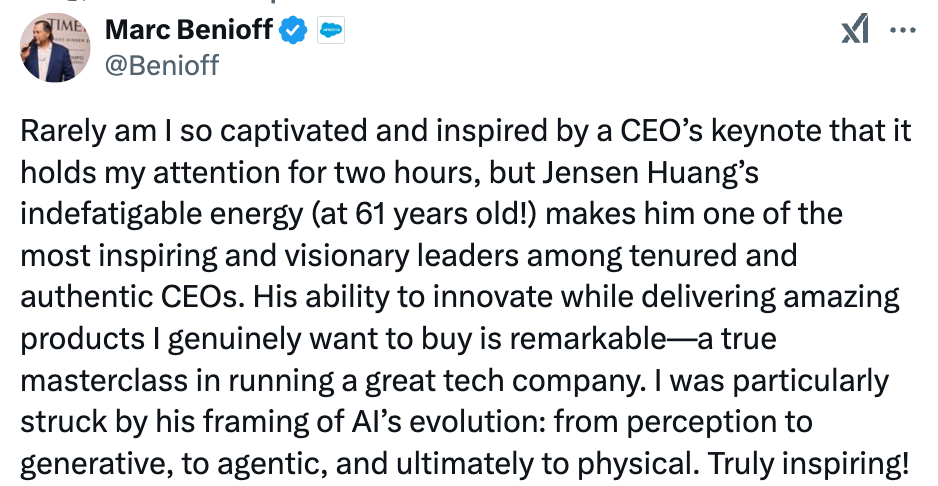
Jensen's message was clear: By scaling up computational power, we can generate more novel intelligence—the world's most valuable asset.
"The industry is chasing and racing to scale artificial intelligence. The scaling laws claim that the more data you have, the larger model you have. And the more compute you apply to it, the more effective your model becomes" - Jensen Huang, Nvidia founder and CEO
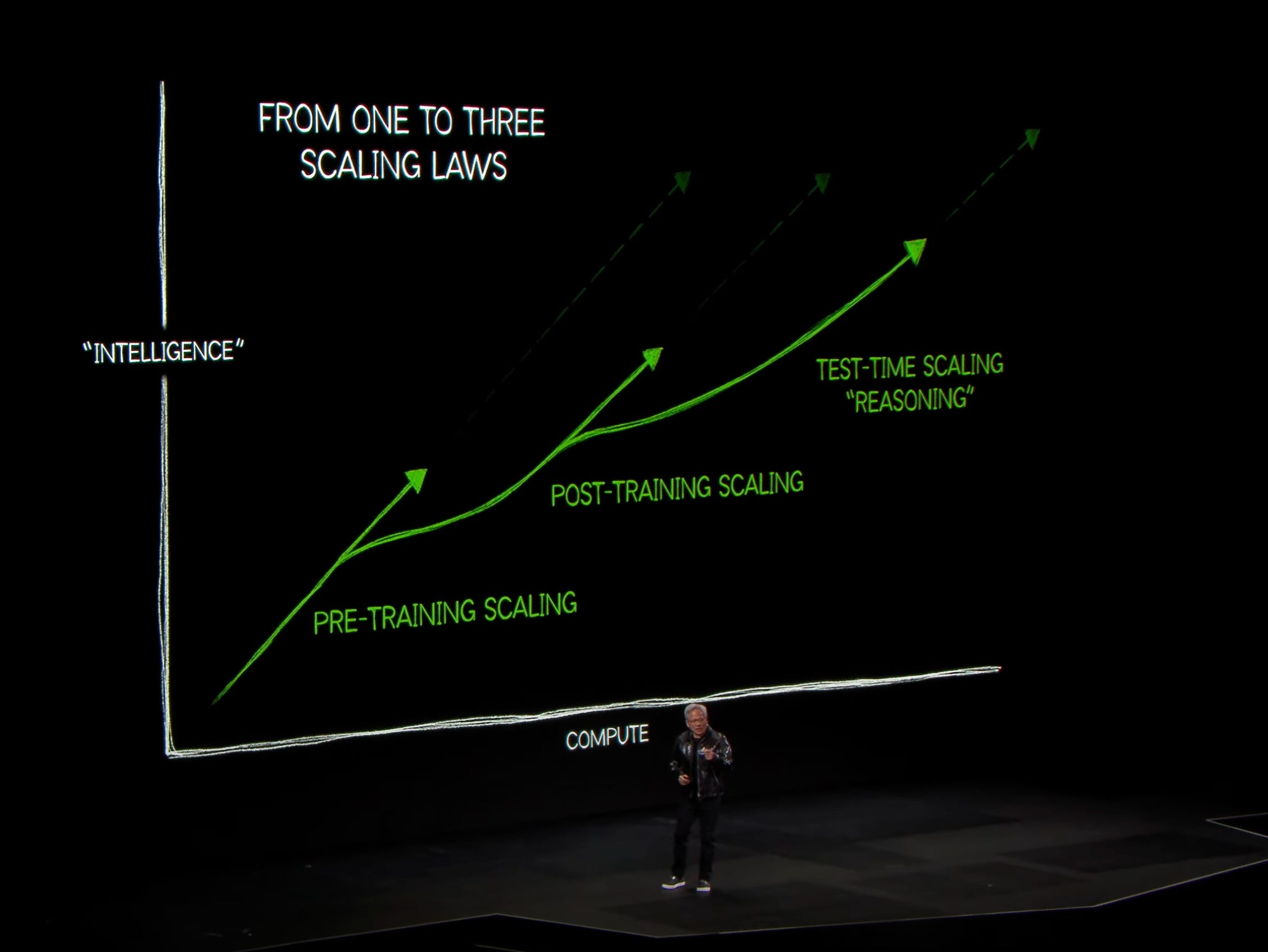
Understanding these laws is crucial because "stacking" them is how we'll scale AI in 2025 and beyond.
It is possible to stack “scaling laws” – pre-training will become just one of the vectors of improvement, and the aggregate “scaling law” will continue scaling just like Moore’s Law has over last 50+ years. - Dylan Patel at SemiAnalysis
Pre-training Scaling Law: Train a massive AI model on an equally massive dataset. The bigger the model and dataset, the better the performance. Think of it as building a strong foundation.
Post-training Scaling Law: Refine the AI model after pre-training. Techniques like reinforcement learning and human feedback fine-tune its skills for specific tasks. This is like specialized training after a basic education.
Test-Time Scaling Law: Optimize performance during actual use. Instead of just spitting out answers, the AI can now reason, break down problems, and explore different ideas before responding. It's like giving the AI time to think things through.
The last scaling law Test-Time compute, is behind the latest breakthroughs by OpenAI and Google. To cap off their "12 Days of Christmas" event, OpenAI unveiled o3, their latest and most powerful reasoning model yet. It's impressive! o3 is making waves on the ARC-AGI benchmark. This benchmark is designed to test for Artificial General Intelligence (AGI) – the kind of AI that can truly match human cognitive abilities across the board.
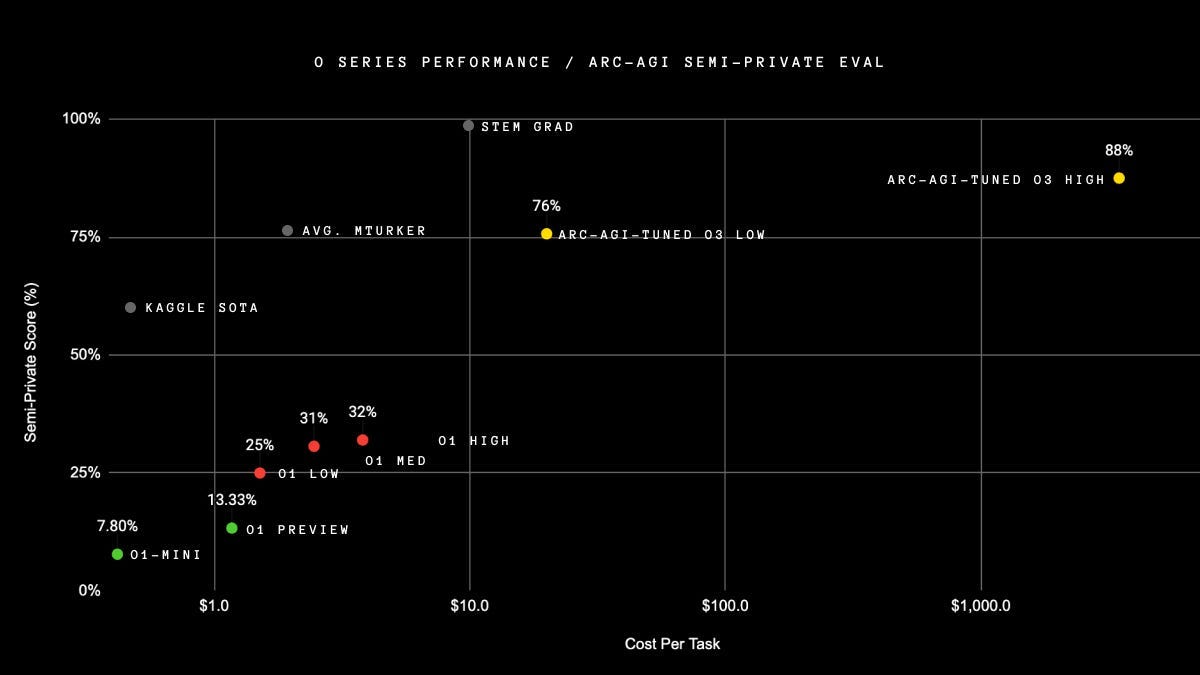
The fact that a human STEM graduate is included in the benchmark highlights just how challenging these tasks are and how far AI has come. It really underscores the potential of o3 and its implications for the future of AI.
So, is the GPT era already ending (The Atlantic)?
It's a fascinating contrast: while the GPT family excels at memorizing vast amounts of information, o3 shines when it comes to actual reasoning. Think of it this way: GPT models are like encyclopedias, packed with knowledge, while o3 is more like a seasoned detective, carefully piecing together clues and analyzing information.
This difference in approach is evident in the ARC-AGI benchmark, where o3 significantly outperforms GPT models. The key is that o3 has more time to "think," to process its thoughts and arrive at a solution. Of course, this deeper level of processing comes at a cost – reportedly around $1,000 per task.
Even Sam Altman acknowledges the financial challenges, stating that OpenAI is still operating in the red. This raises an important question: how can we make this level of AI reasoning more accessible and cost-effective? A challenge leading foundational model providers must solve in 2025.
o3's improvement over the GPT series proves that architecture is everything. You couldn't throw more compute at GPT-4 and get these results. Simply scaling up the things we were doing from 2019 to 2023 – take the same architecture, train a bigger version on more data – is not enough. Further progress is about new ideas. - Francois Chollet, ARC Prize
It's these fresh ideas, spanning the entire AI lifecycle—from pre-training and post-training to test-time compute—that have optimists buzzing about the continued scalability of AI.
Buckle up, ambitious readers! We're living in an era of unprecedented advancements in artificial intelligence. What a time to be alive! Happy New Year! 🥂

Best of the rest:
🧠 From AI Agents to Enterprise Budgets: 20 VCs Share Predictions on Enterprise Tech in 2025 - TechCrunch gathers insights from 20 top VCs on the trends shaping enterprise technology in the coming year. - TechCrunch
🔮 What Will Happen in 2025 - Fred Wilson of Union Square Ventures shares his predictions and insights for the year ahead. - AVC Blog
🏗️ The 30 Best Pieces of Company Building Advice We Heard in 2024 - First Round Review shares 30 timeless insights on company building, rounding up the best advice from the past year. - First Round Review

Charts that caught my eye:
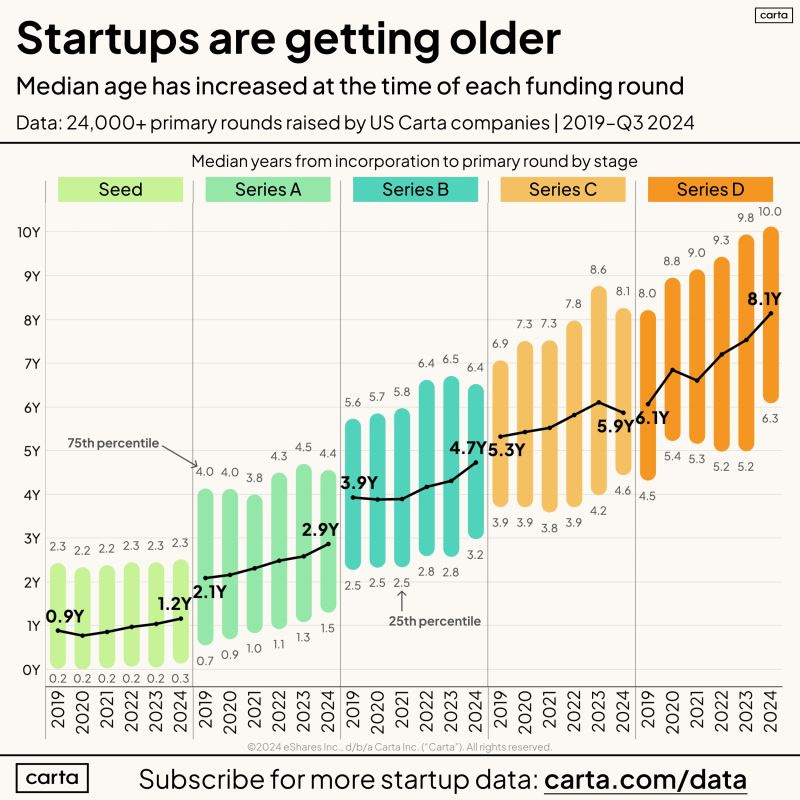
→ Why does it matter? Building a successful company is taking longer than ever. It's a tough journey, with the average time to reach Series D now clocking in at 8.1 years—a significant jump of more than two years since 2019.
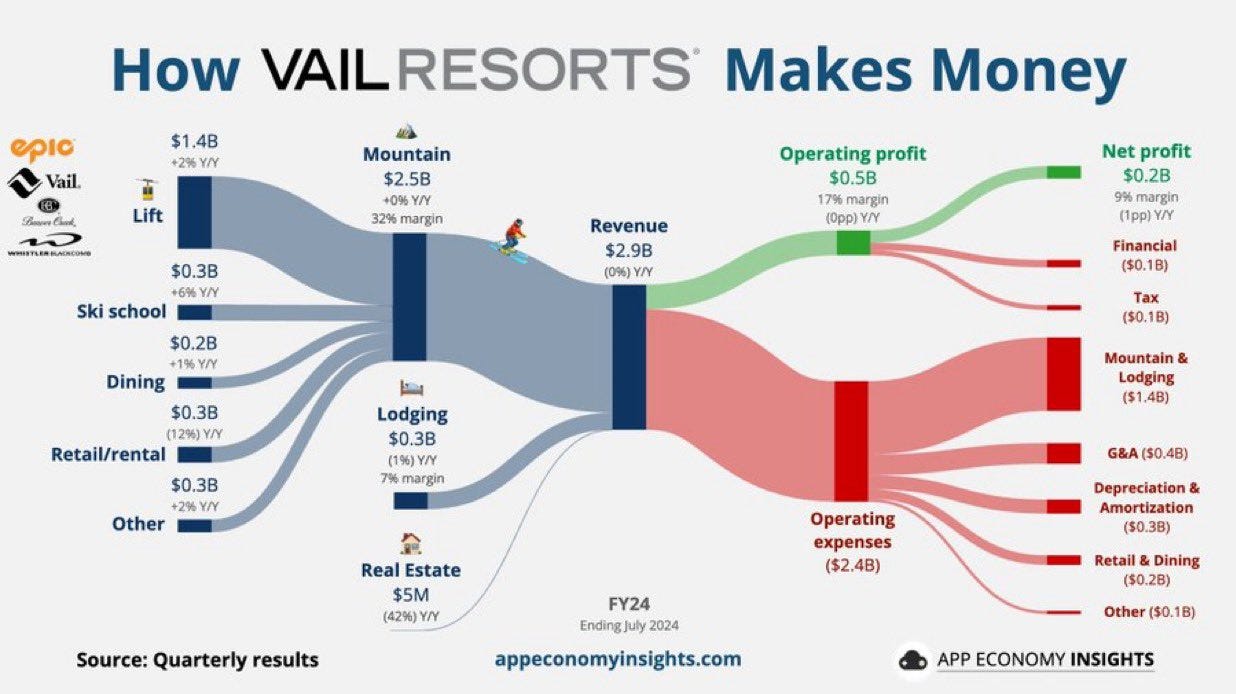
→ Why does it matter? That $15 cup of clam chowder generates more than $200M in dining revenues for Vail! 👀
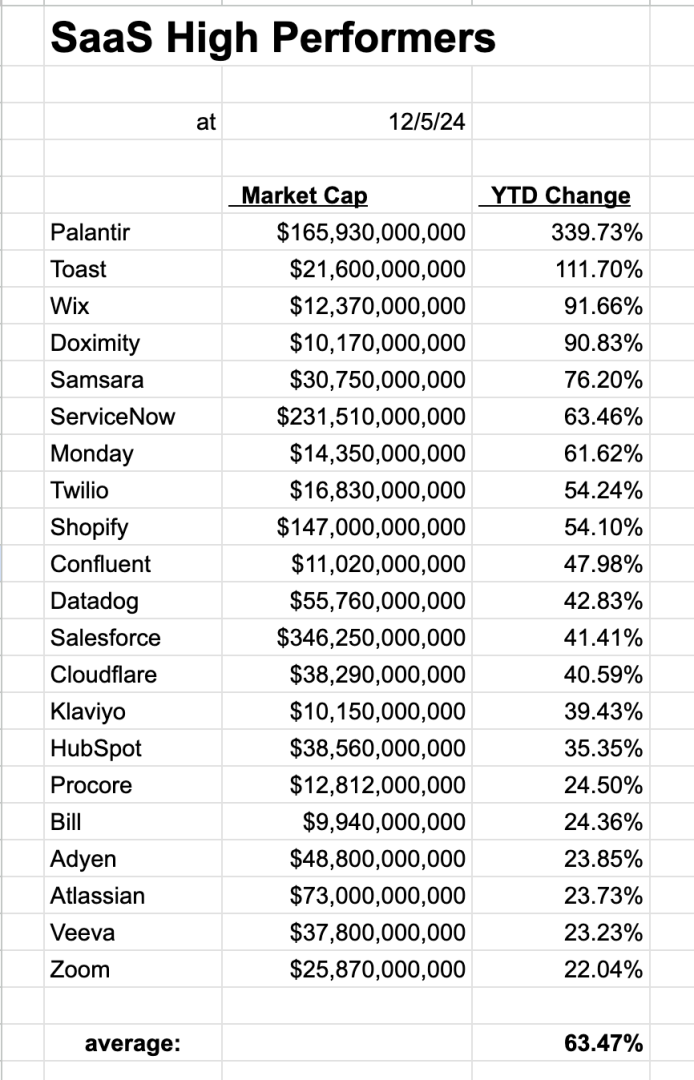
→ Why does it matter? In a recent interview, Alex Karp (CEO of Palantir) was asked: "What does Palantir do?" His answer? Palantir protects Western values and fights the enemies of freedom. … if that's your mission, maybe your stock price doesn't need to be tied to anything fundamental, right?

Tweets that stopped my scroll:

→ Why does it matter? One of my favorite reads of 2024 was Michael Dell's autobiography, Play Nice But Win: A CEO's Journey from Founder to Leader. The Dell-EMC going-private saga is a big part of his story, so here's the TL;DR!

→ Why does it matter? This one's a gem! Jerry Jones, the legendary owner of the Dallas Cowboys, shares some truly inspiring advice for anyone on the entrepreneurial journey.

Worth a watch or listen at 1x:
→ Why does it matter? Church for the AI faithful! 🙏🤖
→ Why does it matter? David Senra's deep dives into the lives of history's greatest entrepreneurs are more than just biographies. He goes beyond the surface, sharing 15 harsh truths about their journeys (as told to Chris Williamson) that reveal the raw, unfiltered reality of building something extraordinary. Forget the polished success stories; Senra gives you the true grit behind groundbreaking innovation.
1. Excellence is the capacity to take pain.
2. Problems are just opportunities in work clothes.
3. There are ideas worth billions in a $30 history book.
4. Relationships run the world.
5. You can always understand the son by the story of his father. The story of the father is embedded in the son.
6. Actions express priority.
7. Bad boys move in silence.
8. Belief comes before ability.
9. By endurance we conquer.
10. If you know your business from A to Z there is no problem you can’t solve.
11. The public praises people for what they practice in private.
12. Self pity has no utility.
13. The good ones know more.
14. Money comes naturally as a result of service.
15. If you love what you do the only exit strategy is death.

Quotes & eyewash:
Instead of New Year's resolutions, Dr. Julie Gurner, author of the executive coaching blog Ultra Successful, encourages her clients to focus on concrete actions and plans. She challenges them with these powerful questions:
"What are you going to not just say you'll do, but actually do?
What actions are you going to take?
What systems are you going to put in place?
What solid, actionable plans will you make?
What sacrifices are you willing to make to turn those words into reality?"
Dr. Gurner's approach emphasizes commitment and follow-through, pushing beyond mere aspirations to create tangible change.
I was just at Vail - that cup of clam chowder is now $22! Yet they still only have 9% margin overall...
'Actions express priority' there is more depth to that than people realize. I am relatively new to your discussions but look forward to being active in the future, cheers to 2025!!!