The Wall Street Journal once used ‘Read Ambitiously’ as a slogan, but it became a challenge I took to heart. If that old slogan still speaks to you, this weekly curated newsletter is for you. Every week, I will summarize the most important and impactful headlines across technology, finance, AI and enterprise SaaS. Together, we can read with an intent to grow, always be learning, and refine our lens to spot the best opportunities. To quote Jamie Dimon: “Great leaders are readers.”
Thanks to GenerativeAI and our friends at GoogleNotebookLM, you can enjoy this week’s Reading Ambitiously as a podcast entirely generated by AI. If you haven’t experienced this technology yet, definitely give this a try!

In the news:

→ Why does it matter? This headline is a few weeks old, with the US election dominating at the moment, let’s revisit it. Klarna is dropping Salesforce and soon Workday, opting to replace these major cloud systems with its own AI tools.
“There are large ongoing internal initiatives that are a combination of AI, standardization and simplification. As an example, we just shut down Salesforce,” Siemiatkowski said, per a transcript on Seeking Alpha. “Within a few weeks, we will shut down Workday. We are shutting down a lot of our SaaS providers, as we are able to consolidate.” - Sebastian Siemiatkowski (CEO, Klarna)
Really? Count me among the “tech skeptics.” Can AI genuinely replace today’s cloud leaders? I’d argue, no. AI thrives on valuable datasets, and systems of record hold some of the richest data possible. Here’s Salesforce CEO Marc Benioff speaking with Ben Thompson about Salesforce’s edge in AI workloads.
If you’re going to get these AI agents to work, you want these agents to work, what do you need? What are the ingredients? Let’s say we’re making a cake. You want an LLM, but that’s just like sugar. That’s going to make it great, okay, you’re going to have to have a pretty advanced RAG technique. You’re also going to need data because LLMs by themselves don’t know anything, they’re just an algorithm, you’re also going to want metadata because the data is better if it’s explained to the LLM what the data and metadata are.
On the other side, I could say we always felt that the beginning with our Platform as a Service approach, which is a term I actually came up with back in the late ’90s, that the platform would always carry us through that, the fundamental truth of our industry over many years is it’s not about the app because the apps tend to be very temporal, but really it’s about the platform and the data over time.
It’s about the platform and the data, if I were a betting man, these systems of record won’t be going anywhere anytime soon.

Best of the rest:
📉 How Intel Lost Its Way: The Missed Chance to Buy Nvidia in 2005 - The New York Times
🕒 NYSE to Extend Trading Hours to Nearly 24/7 on NYSE Arca Equities - Press Release
💭 Reflections on Palantir - Nabeel Qureshi’s Blog
✈️ Delta Sues CrowdStrike Over Massive IT Outage and Flight Cancellations - CNBC
💸 FedEx’s Near Bankruptcy in 1973 and the Founder’s Gambit to Save It - Joseph Cass on LinkedIn

Charts that caught my eye:
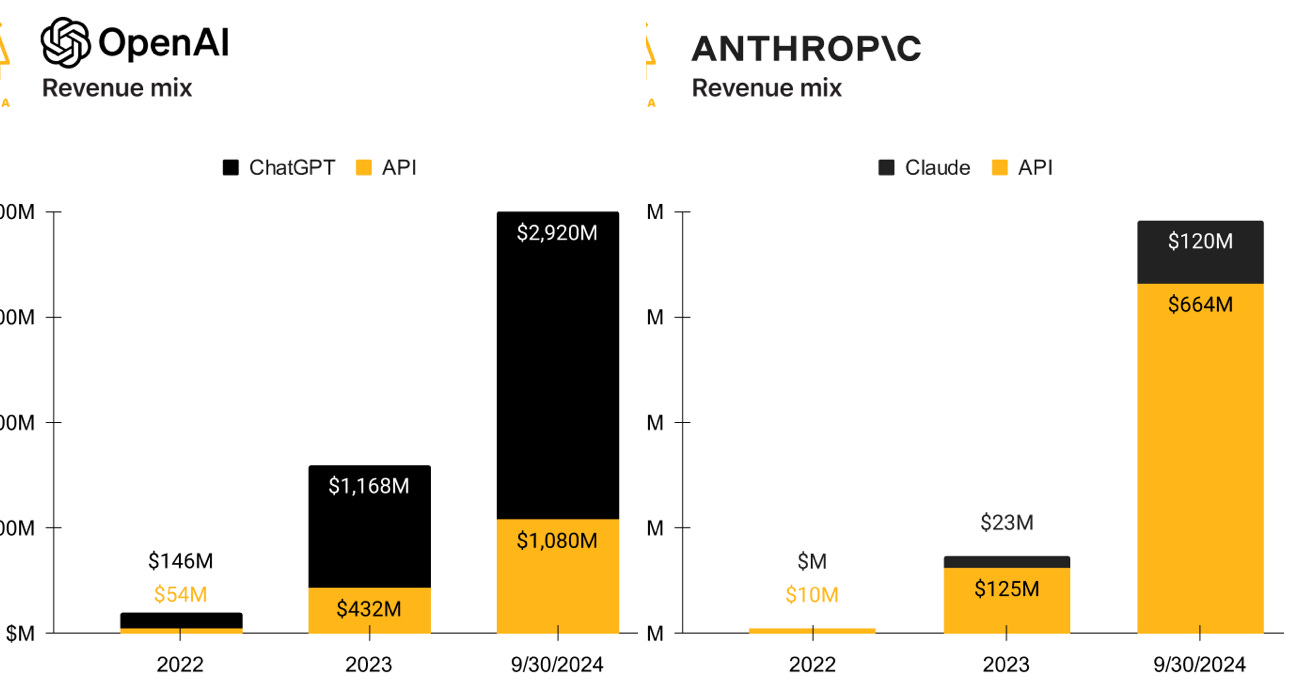
→ Why does it matter? In LLM land there are many players, two of the largest and most prominent are OpenAI and Anthropic. It’s interesting to look at their revenue mix. OpenAI generates more revenue from their B2C product, ChatGPT and Anthropic is generating more revenue from their API, which is mostly B2B. It’s notoriously hard to maintain both a B2B and B2C business, Google and LinkedIn come to mind as examples. At this stage in the game will we see Anthropic focus more on B2B Enterprise? And OpenAI focus more on the consumer? Or maybe we’ve yet to meet the ultimate winner in this space? Remember, Google was the 17th entrant into search, we still had AskJeeves at this stage in the cycle.
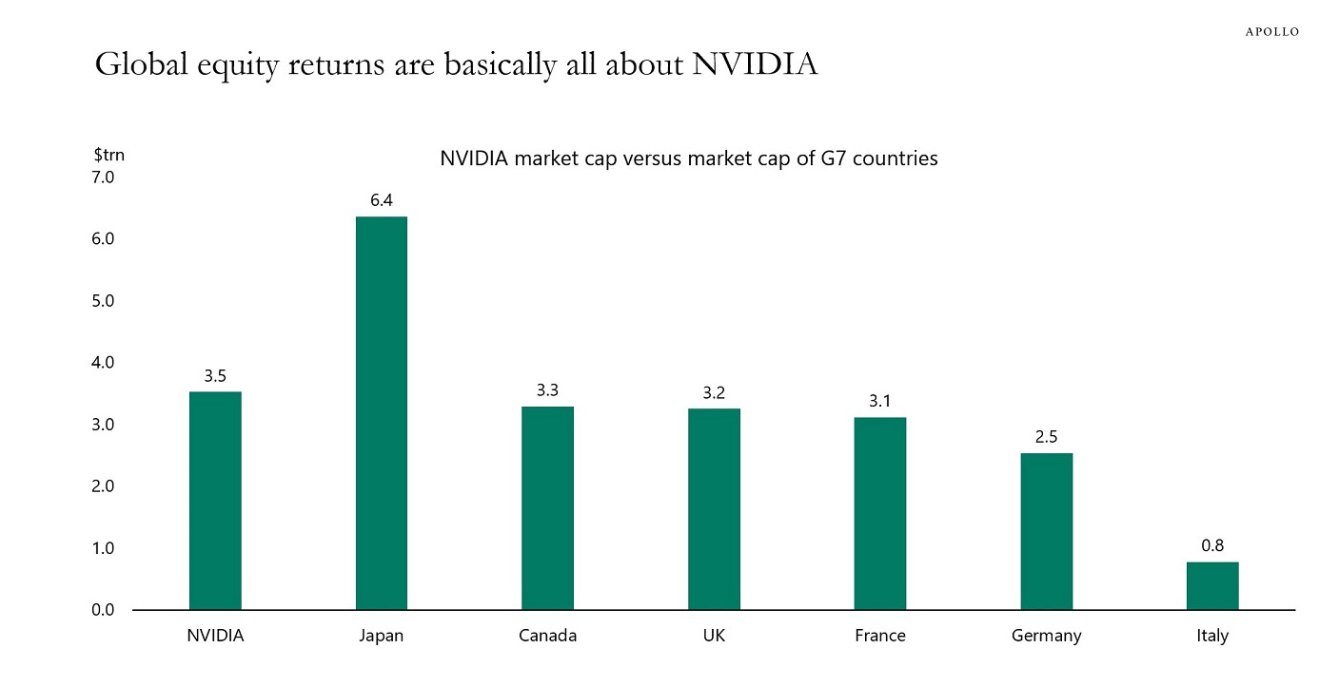
→ Why does it matter? NVIDIA’s market cap now surpasses the entire 🇩🇪 German and 🇮🇹 Italian stock markets combined 🏛️

Tweets that stopped my scroll:

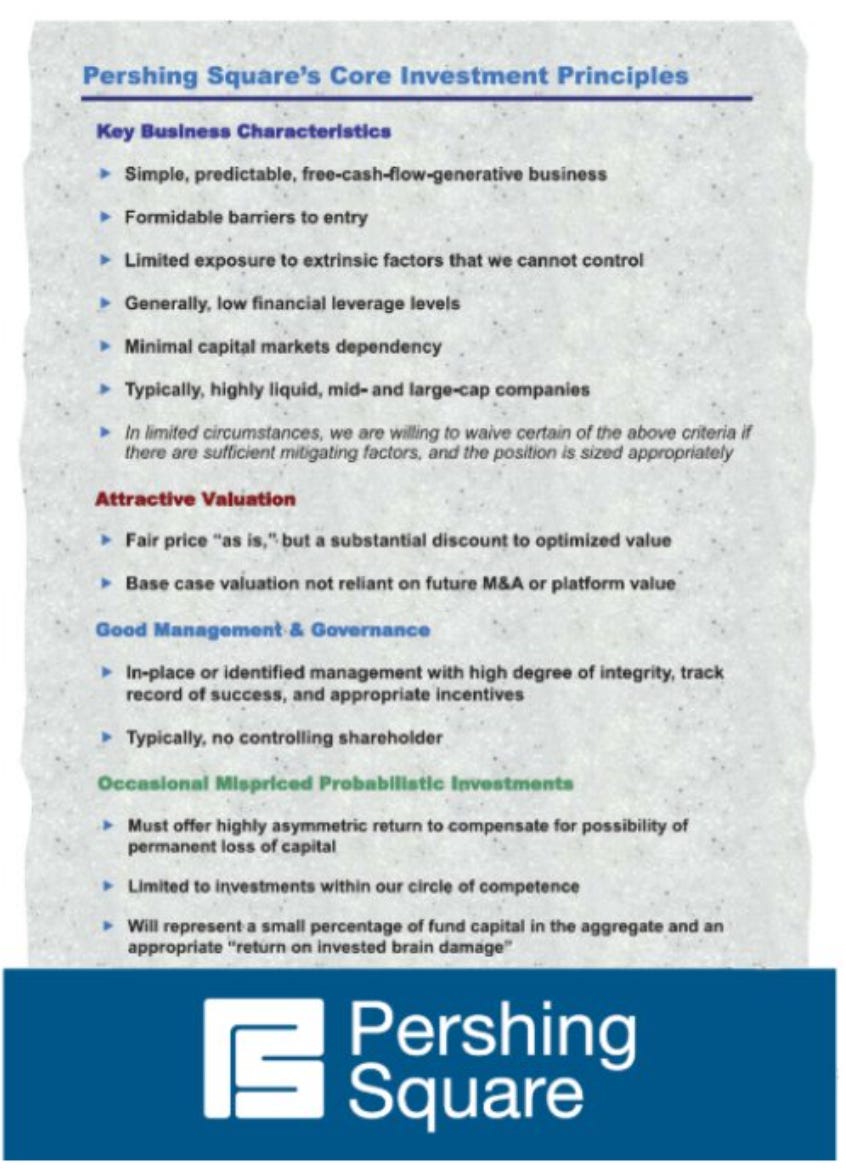
→ Why does it matter? This viral tweet on Bill Ackman’s investment principles has been making waves. Curious to see what they are?

→ Why does it matter? Masayoshi Son, founder of SoftBank, is known for his big ideas. Check out this 90-second clip from the Future Investment Initiative in Saudi Arabia last week. My favorite line: “$9T very reasonable CAPEX, not too big, maybe too small”… to achieve Artificial General Intelligence.

→ Why does it matter? Veeva stands out as one of the all-time greats in software, building specialized solutions for life sciences. Dive into this thread to read about their inspiring journey!

→ Why does it matter? A 99.96% cost reduction in anything is certainly worth paying attention to!

Worth a watch or listen at 1x:

→ Why does it matter? Curious about AI Agents, their potential, and real-world applications in large enterprises? Don’t miss this insightful podcast with Shomik Ghosh and Joao Moura.
→ Why does it matter? We’re big fans of Patrick O’Shaughnessy’s Invest Like The Best podcast. This week features Boyd Varty, a master storyteller, sharing invaluable insights. For anyone looking to sharpen their storytelling skills—an essential for any leader—this episode is a must-listen!
→ Why does it matter? The best part of the Every series is the examples—it feels more like a workshop than a talk show. If you’re curious about how some of the smartest people are using AI in their daily lives, this is a must-watch.

Quotes & eyewash:
Any sufficiently advanced technology is indistinguishable from magic.” — Arthur C. Clarke, British science-fiction author
"Happiness is when what you think, what you say, and what you do are in harmony.” - Mahatma Gandhi
“Your first thought is what everyone else thinks. Your best thought comes after you've thought long enough to forget what everyone thinks. The difference between good and exceptional isn't hours worked – it's the depth of thought applied to the right problems.” —Shane Parrish