

Enjoy this week’s Big Idea read by me:

The big idea: tokenize everything

I used to think of tokens mainly in the context of cryptocurrencies like Bitcoin. There’s truth in that, but tokens are a much bigger idea, and I may not have been thinking big enough.
So what is a token? Unfortunately, the answer is nuanced. A token is a standardized unit of information that computers can store, move, and interpret. A token can represent text, money, identity, or ownership, but the essential idea is the same: tokens make the world machine-readable. They’re the mechanism through which software understands and transacts with reality.
With artificial intelligence, we hear about tokens. Google announced earlier this month that they are processing 1,300,000,000,000,000 (yes, that’s a real number) of them.

Tokens are the smallest pieces of language a model can process, the syllables and symbols it turns into meaning. AI models are priced based on the number of input tokens and output tokens.
In finance and crypto, tokens can represent ownership, such as a share of stock, a currency, or the rights to an asset. In 2018, The St. Regis in Aspen, Colorado, sold Aspen Digital Tokens to interested real estate investors. Early this year, Robinhood’s CEO said that “Tokenization of real-world assets is an unstoppable ‘freight train’ coming to major markets” after tokenizing over 200 US stocks now available to European investors.
“Token” is a word that you hear a lot in cryptocurrency. You often hear Bitcoin described as a “crypto token” or “crypto currency” because technically, all cryptoassets can also be described as tokens. However, the reality is that there are many more types of tokens than cryptocurrencies.
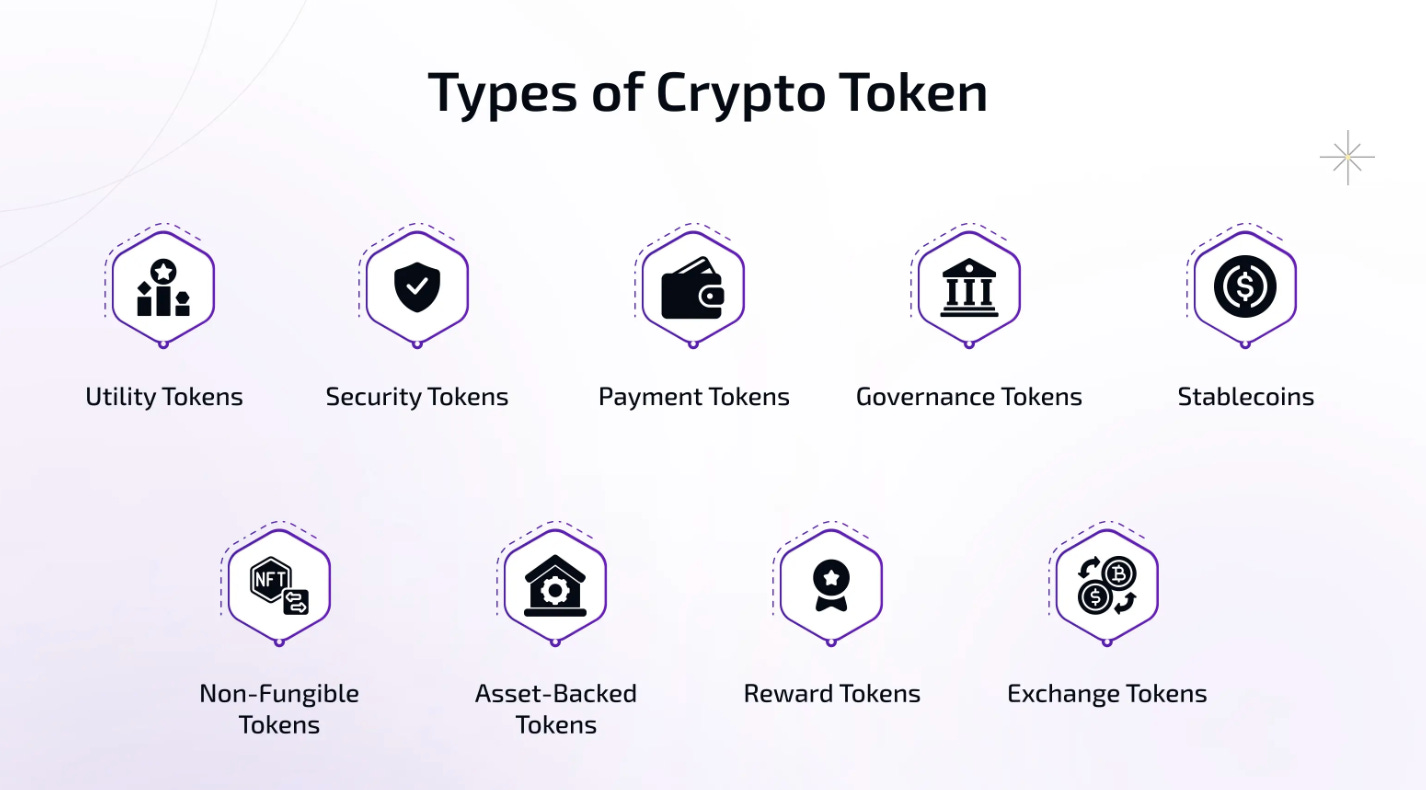
Tokenization is how the world will become legible to machines. A token is the output of translating human activity into a digital format that software can interpret and act on. Once something is expressed as a token, it can move and interact with networks such as blockchains and generate feedback loops of data and economic activity.
Tokenize It
Over the next decade, there will be an explosion of all sorts of tokens. Ribbit Capital has done an exceptional job breaking it down by value stores (red), expertise (green), and personalization (blue). Their taxonomy is the clearest map available today.
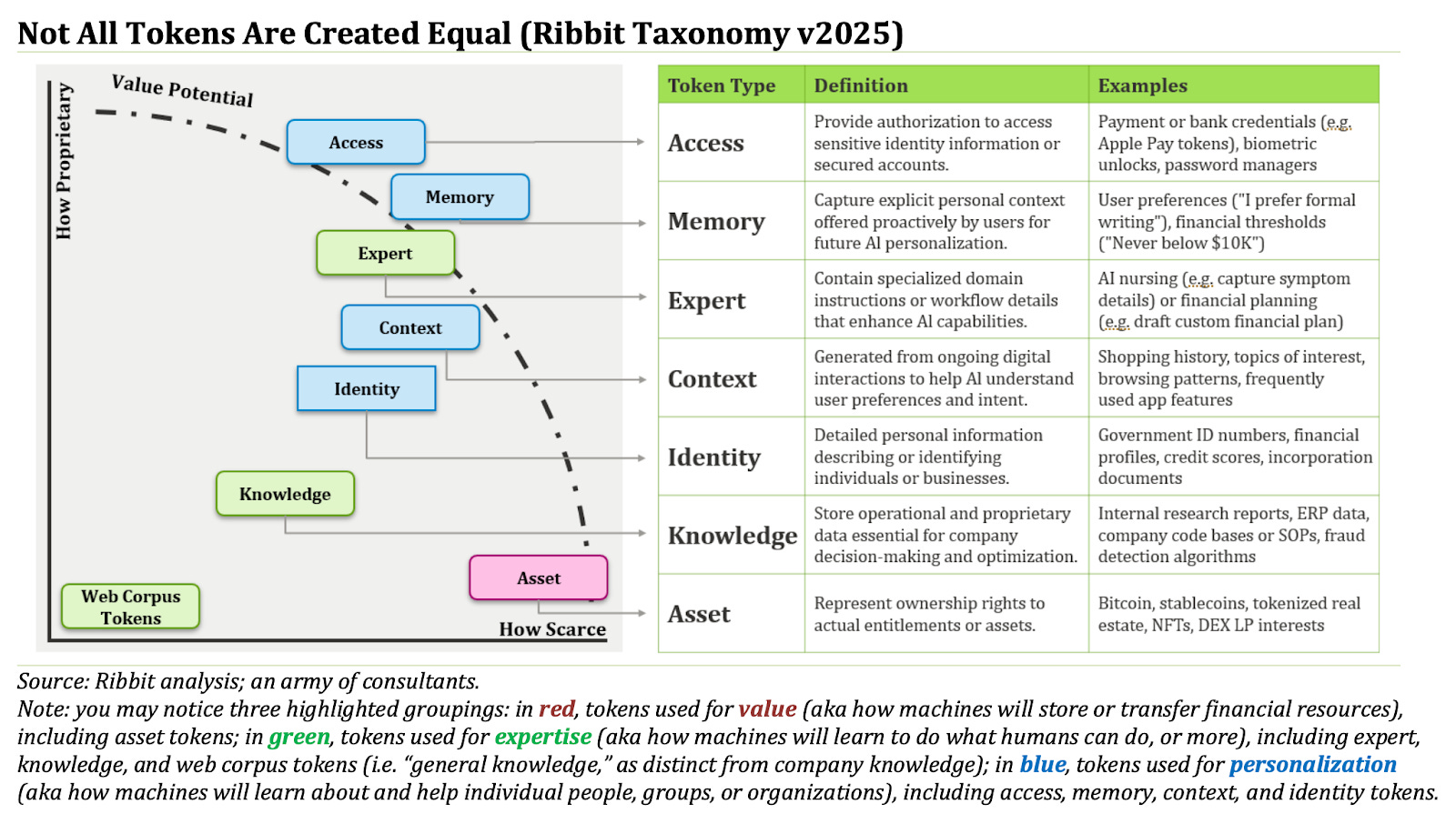
In the future, most every system has the propensity to generate tokens in one or more of these categories:
Access and identity determine who is eligible to participate. They sit at the intersection of authentication and trust, and they’re the substrate for privacy-preserving design.
Memory and context record preferences and intent. They are the feedback layer that lets software learn from behavior, not just data.
Knowledge and expert encode the capabilities that make AI useful. They turn human judgment into machine leverage.
Asset carry the balance sheet. They are the ones that move money, credit, and ownership.
You may already issue tokens, whether you realize it or not. Your user profiles, transaction logs, API keys, and model weights are all token primitives. The work ahead is to decide which of those primitives are worth tokenizing. Are they proprietary? Which are portable? Can they compound into an advantage?
Tokens as the atomic unit for the digital economy
Deciding which tokens you could own and issue is only the first step. The next step is building the systems that can move and coordinate them. That work is already underway.
Stripe is the clearest example. In 2025, it launched a stablecoin payment network that allows businesses to settle subscriptions and invoices instantly, bypassing traditional rails. It also introduced Open Issuance, a platform that lets companies mint their own stablecoins. Each transaction becomes a token, a machine-readable unit of value that can move, reconcile, and report itself in real time.
This is what Ribbit Capital calls a token factory: a system that not only records information but also produces the tokens that flow through it.
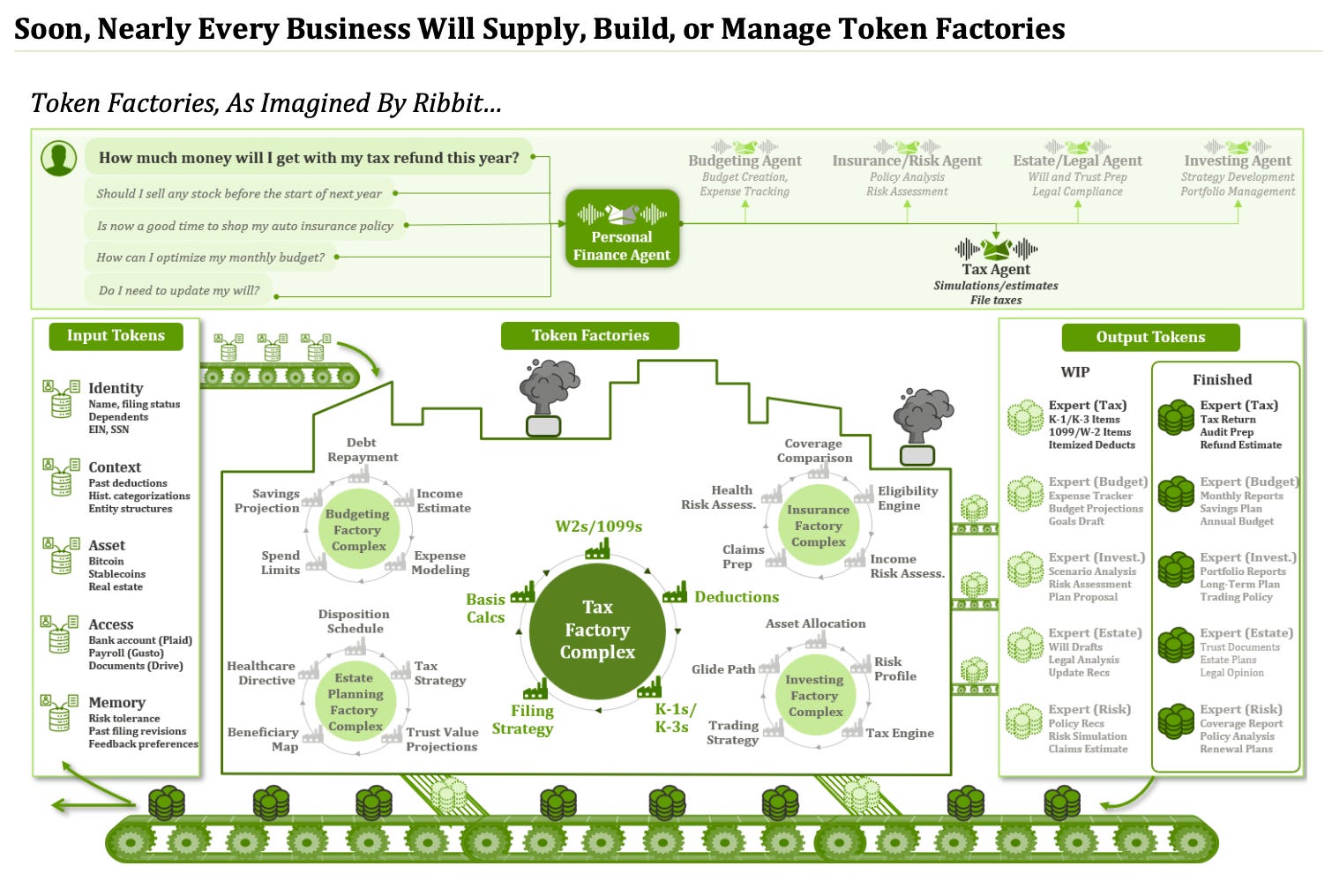
Software once described what happened, allowing people to decide what to do next. With real-world data and the trust frameworks enabled by tokenization, it can now act. It settles, verifies, and authorizes directly, reducing the distance between information and execution. Software has become infrastructure, and tokens are how it keeps its books.
Why It Matters
Tokens turn the world into something software can understand, and in doing so, they redefine where value lives and who captures it. Most companies could become token factories that produce, store, and exchange units of data, capital, and identity that machines can act on.
The token era will not arrive all at once. It will seep in quietly over the next 7-10 years, through products that seem familiar but behave differently. A payment app that settles in real time. AI models that allow you to export memory. A digital wallet that knows who you are. Step by step, the world becomes legible to machines, and in that legibility, new forms of coordination emerge. Tokenization is what makes it possible.

Best of the rest:
🤖 Inside Cursor — A rare, inside-the-building look at how Cursor’s ceiling-raising culture, recruiting swarm tactics, and relentless dogfooding are turning an AI code editor into a generational software company. — Colossus
💥 Cockroaches in the Coal Mine – Howard Marks warns that recent private credit blowups aren’t proof of systemic risk but a reminder that good times breed bad loans. The post-2011 private credit boom has finally hit turbulence, exposing sloppy underwriting, off-balance-sheet leverage, and even fraud. The lesson: risk never disappears, it just hides in the dark until someone turns on the light. – Oaktree Capital
💸 SoftBank Cashes Out of Nvidia to Double Down on AI – Masayoshi Son sold SoftBank’s entire $5.8B Nvidia stake to bankroll a spree of AI bets, from OpenAI and Ampere to a trillion-dollar “Stargate” data center project, even as questions swirl about an overheating AI bubble. – Bloomberg
🎰 ‘Chad: The Brainrot IDE’ is a new Y Combinator-backed product so wild, people thought it was fake — YC’s latest “vibe coding” experiment reframes AI idle time as product design, pulling TikTok, Tinder, and minigames into the IDE to cut context switching and test where developer productivity tools go next. — TechCrunch

Charts that caught my eye:
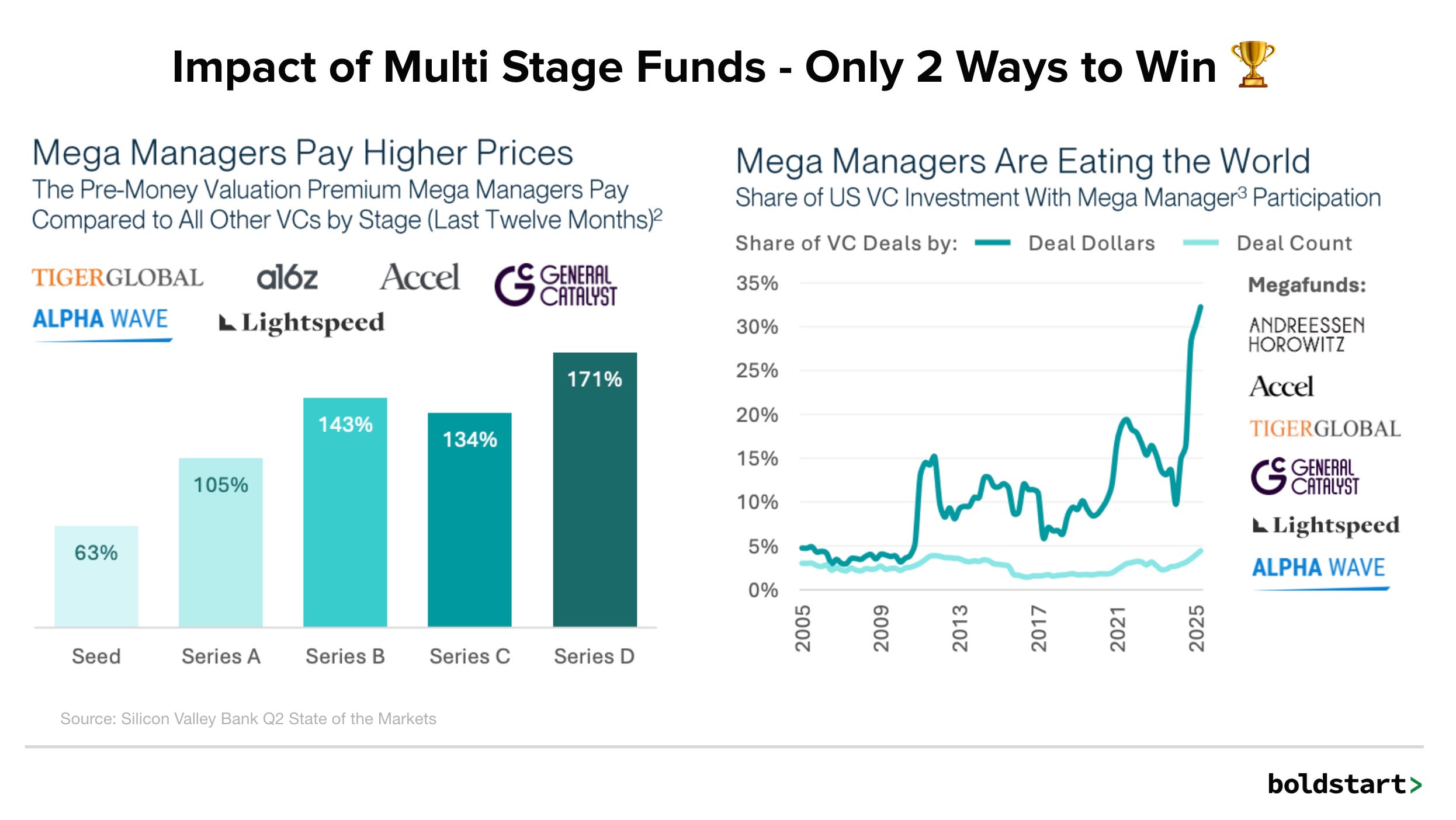
→ Why does it matter? Venture has consolidated into an efficiency game. Mega managers use scale to buy access, paying steep premiums while crowding out smaller firms. The market now splits in two: giants who can afford to overpay and specialists who must outthink them. Everything in between is getting erased.
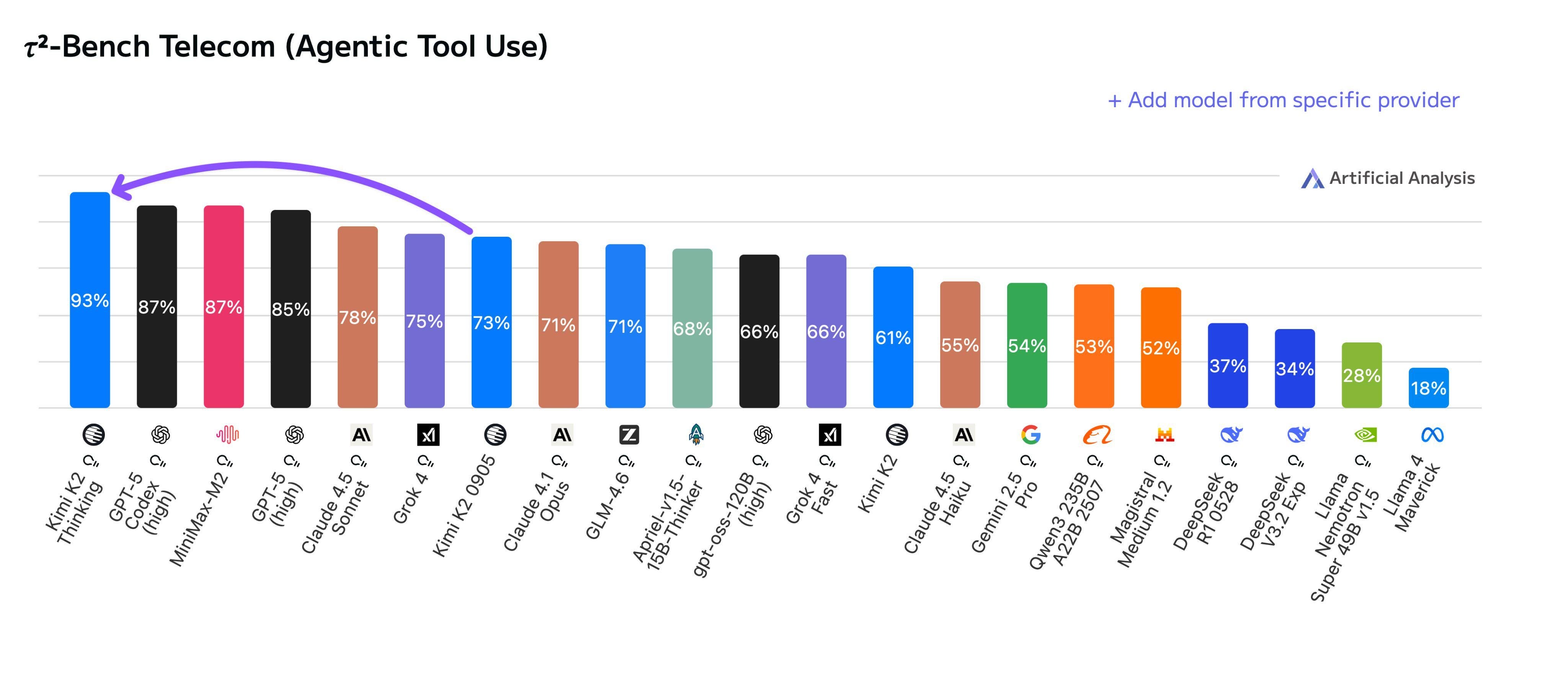
→ Why does it matter? Kimi K2’s performance shows China is closing the gap. For the first time, a Chinese model outscored GPT-5 on complex reasoning tasks. The U.S. still leads in chips, research, and ecosystem strength, but this is a reminder that the balance of power in AI is not guaranteed. America remains ahead, but the race is now real.
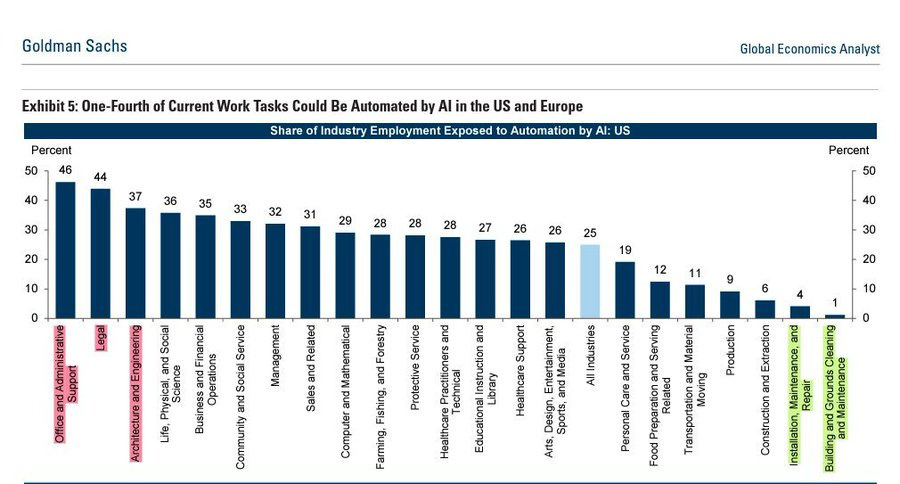
→ Why does it matter? Goldman is out with a new report predicting which work tasks could be most effectively automated by AI. Interesting to see the “all” industries projected at 25%.
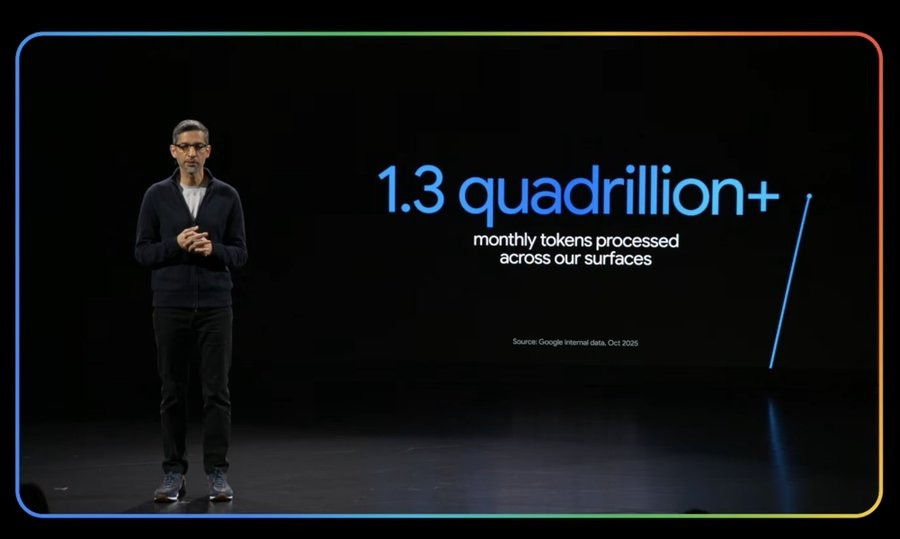
→ Why does it matter? When we first reported on the # of AI Tokens Google is processing per month, it was 480T, then 980T, now it’s 1.3Q!
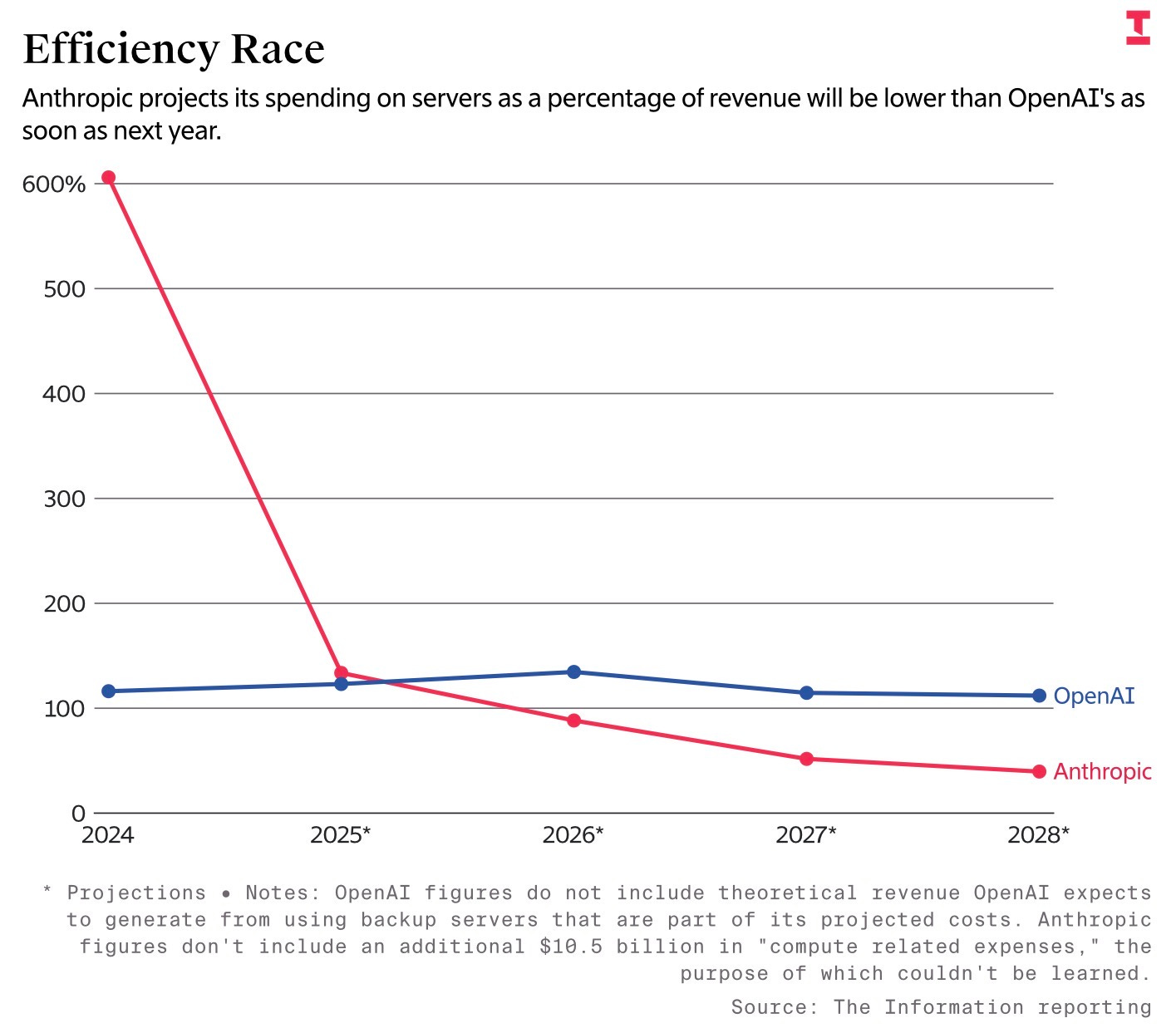
→ Why does it matter? While OpenAI finds itself entangled in the question of how to fund $1.4 trillion in commitments, Anthropic now projects a cost advantage. Both companies forecast similar revenue growth, but Anthropic expects to spend less than a third as much on compute. The difference reflects strategy, not capability: OpenAI is building for breadth and future breakthroughs, while Anthropic is concentrating on efficiency within tighter bounds. The trade-off will define which model of AI company proves sustainable.

Tweets that stopped my scroll:

→ Why does it matter? ‘Big Short’ investor Michael Burry accuses AI hyperscalers of artificially boosting earnings. He argues that extending chip “useful lives” is masking depreciation and flattering AI-era profits, a risk to valuations if assumptions snap back, with Oracle and Meta in the crosshairs. More from CNBC here. Since this writing, Burry has also potentially closed up shop. Follow him on X here.
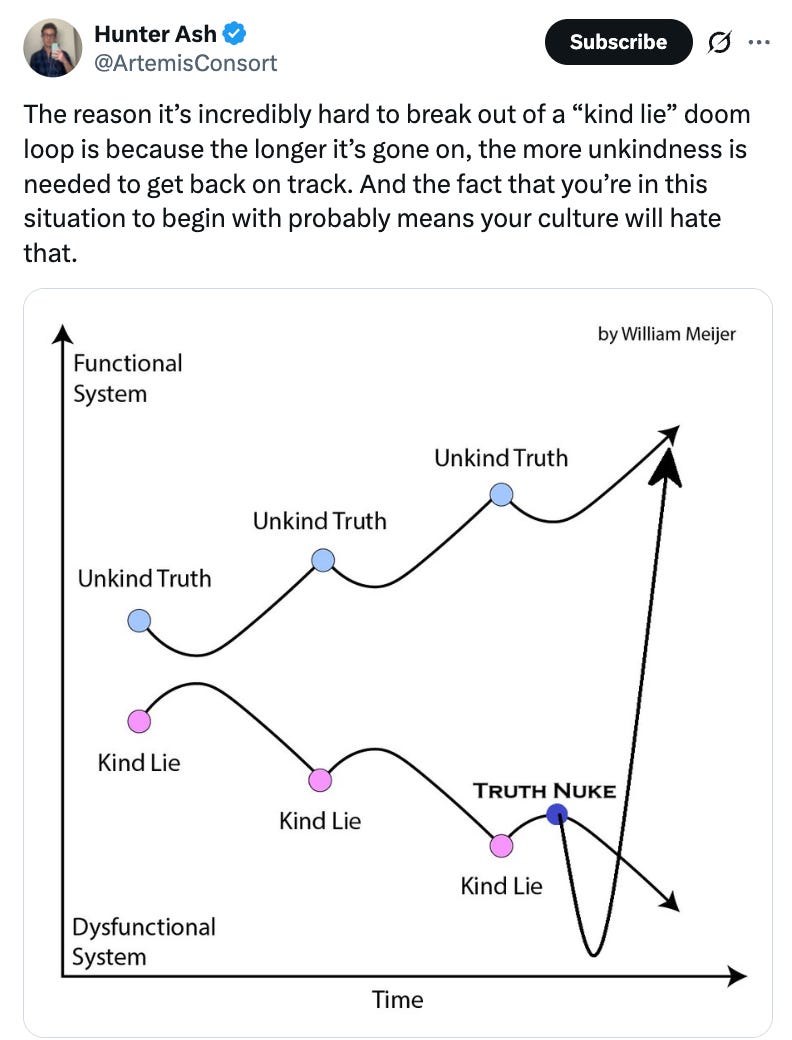
→ Why does it matter? From the original author on X, William Meijer, “an extreme commitment to the truth makes relationships acutely dysfunctional but systems chronically functional. An extreme commitment to kindness makes relationships acutely functional but systems chronically dysfunctional.” The more kind lies, the bigger the ‘truth nuke’ ultimately becomes.

Worth a watch or listen at 1x:
→ Why does it matter? You may have seen headlines claiming OpenAI called for “government backstops.” In the full interview, Sarah pauses, searches for her words, and ultimately chooses the wrong one. Still, the conversation is worth a listen, especially through the lens of OpenAI’s CFO. It’s a rare look at how the financial house behind the most-watched company in the world is being built.
→ Why does it matter? Everything is a narrative! Wolfgang is a 5-star storyteller. I love the Joycean moment. A transcendent truth about the world, if only for a fleeting moment.

Quotes & eyewash:
“Who Luck”—the luck of finding the right mentor, partner, teammate, leader, friend—is one of the most important types of luck. The best way to find a strong current of good luck is to swim with great people, and to build deep and enduring relationships with people for whom you’d risk your life and who’d risk their lives for you.
Jim Collins
The mission:
The Wall Street Journal once used “Read Ambitiously” as a slogan, but I took it as a personal challenge. Our mission is to give you a point of view in a noisy, changing world. To unpack big ideas that sharpen your edge and show why they matter. To fit ambition-sized insight into your busy life and channel the zeitgeist into the stories and signals that fuel your next move. Above all, we aim to give you power, the kind that comes from having the words, insight, and legitimacy to lead with confidence. Together, we read to grow, keep learning, and refine our lens to spot the best opportunities. As Jamie Dimon says, “Great leaders are readers.”
Disclaimer: This content is for informational purposes only and does not constitute financial, investment, or legal advice. Readers should do their own research and consult with a qualified professional before making any decisions.