

Enjoy this week’s Big Idea read by me:

The big idea: the tale of two markets

Michael Burry disclosed this week he’s short Palantir and Nvidia. A SEC-required 13F filing shows roughly $1.1 billion in put options opened against the two massively popular AI companies.
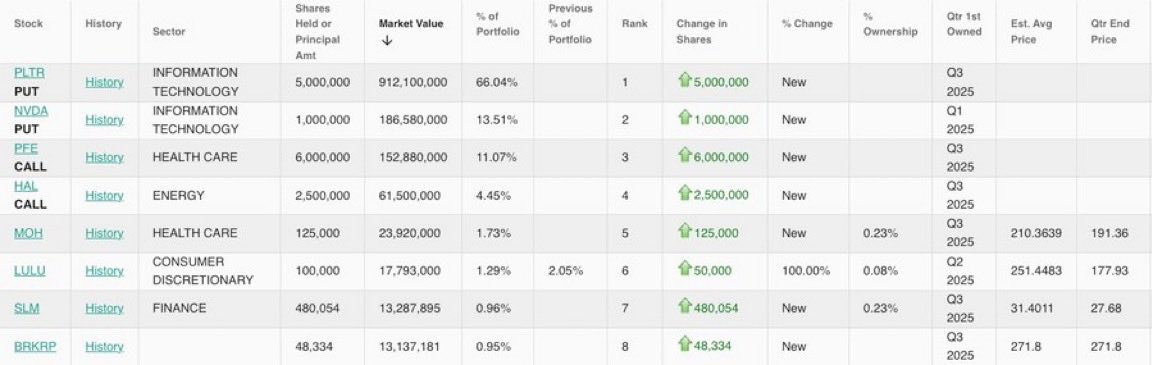
Scion Capital filed the disclosure weeks ahead of schedule. Funny timing, as the SEC is on PTO during the government shutdown. An oddly poetic detail for a market suspended between two interpretations of the same data.
Within hours, Burry’s announcement was for many the key signal: we’re in a bubble. How could we not be? The star trader made famous in the Hollywood film, The Big Short, who infamously predicted the 2008 financial crisis, was now making a call on the next crisis. Burry even went on to post a picture of Christian Bale!
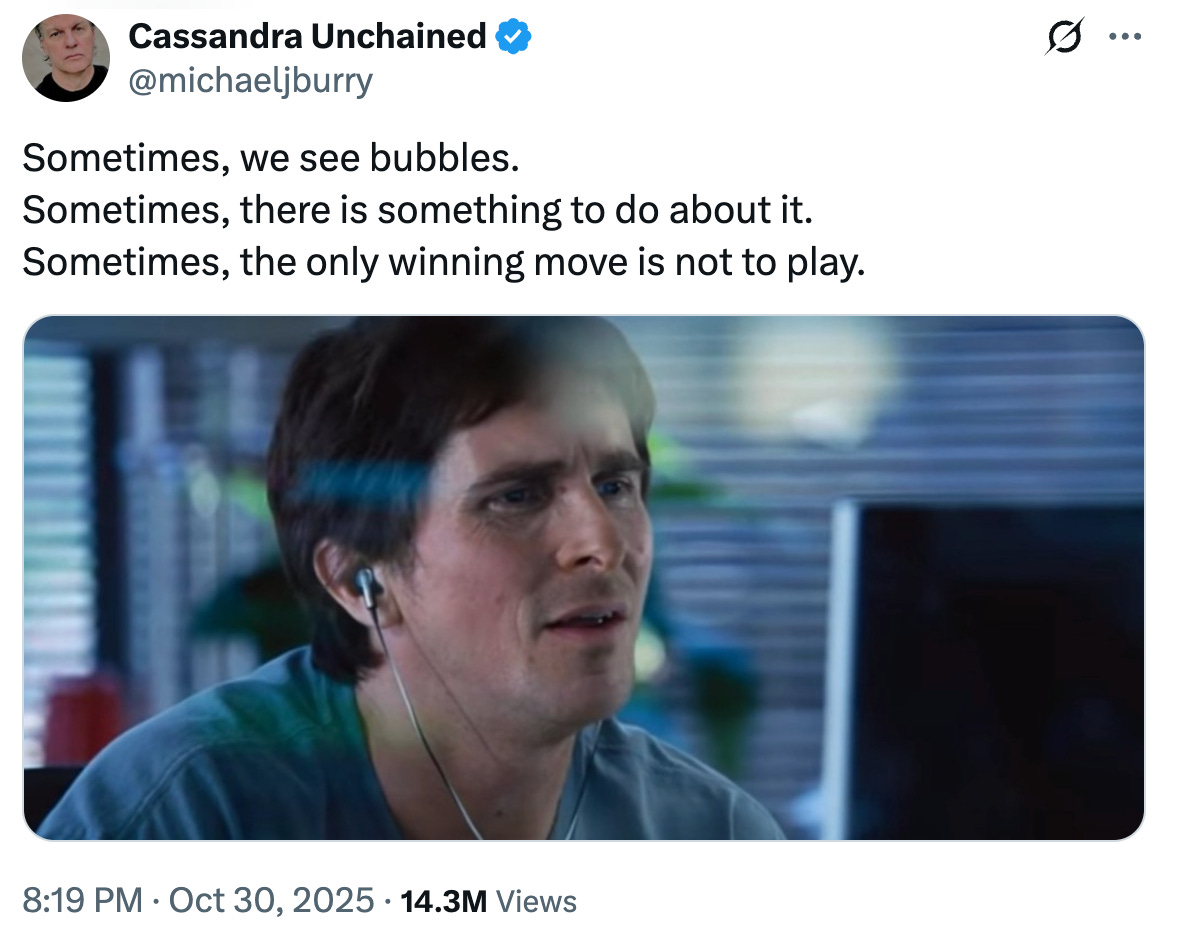
For months, we’ve been in this debate. And most everybody is trying to answer this question: Are we in an AI Bubble?
Unfortunately, I do not know. But I have been keeping track of both arguments.
The AI bubble argument
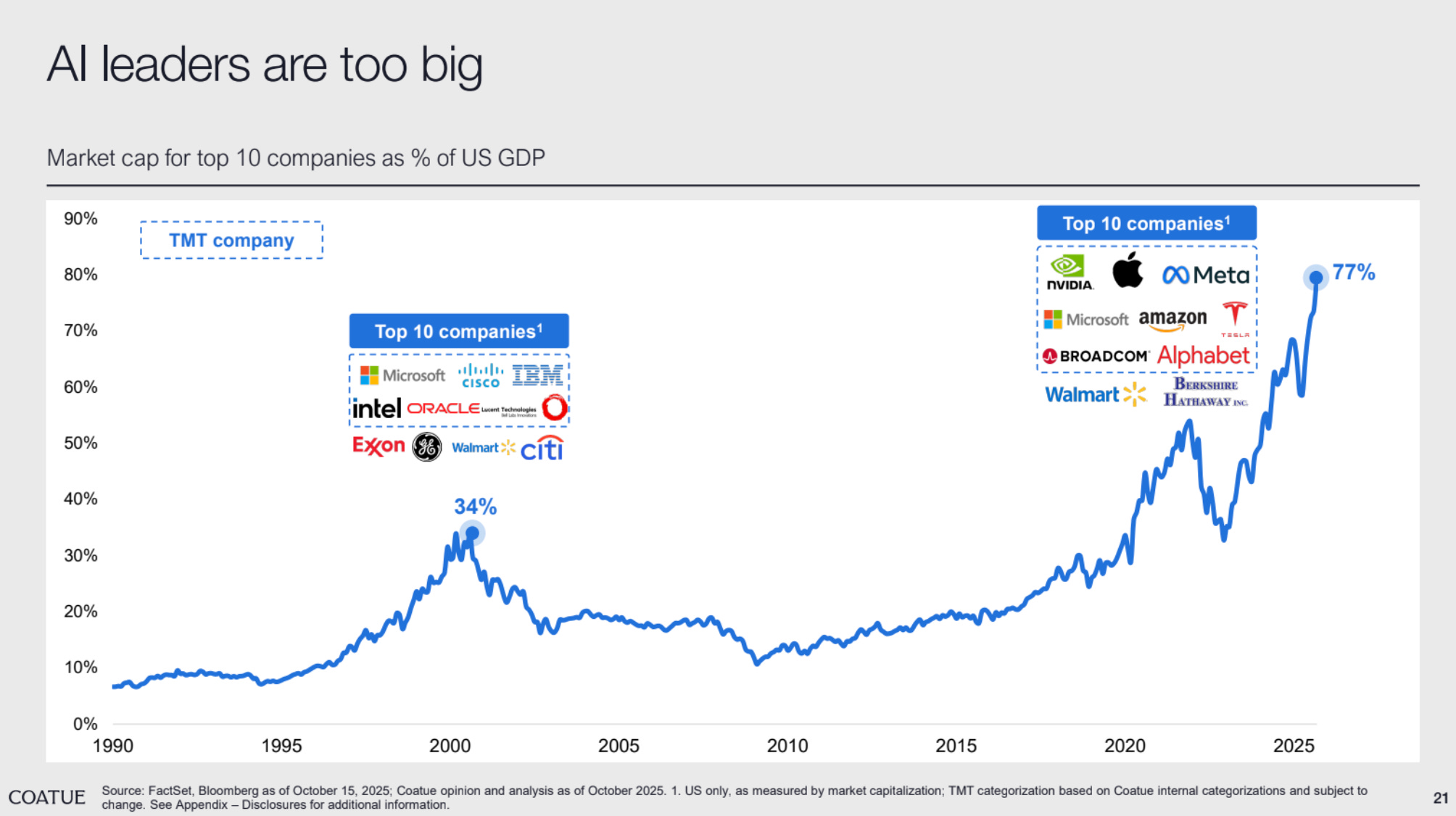
1/ The top ten companies now represent a larger share of market capitalization than at any time since 2000. What else happened in 2000? The dotcom bubble burst.
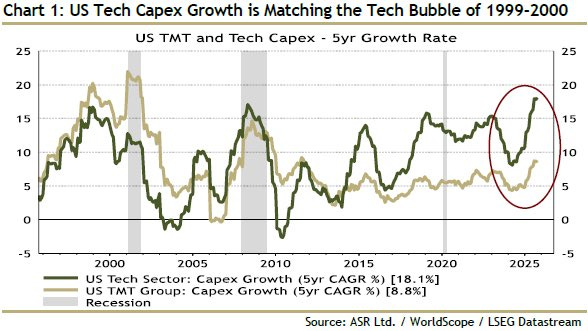
2/ AI capital spending has crossed 1% of GDP, a threshold last breached during the railroad boom and the dot-com era.
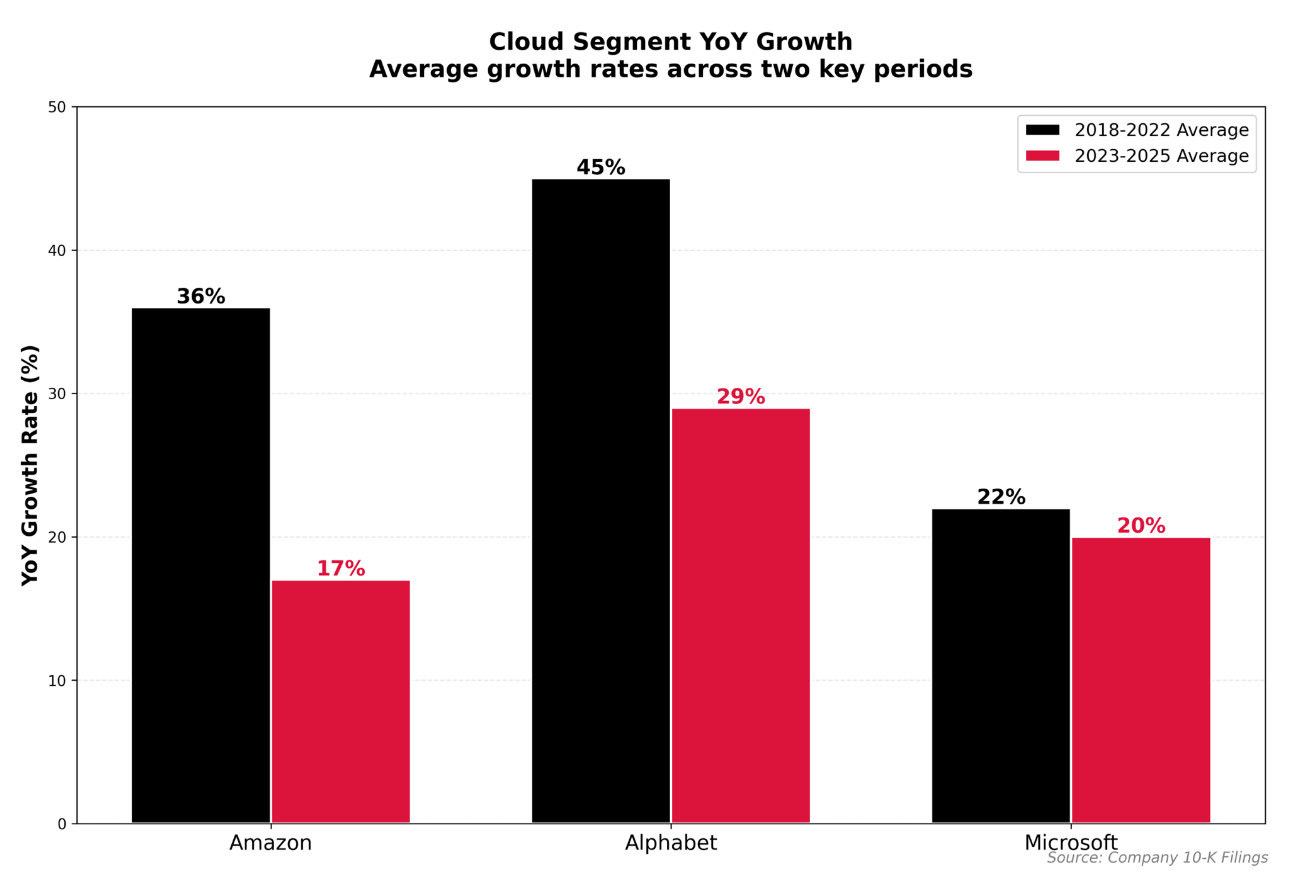
3/ Cloud revenue growth at Amazon, Microsoft, and Google has decelerated since 2022.
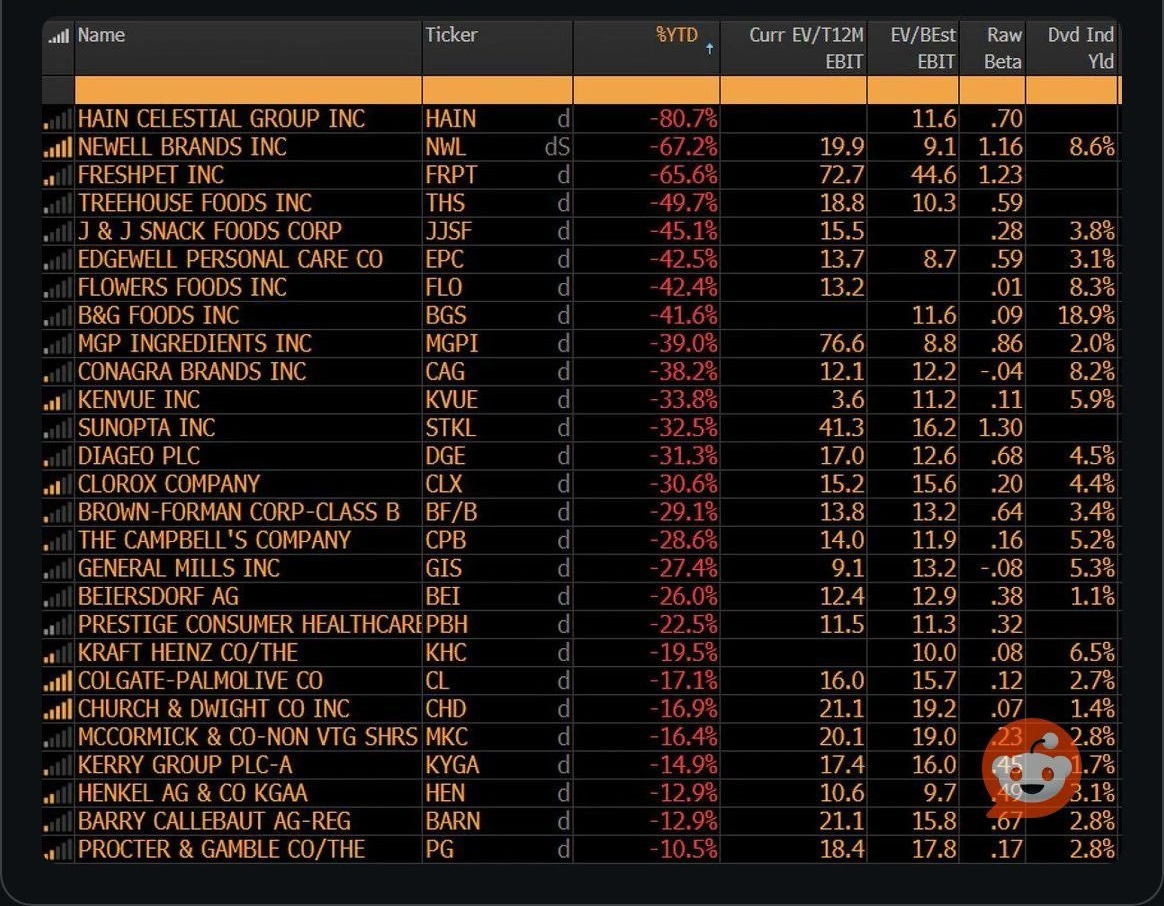
4/ Quality stalwarts like Clorox, General Mills, and Kraft Heinz are down a lot this year.
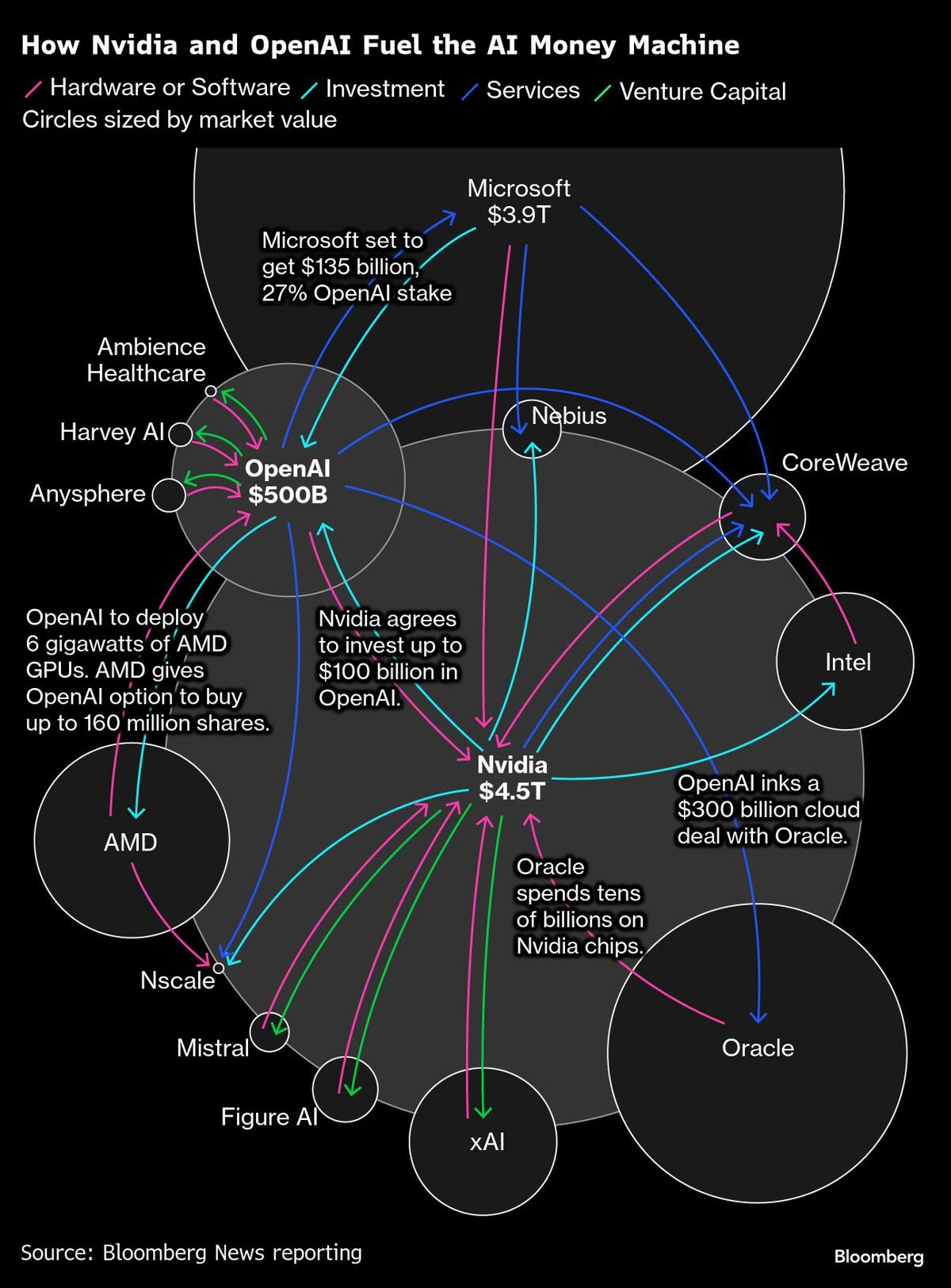
5/ Financing loops echo the dot-com era revenue inflation. (Reading Ambitiously 10-17-25).
The AI abundance argument
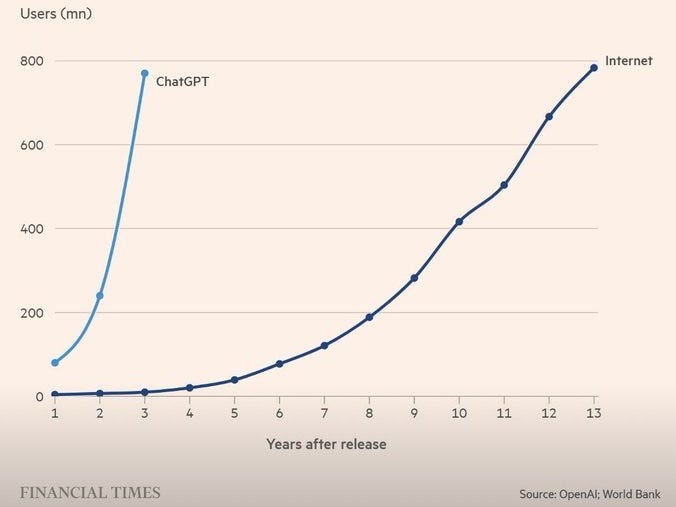
1/ ChatGPT will reach a billion users faster than any technology in history. Adoption signals utility, not hype or speculation.
2/ The Mag 7 generates roughly a trillion dollars in annual free cash flow before capex. A lot of AI infrastructure can be self-financed.
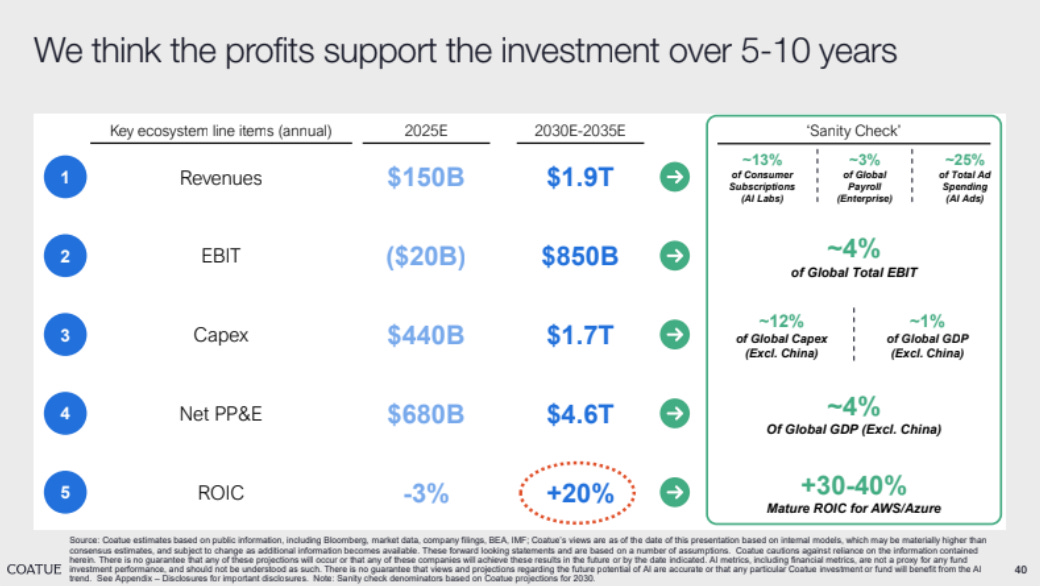
3/ AI is already generating measurable returns: productivity gains, cost savings, and new revenue streams across enterprises. Coatue pegs current AI revenues at $150 billion, with the potential to reach $1.5 to $2 trillion within a decade and generate roughly a trillion dollars in profits.
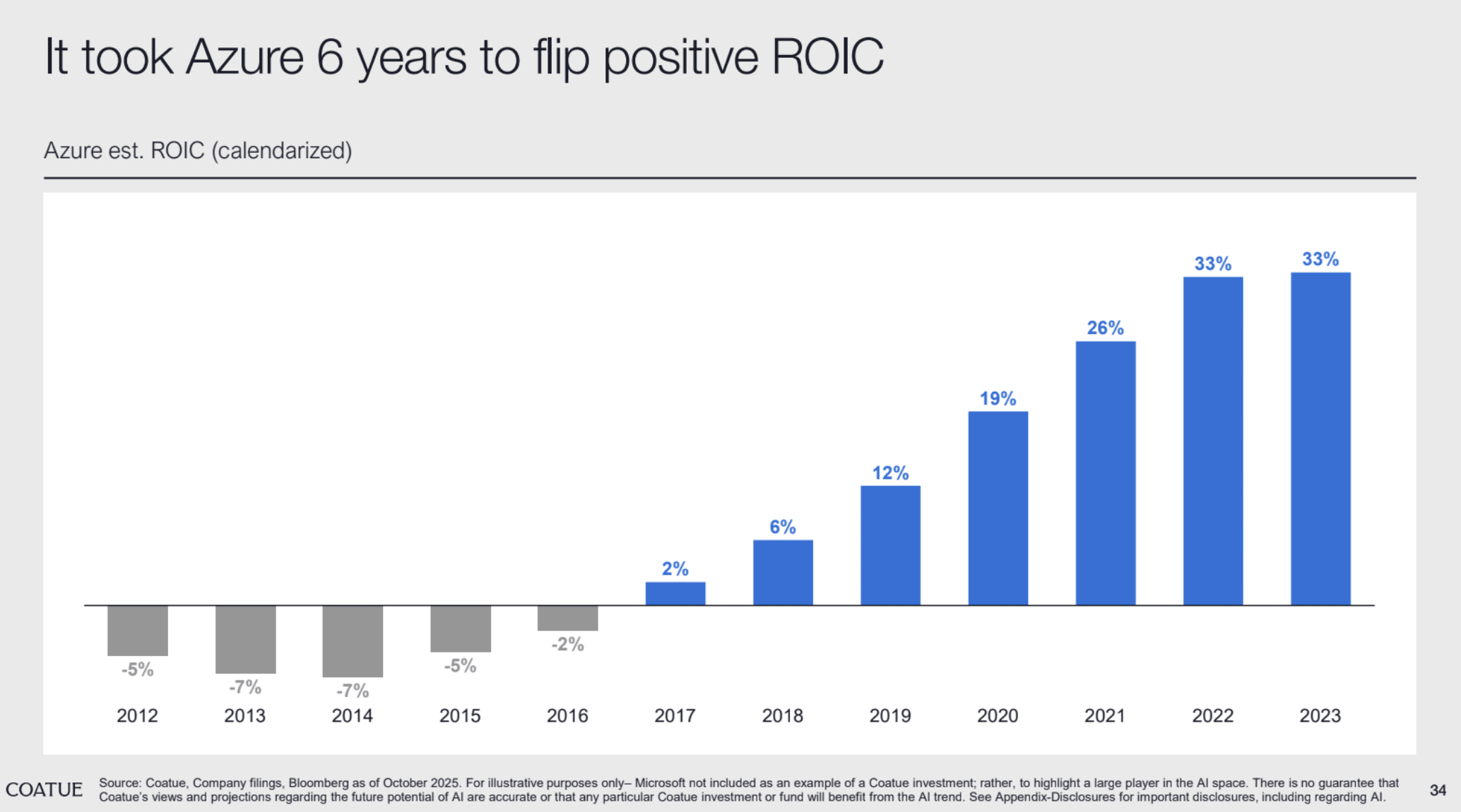
4/ This isn’t about profits in the distant future. Azure took six years to turn profitable for Microsoft and is now its highest-return business.
5/ Knowledge work accounts for 55–65% of the global GDP, which is roughly $50 trillion. If AI augments even a fraction of that, the TAM is enormous.
Both are narratives about the same phenomenon. Bubbles are about mispricing assets. Abundance is about transformation. And there is truth in both. Remember, transformational infrastructure and overvalued equity can coexist, they did during the railroad boom, electrification, and 1999.
History doesn’t repeat, but it rhymes. Economist Carlota Perez mapped this pattern across five technological revolutions spanning 240 years. Every major technology follows a similar arc: installation, a turning point, and then deployment.
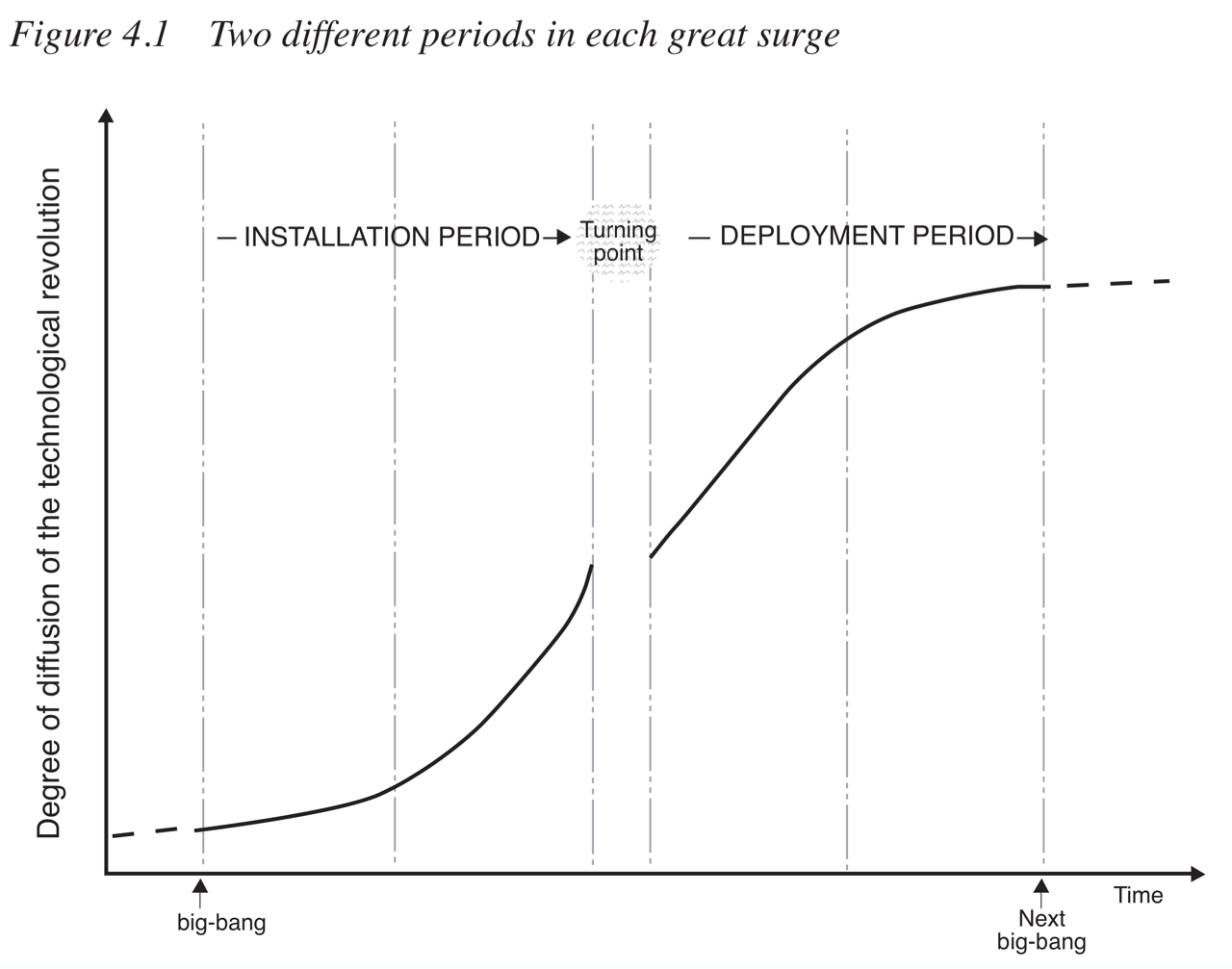
Installation, turning point & deployment
During installation, capital floods into the new paradigm. Valuations can become detached from current earnings, as future potential is priced in. Old industries struggle, new ones spawn. Installation often ends in a bubble, as it did for canals, railways, electricity, and the internet.
But when the bubble bursts, it doesn’t mean failure. The fiber optic cables laid in the 1990s became the internet’s backbone. The railroads transformed America, even though the equity holders who financed the build-out were essentially wiped out. The tracks remained after the companies failed.
Following the installation phase is a turning point that ushers in uncertainty, a period lasting two to fifteen years, during which the technology exists and infrastructure is built, but society has not yet figured out how to organize around it.
This is what we seem to be approaching. Structural unemployment, rising inequality, feeble growth, and polarized political landscapes are common during this phase.
The third phase is deployment and ultimately a golden era. We haven’t reached it yet. Deployment requires “synergistic direction,” and alignment between innovation and broad prosperity.
What this means for bubbles and abundance
Both AI Bubble and AI Abundance arguments describe the dynamics of installation.
The infrastructure is being built. The spending looks excessive because returns haven’t materialized at scale yet. Valuations are stretched because they’re pricing deployment while we’re still in the installation phase. The old economy is collapsing, consumer staples down 40-70 percent, while the new economy expands.
Unfortunately installation doesn’t tell you who survives to deployment. The railroads transformed America. Most railroad companies went bankrupt. The internet revolutionized commerce. Most dot-com companies failed. The infrastructure persisted. The equity holders didn’t.
Perez’s framework doesn’t answer whether Nvidia or Palantir is overvalued. It answers something more fundamental: we’re not in a normal market. We’re in the high-risk installation phase of a technological revolution that hasn’t yet reached its productive Golden Age.
The question isn’t whether we’re in an AI bubble. The question is whether you’re positioned to survive the turning point and benefit from deployment or whether you’re holding equity in companies that build the tracks but never reach the other side.
Stay ambitious. Stay solvent.

Best of the rest:
💣 Is OpenAI Becoming Too Big to Fail? – The Wall Street Journal’s Tim Higgins explores how Sam Altman has woven OpenAI so tightly into America’s tech and economic fabric that its collapse could ripple like a 2008-style shock, as Microsoft, Nvidia, and the U.S. government all bet on its success. – The Wall Street Journal
🎓 Palantir Thinks College Might Be a Waste. So It’s Hiring High-School Grads. — Palantir’s Meritocracy Fellowship directly challenges the college-to-tech pipeline by fast-tracking 18-year-olds onto real customer work, a signal that elite employers may swap credentials for demonstrated capability. — The Wall Street Journal
🧭 You Are How You Act – Boz distills a timeless tension between Rousseau’s inward virtue and Franklin’s outward habit, arguing that character is built by repetition, not reflection, and that agency lives in what we do, not how we feel. – Boz.com

Charts that caught my eye:
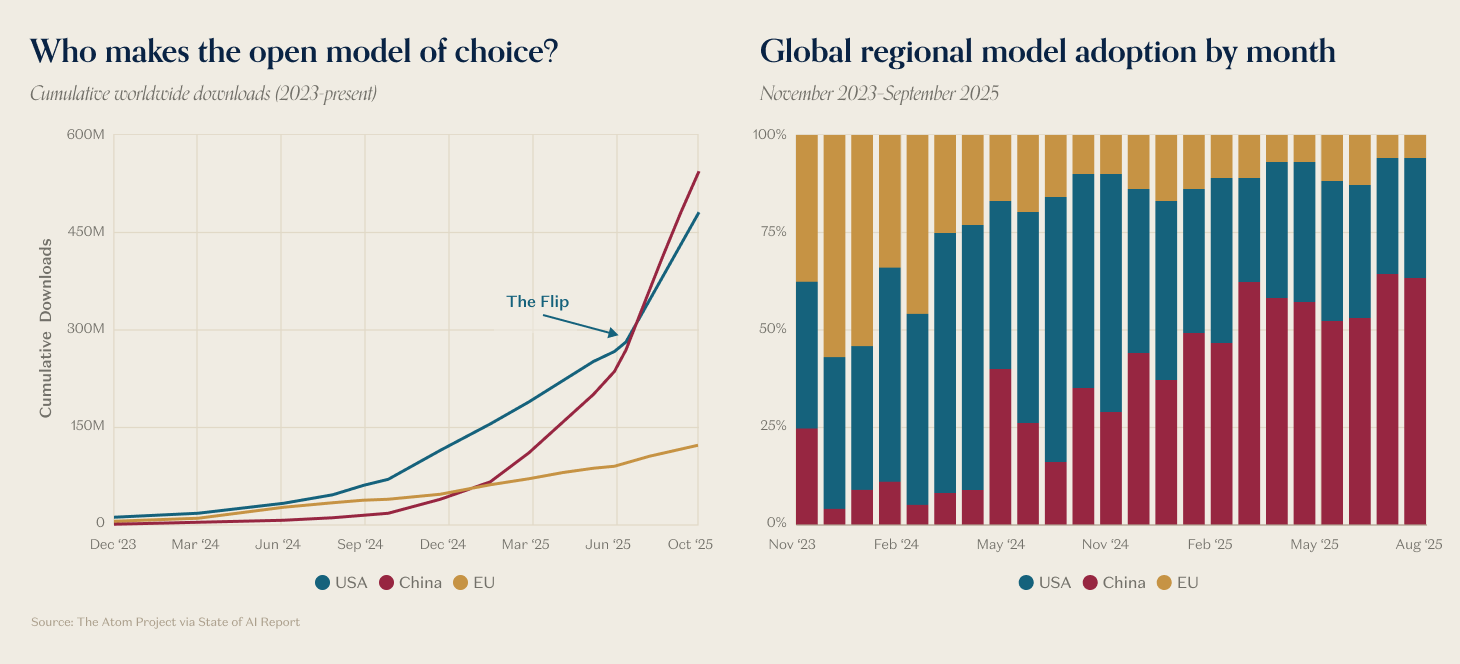
→ Why does it matter? Downloads of Chinese open-source models have now surpassed those of their US-developed competitors. And while OpenAI has released an open-source variant of their models, their SOTA still remains closed.
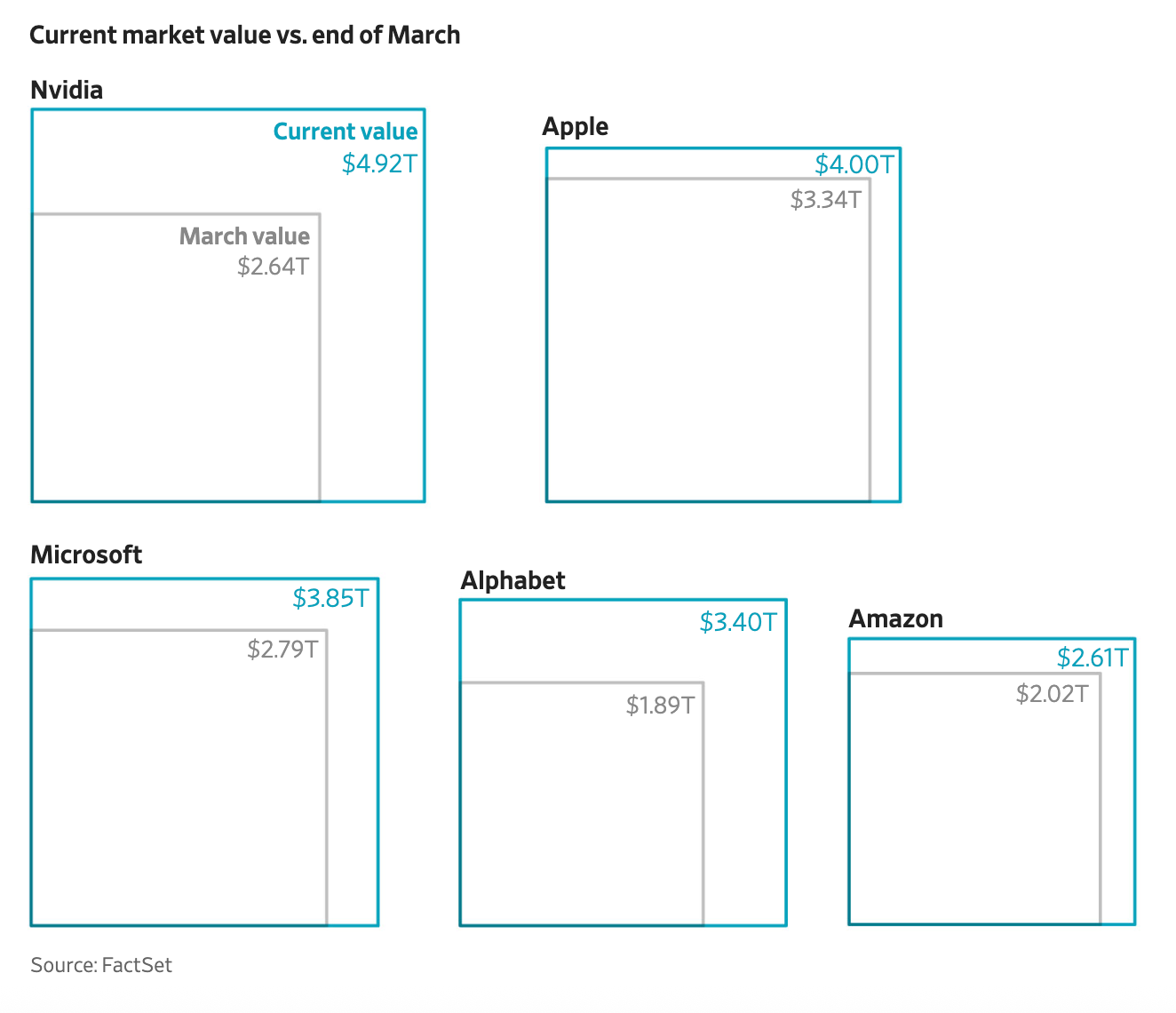
→ Why does it matter? The market has been on a significant upward trend since March. Alphabet alone has added $1T+. Wow!
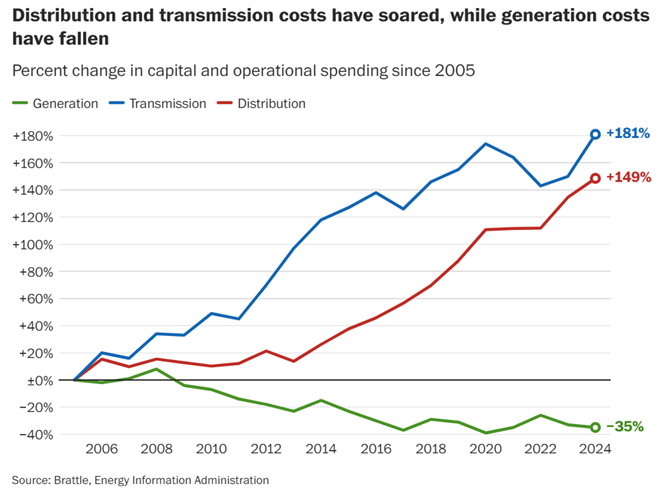
→ Why does it matter? It’s interesting that the cost of energy generation is down 35%, but the costs of transmission and distribution are up 181% and 149%, respectively.
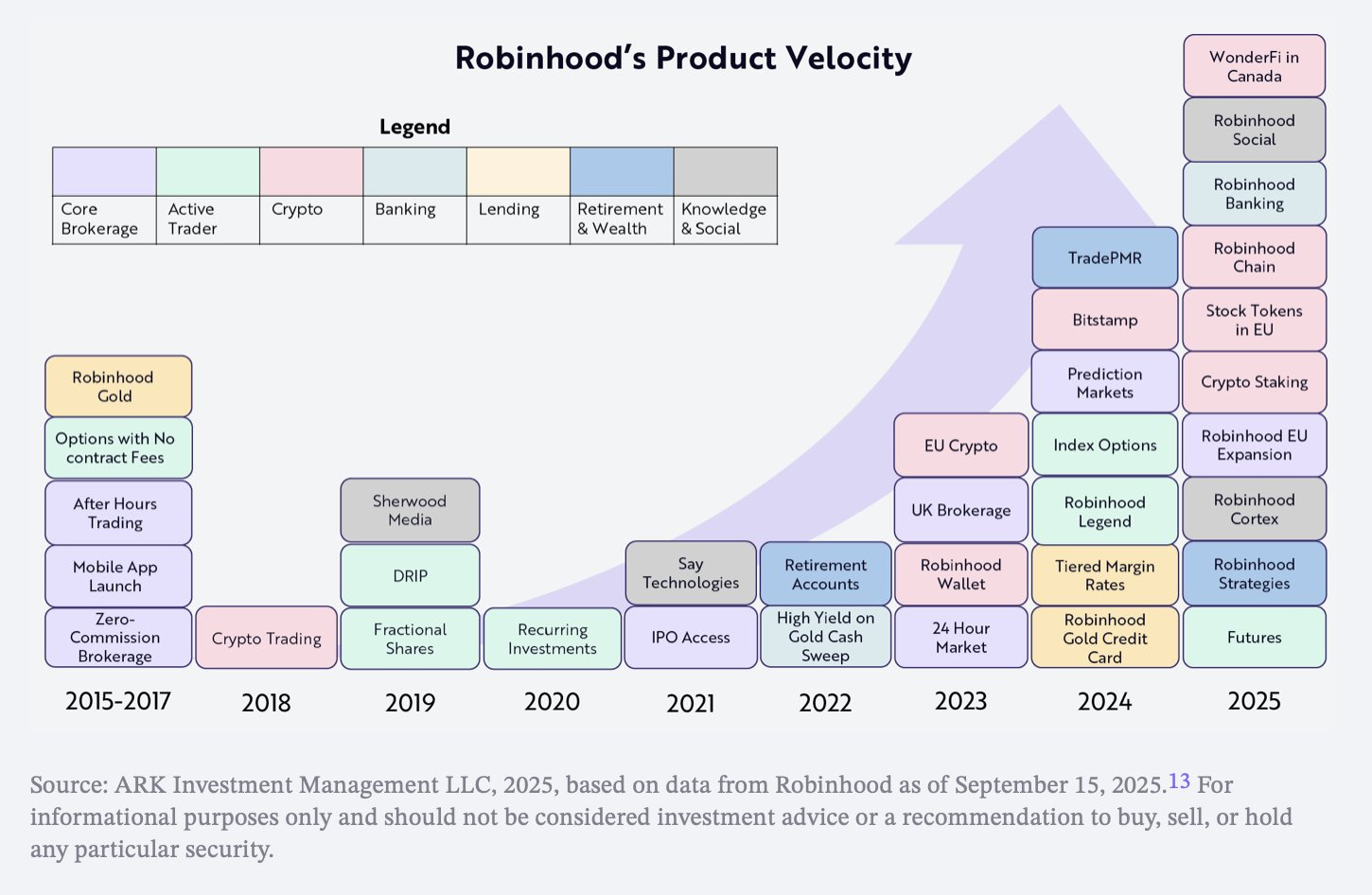
→ Why does it matter? The bull case for Robinhood is that each generation gets its own Charles Schwab, and Robinhood is it for Millennials and Gen Z. This chart is clear evidence of all the new products and services they’ve launched. The question is: will you trust Robinhood with your long-term financial wellness? Will they accrue that critically important “trust” factor to their brand?
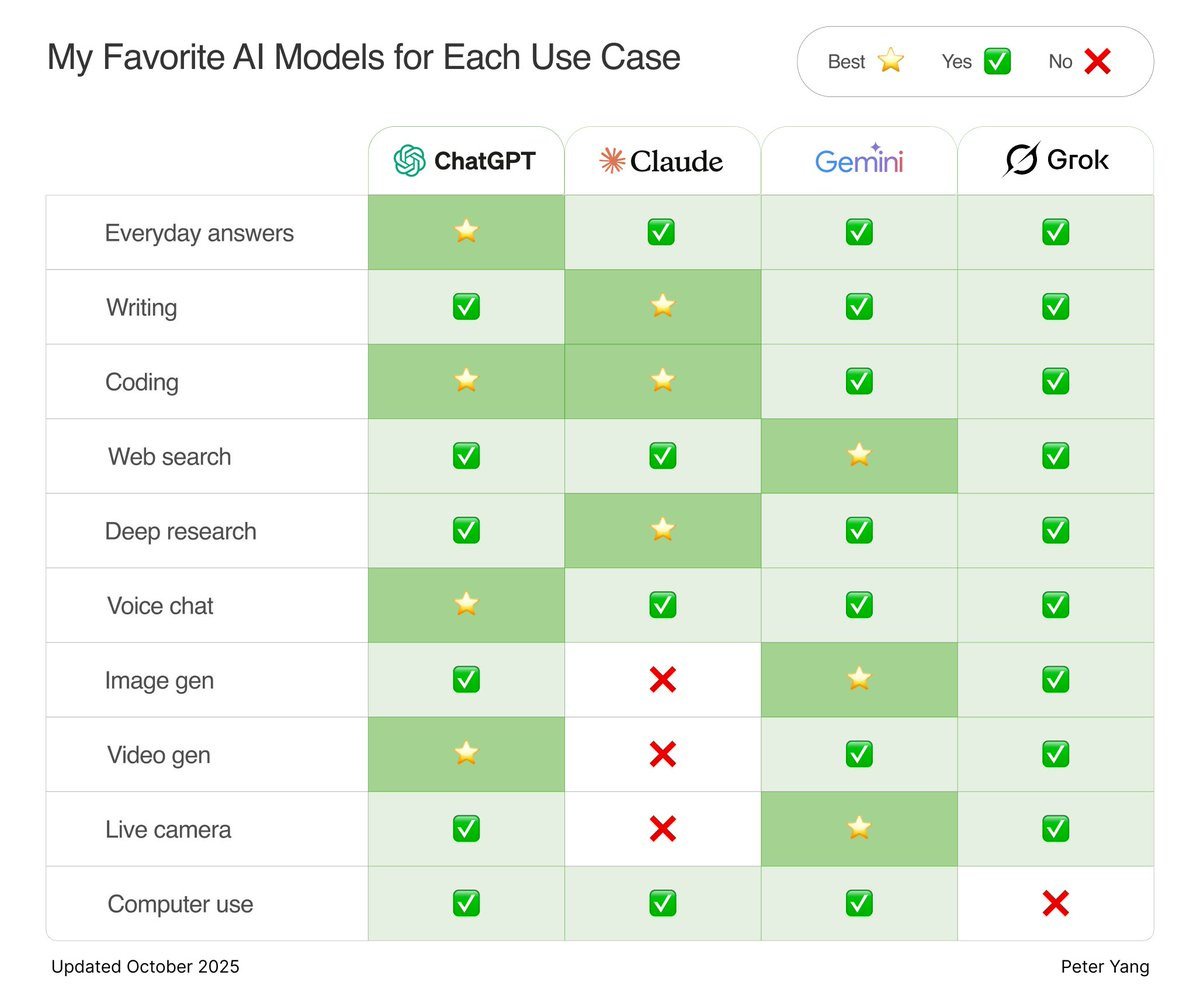
→ Why does it matter? Pretty neat chart here from Peter Yang on which LLMs to use for specific use cases.

Tweets that stopped my scroll:

→ Why does it matter? Due to the cost of computing and GPUs, it now costs more to mine a Bitcoin than Bitcoin is actually worth. For those wondering, this has happened before. More details in the tweet.

→ Why does it matter? If you’re looking for a log of all the deals OpenAI has announced.

Worth a watch or listen at 1x:
→ Why does it matter? This two-part podcast features a conversation between Sam Altman and Satya Nadella on the relationship between OpenAI & Microsoft. What I enjoyed the most, though, was Part II, where Satya discusses Microsoft’s strategy for winning in the AI era. Totally worth a watch!
→ Why does it matter? This ~10-minute video, produced by Jeff Su, who taught a course internally at Google on productivity, is packed with valuable knowledge. If you’re feeling overwhelmed and want a simple system to help you get organized quickly, take a look.

Quotes & eyewash:
Does the world happen to you, or do you happen to the world?
Most people wait for permission to solve problems. The subtle message they send is “I don’t care enough to solve this on my own. Tell me what to do.” The world happens to them.
High agency people are different. They care. And because they care, they solve problems without being told. They happen to the world.
High agency people act like owners. Owners see a problem and fix it. They don’t wait. They don’t need permission. They don’t think this is someone else’s job. They don’t think this is hard. They don’t think “I can’t do this, I’ve never done it before.” They don’t think this is someone else’s job.
Act like an owner before you are one. That’s how you become one.
→ Why does it matter? If you read week to week, you know how I feel about high agency. This one hits home!
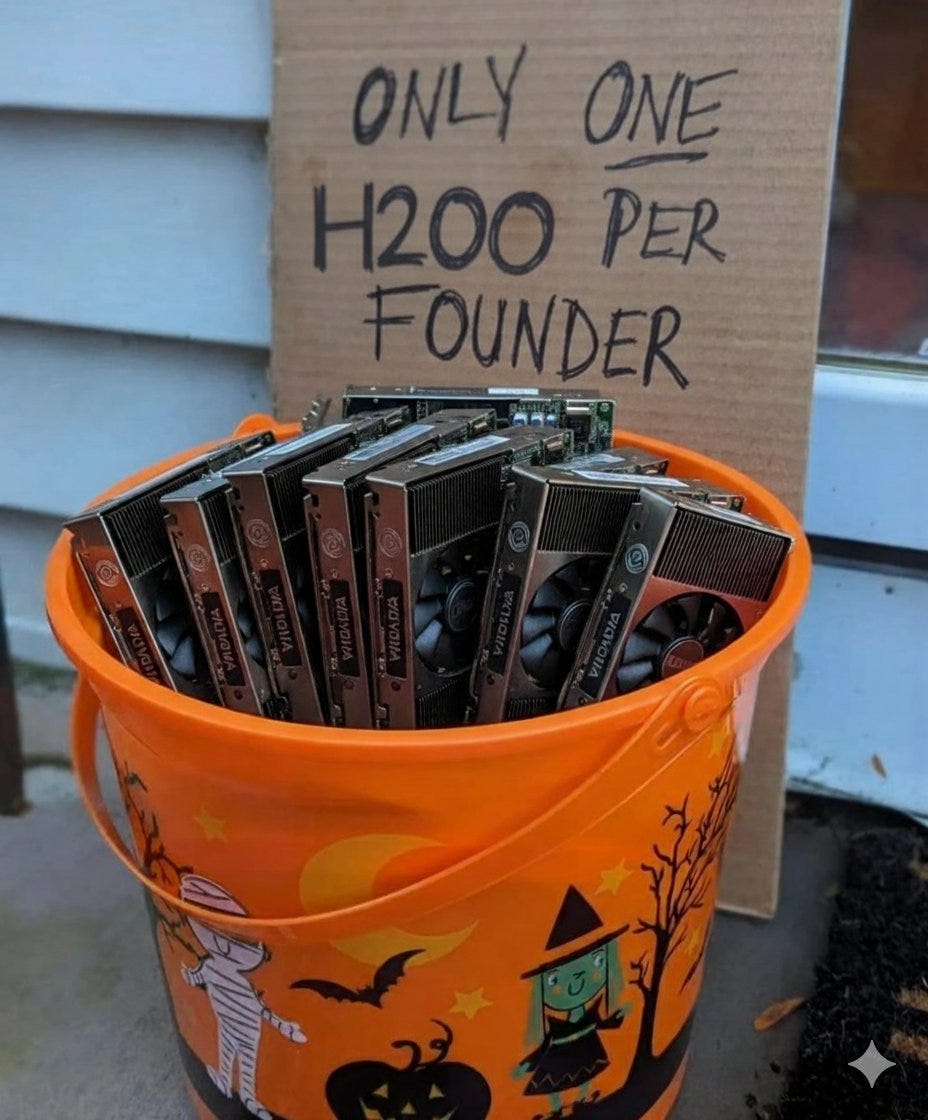
→ Why does it matter? Haha. Only one per founder, please!
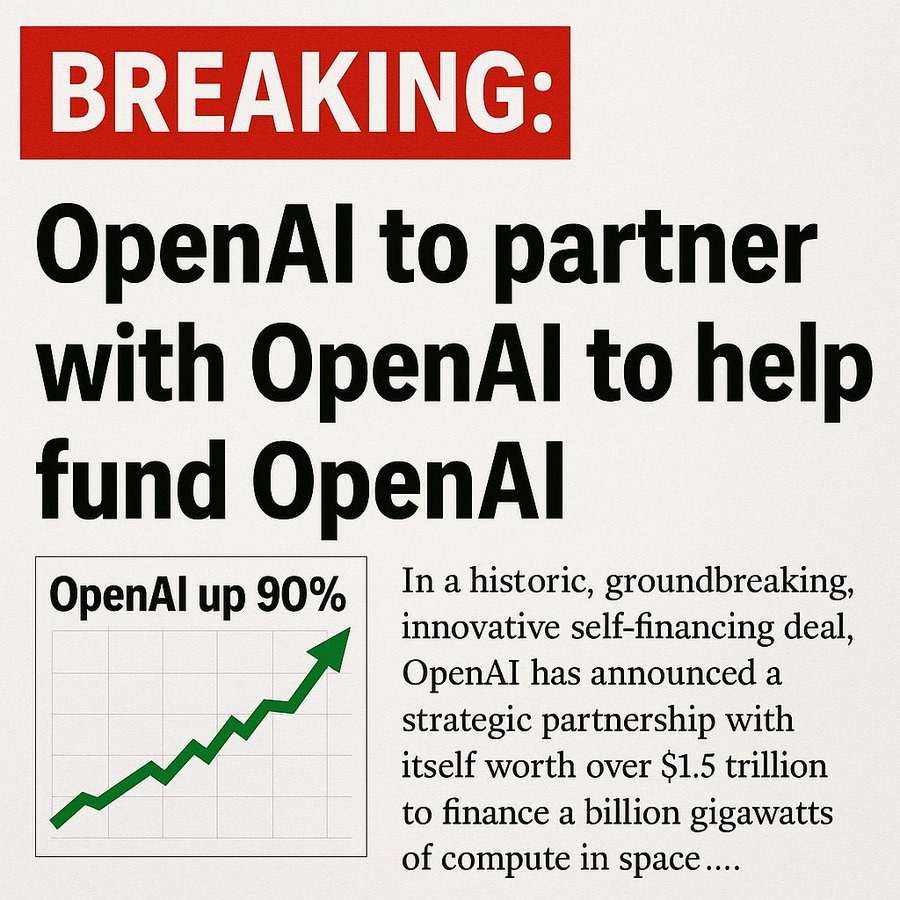
→ Why does it matter? 😂
The mission:
The Wall Street Journal once used “Read Ambitiously” as a slogan, but I took it as a personal challenge. Our mission is to give you a point of view in a noisy, changing world. To unpack big ideas that sharpen your edge and show why they matter. To fit ambition-sized insight into your busy life and channel the zeitgeist into the stories and signals that fuel your next move. Above all, we aim to give you power, the kind that comes from having the words, insight, and legitimacy to lead with confidence. Together, we read to grow, keep learning, and refine our lens to spot the best opportunities. As Jamie Dimon says, “Great leaders are readers.”
Disclaimer: This content is for informational purposes only and does not constitute financial, investment, or legal advice. Readers should do their own research and consult with a qualified professional before making any decisions.