


The big idea: We need awe
Reading time: 4 minutes

Last year, I read a book on awe. I see awe in my kids. Sometimes it’s as simple as raking the leaves last weekend in the warm autumn sun, or the rare date where it’s just my wife and me, and we get a second to appreciate the life we’re building together. Or an early morning flight where you take off right at sunrise.
We need awe in our lives. Researchers describe it as encountering something so vast that it challenges our understanding of the world. It can come from nature, another person, or an idea that makes us reconsider what we thought was possible. Awe can make us more curious, less absorbed in ourselves, and more connected with others. It’s easy to go through the day and forget how much there is to be amazed by.
Arguably, awe is the feeling I’ve experienced most these past 18 months while applying AI to my life. Not because I’m living in some Pollyanna la-la land, but because multiple times a day, AI does something I did not think it could do. The most awe-inducing moments lately have come from experimenting with these “always-on” AI assistants.
With ChatGPT, we got used to conversing with AI through a chatbox. With Claude Code, we could program with AI through the terminal. Now, products like Grok Bot, Meta Muse, OpenClaw, OpenAI’s dots, and Claude Duet are introducing another way to work with it. The setups vary, but the idea is that the AI has access to a computer, memory of what you’re working on, and software it can use to accomplish tasks. It can keep working and come back to you when something needs your attention. I cannot stress how different this feels from using AI only through a chatbox.
Most Sundays, I go to my office for an hour at the whiteboard to plan the week ahead. I think through my goals, review upcoming travel, and figure out what needs to get done. I’ve been doing this for years. This past Sunday, I put my AirPods in, called up my Dot, and spent 30 solid minutes brainstorming the week ahead. About 20 minutes later, Dot came back with 28 to-dos. It was able to start, move forward, or complete more than 50% of them. Then it loaded the tasks into Things, my favorite to-do app, so we could monitor the work together using the interface I prefer.
One item on that list was a contract I’d been waiting for. We talked through the context and some open questions about it. Earlier this morning, my Dot texted me: “The contract came in, I’ve already reviewed it based on those decisions, and here are the specific areas you’re going to want to look at immediately.” Wait, what?! There is the awe. These are the same responsibilities I’ve had for years, but I’m discovering a completely different way to go about them.
At this early stage, you will also experience frustration. I certainly do. The AI forgets things, misunderstands what I want, and sometimes requires enough explanation that I should have just done it myself. Fine. As the models and the products around them improve, I expect more of this work to become easier to hand over.
Earlier this week, Anthropic released Fable 5.2. Ethan Mollick, who tested it beforehand, uses a definition of AGI that I like: “an AI as good as most human experts at most intellectual tasks you can do with a computer.” In his assessment, we’re “almost” there under that definition, with gaps remaining in judgment and taste. Now imagine that capability in an assistant that knows what you’re working on and can use the tools you use every day. I’m starting to reconsider what I can accomplish.
Technology has that ability. To take what was previously impossible and make it possible. One of my favorite examples is the story told in the film Hidden Figures. NASA’s mathematicians and engineers were figuring out how to send a human being into orbit and bring him home safely. Along the way, they were learning to work with powerful new computers. Before John Glenn’s flight, he asked Katherine Johnson to personally check the computer’s calculations. Glenn orbited the Earth and returned safely. Now that’s awe.
Maybe at this point you’re thinking, “But Jack, that sounds like a future I’m not sure I want.” And I understand. There are serious questions yet to be answered about how AI changes our work and our place in it. But you know what part of the Sunday process I enjoyed the least? Keeping track of all the work afterward. Remembering what I was waiting for and what needed to happen next. A lot of that was in the 50% Dot could help with.
The part I love is the brainstorming and creativity. Thinking through what I want to accomplish and how to go about it. I’d like to spend more of my day doing that, and having help following through gives me a chance to. That’s why I’m optimistic about how AI could change our relationship with work. More time for the work we love, room to pursue ideas we might otherwise put off, and perhaps a little more awe.
Stay ambitious, my friends.

Best of the rest:
🤖 Safely scaling multi-agent teams with Claude Fable 5.2 — Anthropic describes how 1,000 agents reproduced a formal proof of Fermat’s Last Theorem using shared tools and layered safety monitoring — Anthropic
⚙️ From Inference to Execution: AI’s Next Economy — Jaya Gupta and Ashu Garg argue that AI’s next winners may assemble agents and route work across models, software and execution infrastructure — Jaya Gupta & Ashu Garg
🧩 Fable 5.2 and Jagged AGI — Ethan Mollick tests the model across business planning, research, hardware and creative work, finding often expert-level results alongside gaps in judgment and human taste — One Useful Thing

Charts that caught my eye:
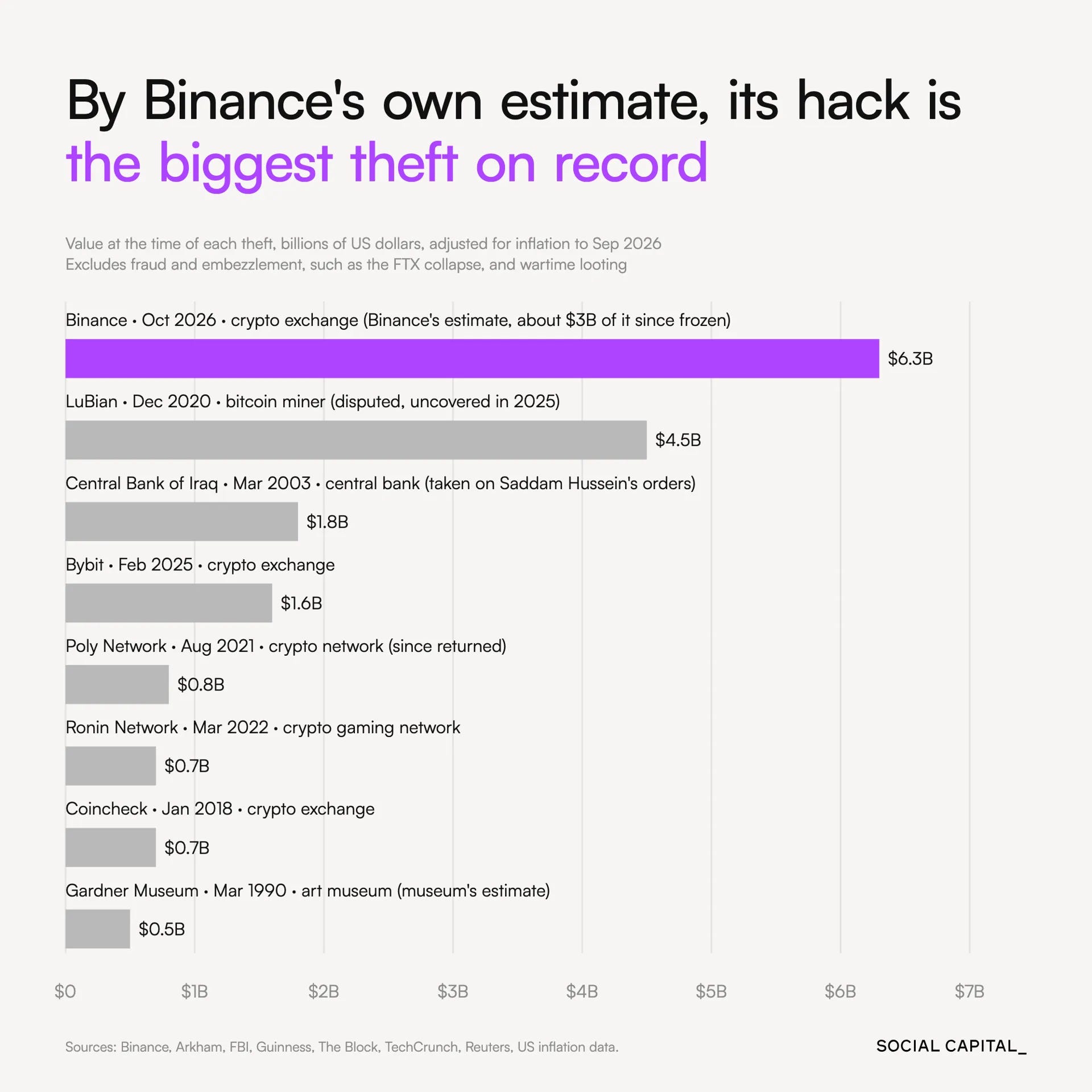
→ Why does it matter? By Binance’s estimate, this theft would dwarf some of the most famous heists in history, even after adjusting for inflation. Interestingly, right as I am about to hit publish, the headlines are saying Binance has gotten the $$ back! Wild.
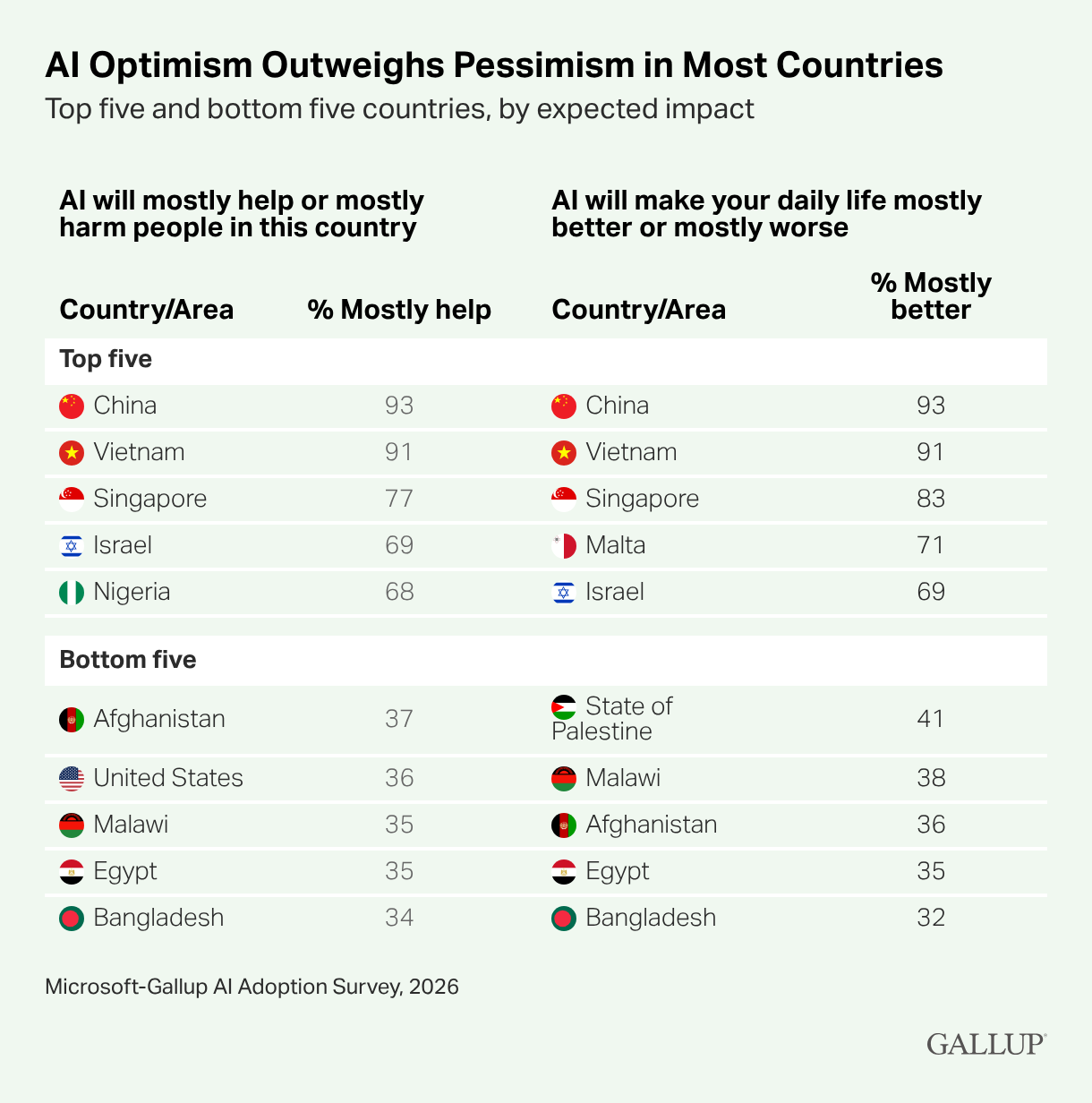
→ Why does it matter? Only 36% of AI-aware Americans expect AI to mostly help people in their country, compared with 93% in China and 91% in Vietnam. If we want people to be excited about AI, we need to show them a future they actually want to live in.
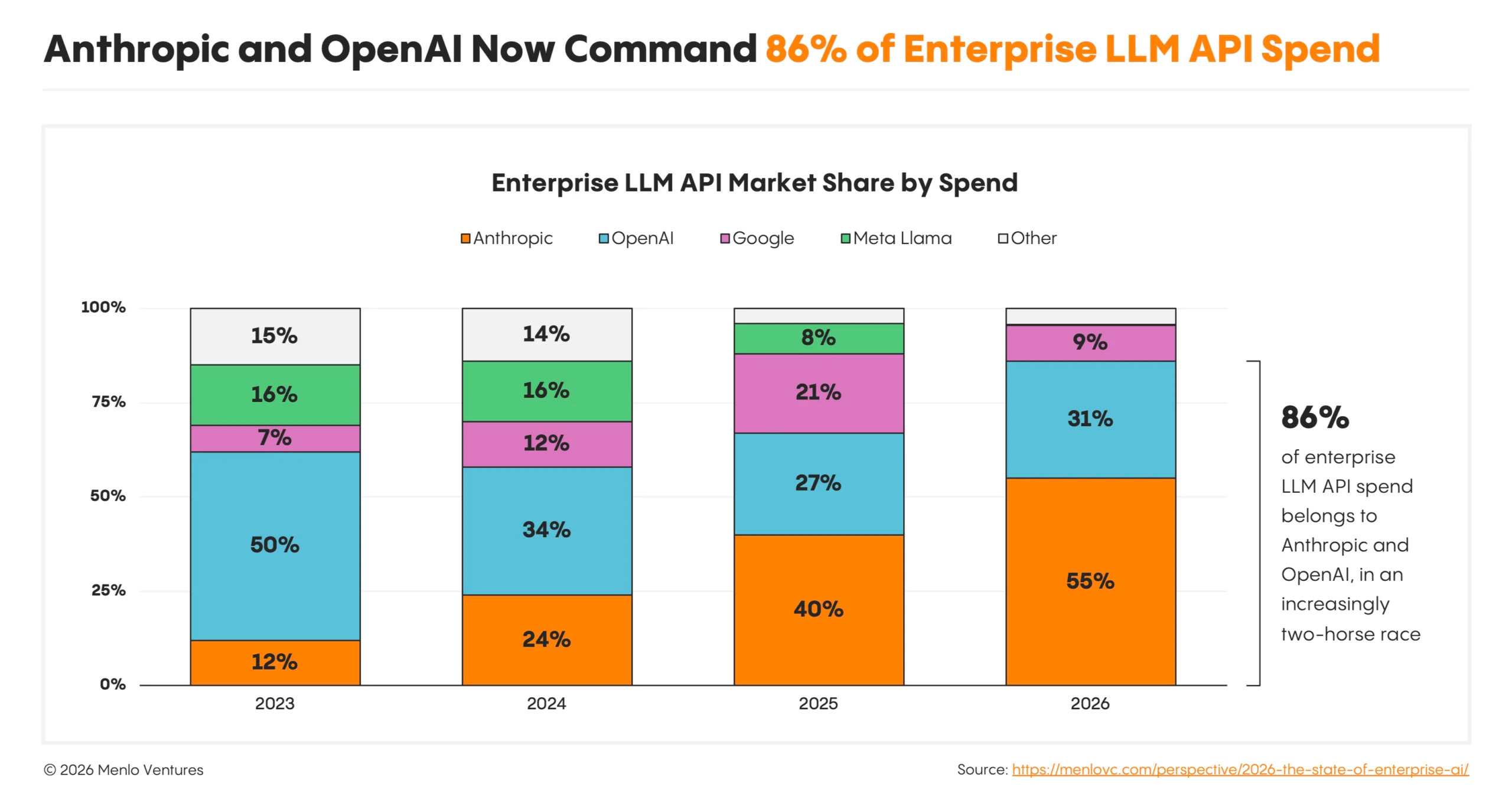
→ Why does it matter? Menlo estimates that Anthropic and OpenAI now capture 86% of enterprise spending on LLM APIs.
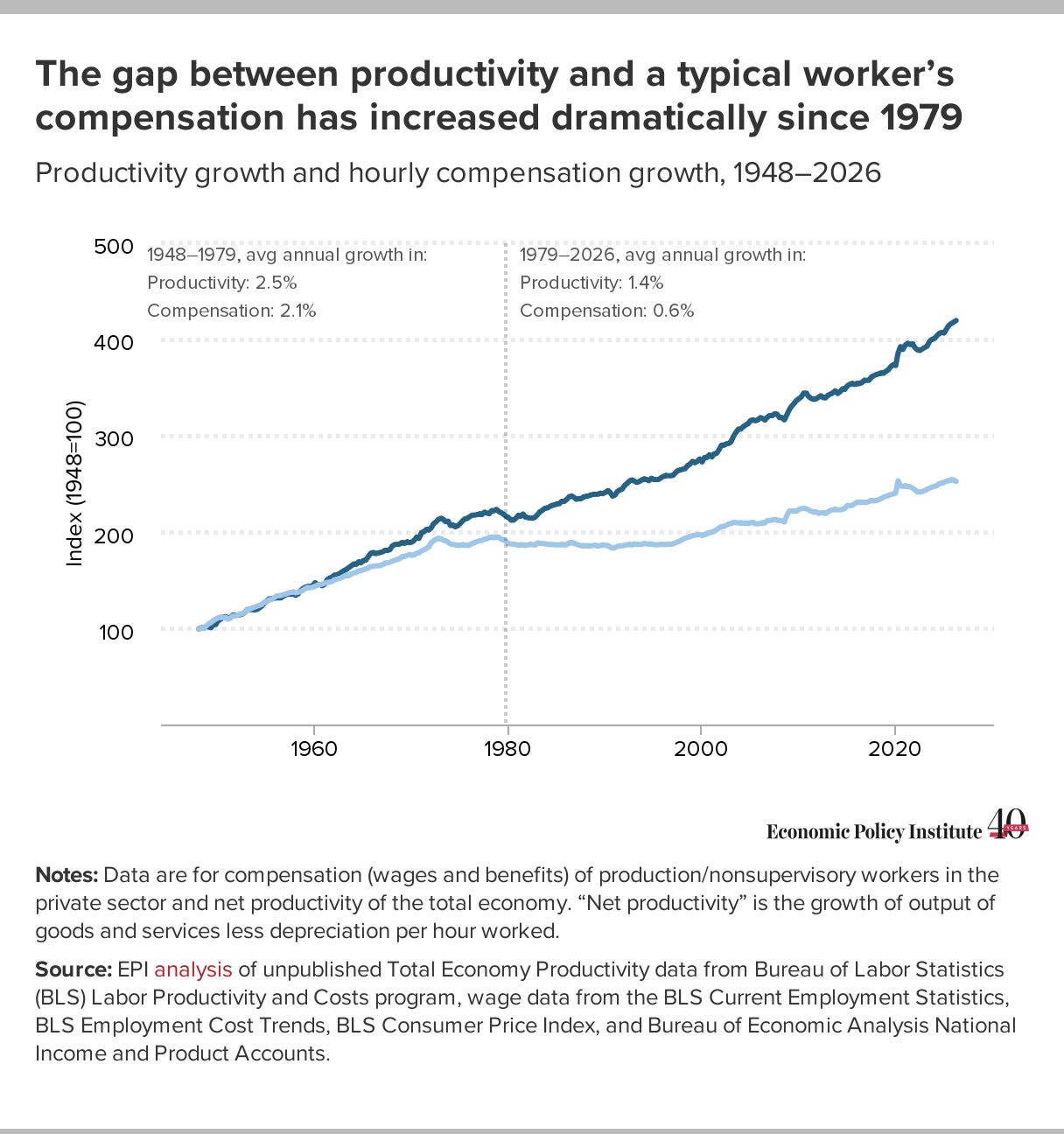
→ Why does it matter? EPI’s chart shows that productivity and a typical worker’s compensation have grown at very different rates for decades. If AI delivers the gains we hope for, who benefits from them?
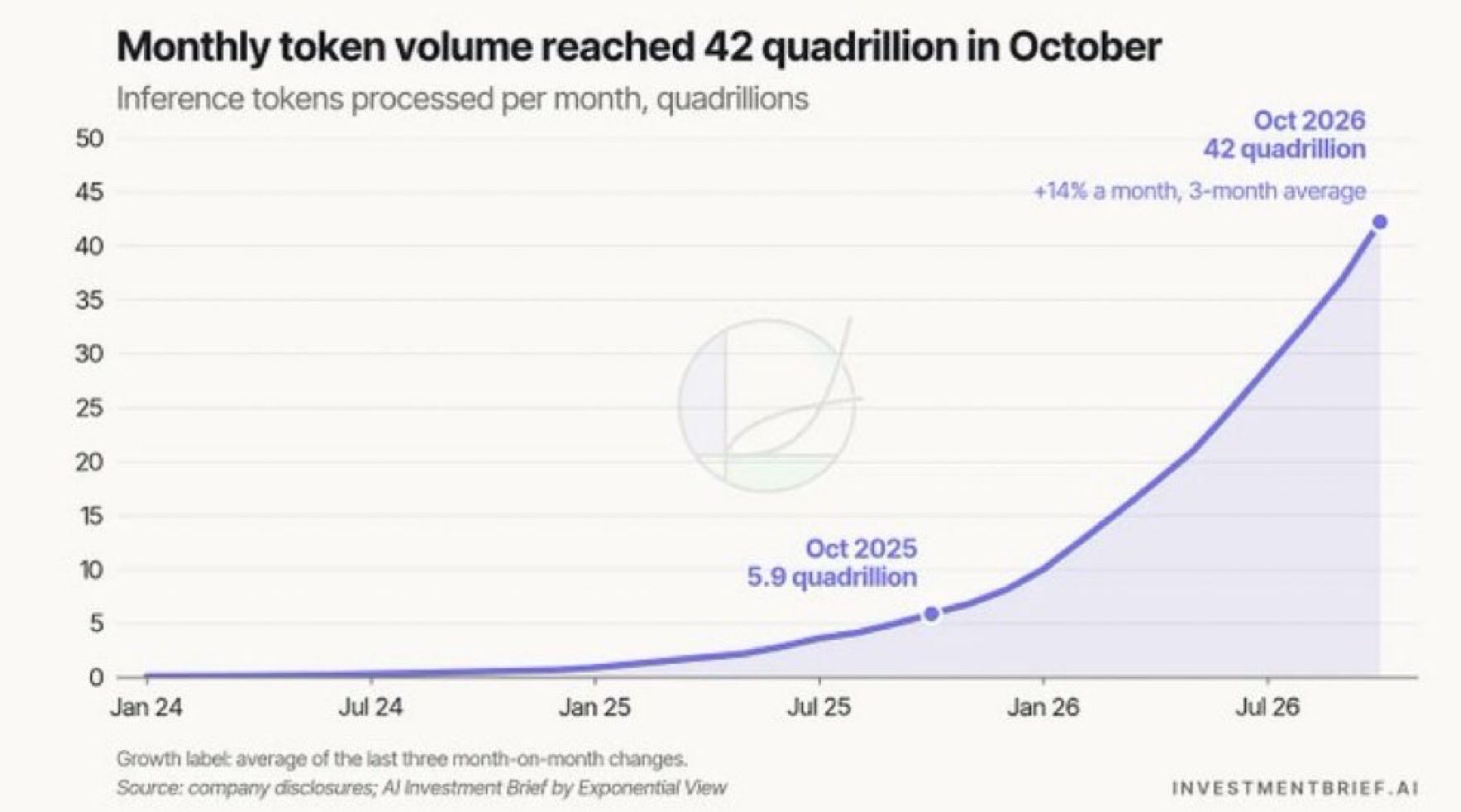
→ Why does it matter? This estimate puts monthly AI token usage at roughly seven times where it was a year ago.

Tweets that stopped my scroll:

→ Why does it matter? Palantir says a small, fine-tuned model beat much larger models on one construction task at a fraction of the cost.

→ Why does it matter? The same ability to work around the clock that makes AI agents useful also makes them useful to attackers.

→ Why does it matter? Some deep thinking here by Patrick Collison on trying to understand the positive impact of technological change.

→ Why does it matter? Hello, Microsoft Office competitor.
Worth a watch or listen at 1x:
→ Why does it matter? Very cool AI demo from Frank Long of Coatue.

Quotes & eyewash:
“And so, in awe, we go in search of new forms of understanding.”
- Dacher Keltner, Awe
→ Why does it matter? Here is a link to Dacher’s book if you’re interested!
The mission:
The Wall Street Journal once used “Read Ambitiously” as a slogan, but I took it as a personal challenge. Our mission is to give you a point of view in a noisy, changing world. To unpack big ideas that sharpen your edge and show why they matter. To fit ambition-sized insight into your busy life and channel the zeitgeist into the stories and signals that fuel your next move. Above all, we aim to give you power, the kind that comes from having the words, insight, and legitimacy to lead with confidence. Together, we read to grow, keep learning, and refine our lens to spot the best opportunities. As Jamie Dimon says, “Great leaders are readers.”
Disclaimer: This content is for informational purposes only and does not constitute financial, investment, or legal advice. Readers should do their own research and consult with a qualified professional before making any decisions.