

Programming Update: Reading Ambitiously is taking a short holiday break and will return on January 10, 2025. Wishing all our readers a joyful holiday season and a bright start to the new year! 🎉The Wall Street Journal once used ‘Read Ambitiously’ as a slogan, but it became a challenge I took to heart. If that old slogan still speaks to you, this weekly curated newsletter is for you. Every week, I will summarize the most important and impactful headlines across technology, finance, AI, and enterprise SaaS. Together, we can read with an intent to grow, always be learning, and refine our lens to spot the best opportunities. As Jamie Dimon says, “Great leaders are readers.”
Thanks to GenerativeAI and our friends at GoogleNotebookLM, you can enjoy this week’s Reading Ambitiously as a podcast entirely generated by AI. If you haven’t experienced this technology yet, definitely give this a try!

In the news:
His Startup Is Now Worth $62 Billion. It Gave Away Its First Product Free. (WSJ)

→ Why does it matter? This week, Databricks raised $10 billion in a Series J investment round at a $62 billion valuation, the largest venture capital raise of 2024 and one of the largest on record.
“I saw this Excel sheet where they keep a tally of all the people that want to invest. It was $19 billion of interest, and I almost fell off the chair” - Ali Ghodsi (CEO, DataBricks)
There are many angles to this story:
Databricks is Snowflake’s #1 competitor. Its $62B valuation exceeds Snowflake’s current $52B market cap.
DataBricks talked about in the same sentence as disruptive new AI companies like Anthropic and OpenAI
Databricks raised $10 Billion: Is Series J The New IPO?
Let’s go with #3. The $62B valuation reflects a multiple of approximately 20x their forward revenue forecast, based on close to $3 billion in annual recurring revenue. For context, that valuation places Databricks above most publicly traded cloud software companies based on recent market comps.
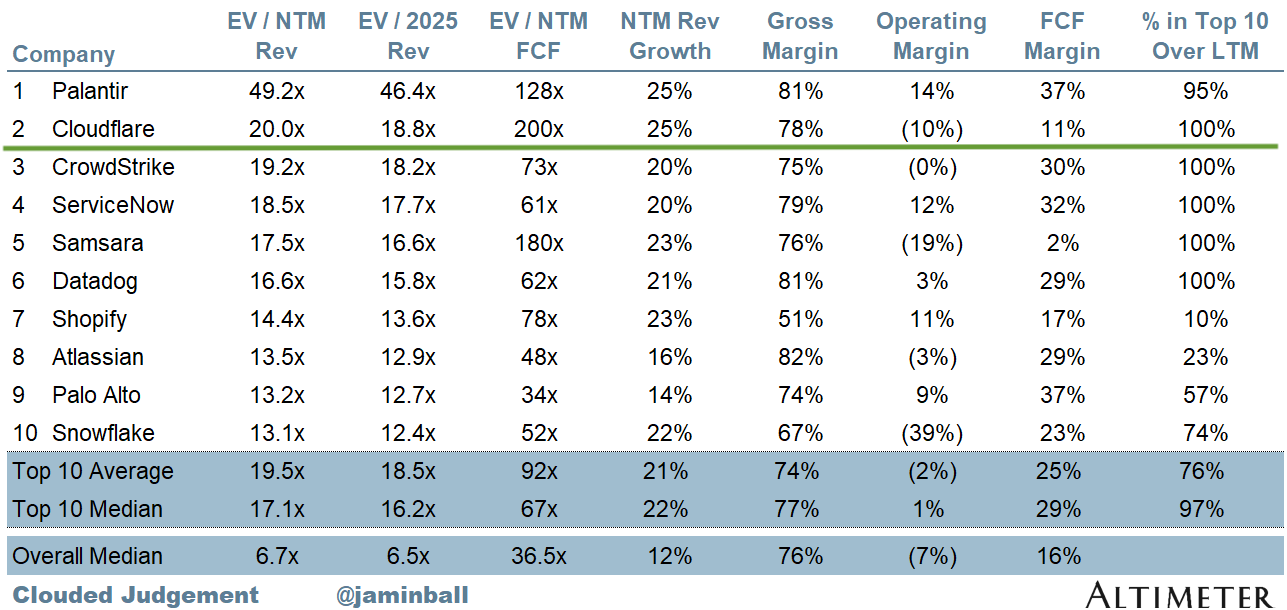
Companies like Databricks, Stripe, and SpaceX are staying private longer. They can afford to with $10B in private capital available for high-growth companies. We’ve discussed this trend in Reading Ambitiously before—most recently in the podcast featuring Marc Rowan (CEO, Apollo), who highlighted the growing convergence of public and private markets.
It’s been called the “50, 30, 20” portfolio. Instead of the traditional 60% stocks and 40% bonds allocation, the new model shifts to 50% stocks, 30% bonds, and 20% alternative investments. According to BCG, alternatives will account for 22% of global assets under management and 55% of industry revenues by 2027.
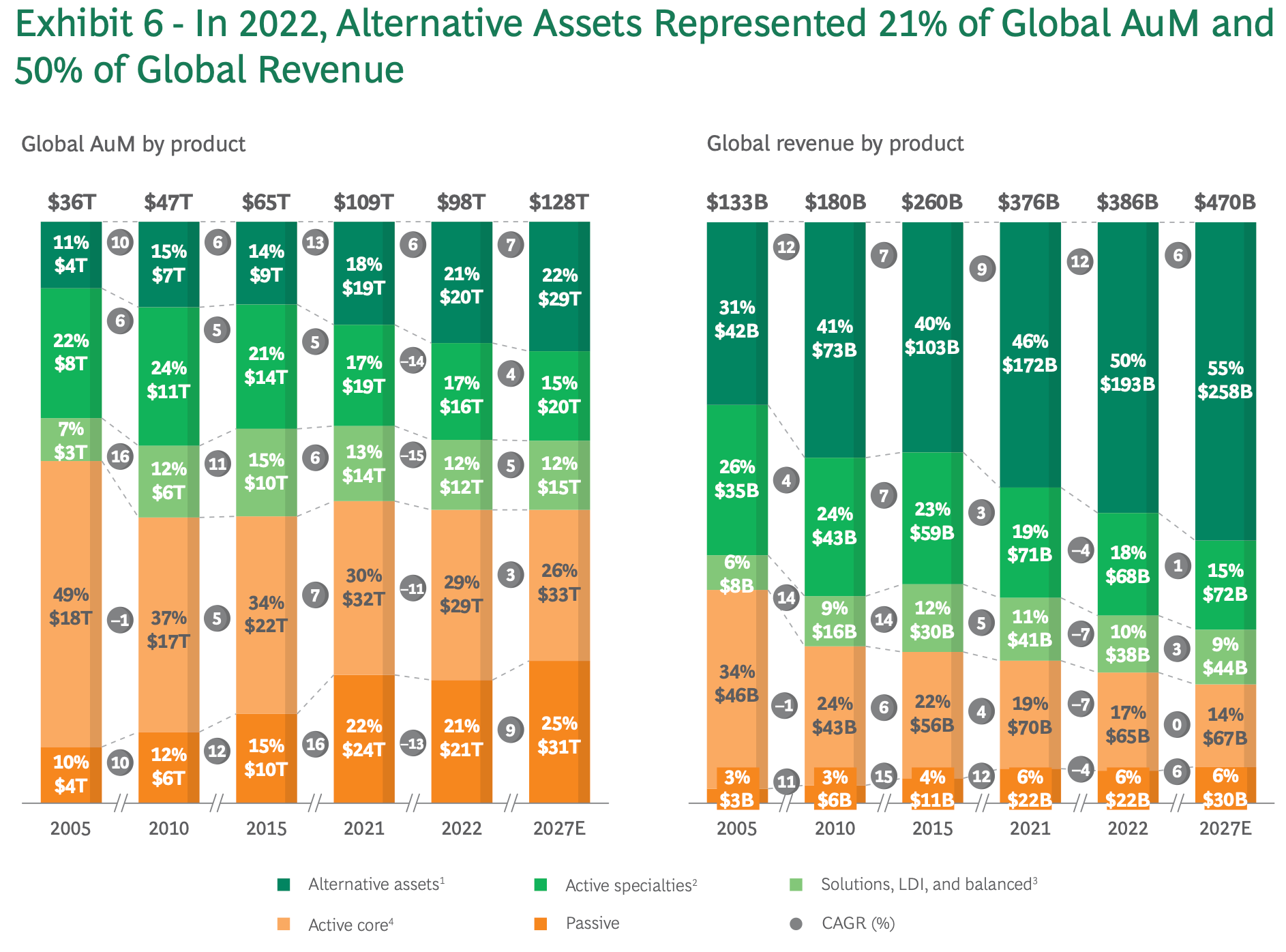
The challenge? Access has historically been limited for individual investors and financial advisors. That’s starting to change. Want to own a piece of Databricks? Secondary markets like EquityZen now make it possible.
The private markets are rewriting the rules for how capital is raised and invested. For Ambitious Readers, understanding this shift is critical—not just as a potential fundraising strategy but also as a signal of how portfolios and market dynamics are evolving. Whether you're raising capital or deploying it, the boundaries between public and private are becoming harder to define.

Best of the rest:
🎥 State-of-the-Art Video and Image Generation with Veo 2 and Imagen 3 - Google unveils new versions of Veo and Imagen, along with Whisk, an experimental tool for cutting-edge image generation. - Google Blog
📞 AI Effect: OpenAI Makes ChatGPT Available for Phone Calls and Texts - OpenAI introduces 1-800-CHATGPT, enabling users to engage with its viral chatbot through phone calls and text messages. - CNBC
🎁 Apps Unwrapped: The Best AI Apps of 2024 The a16z team shares their favorite AI products from a launch-packed year, featuring everything from songwriting tools to automation hacks. - a16z

Charts that caught my eye:
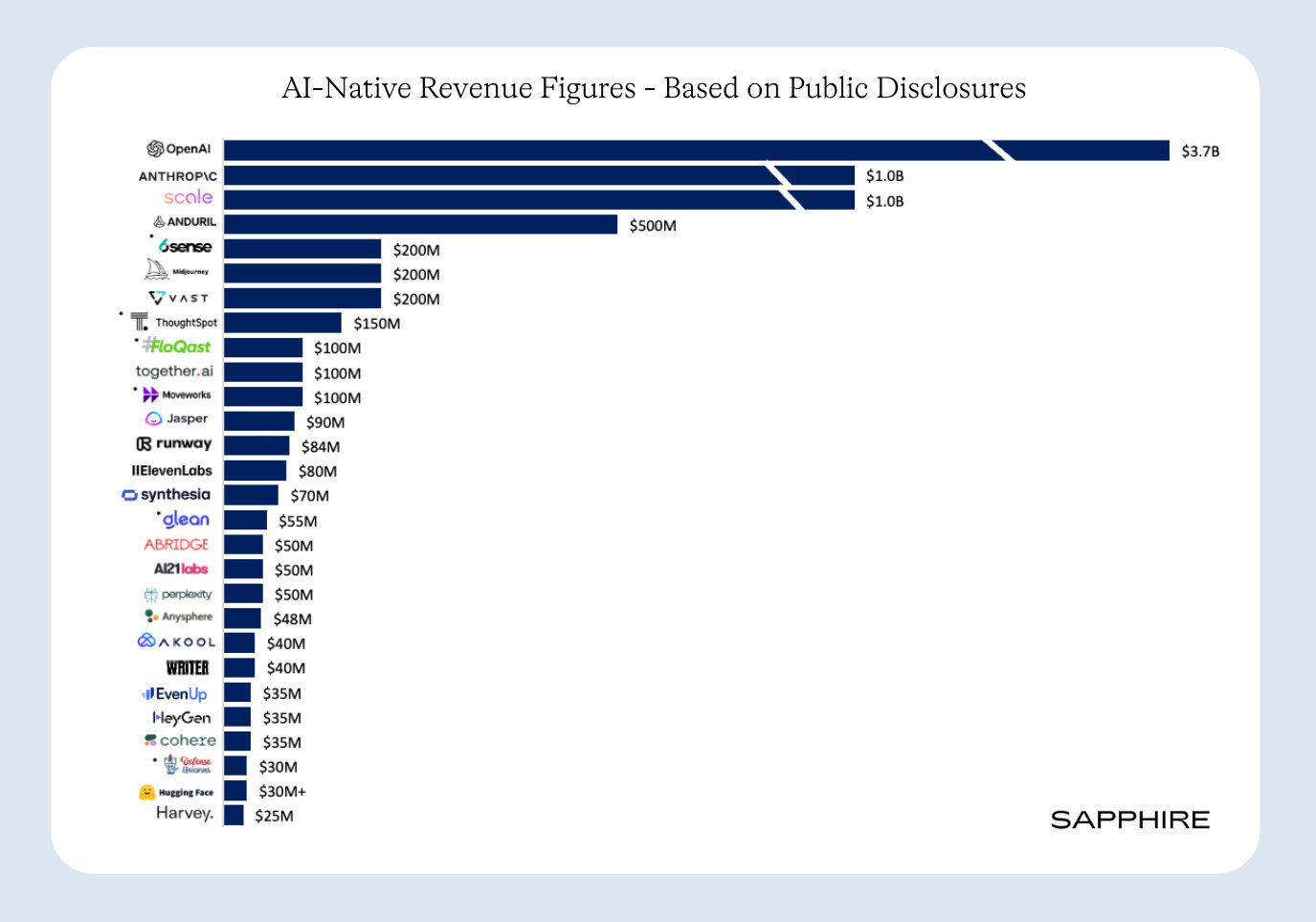
→ Why does it matter? 🚀 Capital is flooding into AI-native companies like OpenAI and Anthropic. AI dominated 2024, snagging 46% of all US venture financing by dollar value. But here’s the real question: How much revenue are these companies actually generating?
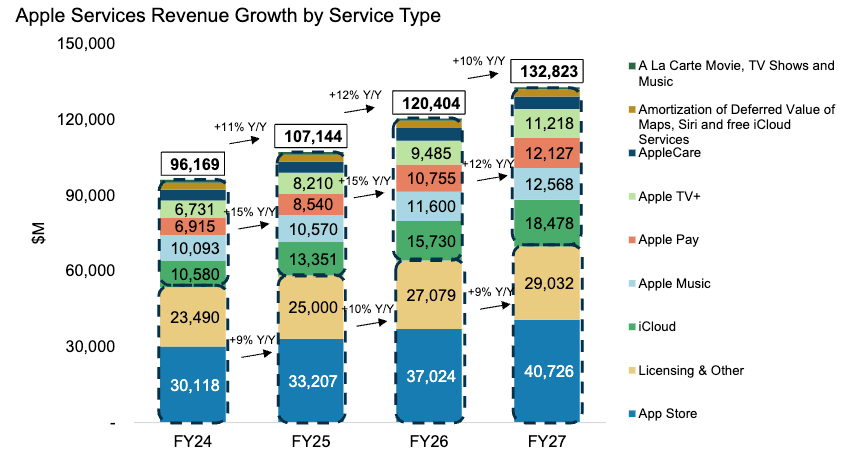
→ Why does it matter? Apple has nailed building a thriving services business around its hardware, with strong growth. The downside: The $40B App Store is facing regulatory heat. iPhone revenue? Flat for three years. Meanwhile, Apple Car projects seem to fizzle out more than we hear about exciting new launches. As a die-hard Apple fanboy, I can’t help but wonder: What’s next for Apple?
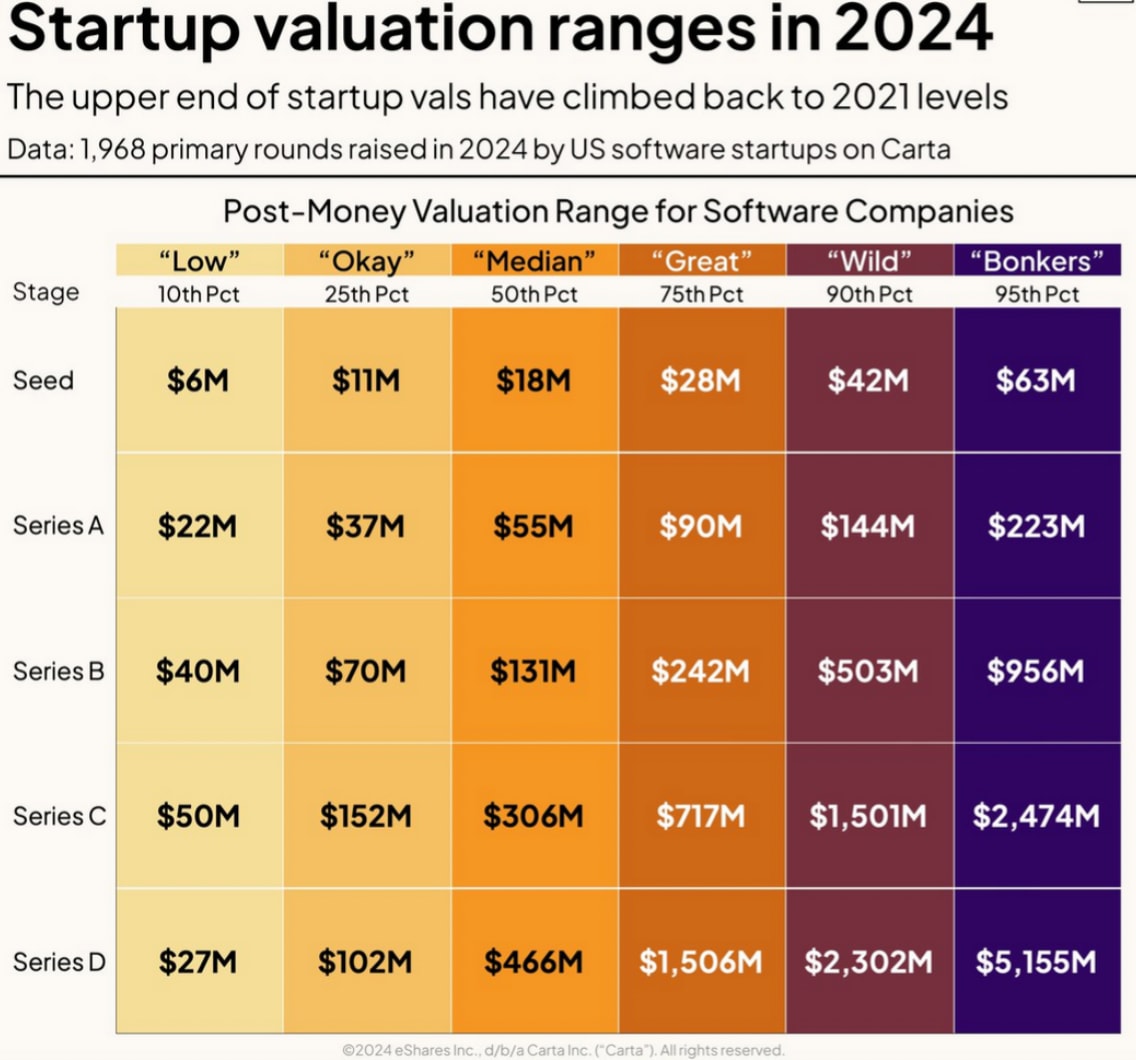
→ Why does it matter? Thank you to the Carta marketing team for calling the 95th Pct “Bonkers.”

Tweets that stopped my scroll:
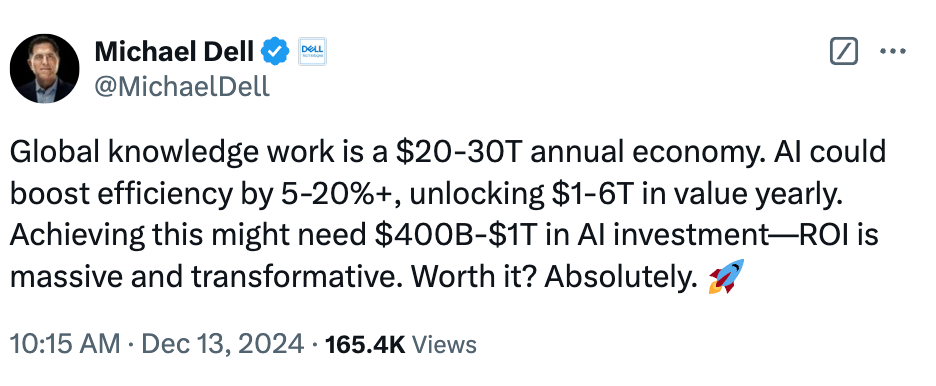
→ Why does it matter? Enterprise software has always been about building tools for the job. But what happens when the tools do the job? Enter: Service as Software—a generational opportunity!

→ Why does it matter? Disruptive tech brings disruptive business models. The big question: How do we price AI agents in a Service as Software world?

→ Why does it matter? Google's new Veo 2 is here—and the example videos are mind-bogglingly good. Entirely AI-generated, it's a strong competitor to OpenAI's Sora. Veo 2 can create videos up to 4K resolution and several minutes long, surpassing Sora's capabilities.

Worth a watch or listen at 1x:
→ Why does it matter? Matt MacInnis, COO of Rippling, shares excellent perspectives on execution excellence. This was one of First Round Capital's most popular podcasts of 2024. In the episode, MacInnis discusses combating organizational entropy and maintaining high standards as companies scale.
→ Why does it matter? Marc Benioff, the GOAT of enterprise software, has fully embraced the AI paradigm shift with Agentforce. In his recent Agentforce 2.0 keynote, he detailed how Salesforce is integrating AI agents to enhance efficiency and customer success across service, sales, marketing, and commerce. This strategic move positions Salesforce, the world's largest cloud software application company, at the forefront of AI-driven digital labor.

Quotes & eyewash:
ChatGPT's new Santa Mode puts some holiday spirit in AI (TechRadar)
For all the fans of “It’s A Wonderful Life,” my all-time favorite Christmas movie, and Jimmy Stewart… Read on.

Just months after winning his 1941 Academy Award for best actor in “The Philadelphia Story,” Jimmy Stewart, one of the best-known actors of the day, left Hollywood and joined the US Army. He was the first big-name movie star to enlist in World War II.
An accomplished private pilot, the 33-year-old Hollywood icon became a US Army Air Force aviator, earning his 2nd Lieutenant commission in early 1942. With his celebrity status and huge popularity with the American public, he was assigned to starring in recruiting films, attending rallies, and training younger pilots.
Stewart, however, wasn’t satisfied. He wanted to fly combat missions in Europe, not spend time in a stateside training command. By 1944, frustrated and feeling the war was passing him by, he asked his commanding officer to transfer him to a unit deploying to Europe. His request was reluctantly granted.
Stewart, now a Captain, was sent to England, where he spent the next 18 months flying B-24 Liberator bombers over Germany. Throughout his time overseas, the US Army Air Corps' top brass had tried to keep the popular movie star from flying over enemy territory. But Stewart would hear nothing of it. Determined to lead by example, he bucked the system, assigning himself to every combat mission he could. By the end of the war he was one of the most respected and decorated pilots in his unit. But his wartime service came at a high personal price.
In the final months of WWII he was grounded for being “flak happy,” today called Post Traumatic Stress Disorder (PTSD).
When he returned to the US in August 1945, Stewart was a changed man. He had lost so much weight that he looked sickly. He rarely slept, and when he did he had nightmares of planes exploding and men falling through the air screaming (in one mission alone his unit had lost 13 planes and 130 men, most of whom he knew personally).
He was depressed, couldn’t focus, and refused to talk to anyone about his war experiences. His acting career was all but over.
As one of Stewart's biographers put it, "Every decision he made [during the war] was going to preserve life or cost lives. He took back to Hollywood all the stress that he had built up.”
In 1946 he got his break. He took the role of George Bailey, the suicidal father in “It’s a Wonderful Life.” The rest is history.
Actors and crew of the set realized that in many of the disturbing scenes of George Bailey unraveling in front of his family, Stewart wasn’t acting. His PTSD was being captured on film for potentially millions to see.
But despite Stewart's inner turmoil, making the movie was therapeutic for the combat veteran. He would go on to become one of the most accomplished and loved actors in American history.
When asked in 1941 why he wanted to leave his acting career to fly combat missions over Nazi Germany, he said, "This country's conscience is bigger than all the studios in Hollywood put together, and the time will come when we'll have to fight.” This weekend, as many of us watch the classic Christmas film, “It’s A Wonderful Life,” it’s also a fitting time to remember the sacrifices of Jimmy Stewart and all the men who gave up so much to serve their country during wartime. We will always remember you!
Postscript:
While fighting in Europe, Stewart's Oscar statue was proudly displayed in his father’s Pennsylvania hardware store. Throughout his life, the beloved actor always said his father, a World War I veteran, was the person who had made the biggest impact on him.
Jimmy Stewart was awarded the Presidential Medal of Freedom in 1985 and died in 1997 at the age of 89.
@Judianna. “For all the fans of ‘It’s A Wonderful Life’ and Jimmy Stewart . . .”. X, 2024. https://x.com/Judianna/status/1728512386787622994.