

Enjoy this week’s Reading Ambitiously as a podcast entirely generated by AI.

The big idea: do more with less AI

“Do more with less” has long been corporate code for cutbacks—shrink the budget, delay that hire, and squeeze out a bit more efficiency.
But in 2025, that phrase is being rewritten.
The most forward-looking companies aren’t just doing more with less.
They’re doing more with less AI.
And that subtle reframing is the big idea behind a growing cultural shift inside organizations.
In the late 20th century, W. Edwards Deming and Andy Grove helped bring the principles of lean manufacturing and Kaizen thinking into the heart of Western business. They didn’t just push for efficiency—they reshaped how companies thought about quality, feedback loops, and continuous improvement. Systems, not slogans, became the driver of performance.
Today, leaders like Tobi Lütke (Shopify) and Bret Taylor (Sierra, OpenAI) are doing something similar. But their raw material isn’t physical goods—it’s intelligence. And their lever isn’t the assembly line—it’s AI.
They’re not treating AI as a gadget or side project. They’re embedding it into the culture—as a new kind of operating system for how companies think, move, and scale.
Why “Do More with Less AI” resonates now
The zero-interest-rate era has ended—and with it, the “grow at all costs” mindset. Software budgets are under scrutiny. Capital has a cost again. Guidance is cautious.
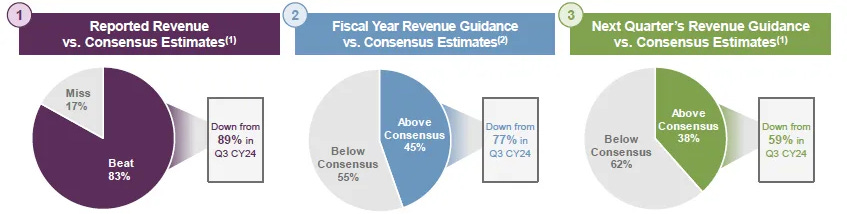
In this new environment, leaders need to show discipline. But they also need to stay ambitious. That’s a hard balance to strike.
This is where AI enters—not just as a productivity booster, but as a new language for operational clarity.
Tobi Lütke captured it in a now-leaked company-wide memo:
“Reflexive AI usage is now a baseline expectation.”
No glossy launch. No pilot program. Just a line in the sand: AI is not a feature, it’s a requirement.
Flexport CEO Ryan Petersen joked online that he wished Grok could rewrite the memo so he could send it to his own team.
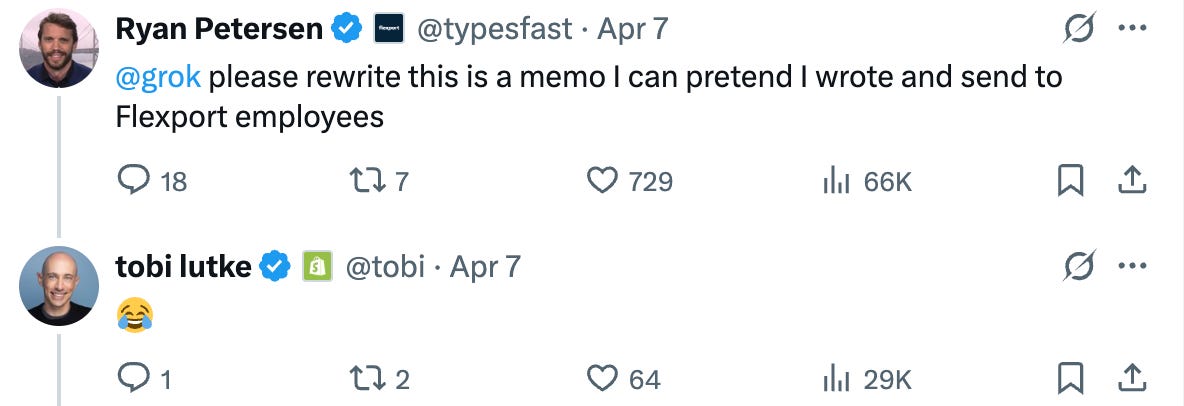
It was funny—but it hit a nerve. Leaders are looking for the words to set a new tone: more output, fewer resources, no backpedaling.
The real power of doing more with less AI
Constraints, done right, don’t weaken an organization. They sharpen it.
Just look at the rise of DeepSeek, the open-source AI model out of China. Some say they “cheated” their way to OpenAI-level performance by cutting corners. But what they really did was engineer around capital and compute constraints. They delivered world-class performance under resource pressure—and in doing so, proved a point.
AI isn’t just valuable when budgets are big. It’s most powerful when they’re not.
In a “Do More with Less AI” world, headcount ≠ influence
For years, team size was a proxy for status. Bigger orgs. Bigger titles. Bigger budgets.
That era is ending.
Today’s highest-leverage leaders set a different default: Prove you can’t use AI before you ask for more resources.
Bret Taylor, former Salesforce co-CEO and now OpenAI board chair, asked the right question:
“What will the role of a software engineer be when we go from writing code to operating code-generating machines?”
That question extends far beyond engineering. In sales, finance, legal, support—those who thrive will be the ones who build better systems, not bigger teams.
It’s not about austerity. It’s about leverage.
A cultural shift gains momentum
Despite all this, many teams are still waiting for permission—stuck in pilot programs or half-hearted trials.
But a cultural pivot is underway. And its early signals look like this:
Reflexive AI: It’s not optional—it’s the standard.
Leverage > Labor: Productivity isn’t about hours or headcount. It’s about smarter systems.
Awkward = Progress: If it feels too comfortable, you're probably behind.
Constraints ignite ingenuity: Abundance breeds complacency. Pressure breeds performance.
These aren’t just tactics. They’re defaults being reset—quietly, but definitively.
The bottom line: a new playbook takes shape
“Do more with less” was once code for cutbacks. Do more with less AI is something else entirely.
Just as Deming and Grove redefined operational excellence, today’s most thoughtful leaders—from Tobi Lütke to Bret Taylor—are using AI to reset the system.
They’re not chasing efficiency for its own sake. They’re building companies that can move fast, stay lean, and adapt in real time—without sacrificing ambition.
Constraints don’t shrink ambitions. They embolden them.
And the CEOs who treat AI not as an experiment, but as a cultural operating system, will be the ones defining the next era of business.

Best of the rest:
📸 OpenAI Is Building an X-Like Social Network Centered on ChatGPT’s Image Capabilities - OpenAI is developing a social platform to showcase ChatGPT-generated images, aiming to boost model training and compete with platforms like X and Meta—further straining the Altman–Musk rivalry. - The Verge
🧬 OpenAI Co-founder’s Safe Superintelligence Now Valued at $32B - Led by Ilya Sutskever, Safe Superintelligence (SSI) has reportedly raised another $2B, bringing its total valuation to $32B. Founded after Sutskever’s departure from OpenAI, the startup is focused solely on building a safe superintelligence—with one goal and one product. - TechCrunch
📅 AI 2027 - A collaborative forecasting project exploring what the world might look like in 2027 through the lens of AI progress - AI 2027
🕵️ Deel CEO Relocates to Dubai, Complicating Rippling’s Lawsuit - An update on the SaaS espionage spy case we covered previously in Reading Ambitiously: Deel CEO Alex Bouaziz is now in Dubai, making it more difficult for Rippling to pursue its explosive claims of corporate espionage. - TechCrunch
🧠 Introducing GPT-4.1 in the API - OpenAI releases GPT-4.1, bringing major upgrades in coding, instruction following, long context handling—and launching its first-ever nano model. - OpenAI
⚖️ Inside Mark Zuckerberg’s Failed Negotiations to End Antitrust Case - The FTC wanted $30 billion. Zuckerberg offered a fraction—and reportedly spent millions cozying up to the new administration in hopes of cutting a $450M deal instead. - The Wall Street Journal
🤝 Announcing the Agent2Agent Protocol (A2A) - Google introduces A2A, a new open protocol designed to enable seamless interoperability between AI agents across platforms. - Google Developers Blog

Charts that caught my eye:
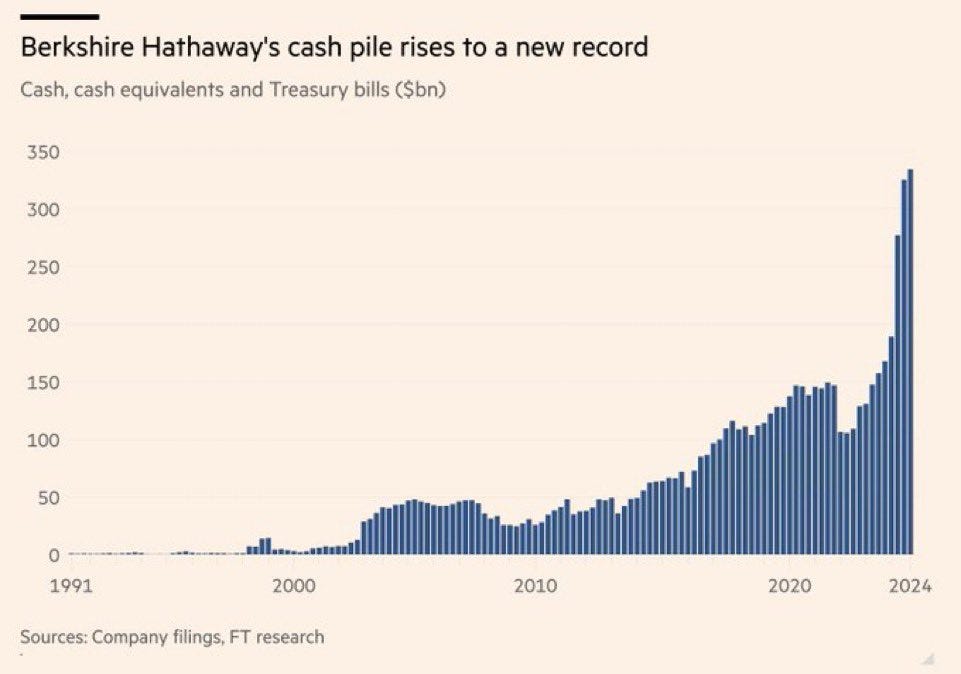
→ Why does it matter? Warren Buffett is sitting on enough cash to buy 476 companies in the S&P 500.
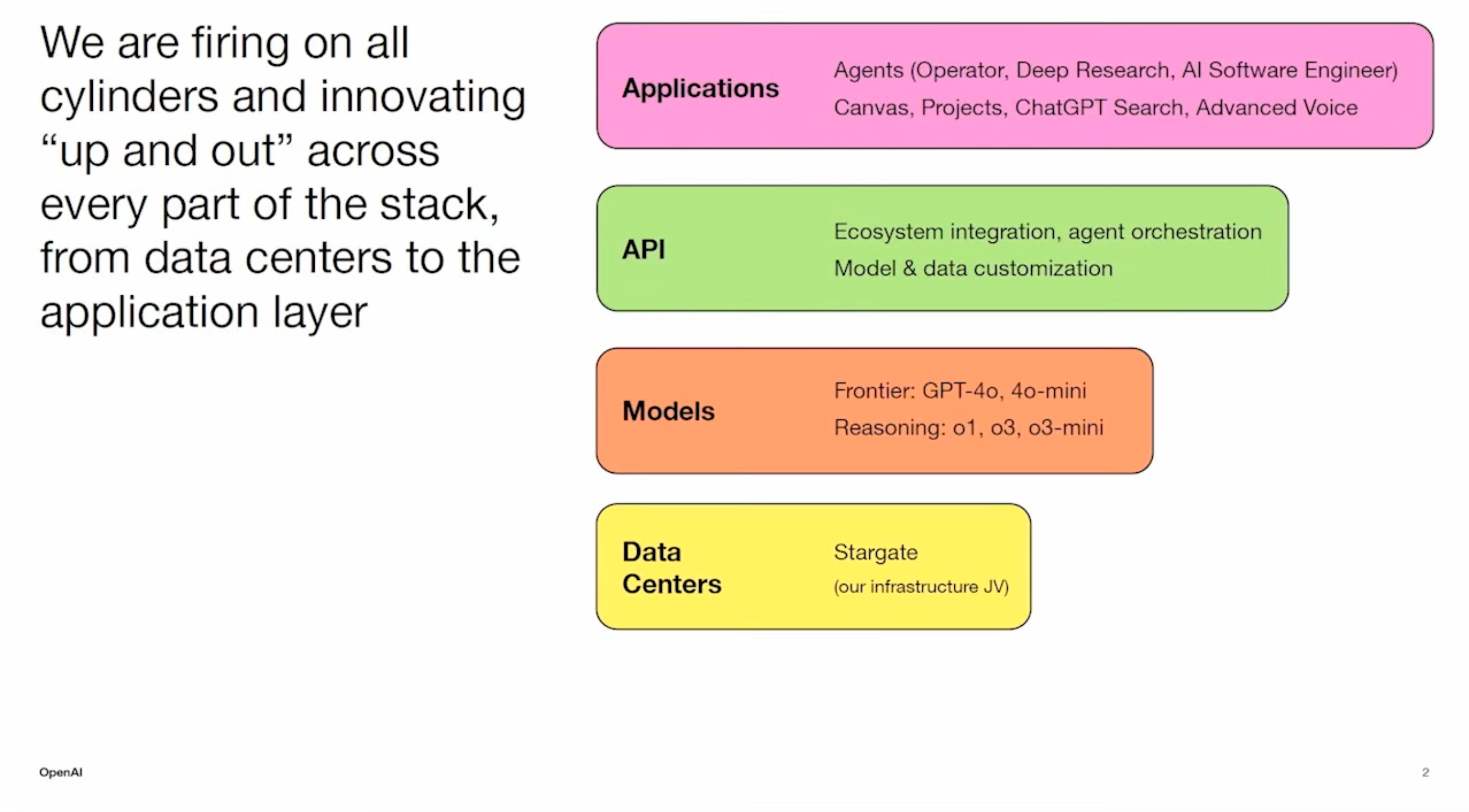
→ Why does it matter? As we wrote in Reading Ambitiously 2.28.25, AI labs are now just as focused on building application-layer products as they are on shipping the next SOTA model. This slide from Sara Friar’s Goldman Sachs presentation makes the point plainly—productization is as important for OpenAI.
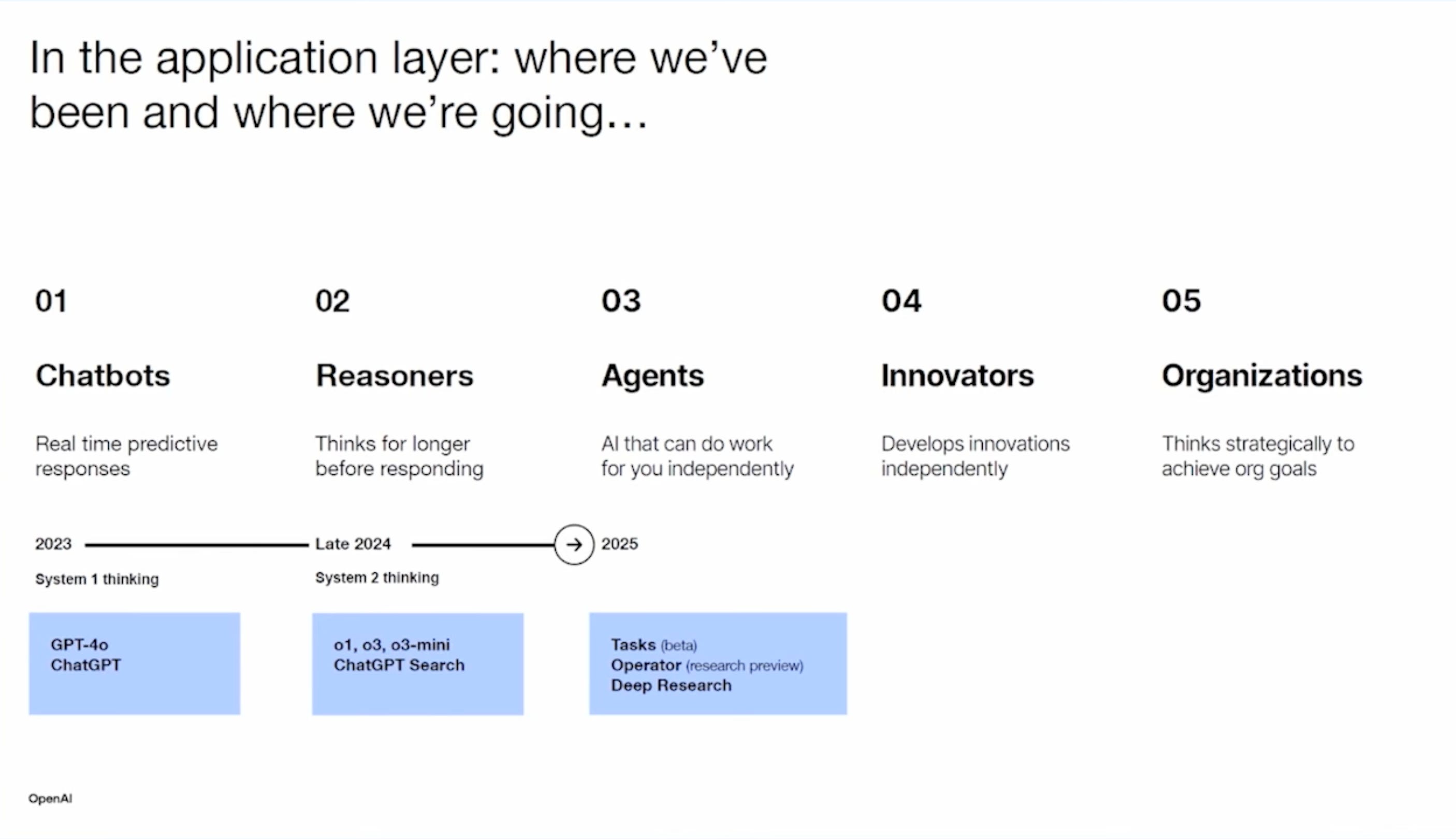
→ Why does it matter? Next up on OpenAI’s roadmap? Agents that don’t just assist—but independently invent. The Information reports that OpenAI is working toward models that mimic polymath inventors like Nikola Tesla, capable of synthesizing across disciplines. The vision: doctoral-level AI, priced at $20,000/month. But a key gap remains—AI can generate ideas faster than scientists can verify them.

Tweets that stopped my scroll:

→ Why does it matter? Find me this ship… 🤯

Worth a watch or listen at 1x:
→ Why does it matter? It’s rare to hear directly from Neil Mehta, Founder of Greenoaks—and this conversation with Patrick O’Shaughnessy delivers. One standout insight: when evaluating companies, Neil’s most important question isn’t about revenue, growth, or margins. It’s this: “Are the best days of this company in front of us or behind us?” A powerful lens for founders, investors, and operators alike.
→ Why does it matter? Bret Taylor brings a rare trifecta: engineering depth, product vision, and boardroom perspective. From building Google Maps to co-leading Salesforce and chairing OpenAI, he’s seen the AI wave from every angle. This conversation with Shane Parrish is a must-listen for anyone thinking seriously about where AI is headed—and what it means to build responsibly in this moment.
→ Why does it matter? It’s rare to hear OpenAI’s story told through the lens of a tenured CFO. Sara Friar brings a refreshing perspective on long-term strategy and capital allocation. Her insights are a reminder that it’s not just a great time to build—this era demands thoughtful leadership and operational clarity.
→ Why does it matter? This week's Not Boring podcast explores a fascinating paradox: how abundant opportunities can lead to scarce accountability. Shopify’s Alex Danco and Packy McCormick discuss how a focus on individual agency can sometimes overshadow responsibility to shared goals. This thought-provoking discussion offers crucial insights for anyone navigating today's dynamic professional landscape.

Quotes & eyewash:
In an era of overproduction and constant commentary, CBS let silence tell the story. The 7-minute broadcast following Rory’s Masters win is a masterclass in restraint—and a reminder that sometimes, saying nothing says everything. Rory had played the Masters 17 times and chased the Grand Slam 11 times. This wasn’t just a win—it was a lesson in perseverance. Never give up.

Oh, and check out the mass exodus of private jets leaving Augusta immediately following.

The mission:
The Wall Street Journal once used ‘Read Ambitiously’ as a slogan, but it became a challenge I took to heart. If that old slogan still speaks to you, this weekly curated newsletter is for you. Every week, I will summarize the most important and impactful headlines across technology, finance, AI and enterprise SaaS. Together, we can read with an intent to grow, always be learning, and refine our lens to spot the best opportunities. As Jamie Dimon says, “Great leaders are readers.”