

Enjoy this week’s Reading Ambitiously as a podcast entirely generated by AI.

The big idea: Enterprise AI Won’t Run on Vibes

To compete in AI, you have to build product. To win in the enterprise, it has to be enterprise-grade.
In the early innings of generative AI, a good demo went a long way.
But as adoption deepens—especially in enterprise contexts—the questions have changed.
It’s less “what can the model do?”
And more: “Can we build around it?”
Because ultimately, this isn’t just about competing in AI—it’s about competing in software. And when it comes to enterprise software, the bar is high: trust, security, compliance, integration, reliability.
Which brings us to one of the more interesting developments this week: OpenAI is reportedly back in talks to acquire Windsurf for $3B, after its reportedly failed bid to buy Cursor—the fastest software company ever to reach $100M ARR.
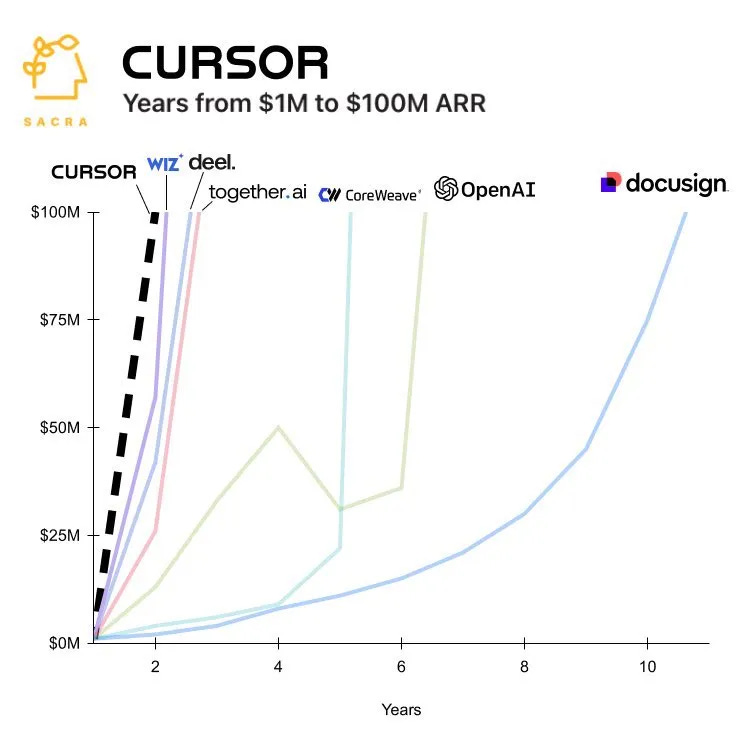
If true, it's a clear signal that OpenAI is going up the stack—moving beyond APIs and into fully productized applications.
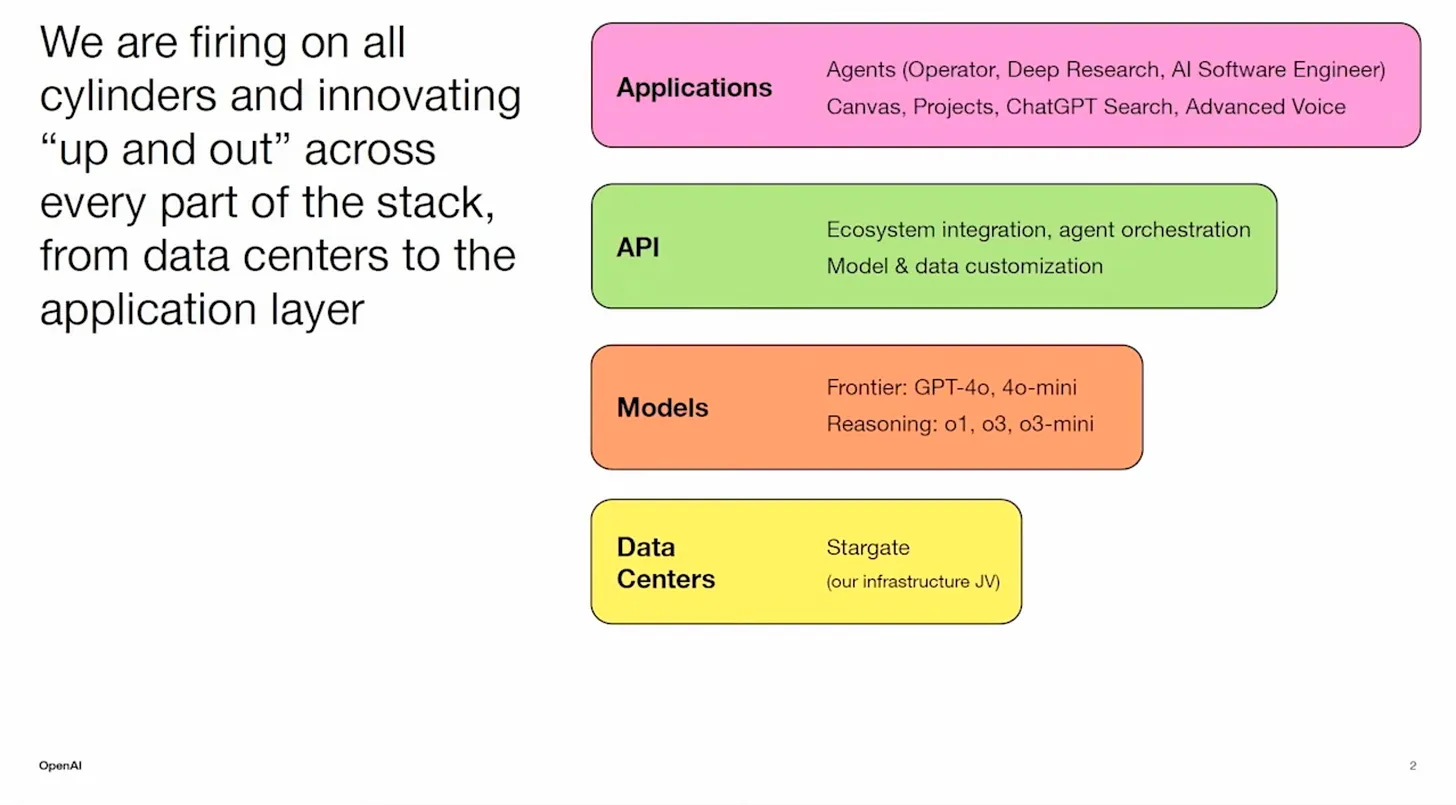
Sarah Friar, OpenAI’s CFO, said as much at a recent Goldman Sachs conference she presented at. The company is building “up and out,” with a clear roadmap from infrastructure to interface.
It’s not just about making SOTA models. It’s about creating real business value. And for now, the first killer app—the one that's pulling the most weight—is code augmentation. Cursor, Windsurf, Qodo. They’re not wrappers. They’re products.
Strategic Context: Up, Out, and Down
Friar outlined how OpenAI is moving up, out, and down the stack.
Up to applications—turning models into usable workflows
Out through APIs—productized, high-reliability interfaces
Down to infrastructure—via Project Stargate and U.S.-based supercomputing capacity
This kind of vertical integration has a precedent. Amazon started by selling books—but to scale e-commerce, it had to build warehouses, logistics, and ultimately, AWS.
What started as a bookstore became a cloud platform—because Amazon followed the stack all the way down.
OpenAI is following a similar trajectory.
And just like Amazon’s first breakout use case was selling books, AI’s first real product moment is shaping up to be code augmentation.
Proof Points: The Race to Productize AI Agents
If you're wondering what “up the stack” looks like in practice—look at the devtools market. It's not just the first real AI application—it’s the one pulling the most weight.
Cursor: fastest to $100M ARR; built around long-term memory, team collaboration, and deep IDE integration
Windsurf: reportedly OpenAI’s next acquisition target; strong traction, local execution
Qodo (formerly Codium AI): test generation, refactoring, and broader workflow ambitions
Claude Code: CLI-native co-developer from Anthropic, designed for end-to-end terminal usage
Replit Ghostwriter: pushing into persistent agents with a clear bet on full-stack AI dev environments
The signal across all of these: this is no longer just about completions. It’s about context. Orchestration. UX. Tools. Memory. Trust.
They’re building products, not just capabilities.
Closing Insight: From Vibes to Viability
Early AI tools were built to show what was possible. Now, the bar is higher.
OpenAI’s roadmap—up, out, and down—suggests this isn’t just a race for better models. It’s a race to build a vertically integrated AI stack.
And that’s what should matter to builders and enterprise leaders alike.
Getting started doesn’t require a moat. Staying in it probably does.
And that moat won’t come from more parameters. It’ll come from product.
Built with memory.
Secured by trust.
Integrated by design.
Built to last—not just to launch.
Enterprise AI won’t run on vibes.
You have to build it.

Best of the rest:
💸 A New Framework for AI Agent Pricing - Growth Unhinged analyzes pricing patterns across 60+ AI agent startups, offering a smart framework for how these products are being monetized. - Growth Unhinged
🧱 IT Fundamentals Still Apply — Even in the AI Era - Boldstart Ventures reminds builders that even amid AI hype cycles, the basics of security, scalability, and reliability still matter. - Fast Forward by Boldstart
📨 AI Horseless Carriages - Why today’s AI tools—like Gmail’s Gemini assistant—still feel like early automobiles: powerful engines stuck behind outdated interfaces. - Koomen.dev
🌐 OpenAI Would Buy Chrome, Executive Testifies - During an ongoing antitrust trial, a Microsoft executive testified that OpenAI would “absolutely” buy Chrome if given the chance—highlighting the strategic importance of browser-level access to user behavior and data. - The Information

Charts that caught my eye:
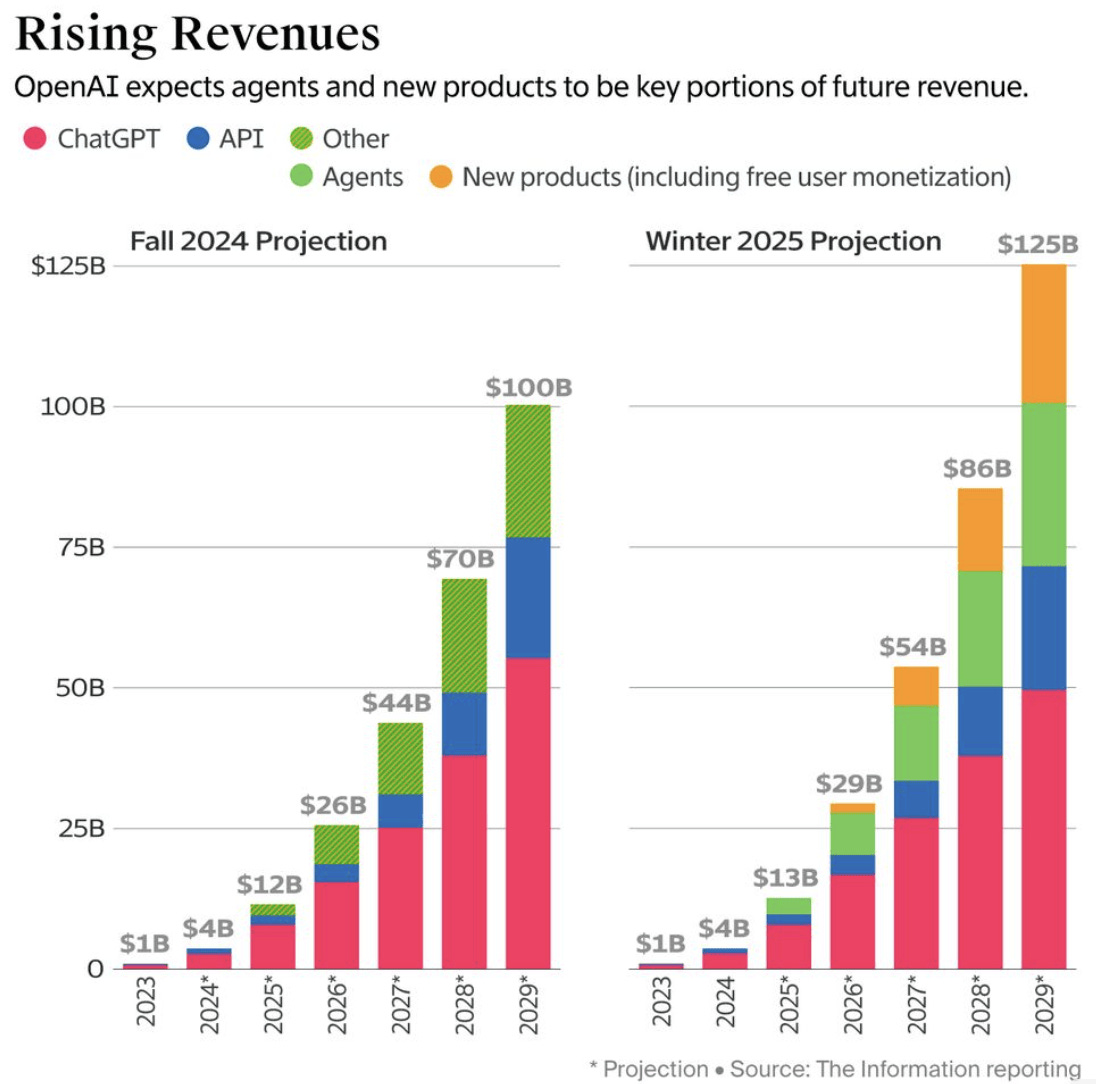
→ Why does it matter? OpenAI has told investors that it expects to generate revenue of $125 billion in 2029 and $174 billion in 2030, with sales from agents and other products exceeding those from ChatGPT!

Tweets that stopped my scroll:

→ Why does it matter? One name jumps off the chart—and it’s not Goldman Sachs or Morgan Stanley. It’s Jane Street. The firm just topped $20.5 billion in trading revenue, matching or beating Wall Street’s most iconic institutions—all with a fraction of the headcount. Jane Street is legendary for its intense interview process (yes, poker is often involved), but what it’s really known for is performance. Quietly, it now accounts for over 10% of all North American equities trading. In a world where leverage comes from algorithms, not offices, Jane Street is showing what the future of finance looks like.
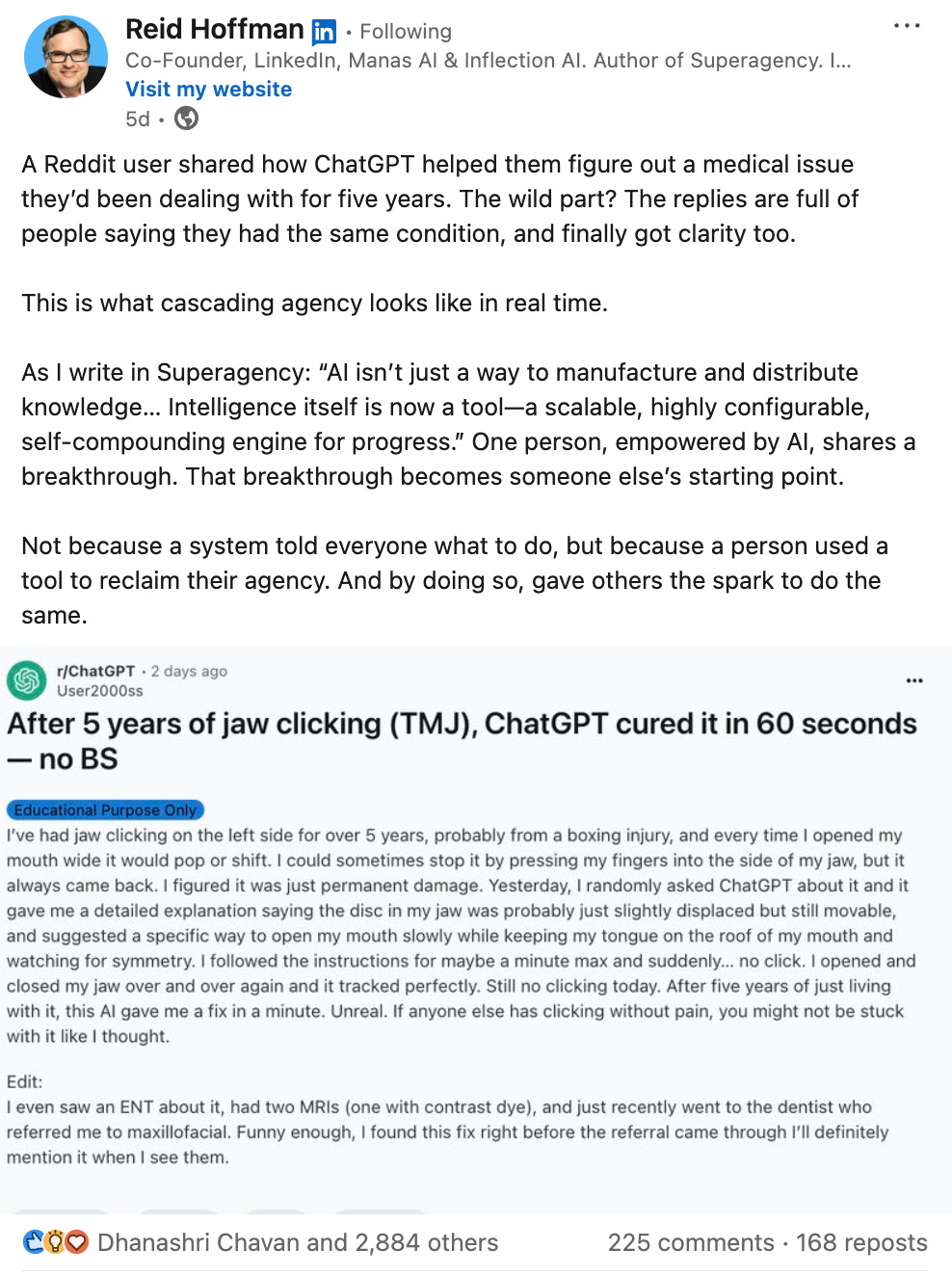
→ Why does it matter? When you combine AI with the long tail of medical knowledge, things start to get really interesting. This story hits a nerve—because it’s not just about a jaw clicking. It’s about people reclaiming their agency through AI. One person asked the right question, got clarity, and suddenly hundreds of others did too. Reid Hoffman calls it “cascading agency,” and that’s exactly the right phrase. The era of one-size-fits-all answers is ending. With AI, each person can start from their own symptoms, their own context—and unlock insight that would’ve otherwise stayed buried in PDFs or missed by specialists.

Worth a watch or listen at 1x:
→ Why does it matter? This is the most comprehensive deep-dive into the electronic medical records industry I’ve ever come across. We’ve looked closely at this market—because it’s primed for cloud disruption and AI-native reinvention. But nothing this thorough has ever existed. Hats off to the Acquire team, who continue to raise the bar. Their work is a gift for anyone serious about understanding this space.

Quotes & eyewash:
On Pressure
“When you feel that pressure inside of you and it's very heavy, you're motivated. You feel it. I've got to get up in the morning. I've got to do this. I've got to accomplish this. When that pressure goes away and you don't feel any pressure in your life, you can do anything and there's no consequences for it. You'll just waste time. You'll waste years, you'll waste months, you'll never accomplish anything. You give somebody a deadline, right? They'll accomplish in two months what it would take somebody two years to do without a deadline. It's that necessity. It's that sense of, there's a sword at my back. I've got to get it done. It makes you get things done. It gives you the energy”
— Robert Greene
The mission:
The Wall Street Journal once used ‘Read Ambitiously’ as a slogan, but it became a challenge I took to heart. If that old slogan still speaks to you, this weekly curated newsletter is for you. Every week, I will summarize the most important and impactful headlines across technology, finance, AI and enterprise SaaS. Together, we can read with an intent to grow, always be learning, and refine our lens to spot the best opportunities. As Jamie Dimon says, “Great leaders are readers.”