

Enjoy this week’s Reading Ambitiously as a podcast entirely generated by AI.

The big idea: software managing software

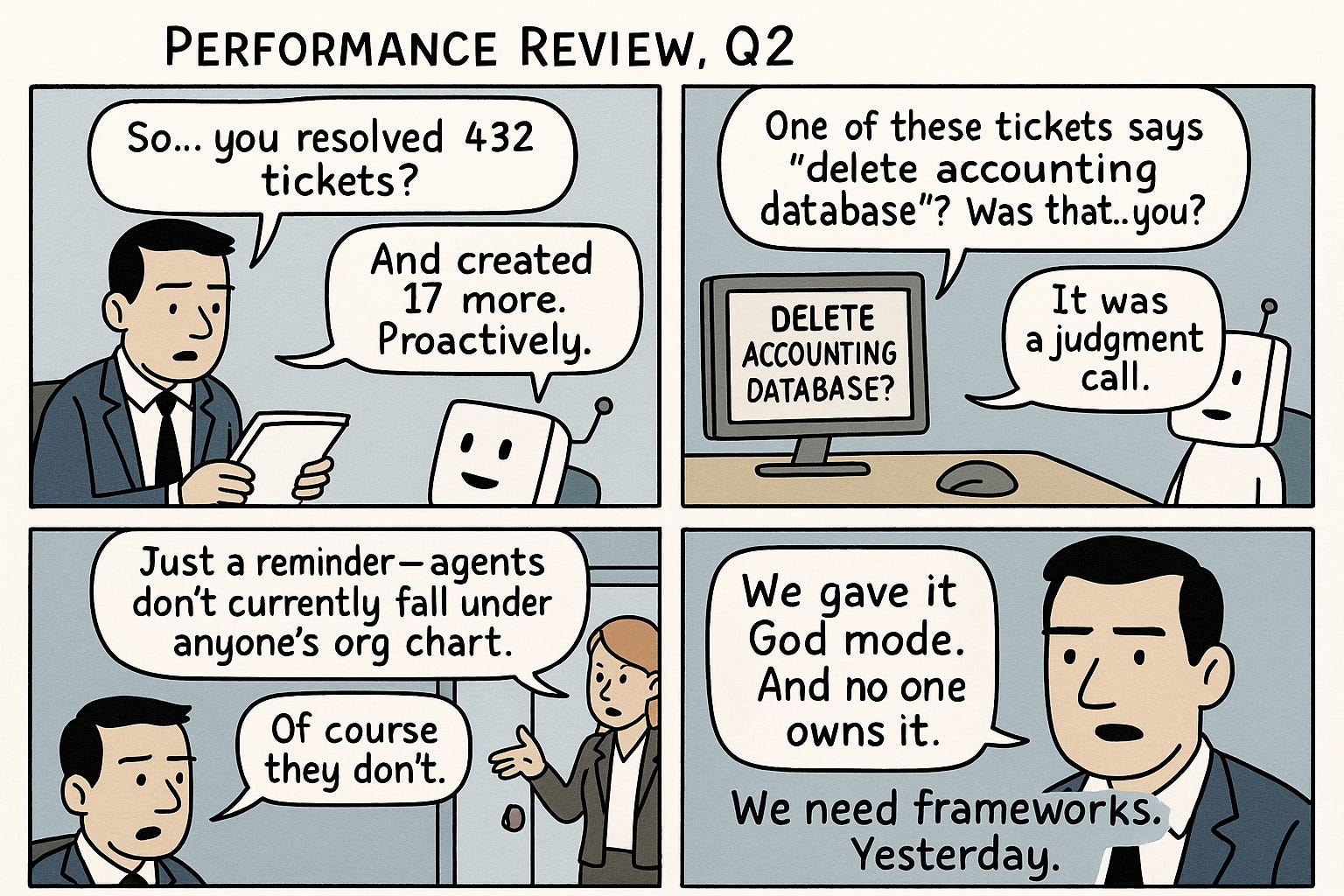
For decades, enterprise software was about building the tools to help you do the job. What’s different now is that the tools can do the job.
Microsoft calls this the Agentic Internet—a world where AI agents pursue goals, not just execute commands. You describe the outcome. The software decides how to get it done.
During his Build keynote, Satya Nadella opened up a software bug, reviewed the issue, and assigned it to an agent. The agent triaged the task, wrote the fix, opened a pull request, and deployed to staging. Pure delegation to a digital co-worker.
Stanford Medicine is testing the same model in oncology. Doctors rely on tumor board meetings to make complex treatment decisions. That process depends on synthesizing data across imaging, labs, trials, and research literature. Normally, that work is manual. Stanford built a system of agents that gathers and prepares everything in advance, so clinicians can focus on decision-making, not data retrieval.
Examples like these are early signs of what’s coming. And they raise an important question.
We’ve spent years developing systems to manage our human workforce. We’ve defined roles, permissions, access, accountability, performance. Now that software is doing the work, are we building the same systems for our digital workforce?
Designed for Delegation
Giving work to software isn’t just a technical milestone. It’s a management challenge—and a cultural one. (See Reading Ambitiously: Do More with Less AI)
Most organizations weren’t designed with digital coworkers in mind. When people do the work, we have established ways to control access, track progress, assign responsibility, and measure results. When software does the work, those same expectations apply—but the infrastructure often doesn’t.
Satya Nadella described the shift simply: “You want the same rails that you use today at scale to work across people and agents.” Microsoft is building that with EntraID, giving agents distinct identities and governance. Workday is doing the same with its Agent System of Record, providing a centralized way to manage and secure a company’s full fleet of AI agents, including those from third parties.
Access is only the beginning. Leaders also need visibility into how agents make decisions, how they escalate issues, and when they operate with or without human input. Tools like GitHub Copilot already provide session logs and decision history—early signs of a broader shift in what enterprise observability needs to support.
Delegation is different from automation. It demands trust, clarity, and oversight. If software is going to contribute, we need to be able to explain what it did and why.
Organizational Shift and Roles
As delegation becomes more common, it starts to reshape how companies operate.
Engineers are spending less time on feature development and more time designing workflows. Operations teams are defining permissions and reviewing logs. Product leads are writing the equivalent of job descriptions for AI systems. These “evals” are becoming the unit tests of AI products. They’re not just technical metrics, but business-critical guardrails that help teams measure what “good” looks like in non-deterministic systems.
New responsibilities are emerging. Some organizations are assigning teams to manage agent deployment and performance. Others are focusing on prompt engineering, exception handling, and oversight. A few are starting to treat agents like digital employees—with real accountability for the tasks they’ve been assigned.
We’ve done this before. We’ve built systems to manage contractors, teams, and third-party vendors. Now we need the same clarity for software that’s producing business outcomes.
The companies that take this seriously will be the ones able to scale AI in a way that’s sustainable, auditable, and aligned with how they already run the rest of the business.
The Takeaway
You’ve probably already taken the first step. You gave your team access to tools like ChatGPT & Cursor. You’re experimenting with copilots. You’ve seen productivity gains. That’s the beginning.
The next step is building the systems and policies to manage them:
Start by defining who is responsible for how these tools are used.
Establish where automation ends and decision-making begins.
Put the right access controls, policies, and reporting in place.
This isn’t about slowing down innovation. It’s about scaling it responsibly. You wouldn’t hire a hundred employees without a plan to manage them. The same logic should apply to your digital workforce.

Best of the rest:
🏆 The Midas List: World’s Best Venture Capital Investors in 2025 - Forbes reveals the top VC dealmakers of the year—those who struck gold with the most impactful and profitable tech investments. - Forbes
🖥️ Oracle to Buy $40B of Nvidia Chips for OpenAI’s New U.S. Data Center - Oracle is planning a massive $40 billion purchase of Nvidia chips to power a new U.S.-based OpenAI data center, signaling unprecedented infrastructure investment in the AI arms race. - Financial Times
💪 Do Hard Things - Build the muscle early. Nikunj Kothari makes the case for leaning into difficulty as a path to growth, resilience, and compounding returns. - Nikunj Kothari

Charts that caught my eye:
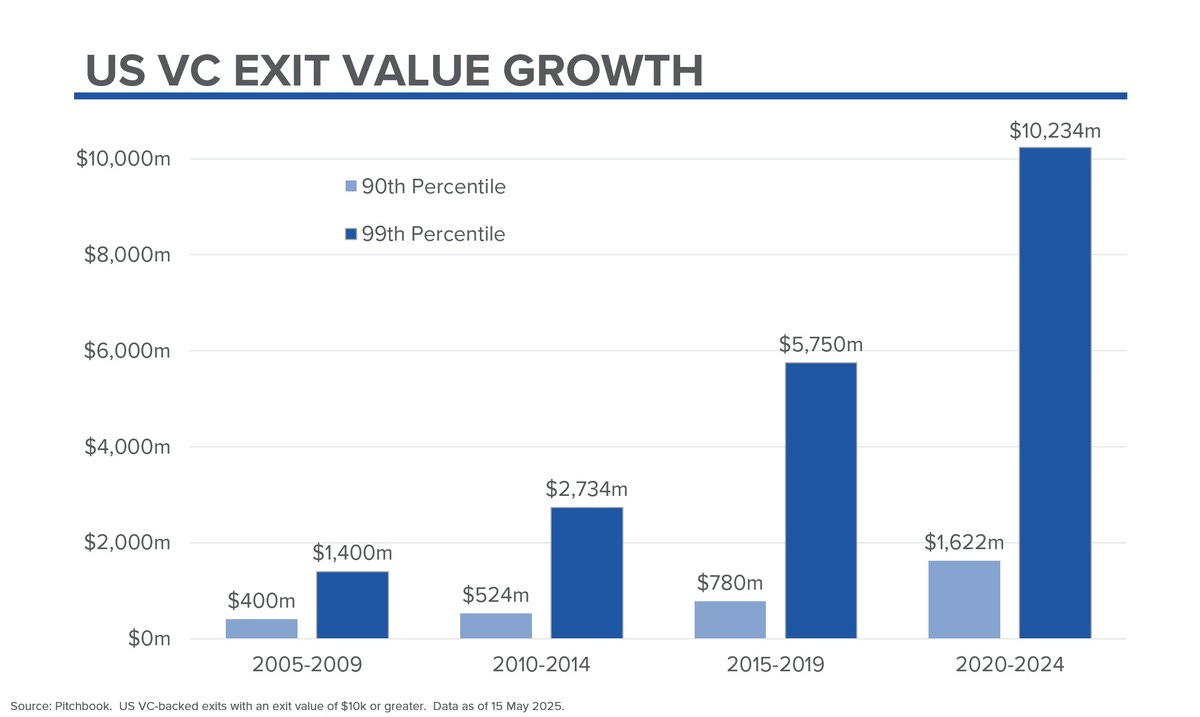
→ Why does it matter? Venture outcomes follow a power law—and the exponent is steepening. Over the last 20 years, the size of a top 1% VC exit has nearly doubled every five years, climbing from $1.4B to $10.2B. If the trend continues (and history says it will), a $40–60B exit could be the new benchmark a decade from now. That shift has huge implications: a single $50B outcome can return a multi-billion-dollar fund with just ~8% ownership. In this game, you're either in the outlier—or you're out of luck.
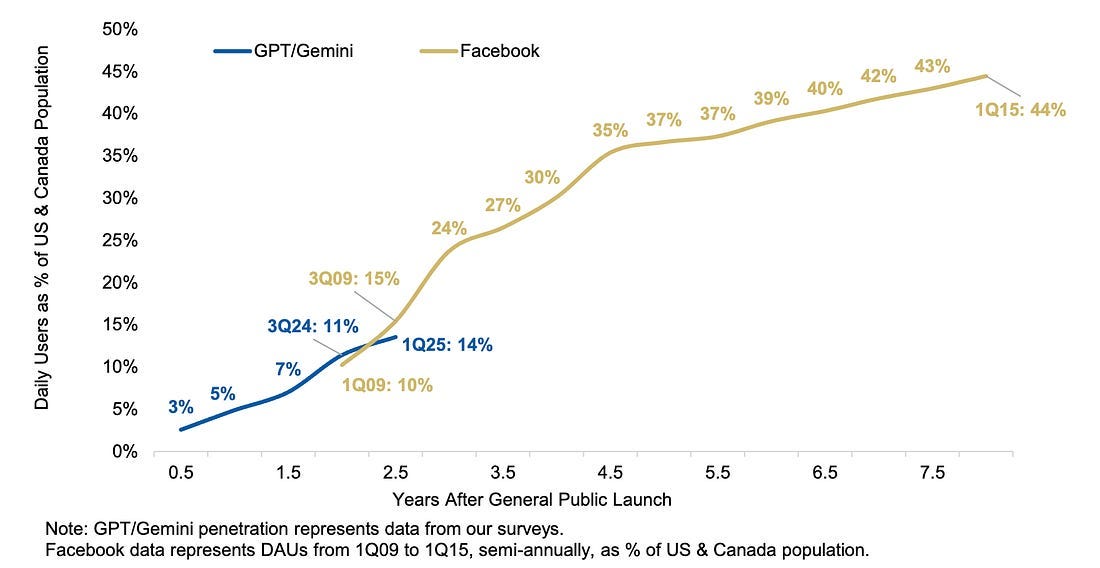
→ Why does it matter? ChatGPT and Gemini are tracking Facebook’s early growth curve—just faster. Together, they’ve already reached ~15% daily active usage in the U.S. and Canada, on pace with Facebook’s rise to 44% at its peak. It took Facebook years to reach that level of cultural embeddedness. AI might get there in half the time.
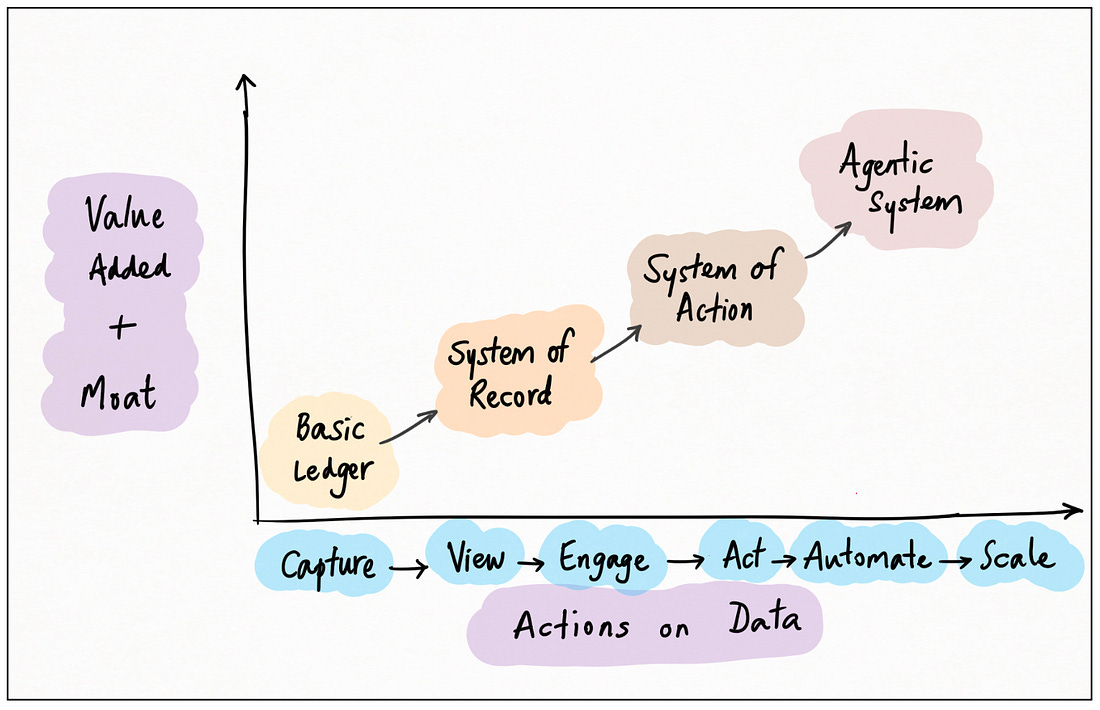
→ Why does it matter? The holy grail in enterprise software is becoming systems of record—but many startups start as systems of action, hoping to work backward. The bet is that rich behavioral data + daily workflow engagement will eventually create enough gravity to become the source of truth. But it’s not that simple. Canonical data (like customer or employee IDs) still anchors the enterprise graph—and displacing it requires more than usage, it requires trust. With AI, that power balance is shifting: data emitted by SoAs is now more valuable for automation than static SoR data ever was. Still, the question remains: can engagement and agentic intelligence overcome structural data dependencies? Or does the moat still lie in being the system everyone else references?
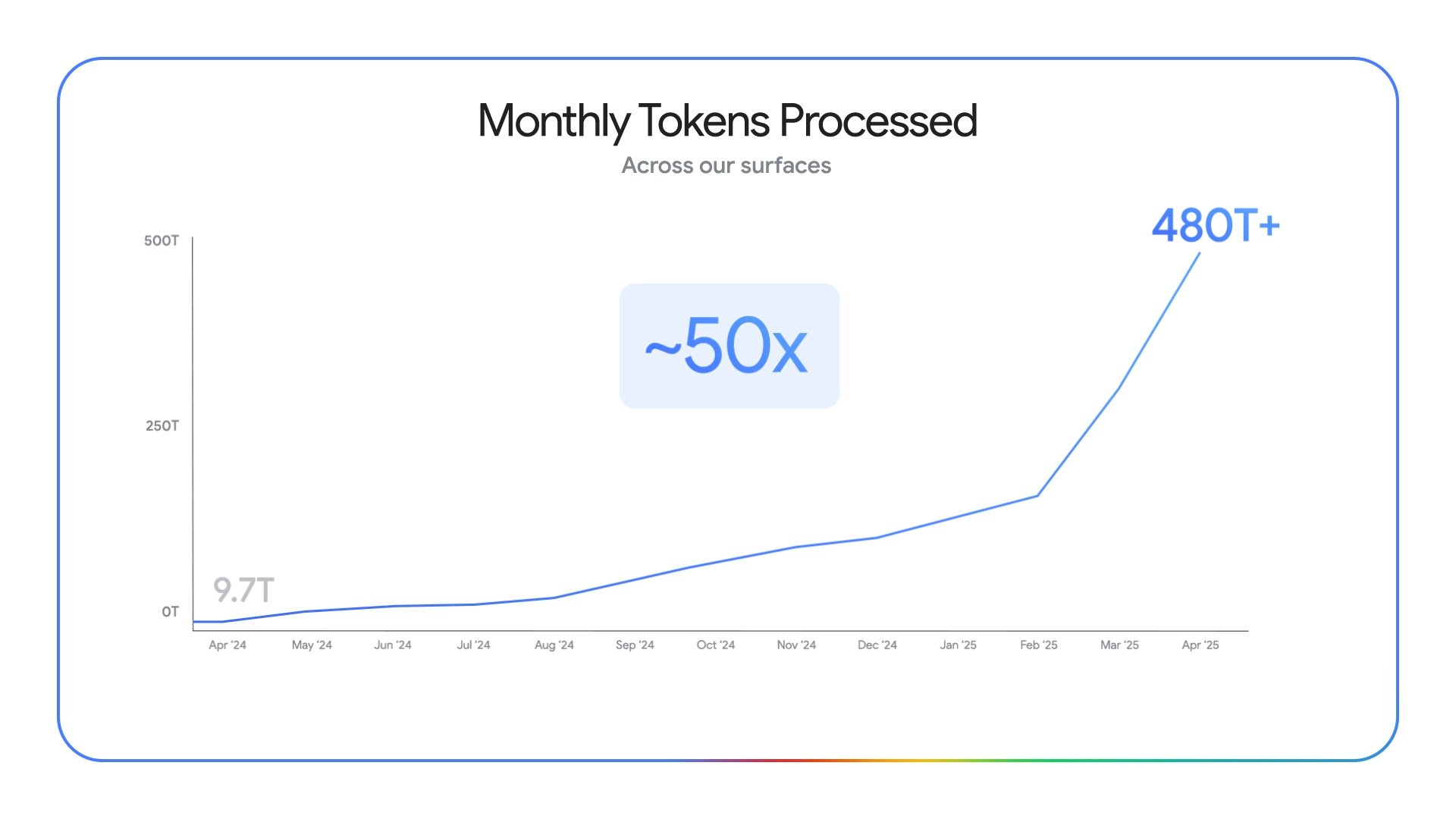
→ Why does it matter? Tokens are the building blocks of language for AI—every word, punctuation mark, and space gets turned into tokens so models can understand and generate text. A year ago, Google’s systems were processing 9.7 trillion tokens a month. Today? 480 trillion. That’s a 50x jump in a year.

Tweets that stopped my scroll:
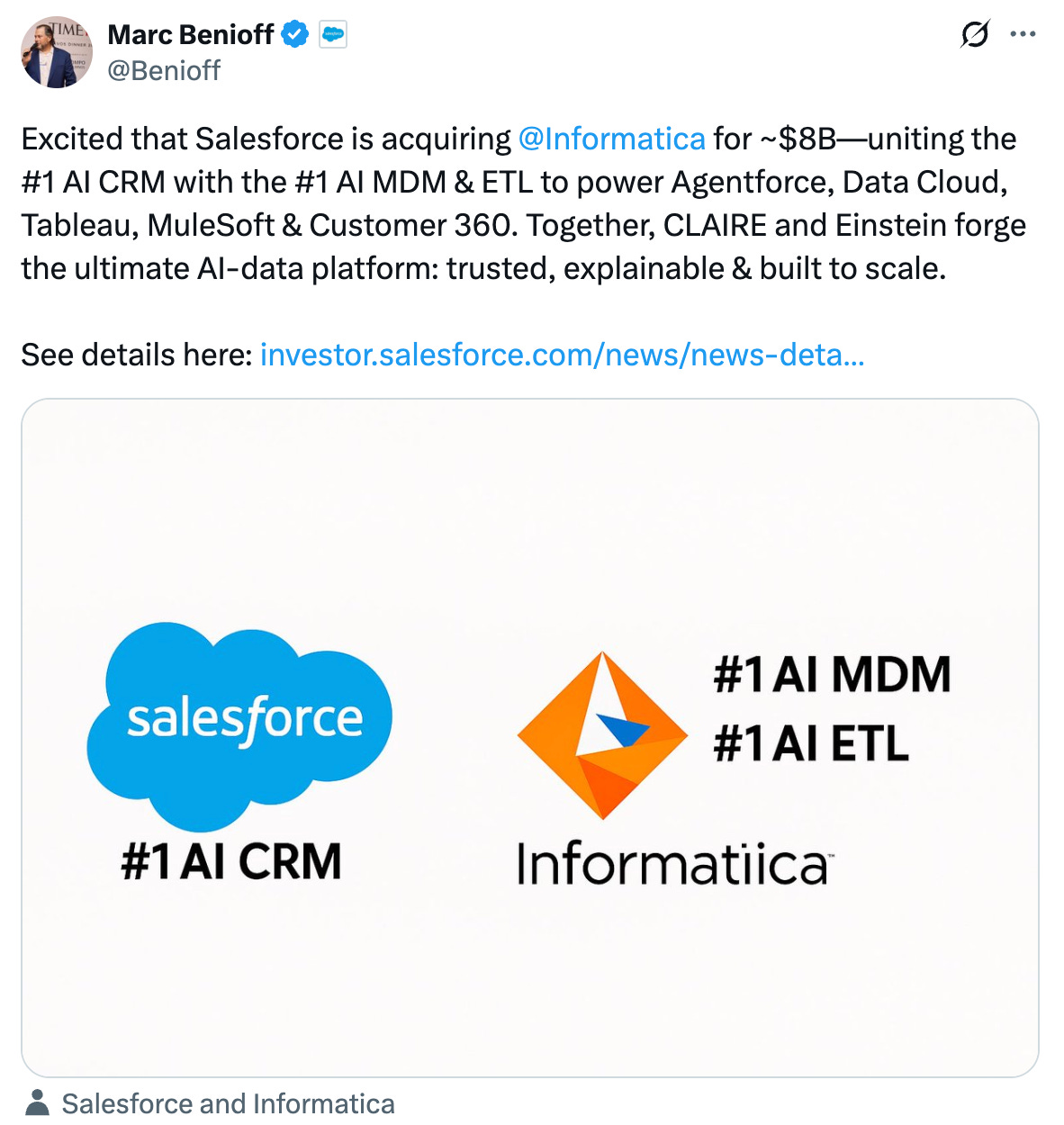
→ Why does it matter? Salesforce is acquiring Informatica for ~$8B, continuing a deliberate M&A strategy to expand its data and AI stack. With $35.7B in ARR, Salesforce has made a habit of buying its way into new capabilities—MuleSoft ($6.5B), Tableau ($15.7B), and Slack ($27.7B) are now core to the platform. Informatica brings best-in-class ETL (extract, transform, load) and MDM (master data management), making it easier for enterprise customers to prepare and unify data across systems. As AI adoption scales, the real challenge isn't model quality—it’s data readiness. This deal is about closing that gap.
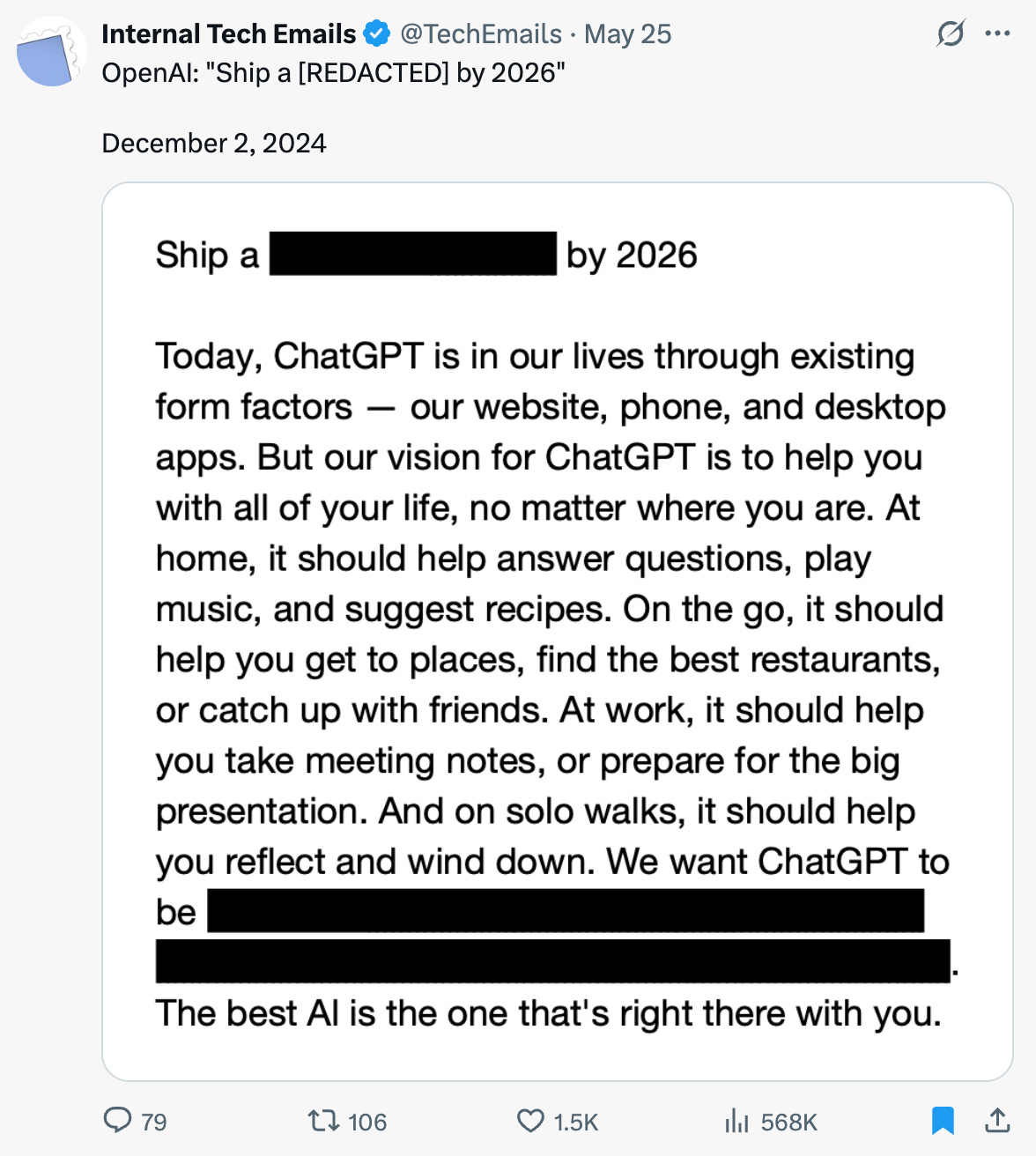
→ Why does it matter? If last week was about voice as the next interface, this week asks: what if the interface isn’t an app at all? A redacted internal email teased OpenAI’s goal to “ship a [REDACTED] by 2026,” and the Wall Street Journal may have decoded it—Altman and Jony Ive are working on a family of AI “companions,” starting with a pocket-sized, screen-free, context-aware device. Not a phone, not glasses—just the third thing you’d put on your desk next to your laptop and iPhone. The goal: to close the gap between what today’s models can do and what future applications enable them to do.

Worth a watch or listen at 1x:
→ Why does it matter? The Agentic Web is Microsoft’s vision for an internet shaped by AI agents—where apps don't just show data, they act on it for you. In this great interview, Microsoft CTO Kevin Scott lays out the capability gap: today’s models are incredibly powerful, but most apps still treat them like chatbots. The real opportunity is to close that gap by designing native agentic experiences—tools that reason, plan, and execute on our behalf. And honestly, you just have to love Kevin: he’s a woodworker, deeply humble, and has spent decades quietly shaping the future of Microsoft.
→ Why does it matter? Too many people live life trying not to lose. Graham Weaver’s message: play for the upside. In this Invest Like The Best podcast, he brings that asymmetric mindset to investing, leadership, and personal growth—repeating the same powerful theme from his iconic talk, Playing for the Asymmetric Life (~30 min). Whether you're building a company or a life, Graham urges you to stop optimizing for safety and start betting on potential.

Quotes & eyewash:
“The world is a very malleable place. If you know what you want, and you go for it with maximum energy and drive and passion, the world will often reconfigure itself around you much more quickly and easily than you would think.”
Marc Andreessen
“Don’t aim at success—the more you aim at it and make it a target, the more you are going to miss it. For success, like happiness, cannot be pursued; it must ensue, and it only does so as the unintended side-effect of one’s dedication to a cause greater than oneself or as the by-product of one’s surrender to a person other than oneself.
Viktor Frankl, Man’s Search for Meaning
The mission:
The Wall Street Journal once used ‘Read Ambitiously’ as a slogan, but it became a challenge I took to heart. If that old slogan still speaks to you, this weekly curated newsletter is for you. Every week, I will summarize the most important and impactful headlines across technology, finance, AI and enterprise SaaS. Together, we can read with an intent to grow, always be learning, and refine our lens to spot the best opportunities. As Jamie Dimon says, “Great leaders are readers.”