



The big idea: The transition tax
Reading time: 5 minutes

“The future is here, it’s just not evenly distributed.”
William Gibson wrote that way before AI arrived. But the quote feels especially relevant as I write this week’s edition from 35,000 feet, using United’s Starlink Wi-Fi, powered by SpaceX, to send instructions to my AI agents working across multiple projects in parallel.
The stack itself feels improbable. SpaceX powers the high-speed satellite Wi-Fi. OpenAI and Anthropic power the AI agents. Three companies, all sitting near the center of trillion-dollar-scale speculation about where the next platform shift is headed.
Yet these technologies remain astonishingly scarce in practice. Out of curiosity, I asked ChatGPT to estimate how many people on Earth might be using Claude Code on a Starlink-enabled United flight at the same time.
Its answer: maybe 20.
The future often arrives this way, slowly as a strange little pocket of improbability that barely anyone notices. Then suddenly.
That future is here. But increasingly, the technologies themselves are not the only things unevenly distributed. The more I live in this new world, the more hyperaware I become of another uneven distribution: mankind’s capacity to absorb change.
Two Parallel Realities
Getting off the plane, I stepped back into the old world, which was fittingly O’Hare’s Terminal 2. It has not been updated in decades. You can still see where the telephone booths once were.
Spend a couple of hours using all this new AI, then try to do the same work the old way. No way. The new way is just too good.
But here’s the thing: the old systems have not disappeared just because the new ones arrived.
Knowledge workers are now balancing two parallel realities: the existing job they are still accountable for, and the emerging AI-native workflow they suspect may eventually redefine the job entirely.
It is energizing, invigorating, concerning, and exhausting all at once.
I feel this tension personally every week.
Most Friday mornings, after a long week of travel, meetings, operational cadence, and finally hitting publish on Reading Ambitiously, I let out a sigh of relief. Then I typically message our CTO and VP of AI some version of the same thought:
“Gosh, I had so much to get done this week based on my traditional set of responsibilities, but I can’t wait to continue building out all the AI to redefine my next set.”
More often than not, I do not feel like I have enough hours in the day for the latter.
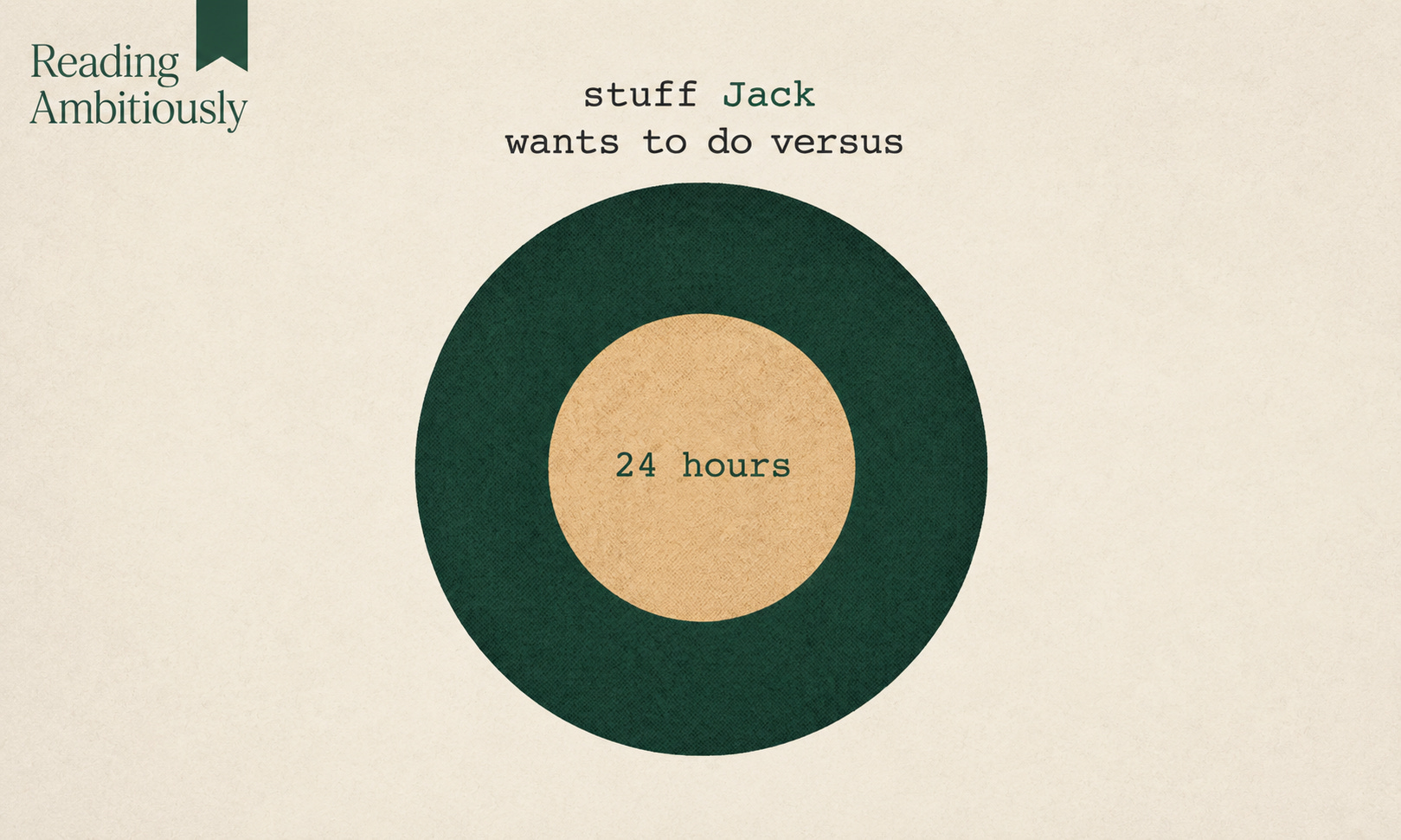
This AI revolution is not arriving into empty calendars.
Microsoft calls this the “Transformation Paradox.” Organizations want all the benefits of AI while still measuring performance through legacy systems and incentives.
And unfortunately, new technology tends to add complexity before it reduces it, leading to burnout and what feels like a cognitive tax.
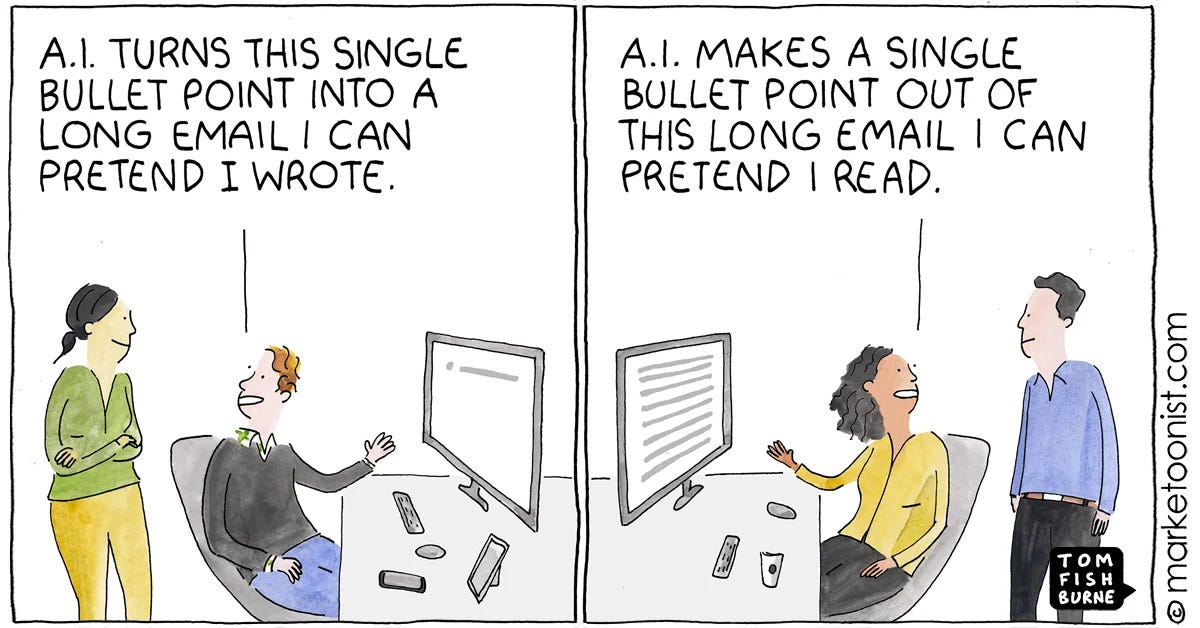
This is normal. When email arrived, it increased the volume of communication and raised expectations for timely response. Now that AI is here, it is incredibly good at generating content. But reviewing and validating that content is becoming more demanding.
Ahead of a recent meeting, I received more than 50 pages of pre-reading material, much of it carefully curated by our teams and some of it helpfully generated by AI.
What am I supposed to do? Have AI summarize the AI-assisted pre-read?
The Deployment Layer
Companies are beginning to realize they may need help with this transition. For many, AI-native work is still happening in the shadows. But the market is beginning to professionalize that shadow work.
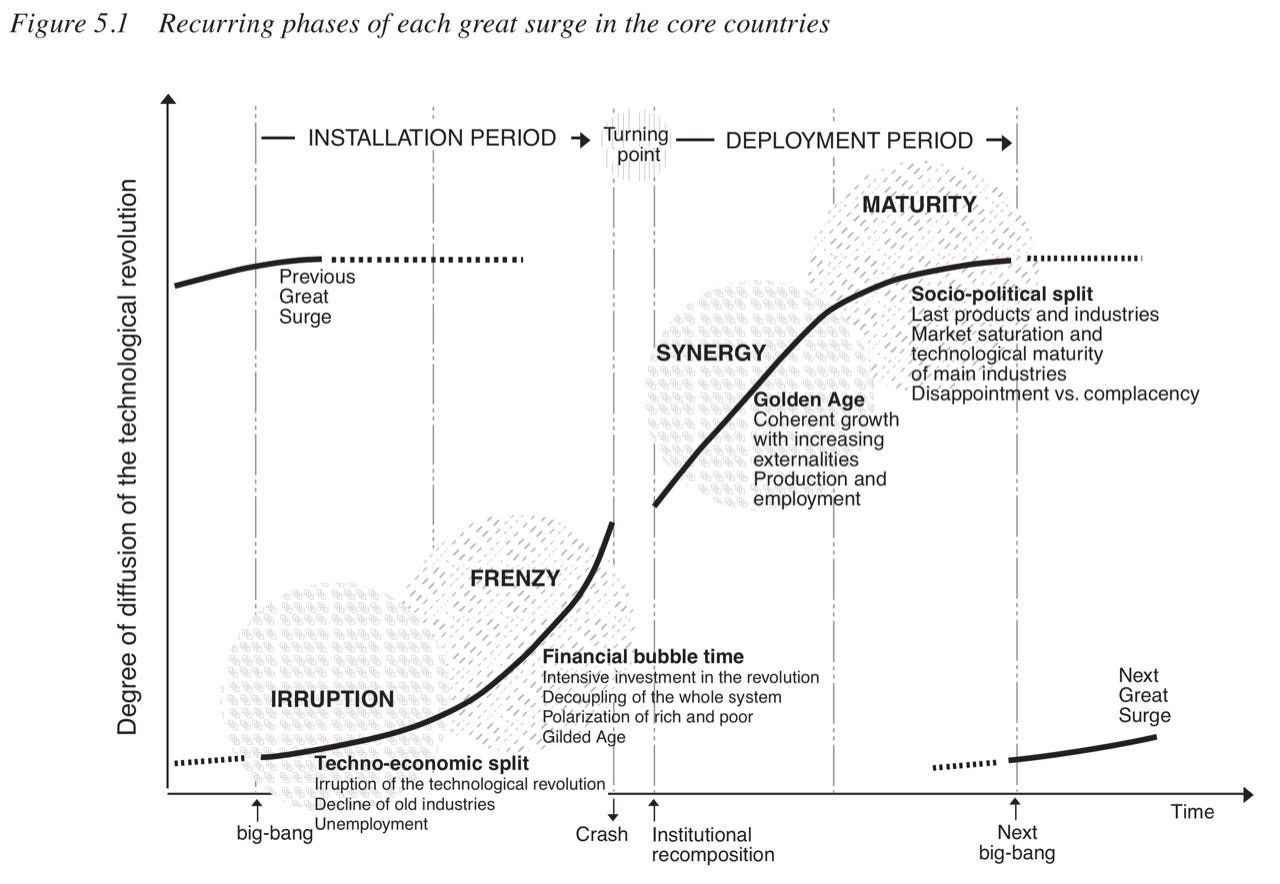
Carlota Perez, my spirit guide for technological revolutions, would recognize this moment immediately. We are somewhere past the frenzy, approaching the turning point, and the deployment period is beginning to take shape. That is not a metaphor. It is literally what they are calling it. OpenAI announced the OpenAI Deployment Company this week, a new venture staffed with forward-deployed engineers who will help companies install AI.
Stripe seems to understand this, too. The company recently posted a new role, “Forward Deployed AI Accelerator,” describing it as embedding AI-native operators directly into its marketing department to help teams of roughly 20 make AI the default mode for all work.
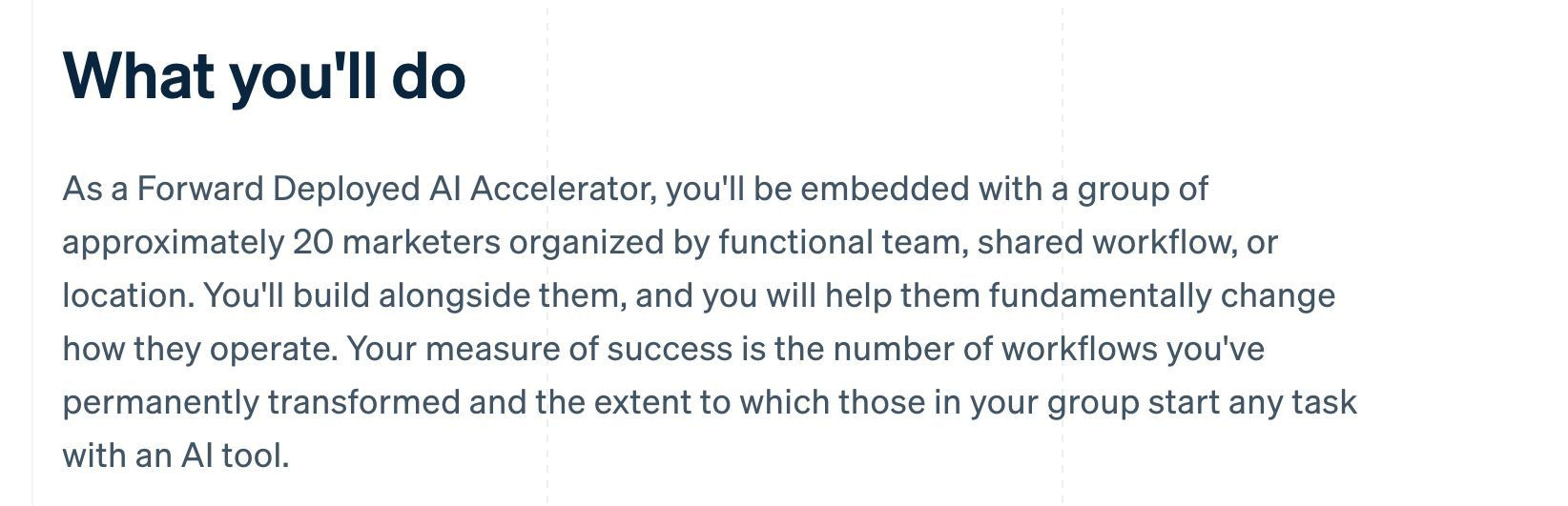
The hard part is no longer simply getting access to AI, although it is astonishing to me how many people still do not have it in the workplace. The hard part is integrating AI into the business's daily operations and embracing change.
Why It Matters
The lesson is that new technologies do not create an advantage simply because they exist. They create an advantage when people reorganize around them.
At first, the new tool gets bolted onto the old system. Email becomes faster mail. Websites become digital brochures. Cloud becomes rented servers. AI becomes a better search engine.
Useful, but the real leverage shows up when the work changes shape.
Electricity is the classic example. Before factories were electrified, many were organized around a central steam engine. The engine turned a shaft. The shaft ran through the building. Belts and pulleys carried power to individual machines. The entire factory was designed around the constraints of the power source.
Then electricity arrived. But many factory owners did not immediately redesign the factory. They simply replaced the steam engine with an electric motor. They had a new power source running an old operating model.
The real gains came later, when factories put smaller electric motors on individual machines. Once power no longer had to flow through a single central shaft, the work could be reorganized. Machines could move. Production lines could change. Buildings could change. The flow of work could change.
The technology mattered, but the reorganization mattered more.
A century later, Tesla gave the same idea a modern form. The car mattered, but so did the machine that built the car. Tesla framed it as an effort to turn the factory itself into a product and build the machine that makes the machine.
That may be the best way to think about AI.
The tech is impressive. But the long-term advantage will likely come from the operating system around it.
Right now, many companies are using AI like an electric motor attached to the old shaft. AI-generated pre-reads. AI-assisted summaries. AI pilots. AI copilots layered on top of work designed before AI existed.
That is useful. It is not the unlock.
The better question is not: how do we use AI to do the old work faster?
The better question is: what would this work look like if AI were assumed from the beginning?
The old world is still here. The new one has arrived. And most of us are living in the gap between them, landing in Terminal 2 while our agents are still working somewhere above the clouds.
The advantage goes to the people and companies willing to close that gap. Not by electrifying the shaft. By redesigning the factory.
The ultimate long-term advantage will go to individuals and companies that pay the transition tax.
Stay ambitious!

Best of the rest:
🤖 OpenAI launches the OpenAI Deployment Company to help businesses build around intelligence — OpenAI is turning enterprise AI deployment into a company-level bet, combining FDEs, Tomoro’s applied AI talent, and a heavyweight partner network to move customers from AI experiments to production systems. — OpenAI
💸 How a Job at OpenAI Became the Greatest Lottery Ticket of the AI Boom – OpenAI’s latest employee stock sale shows just how much wealth the AI boom is creating before IPO, turning hundreds of employees into multimillionaires and giving Silicon Valley a preview of the economic shockwave still to come. – The Wall Street Journal
🍽️ QR Codes Didn't Kill Waiters. And Neither Will AI. — Sophie Bakalar makes the clearest case yet that AI will automate tasks, not jobs, because the human layer still matters wherever trust, care, and accountability are part of the product. — Sophie’s Notes
🛠️ Learning on the Shop floor — Shopify’s River shows that the real unlock in enterprise AI may not be private productivity, but public apprenticeship, where every agent interaction becomes searchable, teachable, and compounding company knowledge. — Tobi Lütke
⚡ Compute Futures Are Here – As AI demand turns GPUs and advanced chips into strategic infrastructure, financial markets are beginning to treat semiconductors like oil or electricity, creating new ways to hedge price volatility and speculate on the backbone of the AI economy. – CNBC

Charts that caught my eye:
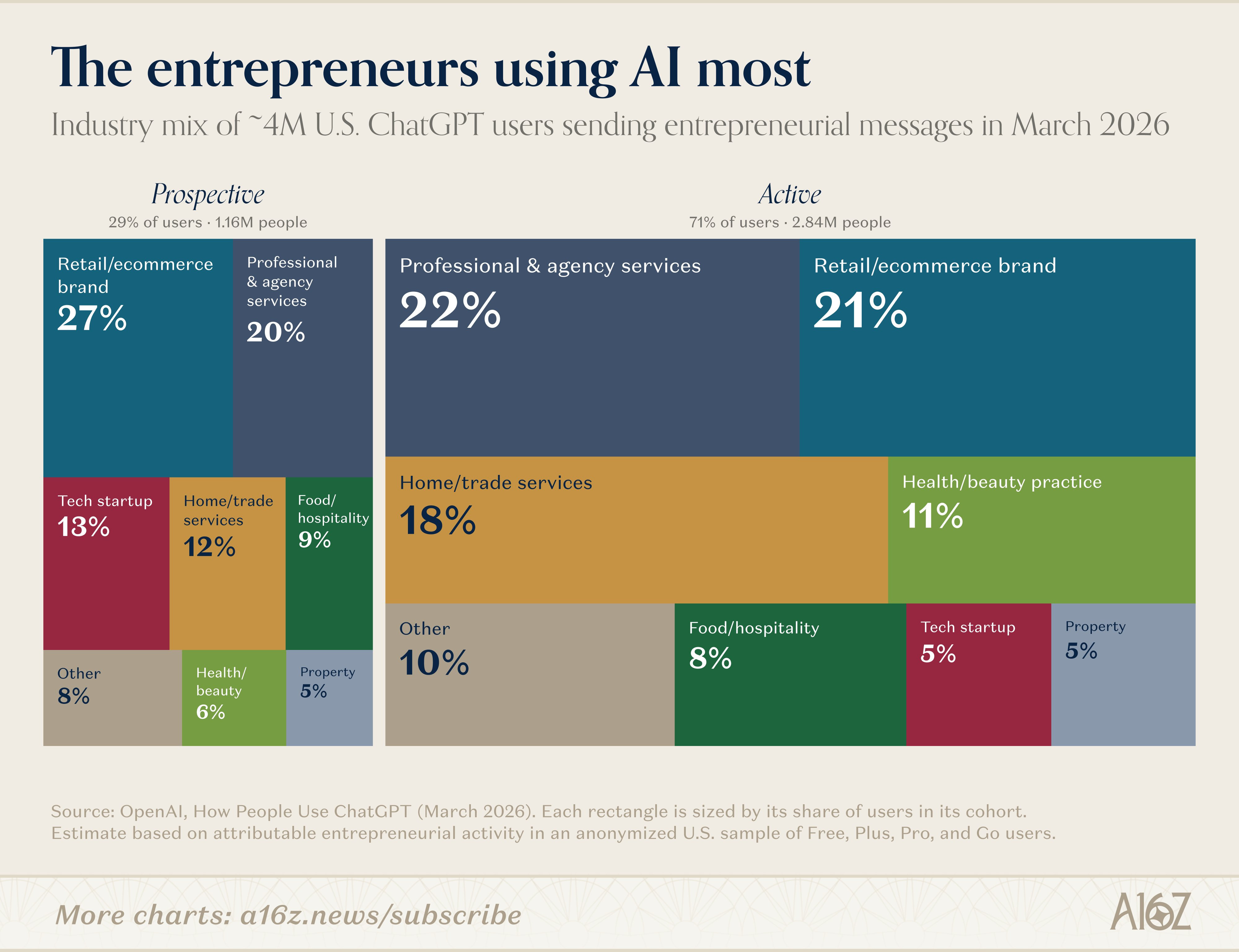
→ Why does it matter? Tech startups are 5% of active U.S. entrepreneurs using ChatGPT. The other 95%: agency owners, plumbers, Etsy sellers, dentists. One read: the AI adoption story for small businesses is already further along than the coverage of it.
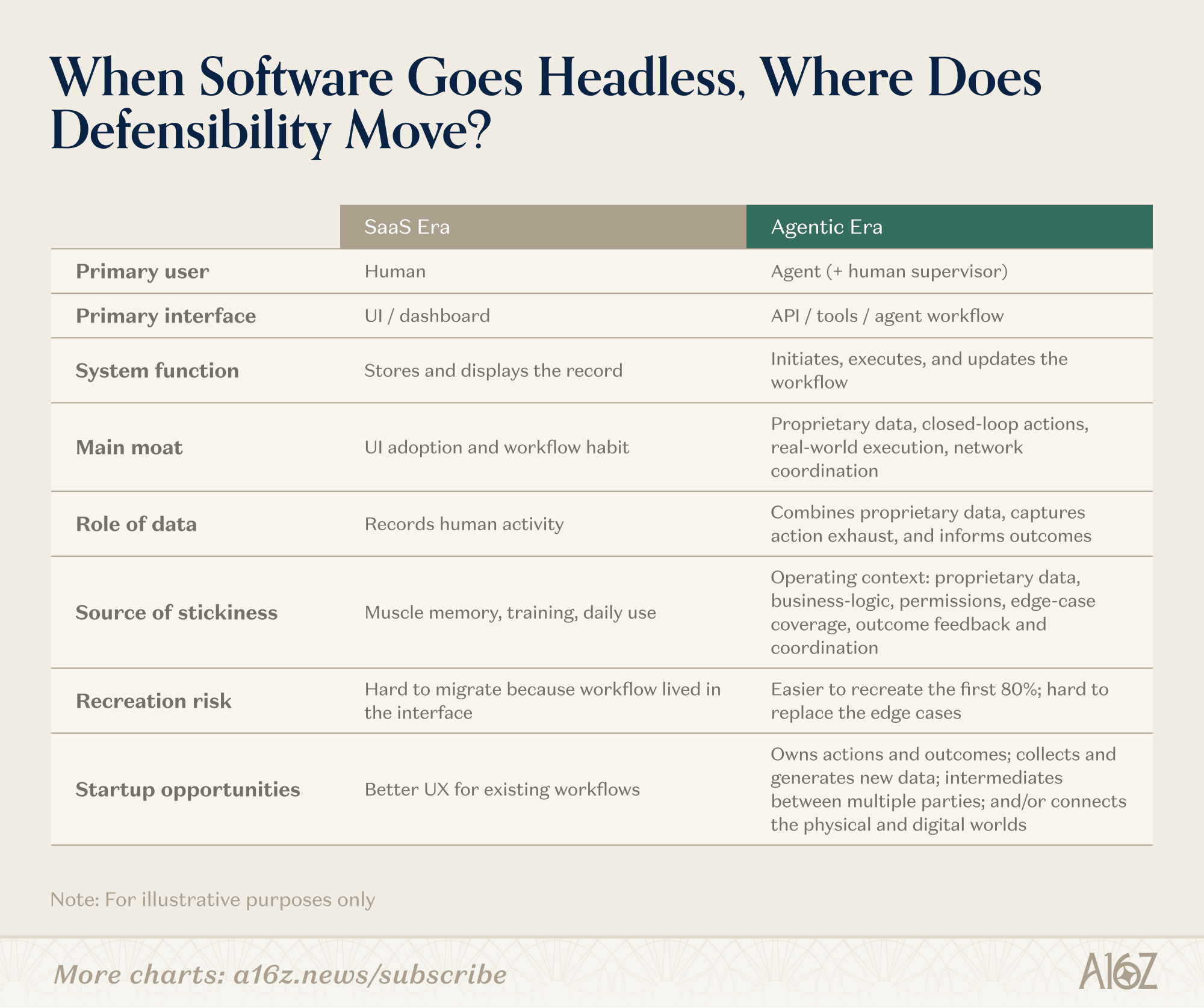
→ Why does it matter? SalesForce.com has announced they’re going headless. Seema Amble argues that as agents bypass the UI, software defensibility shifts from human workflow and muscle memory to data models, permissions, proprietary context, compliance, and real-world execution. — a16z
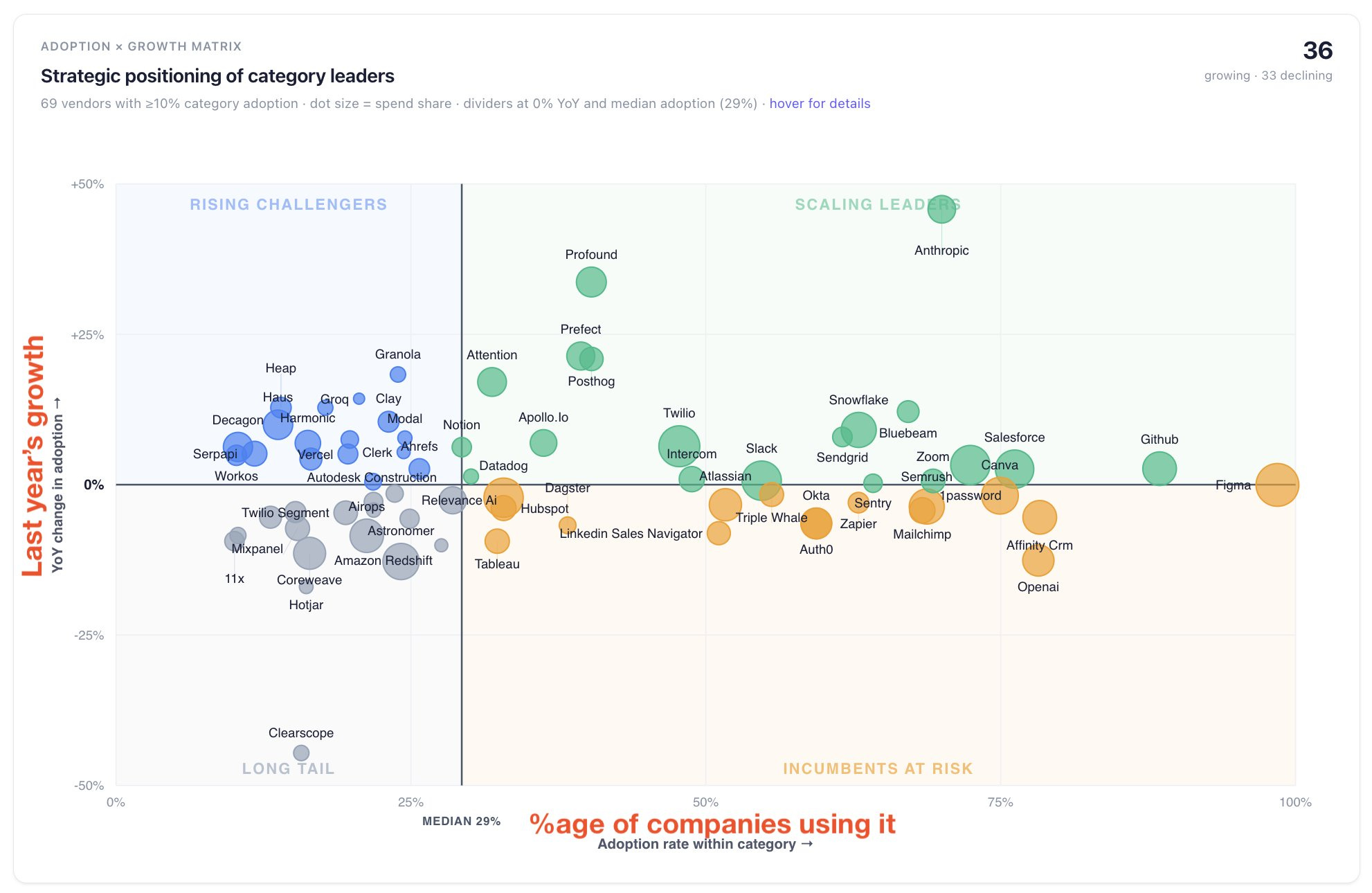
→ Why does it matter? The clearest snapshot I've seen of where software adoption is actually moving: 33 of 69 major vendors declining YoY. Great work from Deedy Das — worth spending time in every quadrant.

Tweets that stopped my scroll:

→ Why does it matter? In the pursuit of organizing around the work, some CEOs are trying entirely new designs. Dorsey's version: collapse Block's five management layers to two or three, with AI doing the information routing that middle management used to own. (Fortune)

→ Why does it matter? Few read the market better than Coatue, and their take: the market is pricing the supply chain, not the applications.

→ Why does it matter? 🤯

→ Why does it matter? The mouse pointer is a 50-year-old interface, and Google DeepMind is experimenting with replacing it with motion, voice, and gesture.

→ Why does it matter? Shopify's internal AI agent increased its merge rate from 36% to 77% in two months. Not by switching models, but by making all AI work visible in public Slack channels. Everyone watching, everyone learning.

Worth a watch or listen at 1x:
→ Why does it matter? Naval's blunt take: pure software is uninvestable. If your only edge is code that others can't build, that edge is gone. Worth 1x for the contrarian framing on venture and his walkthrough of building a personal app store on his iPhone.
→ Why does it matter? Anthropic's CFO walks through how they went from a $9B to a $30B run rate in a single quarter. Krishna Rao's view from inside: compute is the canvas, not a variable cost, and 90% of Anthropic's own code is now written by Claude Code.

Quotes & eyewash:
→ Why does it matter? There is simply not enough time in the day to do all of the things you want (or should) do. What can you say “NO” to?
The mission:
The Wall Street Journal once used “Read Ambitiously” as a slogan, but I took it as a personal challenge. Our mission is to give you a point of view in a noisy, changing world. To unpack big ideas that sharpen your edge and show why they matter. To fit ambition-sized insight into your busy life and channel the zeitgeist into the stories and signals that fuel your next move. Above all, we aim to give you power, the kind that comes from having the words, insight, and legitimacy to lead with confidence. Together, we read to grow, keep learning, and refine our lens to spot the best opportunities. As Jamie Dimon says, “Great leaders are readers.”
Disclaimer: This content is for informational purposes only and does not constitute financial, investment, or legal advice. Readers should do their own research and consult with a qualified professional before making any decisions.