



The big idea: The new knowledge work
Reading time: 7 minutes

Last week I wrote about the transition tax. On Saturday, after the kids went to bed, I started paying it.
You might think, given how much I write about AI, that the manufacturing of this newsletter is entirely automated. It is not. Actually, it is more manual than I’d like to admit.
I am not talking about the Big Ideas or the content I have tastefully curated for you. I am talking about assembling HTML, screenshotting tweets because Substack is in a feud with X, formatting, carefully selecting the right emojis for Best of the Rest, and attributing the quotes.
This is not the thinking part. It is not the creative process, nor the ultimate expression of making something from nothing. That is by far the most rewarding part of why I do this every week.
This is the work about the work. And it takes a lot of time that I want back.
The central promise of AI is to give it back. To let your Agents take on the mundane.
To elevate you. And to get there, you need a new form of knowledge work.
The new operating system and applications
In the old world, the knowledge worker has access to a computer, an operating system, and software. A file system, your favorite applications, productivity tools, and a browser. You use these tools to move the work.
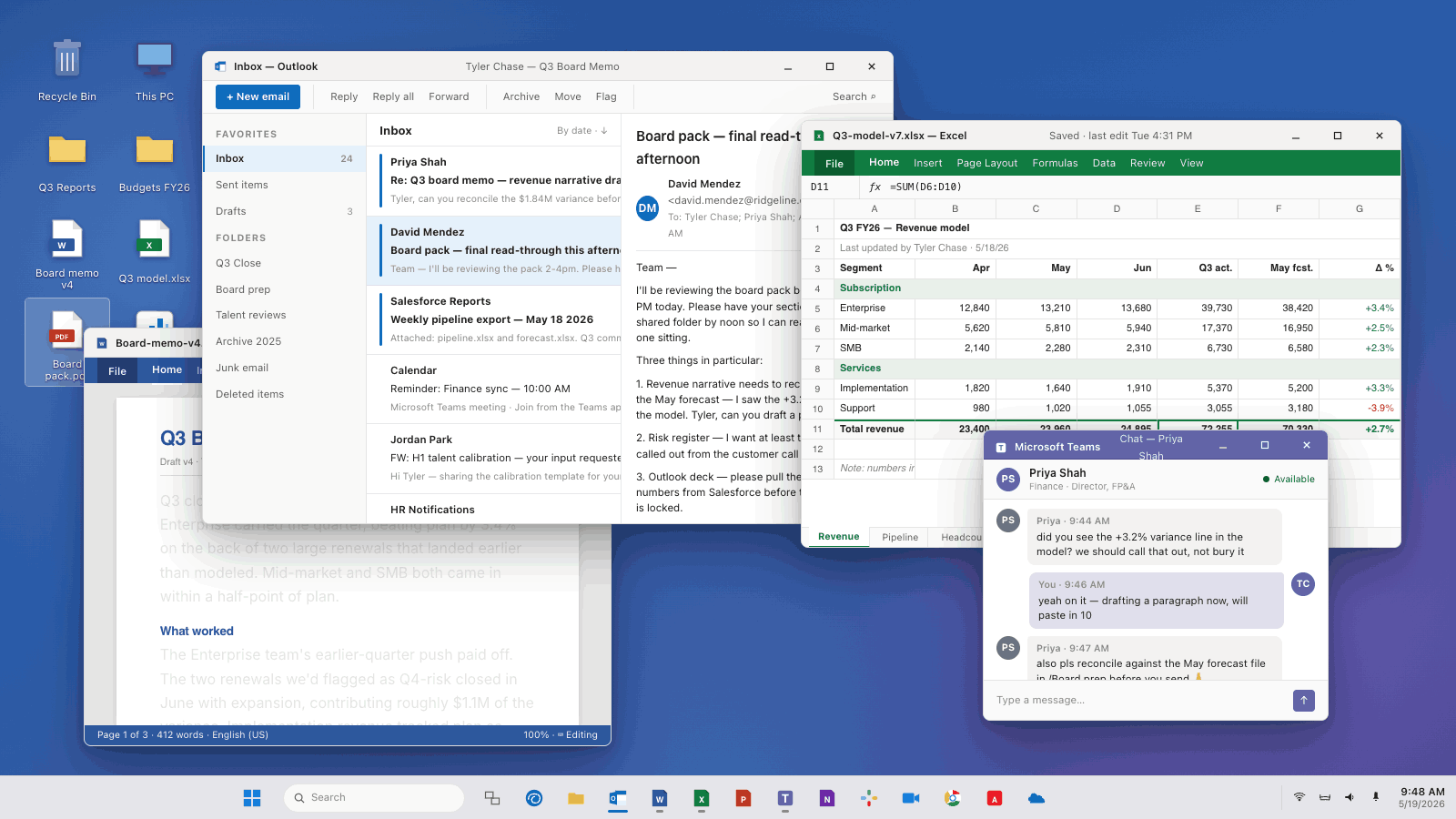
Software historically gave you the tools to do the job. What is different with AI is that the tools can do the job.
The new world is powered by AI, and its primary operating system harnesses intelligence to drive outcomes. Your new job as a knowledge worker is to get in the driver’s seat, tell it what to do, and give it the vital context it needs.
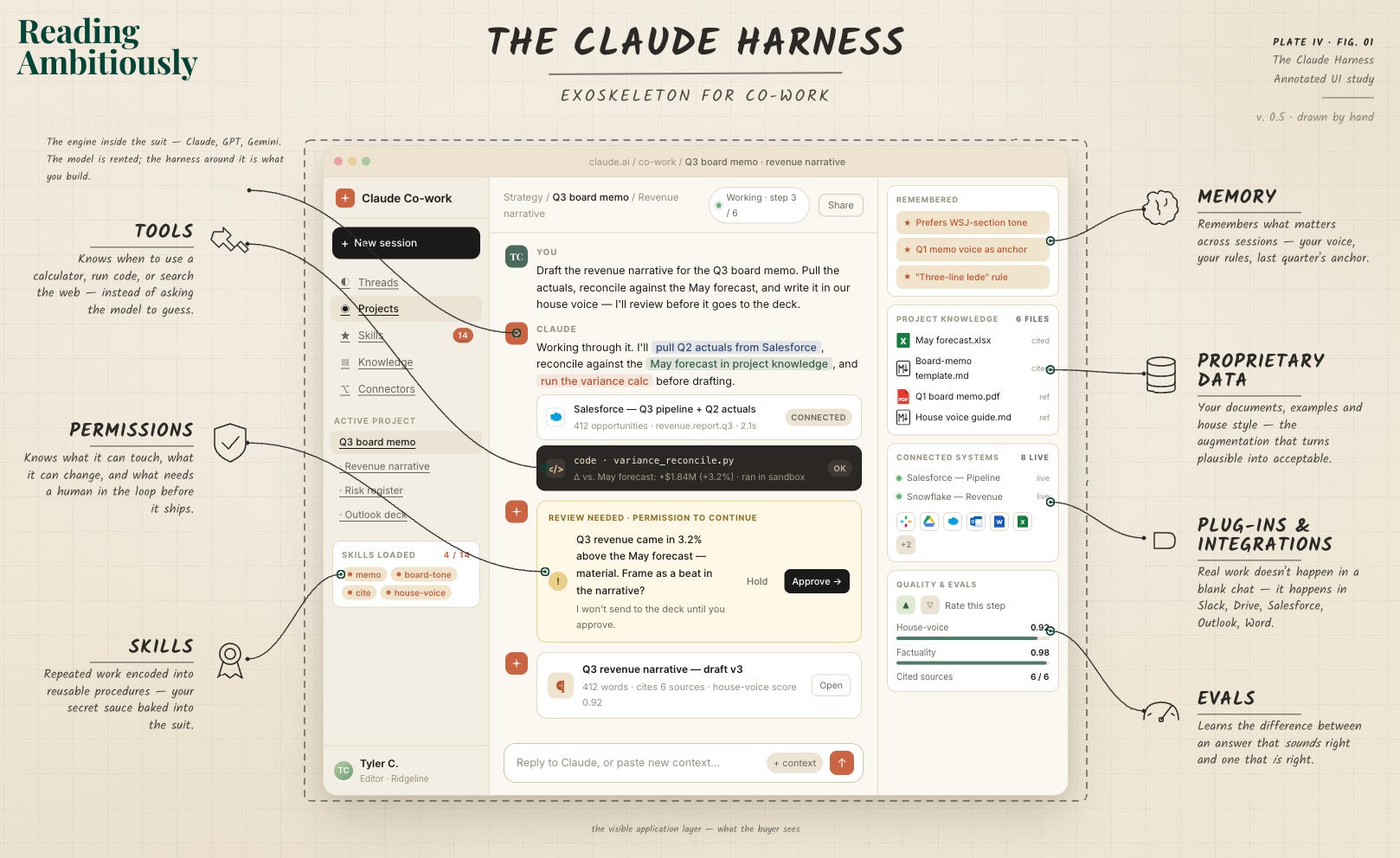
One example of a harness is Claude Cowork from Anthropic. When you open it, you see a mosaic of capabilities working together:
A voice or text-based experience powered by a large language model you select.
Connectors that wire the brain to the tools where your work already lives, such as your email, calendar, files, and applications.
Plugins, which are pre-built collections of capabilities for a specific kind of work.
Memory management (although it is very nascent today).
And skills.
Skills are one unit of automation. They are the onboarding documents for your AI agents.
Skills are to the new world as applications were to the old world.
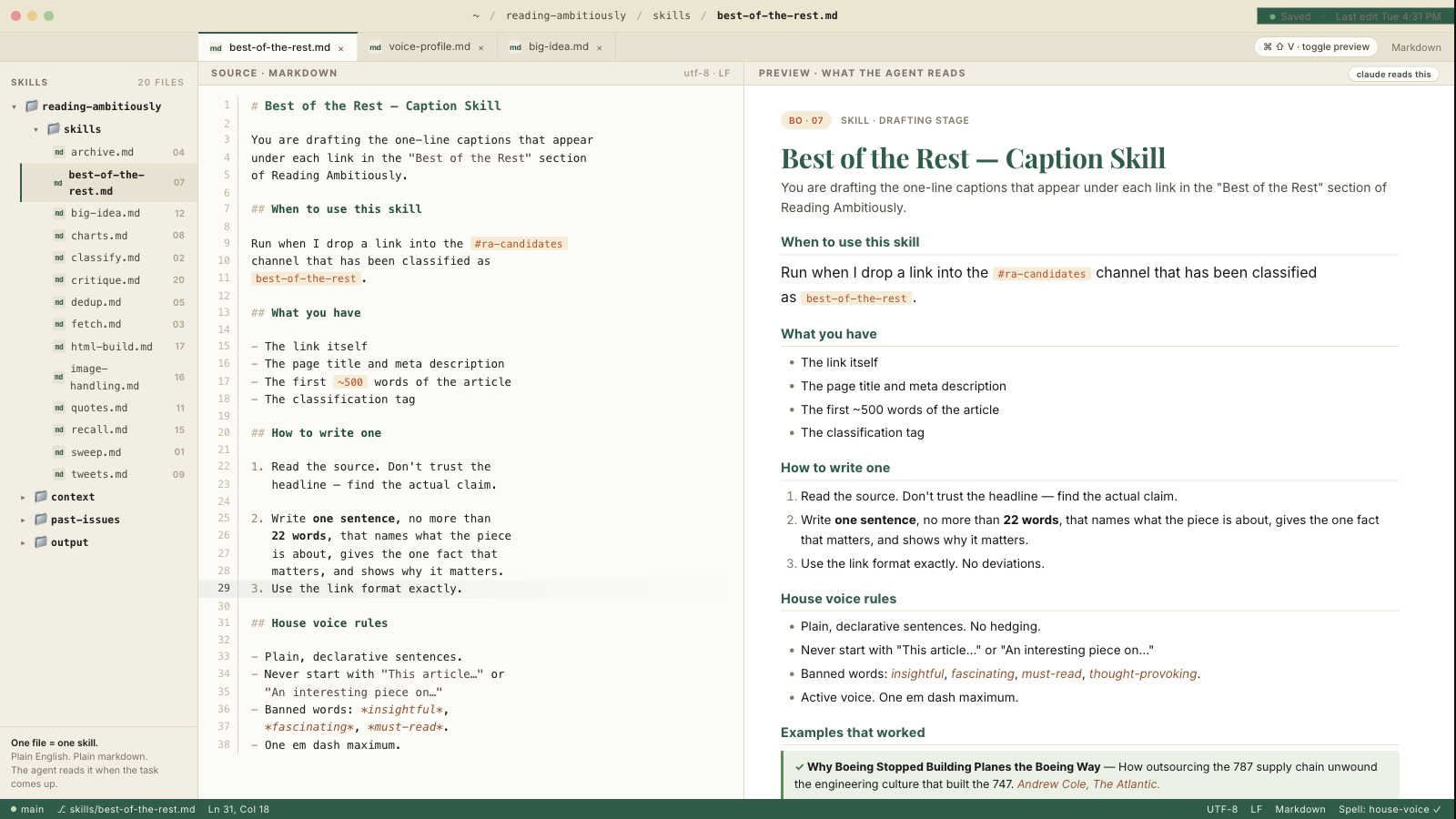
You write down how a task should be done, the way you would explain it to a new hire on their first day. The agent reads it when the task comes up. The next time the work comes up, it runs the same way.
If a prompt is a conversation, a skill is a procedure.
Software used to come in a box. You bought it, installed it, and shaped your work to fit its menus. The unit of software was the application, and the work occurred within it. Like those icons on the desktop.
The unit of software in the new world is now the skill. You write it, shape it, and version it. The work happens around it, in the harness, with the agent reaching for the skill and the context at the right time.
A working example, ready to install
Last week, Anthropic released something called Claude for Small Business. What is it? You guessed it, a big library of skills. Fifteen of them, all written for the work a typical small business does.
There are Monday morning briefings, tax prep, month-end closing, cash forecasting, and payroll.
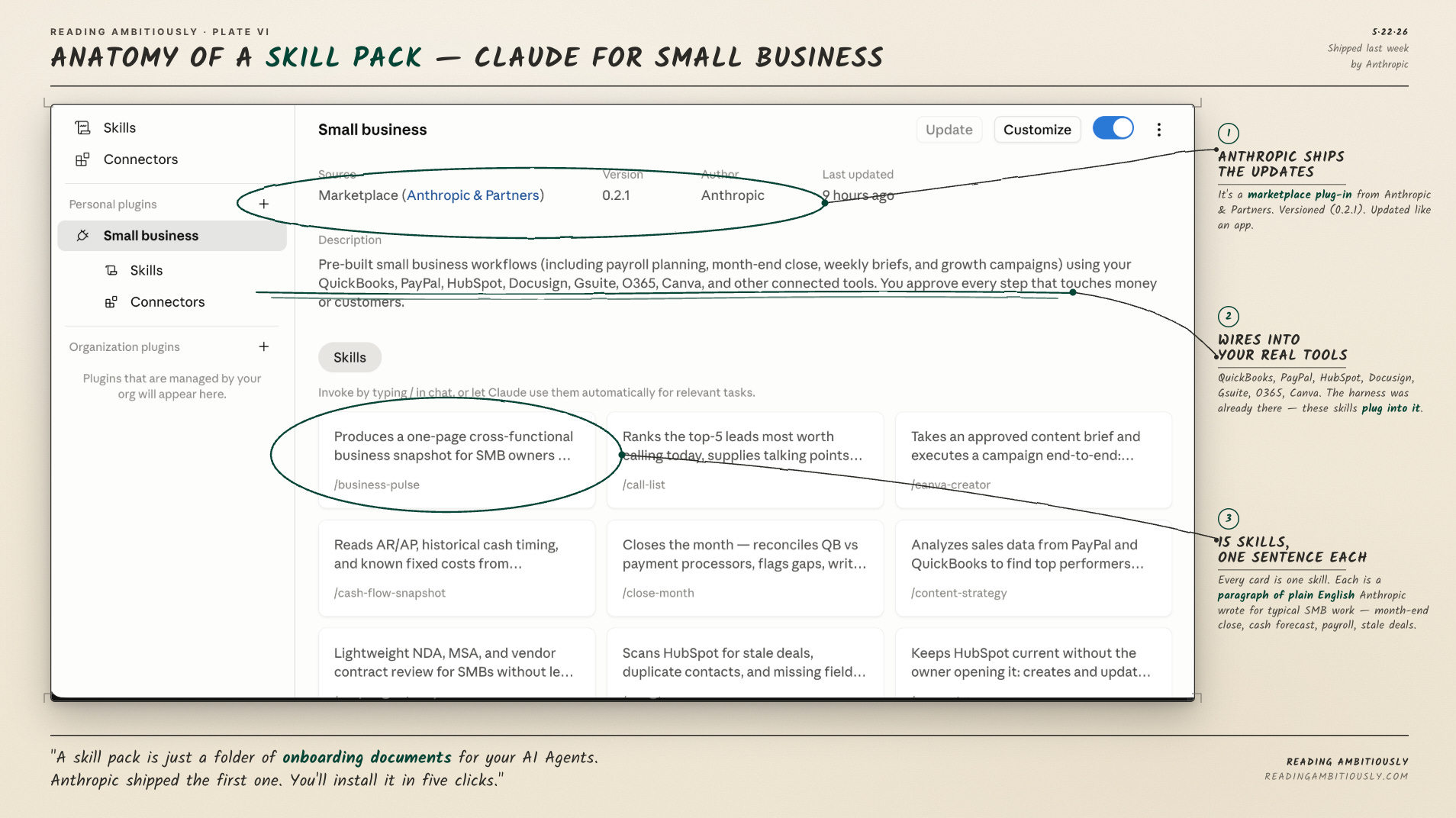
Each of these is a paragraph of plain English sitting in a markdown file, ready to run when you ask for it. The files are version-controlled and updated by Anthropic. You install these skills into your harness, wire it up to your systems like HubSpot, QuickBooks, and PayPal, and you are ready to start automating knowledge work.
It is clear to me that an app store of skills will come. I see a world where you develop a skill, share it with a colleague, and make it available to others, free or for a fee, through a marketplace built for security and compliance.
You do not have to wait for that to arrive. If you can make Word documents, you can start developing skills today.
The agentic factory
I have been building skills to automate the manufacturing process of this newsletter. I liken the compilation of skills to the periodic table.
The elements are discrete. Each one does a very specific thing. Together, they make everything.
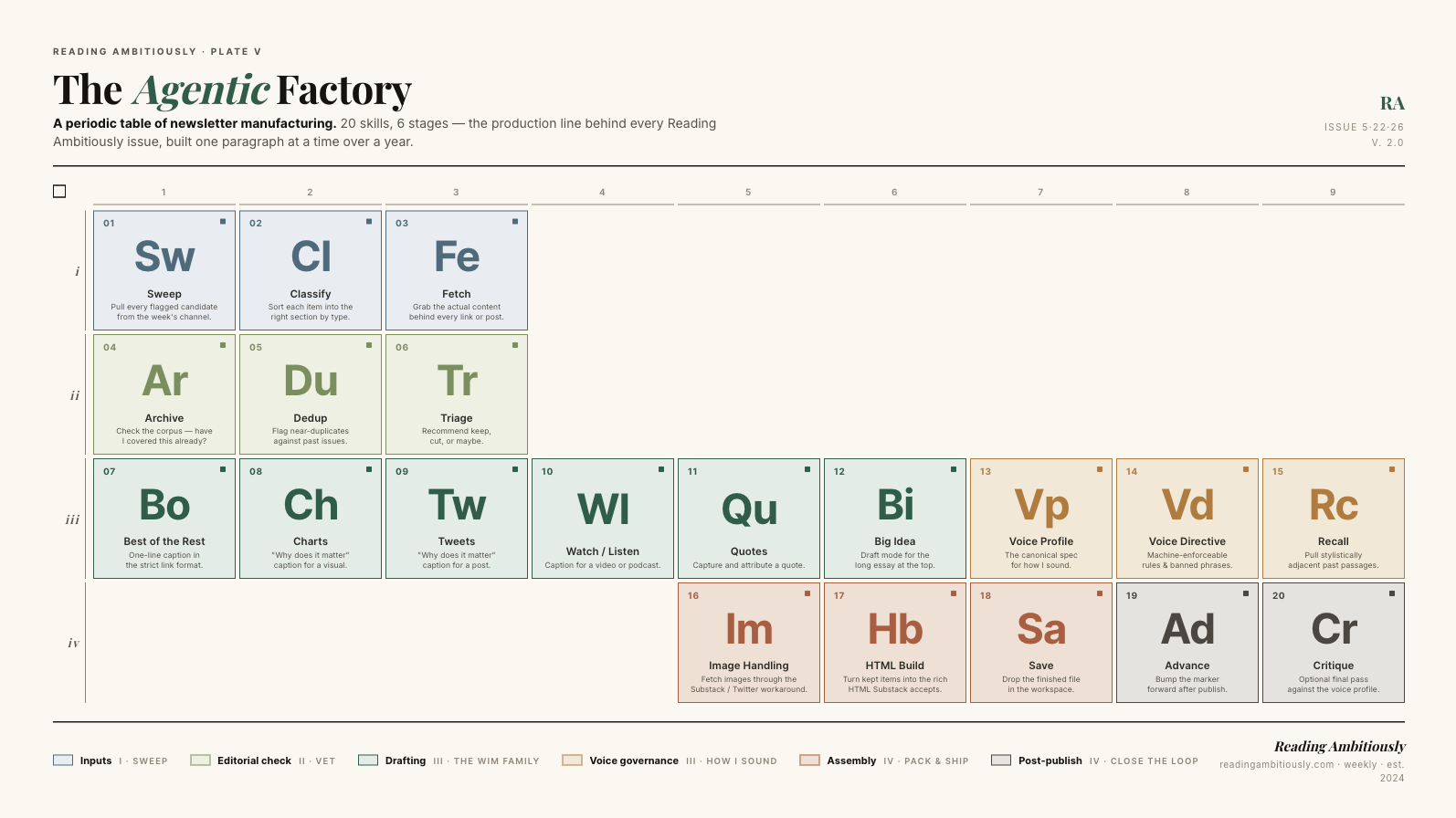
There is:
A sweep skill that pulls every candidate from the private Slack channel where I flag items every week. This channel is accessible to Claude via a Slack MCP connector.
A classifier that interprets the content as either Best of the Rest, charts, tweets, or podcasts.
A fetcher that fetches data and metadata from the internet about the content.
An archive checker that uses AmbitiousOS to search every previous issue and see if I have already used the content.
A drafter who starts coming up with ideas in my voice for the why it matters.
A builder that handles Substack’s rich HTML formatting requirements.
None of these is doing the thinking or the heavy lift of writing the Big Idea. That is the part I love and the human-only part. What they are doing more and more of is the manufacturing, the part of the job that takes hours every week.
Your new job
The knowledge worker’s job is to do the work we are doing here.
The hardest part is thinking in a new way. It is taking a step back and thinking through the processes you have today to manufacture your work. Most knowledge workers have never written this down. We do the work because we know the work, but the way we do it lives in our heads.
Your next job is to externalize that knowledge. Break the processes into elements, write each element into a skill, and let the agents run the elements you should not be running yourself.
This is the practice of paying the transition tax. And you can start right now by opening your favorite AI tool and saying “Hey, let’s create a skill together”.
Done right, you can construct and assemble the skills your agents need to automate the mundane, so that you can move to higher and higher value work. The most creative and rewarding part of the human experience.
It’s worth it, let’s pay the tax together.
Stay ambitious.

Best of the rest:
📚 You Need AI That Reduces Maintenance Costs — James Shore drops a spreadsheet on “Rock Lobster,” his fictional 2x-output coding agent, and shows what we’ve all suspected: if AI doubles your output without halving the cost of maintaining that output, you’ve quadrupled your future maintenance burden. Turn the agent off, and the productivity bump evaporates while the debt stays. Hotel California, but for code. — James Shore
🎯 “AI-Powered” Isn’t a Position — Arielle Jackson returns to First Round Review with the playbook for differentiating when every category is converging on “AI-powered X.” The bottled-water frame is the keeper (Evian and Liquid Death built distinct brands on functionally identical water) and the Cursor case is sharper — they won by repositioning every few months as the terrain moved, and the day they stopped, Claude Code ate their frame. — First Round Review
📊 AI eats the world — Spring 2026 — The new Ben Evans macro deck just dropped, titled “AI eats the world”. — Benedict Evans
🧠 After Automation – Dan Shipper argues that AI will not eliminate expert work so much as flood the zone with cheap competence, making human judgment, taste, and framing more valuable than ever. – Every
🧱 The Inference Shift — Ben Thompson suggests the chip future bifurcates along a more useful axis than training vs inference: “answer inference” and “agentic inference”. Three sideways implications worth chewing on: China already has everything it needs for agentic inference today, space data centers suddenly make sense, and the way we get more compute might just be realizing the compute we already have is good enough. — Stratechery

Charts that caught my eye:
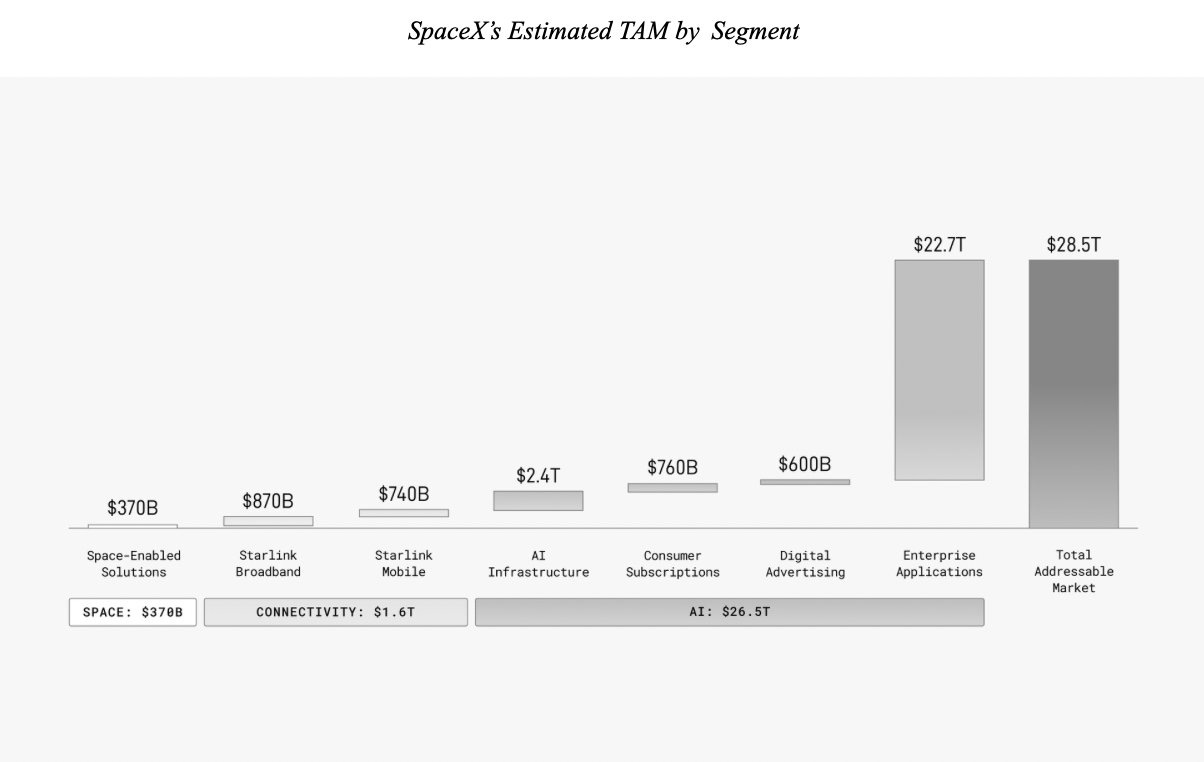
→ Why does it matter? SpaceX in IPO filing: "We believe we have identified the largest actionable total addressable market in human history. We estimate that our quantifiable TAM is $28.5 trillion! 🤯 It was also reported via the S-1 that Anthropic is paying SpaceX $1.25B/month to rent their datacenters. What’s a $15B/ACV deal for SpaceX! Oh, it includes a 90-day cancellation clause. Buckle up!
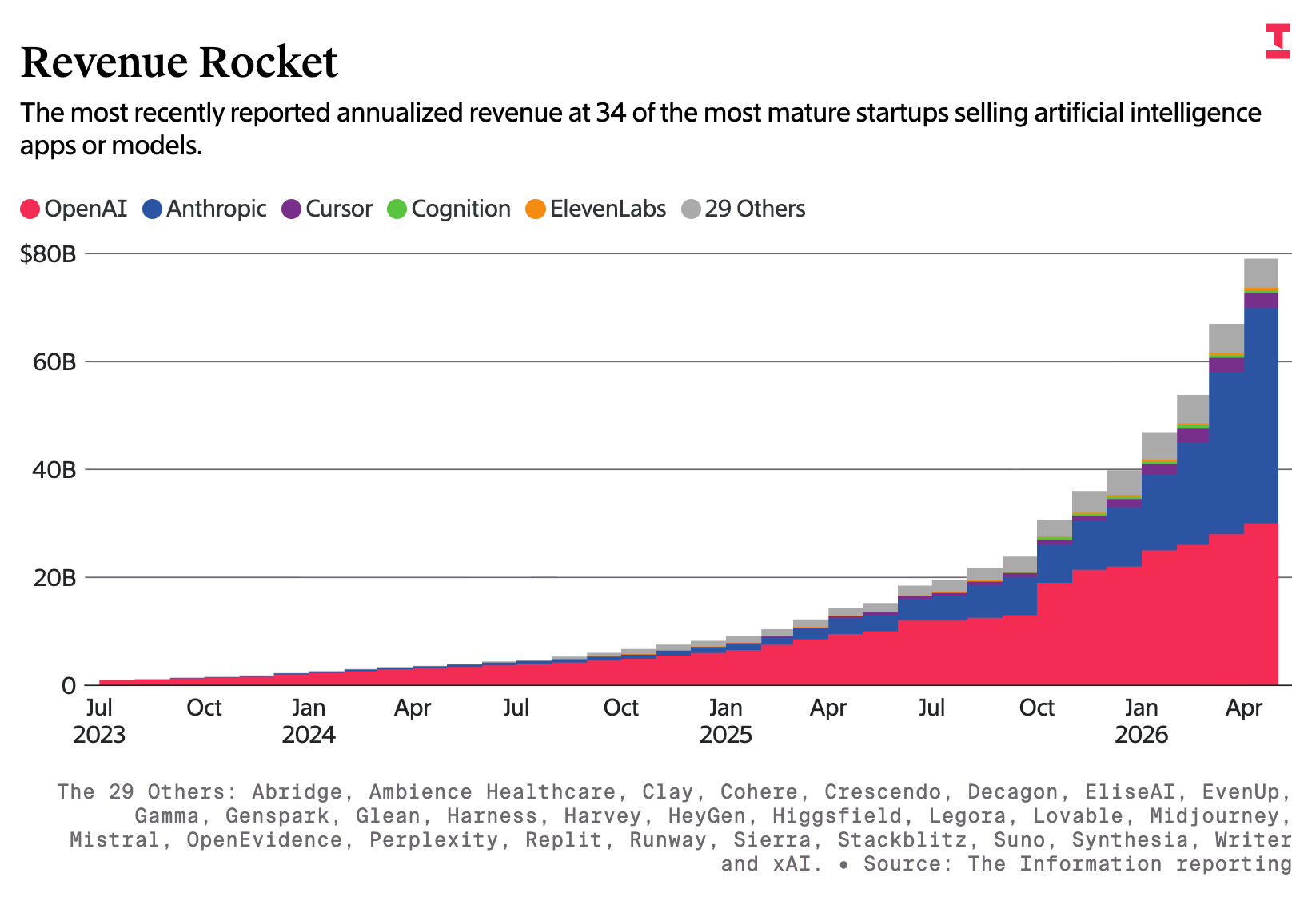
→ Why does it matter? Back in January 2025, the conversation was: Will the AI revenue come? Well, here it is. Palantir, Snowflake, and Databricks are the three highest-profile SaaS companies founded in the last 10 to 12 years, and each spent roughly 10 years building its business. In comparison, Anthropic added the combined annual recurring revenue (ARR) of those three companies in just one month.
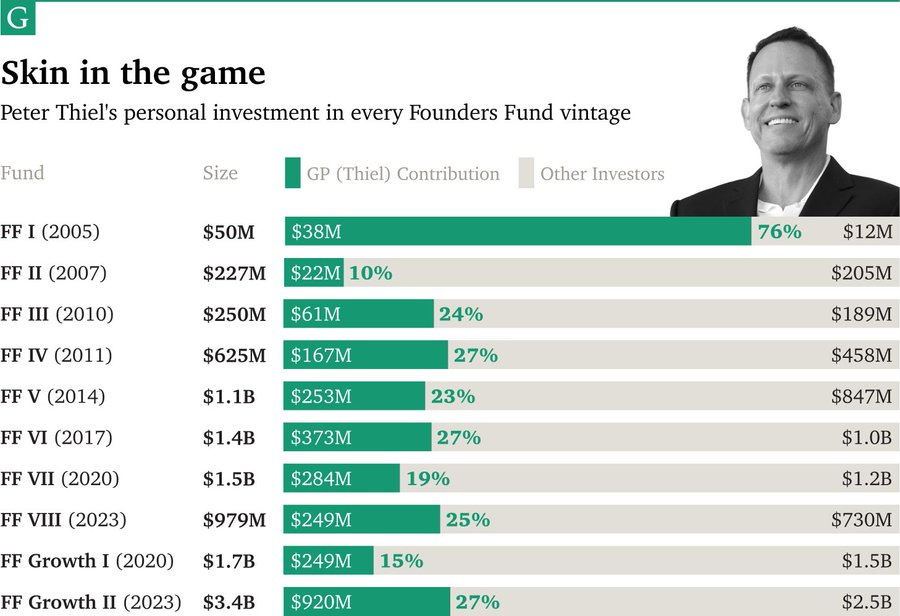
→ Why does it matter? Thiel sold out of Facebook early and missed roughly $100B of upside. The SpaceX IPO could turn that into the tightest comeback story in venture — ~$80B personally on a $3T print. The lesson isn’t that he was right about SpaceX; it’s that the power law lets you be right once and rich forever.
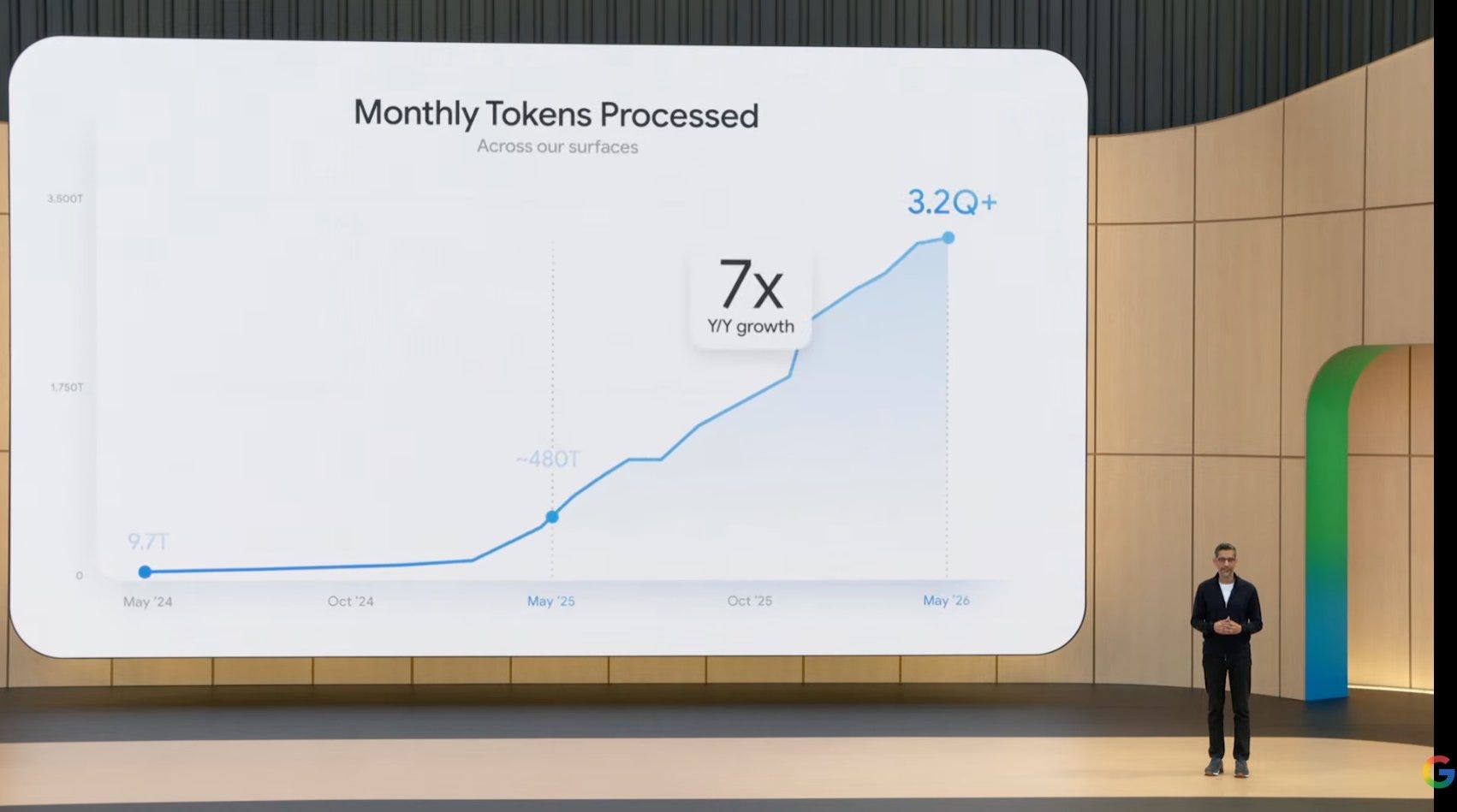
→ Why does it matter? When we first wrote about Google’s AI token volume, the number was already staggering: 480 trillion tokens per month. Today, it is 3.2 quadrillion, yes, quadrillion.
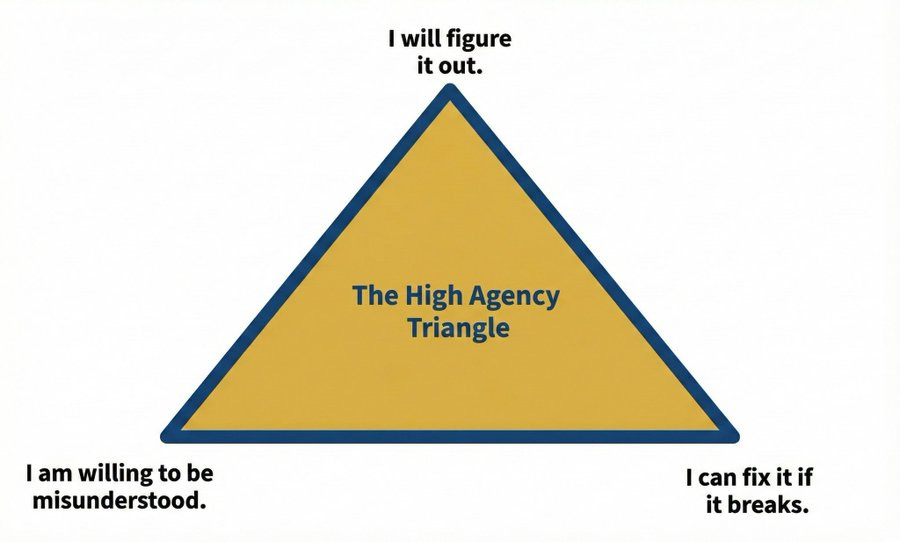
→ Why does it matter? Be the person who doesn’t wait for the conditions to be perfect or a victim of your circumstances to go get what you want.
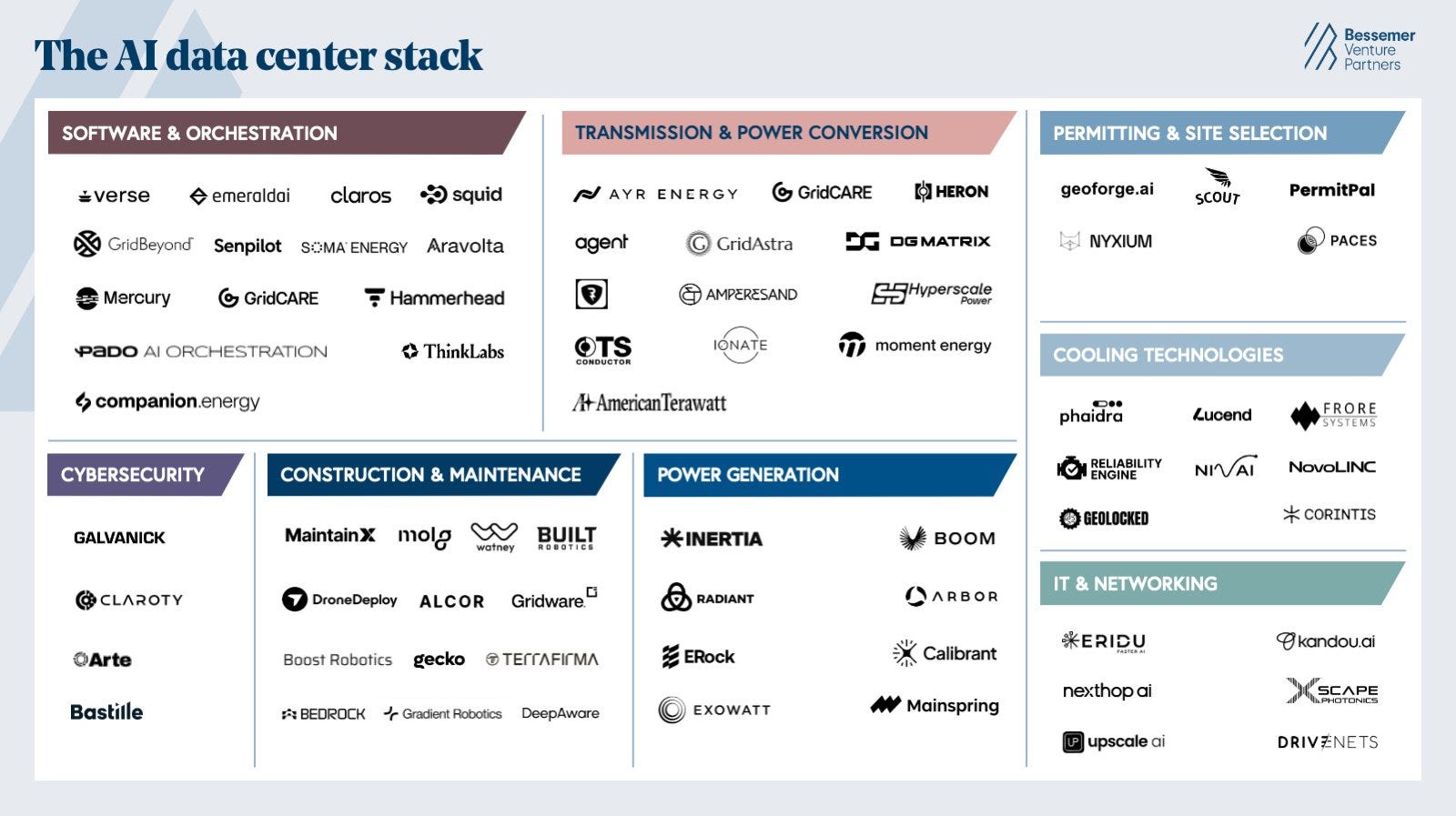
→ Why does it matter? Newest roadmap on the AI data center stack from Bessemer Ventures!
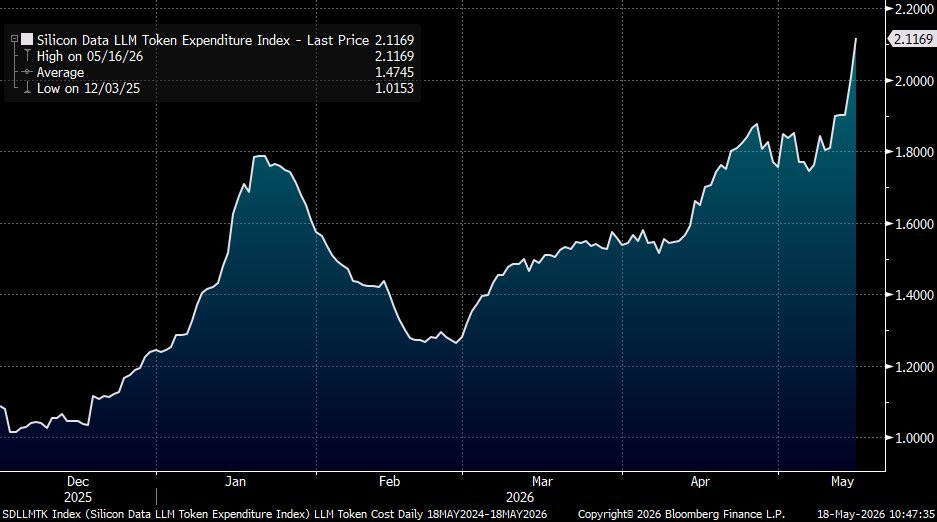
→ Why does it matter? Average LLM token costs are now $2.12/mil tokens,+12% this week alone and +65% since the end of Feb.

Tweets that stopped my scroll:

→ Why does it matter? Karpathy was the unofficial standard-bearer for the OpenAI alumni network. He’s now wearing orange. Rumor has it this Tweet got more engagement than Google I/O (which cost Google millions). Karpathy is going to work on building AI Research agents that can generate new AI Research. Once you have the AI making the AI better, this is the endgame.

→ Why does it matter? $1.3M in tokens from a single user in one month — roughly $43k a day. Two years ago, that was a startup’s monthly inference budget. Today, it’s an individual. Either we’re radically underestimating the per-user upper bound, or radically underpricing tokens. Probably both.

→ Why does it matter? Twenty-year arc from six Dell boxes called “the hive,” sitting out in the room with the traders so they could be unplugged in a crisis (someone once vacuumed one off mid-trade), to 4,032 liquid-cooled GPUs in Texas processing trades in under 100 nanoseconds.

Worth a watch or listen at 1x:
→ Why does it matter? The Acquired guys are THE best, and this one was so good. Bogle gets fired by his own partners. He turns around and builds a shareholder-less mutual that's now the biggest equity owner in most of the S&P 500. No wonder Acquired is considered to be the most expensive ad space in podcast land.
→ Why does it matter? Gavin Baker is at the top of his game right now. He’s running a deep understanding of the entire AI supply chain in his head, updated daily. Nobody better than Patrick to tease it out. Worth 1x for the walkthrough of how every layer connects.

Quotes & eyewash:
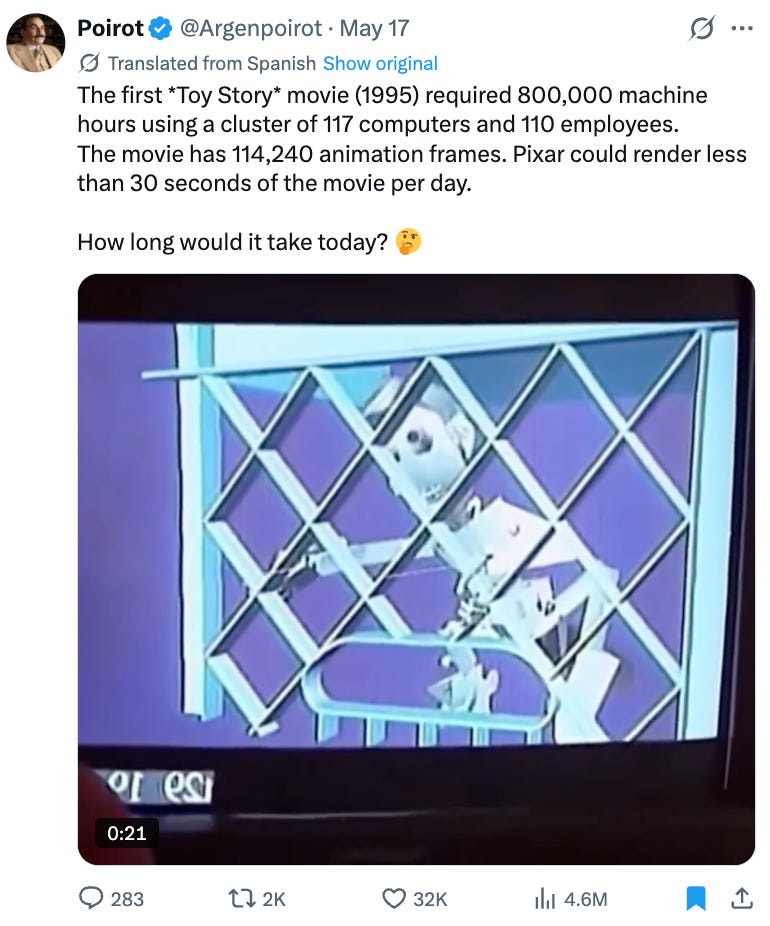
→ Why does it matter? And it was a masterpiece that we still watch with the family today!
The mission:
The Wall Street Journal once used “Read Ambitiously” as a slogan, but I took it as a personal challenge. Our mission is to give you a point of view in a noisy, changing world. To unpack big ideas that sharpen your edge and show why they matter. To fit ambition-sized insight into your busy life and channel the zeitgeist into the stories and signals that fuel your next move. Above all, we aim to give you power, the kind that comes from having the words, insight, and legitimacy to lead with confidence. Together, we read to grow, keep learning, and refine our lens to spot the best opportunities. As Jamie Dimon says, “Great leaders are readers.”
Disclaimer: This content is for informational purposes only and does not constitute financial, investment, or legal advice. Readers should do their own research and consult with a qualified professional before making any decisions.