

*NEW* The big idea read to you this week by me!

The big idea: a lot of FUD... but time and time again, optimism is the better bet

If you know me, you know I’m an optimist. I don’t just see the glass half full—most days it’s overflowing.
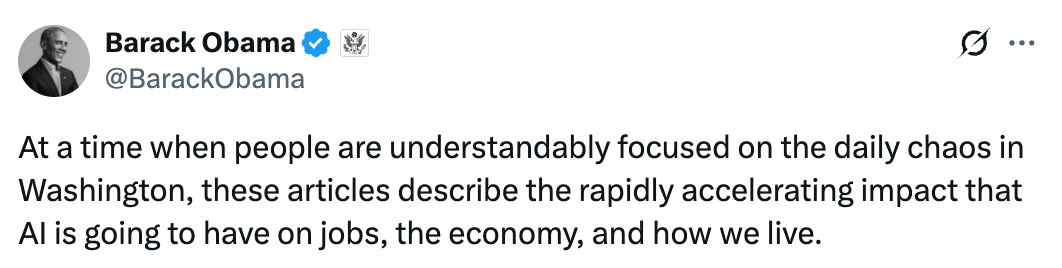
So when I arrived home earlier this week and my 80 year old neighbor said “Jack, what do you think about AI? I’m afraid”. She’d just read the headlines from Anthropic CEO Dario Amodei who warned that half of all entry-level white-collar jobs could vanish and unemployment could spike to 20%. Axios called it a “white-collar bloodbath.” President Obama shared the story with his 130 million followers.
It’s easy to feel like we’re barreling toward a cliff. The speed is real. The anxiety is justified.
But there’s a better way to frame it.
Progress follows a pattern: disruption, then reinvention
Every major leap in technology—electricity, steam, computers, the internet—disrupted the status quo. And yet each disruption eventually ushered in reinvention. Often, expansion.
AI feels different because it’s happening faster, and because it’s happening everywhere at once. But the core pattern is familiar.
“Statistically speaking, the world doesn’t end that often.” — Brian Rogers, former Chairman & CIO, T. Rowe Price
Technology is the ultimate economic multiplier
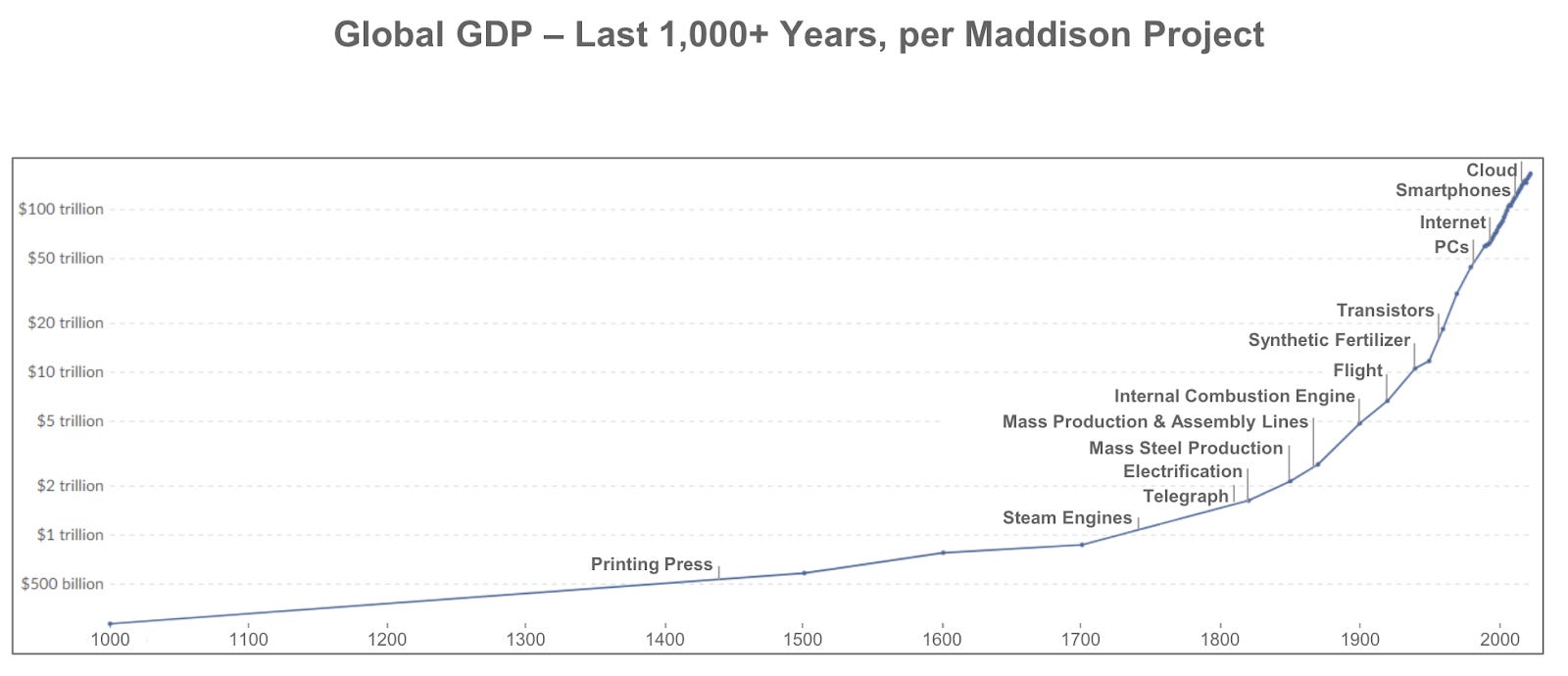
New tech doesn’t just make us more efficient—it creates entirely new industries, roles, and forms of value.
The steam engine pushed aside blacksmiths and birthed mechanical engineering. PCs retired typists and created software development. AI will do the same. It won’t eliminate people. It will move us to higher-value work.
We shift from doing the thing to designing the system. From repetitive execution to judgment, creativity, and strategic input.
Disruption → reinvention. Efficiency → expansion. Again and again.
And this time, because the pace is faster, the benefit may show up faster too.
Just as the industrial revolution dropped the cost of everyday goods and created the modern consumer economy, AI promises to drop the cost of knowledge work and expand access to services that were once scarce or unaffordable. The long arc of technology isn’t just about efficiency—it’s about abundance.
Blankets used to be luxury goods. Then came mass production. Today it’s AI models writing code, prepping legal docs, editing podcasts, booking travel. As these tools become embedded and ubiquitous, the cost of intelligence will fall—just like the cost of textiles did.
Yes, this time is faster. No, it’s not the end
The pace of adoption is dizzying.
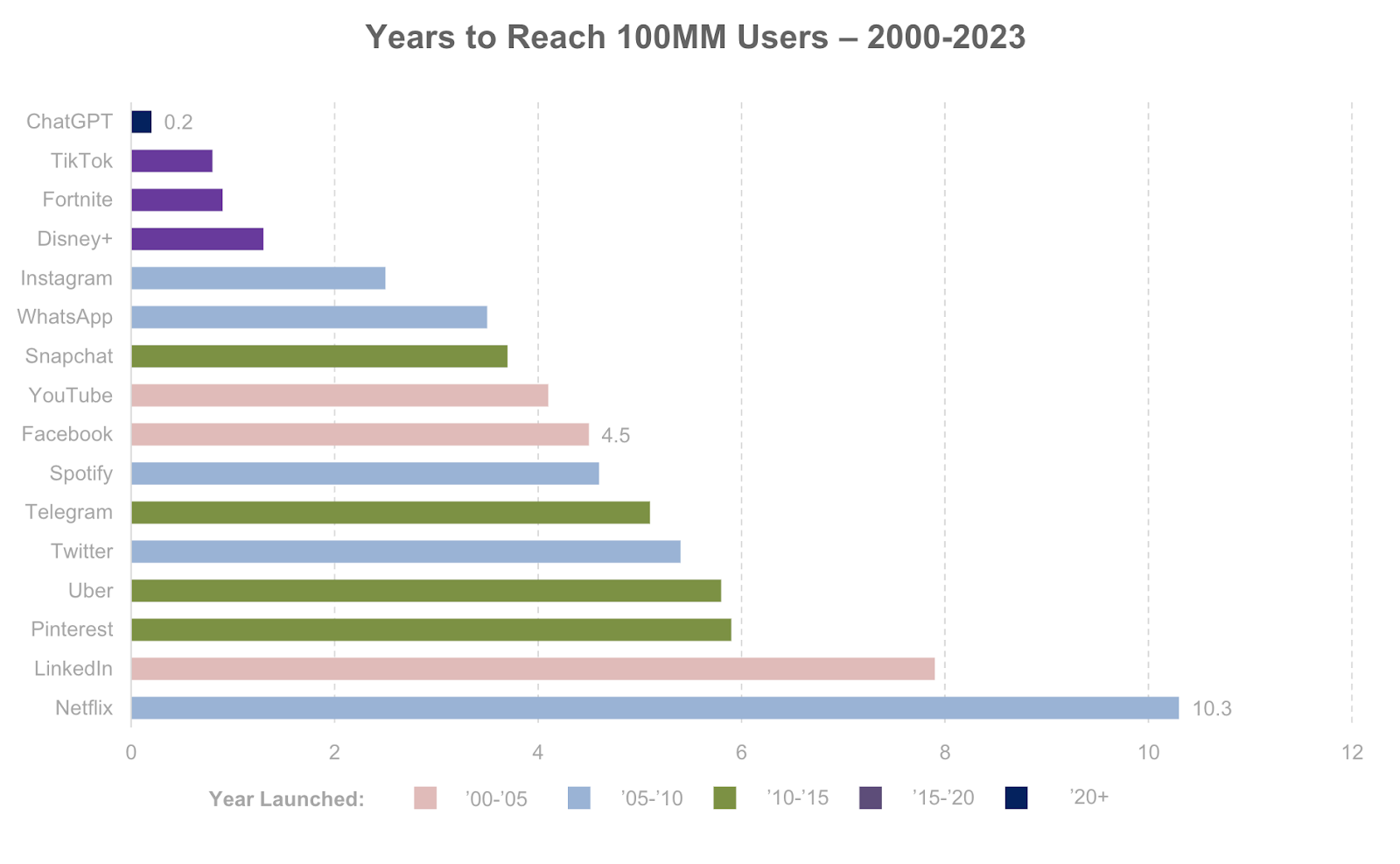
But speed alone doesn’t make it apocalyptic. New tech always feels abrupt when it crosses the tipping point.
Economist Carlota Perez describes the S-curve of technological change as:
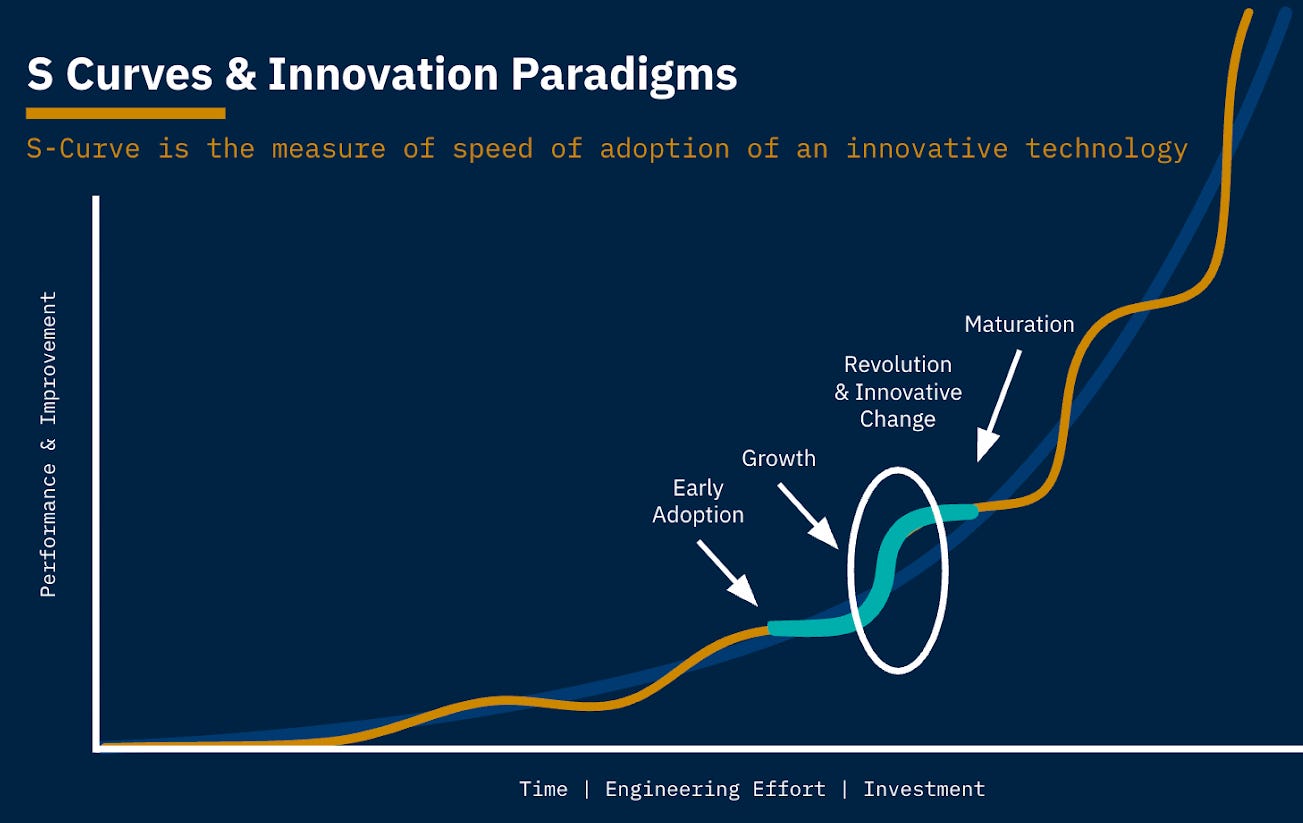
Early experimentation
A breakout moment
Rapid, widespread adoption
The internet’s “Netscape moment” made it usable for the masses. The iPhone did that for mobile. AWS for cloud. Technology doesn’t go mainstream because it’s powerful. It goes mainstream because it’s usable.
ChatGPT was AI’s “Netscape moment”.
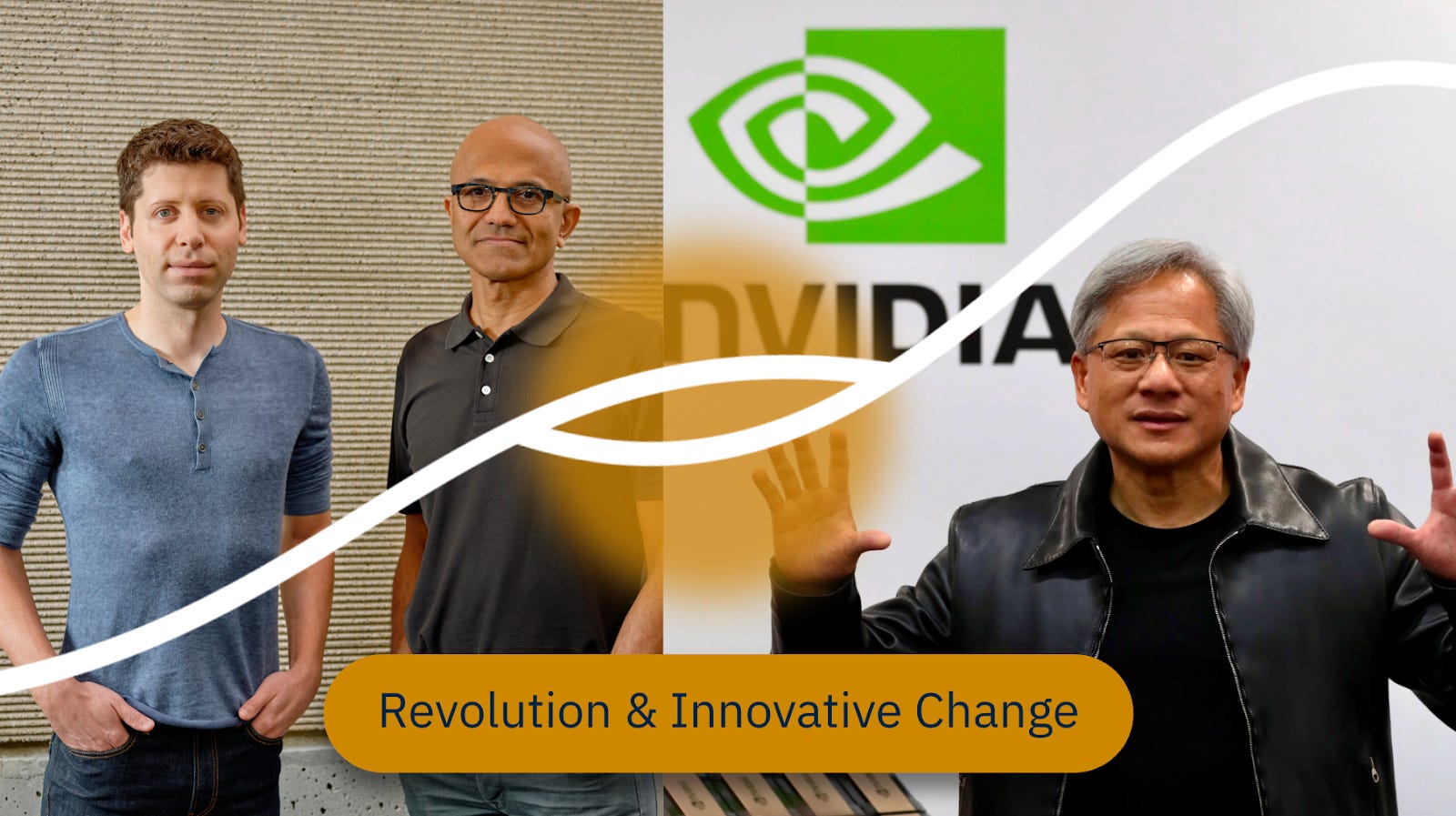
From there, it’s a similar playbook: New infrastructure → new applications → new industries → new careers.
The real bet: reinvention, not replacement
The work will change. But it won’t disappear.
What AI replaces are the repetitive, low-leverage tasks. It does not replace ambition, discernment, storytelling, creativity—or the deeply human instinct to build.
AI creates space for us to refocus on what matters most. That’s what human progress looks like.
Why it matters
This is not a story of destruction. It’s the next chapter of reinvention. And optimism isn’t naivety—it’s pattern recognition.
The people and organizations that win this era won’t be the ones who panic. They’ll be the ones who adapt, expand, and build on the upside.
Because while the pace is new, the path is familiar.
And the case for optimism? Still one of the best bets you can make.

Best of the rest:
🧩 Microsoft’s Former Deals Chief Joins the AI Roll-Up Rush - One of the hottest investing strategies of the year: back startups that acquire and merge services businesses—then use AI to drive scale and efficiency. Now, a former Microsoft dealmaker is getting in on the action. - The Information
🌟 Find Your People (and Your Ambition Plans) - In a moving commencement speech, Y Combinator cofounder Jessica Livingston urges grads to break from the "train tracks" of school and steer their own path—with one key insight: your most ambitious plans usually start as conversations with the right people. You don’t need a map—just direction, curiosity, and immunity to rejection. - Founders at Work
🧑💻 How Morgan Stanley Tackled One of Coding’s Toughest Problems - Morgan Stanley built its own AI tool, DevGen.AI—based on OpenAI’s models—to modernize legacy code. It’s reviewed 9 million lines and saved 280,000 developer hours this year. By turning outdated languages into English specs, it bridges the gap Big Tech’s tools still struggle with. - The Wall Street Journal

Charts that caught my eye:
Trends Artificial Intelligence - Bond Capital (May 2025)
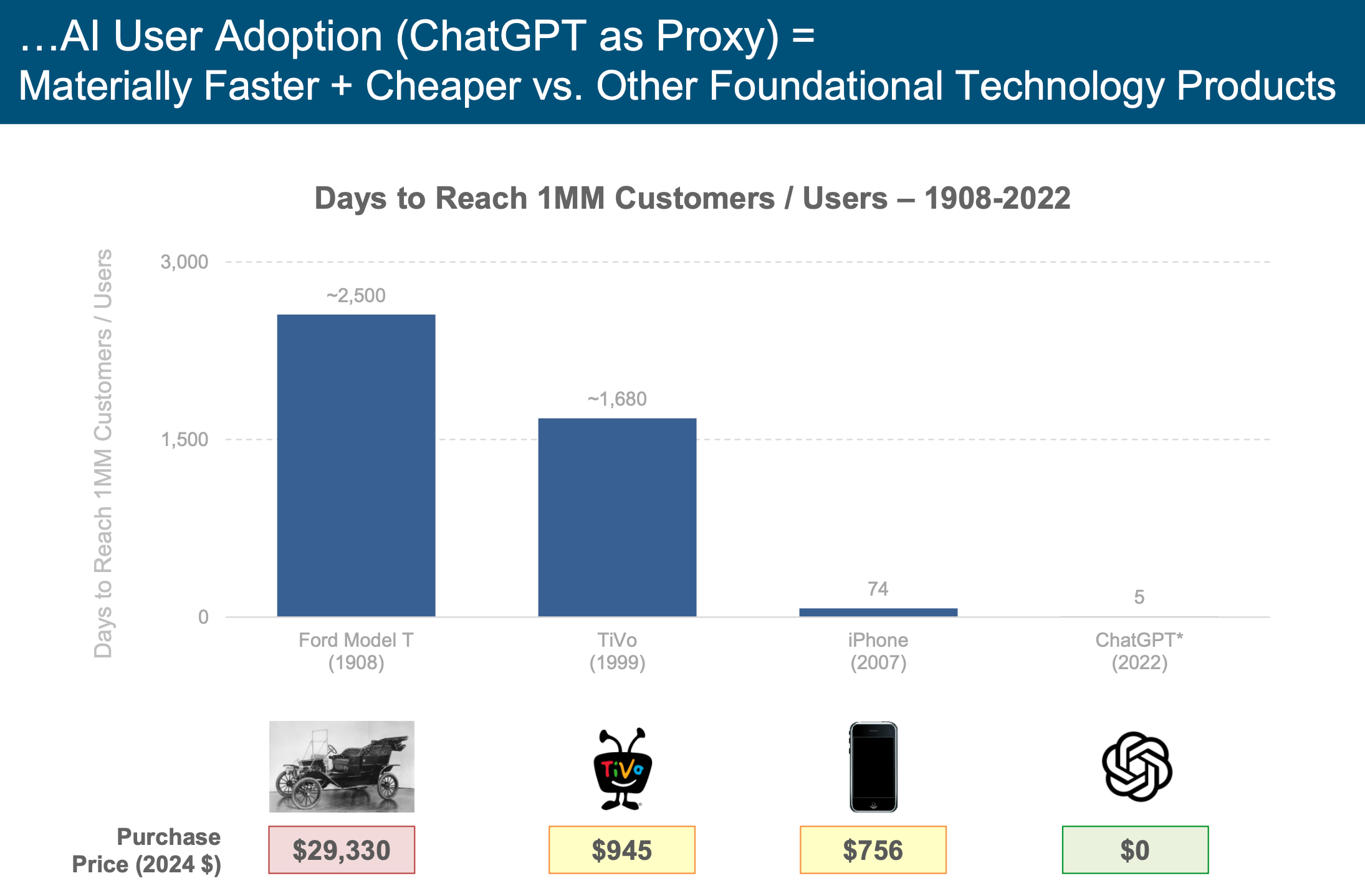
→ Why does it matter? Mary Meeker and Bond Capital just dropped a 340-slide epic on AI—one of the most comprehensive snapshots of the paradigm shift underway. Meeker is known for publishing the kind of charts that show up in board decks for the next year, and this one delivers. From user growth to compute costs to agentic interfaces, the data makes one thing clear: this isn’t a hype cycle—it’s a full-stack transformation, unfolding faster than any tech wave before it.
Coatue Public Markets Update (May 2025)
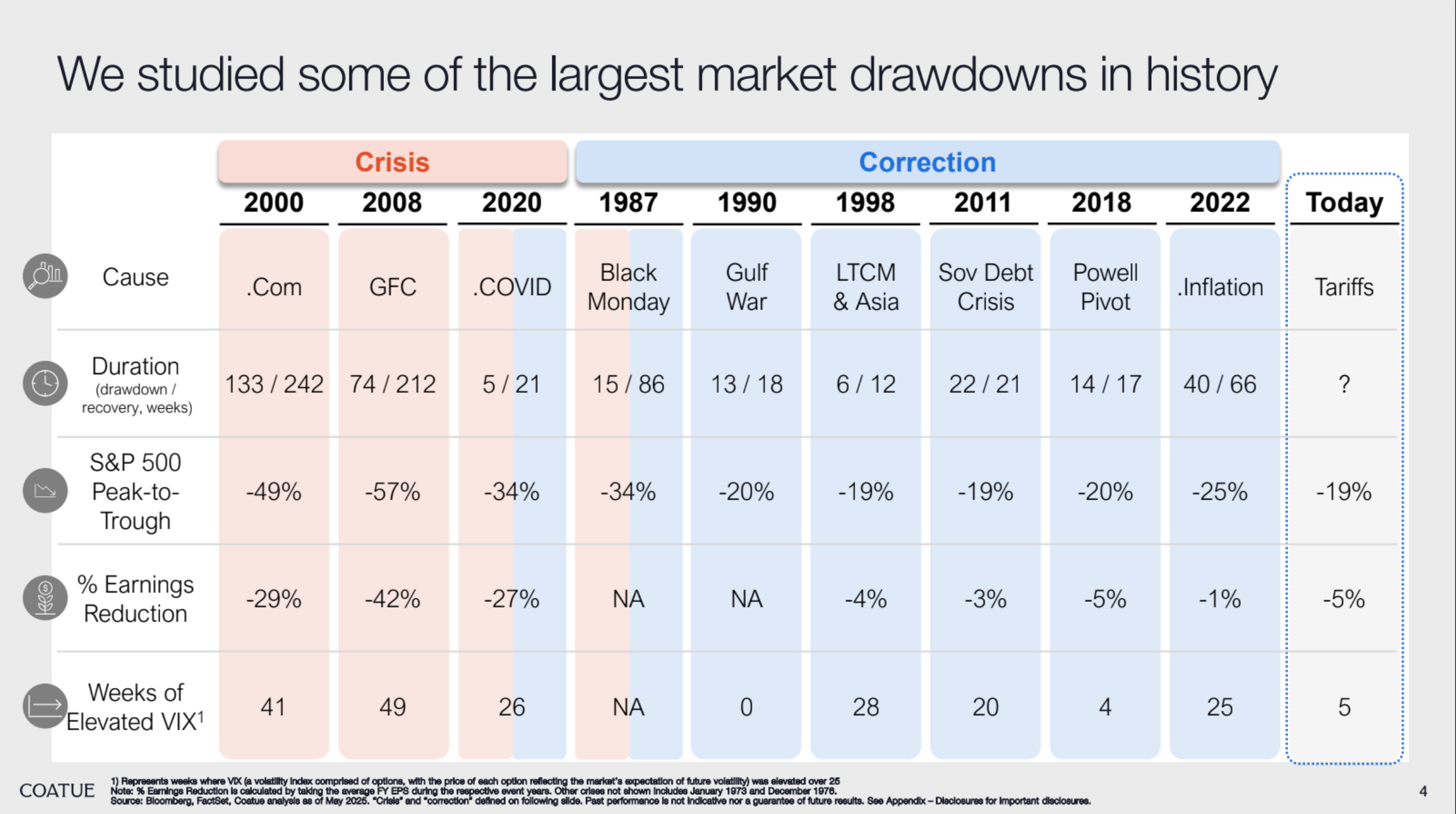
→ Why does it matter? Looking for a point of view on where we’re at in public markets? Look no further than Coatue’s most recent investor update. Very interesting tidbids in here including what Coatue calls the “hard truth index”.
The state of B2B monetization in 2025 (Kyle Poyar)
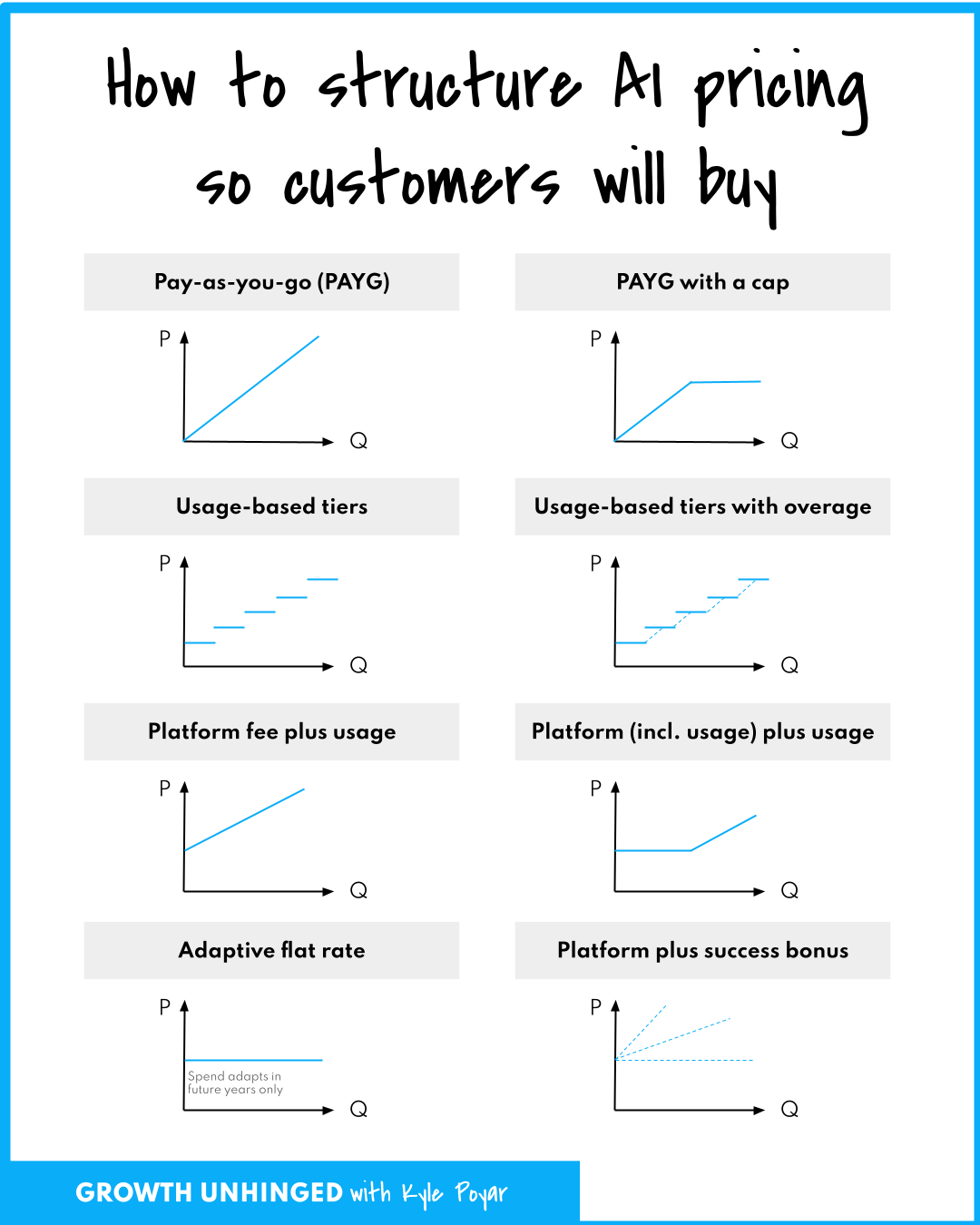
→ Why does it matter? A lot of debate right now about how to monetize AI and there isn’t a clear winner with the exception that most everybody would like to get to an outcome-based model. I tend to find Kyle and team have the best thinking of these topics, check out their latest in the link above.

Tweets that stopped my scroll:
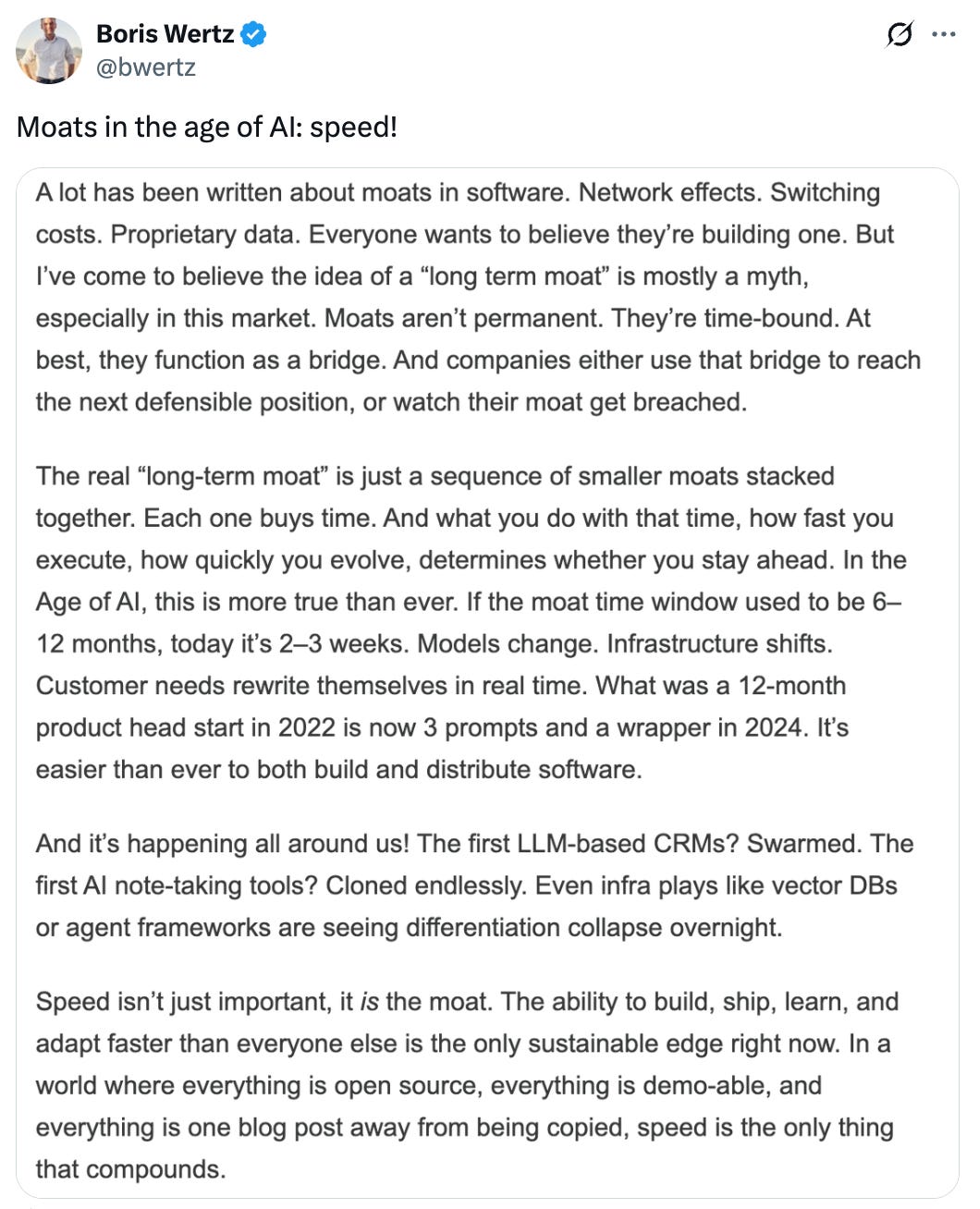
→ Why does it matter? Speed is the moat with which all other moats live inside.
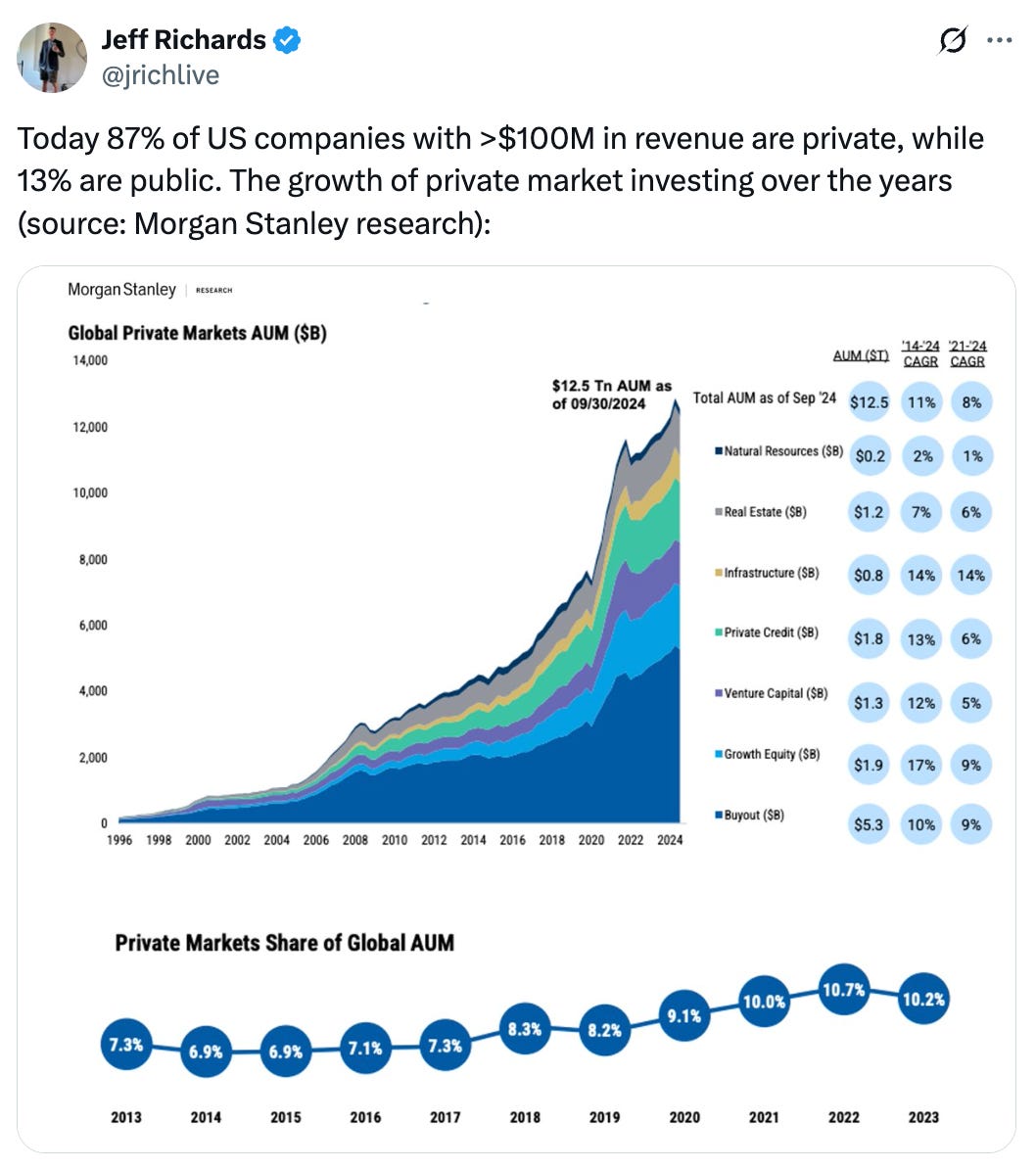
→ Why does it matter? Companies are staying private for longer!

→ Why does it matter? Andrej Karpathy is one of the leading AI Researchers out there. Here is breaks down the most optimal ways to use ChatGPT!

Worth a watch or listen at 1x:
→ Why does it matter? Apollo is aiming way beyond the alt sleeve. Zito lays out how they’ve quietly built a machine that originates $260B+ a year, backed by $300B of their own balance sheet via Athene. That lets them do things like offer 30-year, off-balance-sheet financing to Intel—deals banks can’t touch. They're not trying to win 20% of the portfolio anymore. They’re coming for all 100.
→ Why does it matter? David Einhorn thinks the game has changed. In this wide-ranging chat with David Rubenstein, he explains why classic value investing doesn’t work the way it used to—and how endless government spending and easy money are fueling long-term inflation. If you’ve ever wondered how a legendary investor is rethinking his strategy in todays macro environment, this one’s worth a watch. David asks all the right questions!

Quotes & eyewash:
Our society confuses them constantly, leading us to imagine that transition is just another word for change. But it isn’t. Change is your move to a new city or your shift to a new job. It is the birth of your new baby or the death of your father. It is the switch from the old health plan at work to the new one, or the replacement of your manager by a new one, or it is the acquisition that your company just made. In other words, change is situational. Transition, on the other hand, is psychological. It is not those events, but rather the inner reorientation and self-redefinition that you have to go through in order to incorporate any of those changes into your life.
William Bridges, Transitions
The mission:
The Wall Street Journal once used ‘Read Ambitiously’ as a slogan, but it became a challenge I took to heart. If that old slogan still speaks to you, this weekly curated newsletter is for you. Every week, I will summarize the most important and impactful headlines across technology, finance, AI and enterprise SaaS. Together, we can read with an intent to grow, always be learning, and refine our lens to spot the best opportunities. As Jamie Dimon says, “Great leaders are readers.”
Hi Jack, really enjoyed reading your article. I've been thinking about AI and the job market a lot lately, and the talk about AI reminds me of Jevons paradox where an increase in the efficiency of a good (or in this case white collar labor) leads to a paradoxical increase in consumption of that good. An increase in the efficiency of white collar employees because of AI could easily lead to an increase in the demand for white collar labor as workers become more efficient.
I am a little concerned about how fast AI is disrupting, however. Previous technological disruptors moved at a slower pace, giving displaced workers time to learn new skills to enter new industries. With how fast AI is moving and with how specialized so many labor markets have become, I am a little worried some displaced workers cannot retool fast enough.
Thanks again for writing this great article, definitely gave me a lot to think about.