



The big idea: What a Diamond Mine in South Africa Taught Me About the Build Trap
Reading time: 5 minutes

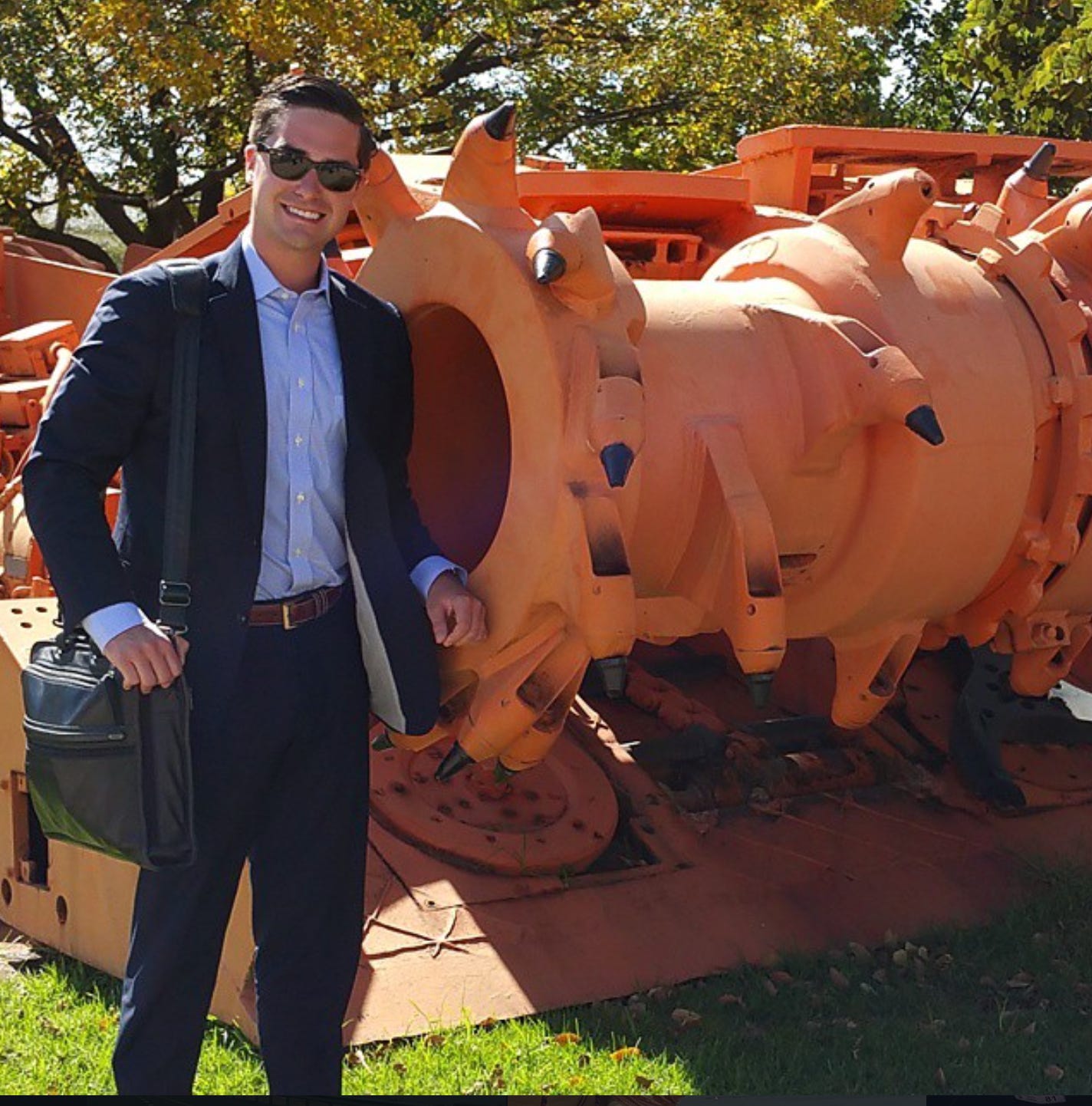
In 2015, IBM sent me to South Africa.
A few years prior, IBM had debuted Watson on the game show Jeopardy! The grand challenge made AI feel real to businesses for the first time.
We were meeting with one of the world’s largest diamond miners. The problem was both serious and impossible to forget. Diamonds were being stolen from the mines. There was even a version of the story involving carrier pigeons being used to carry diamonds out of the mines, and the company’s response was creating its own environmental problem.
Someone had mentioned to the diamond miner and the South African government that AI might help. I was sent to figure that out.
Most of my Watson meetings followed the same arc. We had this new, incredibly powerful technology. It seemed like it could do anything, so the conversation naturally moved toward what we could build. I found myself in this dynamic so often that I coined a term with myself to describe it: the “art of the possible” meeting.
I love those conversations. There is something energizing about watching people realize a new technology may let them solve a problem they had stopped believing could be solved.
But there is also a trap hiding inside the art of the possible. When technology makes more things possible, the default question becomes whether we can build something. That is a reasonable starting place, but it is incomplete. The better questions are more practical: how important is this, what will it cost to get the outcome, how much control do we need, and who will own it after the demo works?
Ultimately, the South African diamond mine decided on a multi-part solution that included biometric scans and a lightweight “lie detector” type assessment. It turned out that if you showed up for work outside your normal baseline, you were more likely to commit a lapse of integrity. AI was part of the solution, but mostly basic statistics.
The lesson I took from that meeting was not that AI was overhyped. It was that possibility has to be paired with discipline. When a new technology expands what can be done, leaders have to become much clearer about what is worth doing.
The New Build Trap
I think this is the part of the AI conversation we are entering right now. CEOs have given their teams the mandate to figure it out. Get access. Experiment. Nobody wants to be the company watching this happen from the sidelines.
That instinct is right. Companies should be experimenting with AI. They should be learning what the tools can do. The risk is that a company can create a lot of visible activity without meaningfully improving the work.
The old Build Trap was confusing shipping more features with creating more value. The new Build Trap is confusing more AI usage with better outcomes.
AI makes the Build Trap more dangerous by making building feel cheaper. What once required a product manager, designer, a few engineers, and a quarter of planning can now be prototyped in an afternoon. That is incredible, but it changes the management problem. When more things become buildable, deciding what deserves to be built matters even more.
AI also gets close enough to make a bad allocation feel reasonable. It can generate the draft, write the code or automate a small task. The demo works. The room gets excited. The team feels momentum. Sometimes that momentum is real. Sometimes it is just a faster path to spending time and money on something that should have been left alone.
Imagine canceling a $10 per month calendar scheduling subscription and replacing it with a custom AI workflow that costs $1,000 to build and run. Maybe it was a killer demo. As a business decision, something still went wrong. A cheap, working solution became more expensive.
That is the 2026 version of the art of the possible. The risk is not only that AI fails. The risk is that AI succeeds well enough to make a questionable decision feel smart.
That is why “what’s this going to cost?” should not be dismissed as a boring CFO question. It is a question that forces clarity. A budget is not just a limit. It is a forcing function. It makes you decide what matters, what does not, and where the next dollar should go.
Now that intelligence feels increasingly available, scarcity and constraints matter more. When everything feels buildable, the scarce resource is knowing what is worth building.
Importance, Cost, Control & Ownership
A team asks, “Could we use AI here?” Increasingly, the answer will be yes. But yes does not tell you what the work is worth, how much control you need, whether the economics make sense, or who will maintain it after the demo works.
Start with strategic importance. Is this workflow core to how the company creates economic value, or is it a generic business process? If the workflow is close to the economics of the business you may want more ownership. If it is a common task that every company performs, you probably do not.
Then look at cost per outcome. The question is what it costs to get good work done, not how much AI you are using. The frontier models may be worth it for the hardest tasks, but they will be wasteful for simple ones. You would not hire a brain surgeon to cut your lawn.
Next is control. Who decides which models get used, what data they can see, what gets logged, what gets remembered, and when a human steps in? This is where AI is different from ordinary software. You are not only renting a tool. You may be renting part of the way work gets interpreted, what data is retained, and where its routed.
Finally, ask who will own the thing after it works. AI makes prototypes feel cheap, but it does not make production free. Someone has to secure it, monitor it, update it, explain it, govern it, and fix it when it breaks.
These are simple tests, but require discipline in the moment to be asked.
Capital Allocation Comes for AI
Ultimately, this comes back to capital allocation. It always does.
The job of a business is to allocate scarce resources toward the work that matters most. AI does not change that. It creates a new kind of resource to allocate: intelligence.
These questions about quality, cost, control, and accountability are not as energizing as the art of the possible, but they are where AI strategy becomes real. At first, the conversation seems to be about tools. Over time, it becomes a conversation about how work should move through the company.
The art of the possible is still where the best ideas begin. Protect that energy. Companies need imagination, experimentation, and people willing to ask whether an old problem can finally be solved in a new way.
But possibility is not a strategy. Strategy is choosing. The goal is not to use the most AI, it’s to know where AI is worth it.
This is what leaders have always had to do. AI just makes the decision more important.

Best of the rest:
🤝 Introducing the OpenAI Partner Network – OpenAI is admitting the enterprise bottleneck is no longer model quality but implementation, turning partners, integrators, and forward-deployed experts into the distribution layer for applied AI. – OpenAI
⚖️ Anthropic Sued Over Limits on Its $200-a-Month AI Plans – Anthropic’s premium Claude backlash shows how AI companies are learning the hard way that unlimited-feeling subscriptions collide with real inference costs once power users start pushing the limits. – The Wall Street Journal
🚀 SpaceX to acquire the AI coding startup Cursor for $60 billion – A reported $60 billion Cursor deal would mark the clearest signal yet that AI coding has become strategic infrastructure, not just a developer productivity wedge. – CNBC
🧠 GLM-5.2: Built for Long-Horizon Tasks – Z.ai’s 1M-context open model keeps pressure on the frontier labs by showing that coding agents are becoming a global, cost-sensitive, open-weights race. – Z.ai
🤖 Salesforce acquires AI customer service platform Fin for $3.6B – Salesforce is buying its way deeper into agentic customer service, reinforcing that support automation may be one of the first enterprise AI markets to consolidate. – TechCrunch
🔁 When AI builds itself – Anthropic lays out the uncomfortable next phase of frontier AI, where models increasingly help build their successors and safety questions move from theoretical to operational. – Anthropic
💸 Ramp at $44 Billion: The Third Pillar – Ramp frames AI spend as a new corporate cost category, making token governance and intelligence procurement feel like the next major finance workflow. – Ramp
🧮 Microsoft eyes DeepSeek for enterprise AI – Microsoft’s flirtation with DeepSeek shows enterprise AI is becoming a multi-model margin game, where cost, control, and token efficiency matter as much as capability. – Axios
🌐 A frontier without an ecosystem is not stable – Satya Nadella’s line is the strategy in miniature: frontier models need developers, partners, distribution, and trust to become durable platforms. – X

Charts that caught my eye:
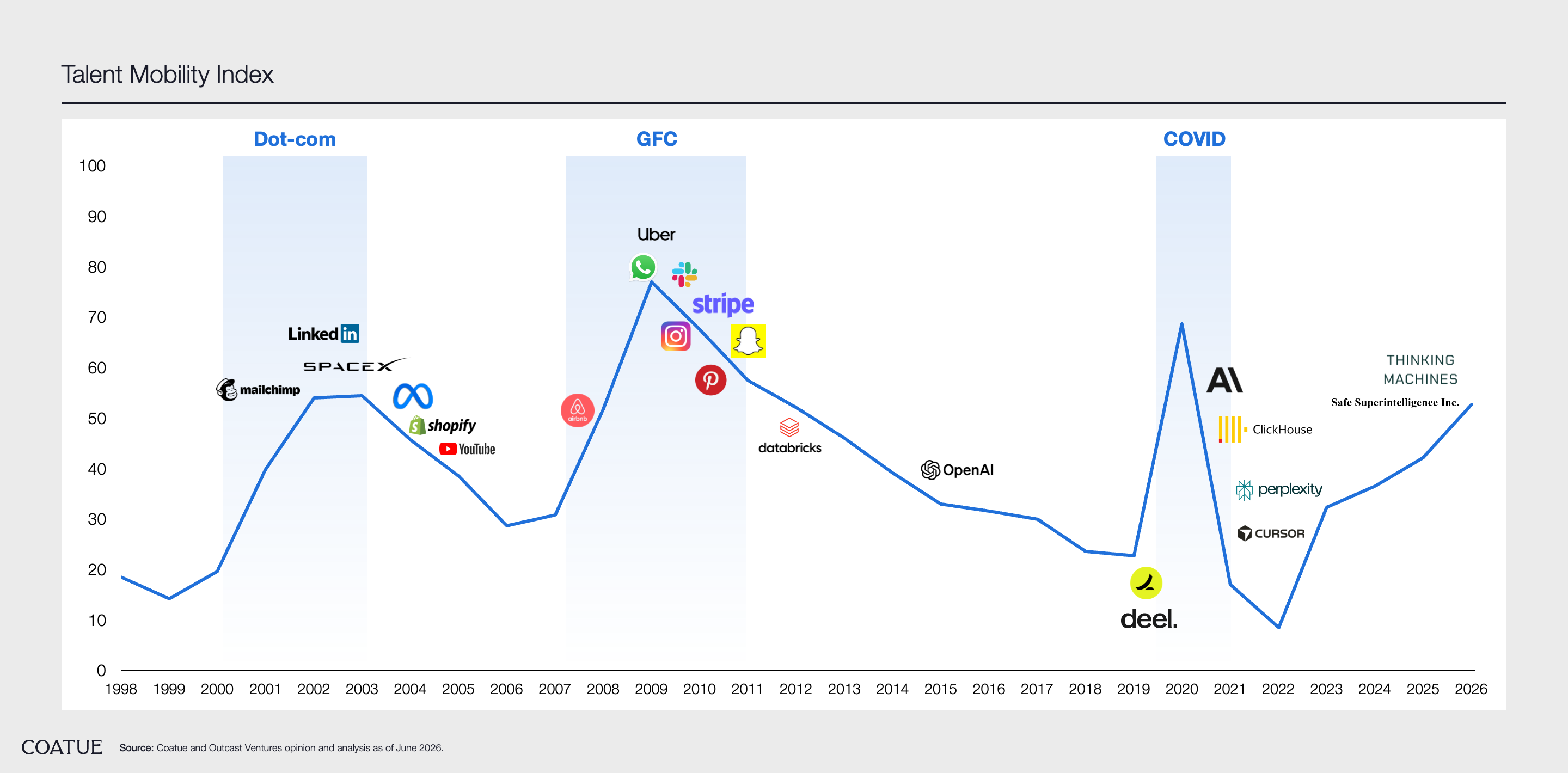
→ Why does it matter? Incredible chart from Coatue. Innovation waves are often attributed to new technology. The real trigger is when great talent becomes available to build. I think about SpaceX. NASA at one point had 40,000 employees, many of them went to work for SpaceX.
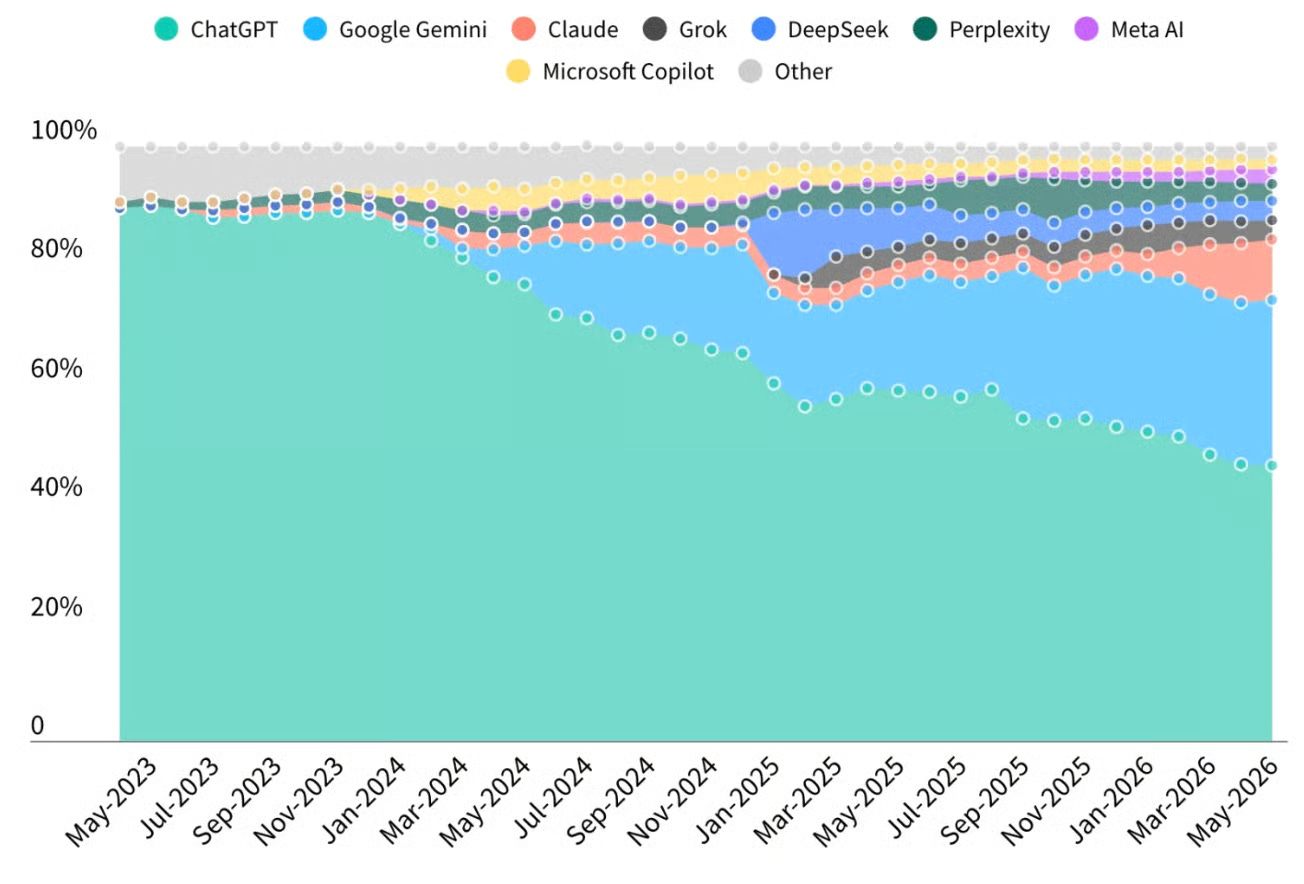
→ Why does it matter? According to TechCrunch, ChatGPT remains the world’s most-used AI assistant with more than 1.1 billion monthly users, but its market share has slipped below 50% for the first time as Google’s Gemini and Anthropic’s Claude have gained ground.
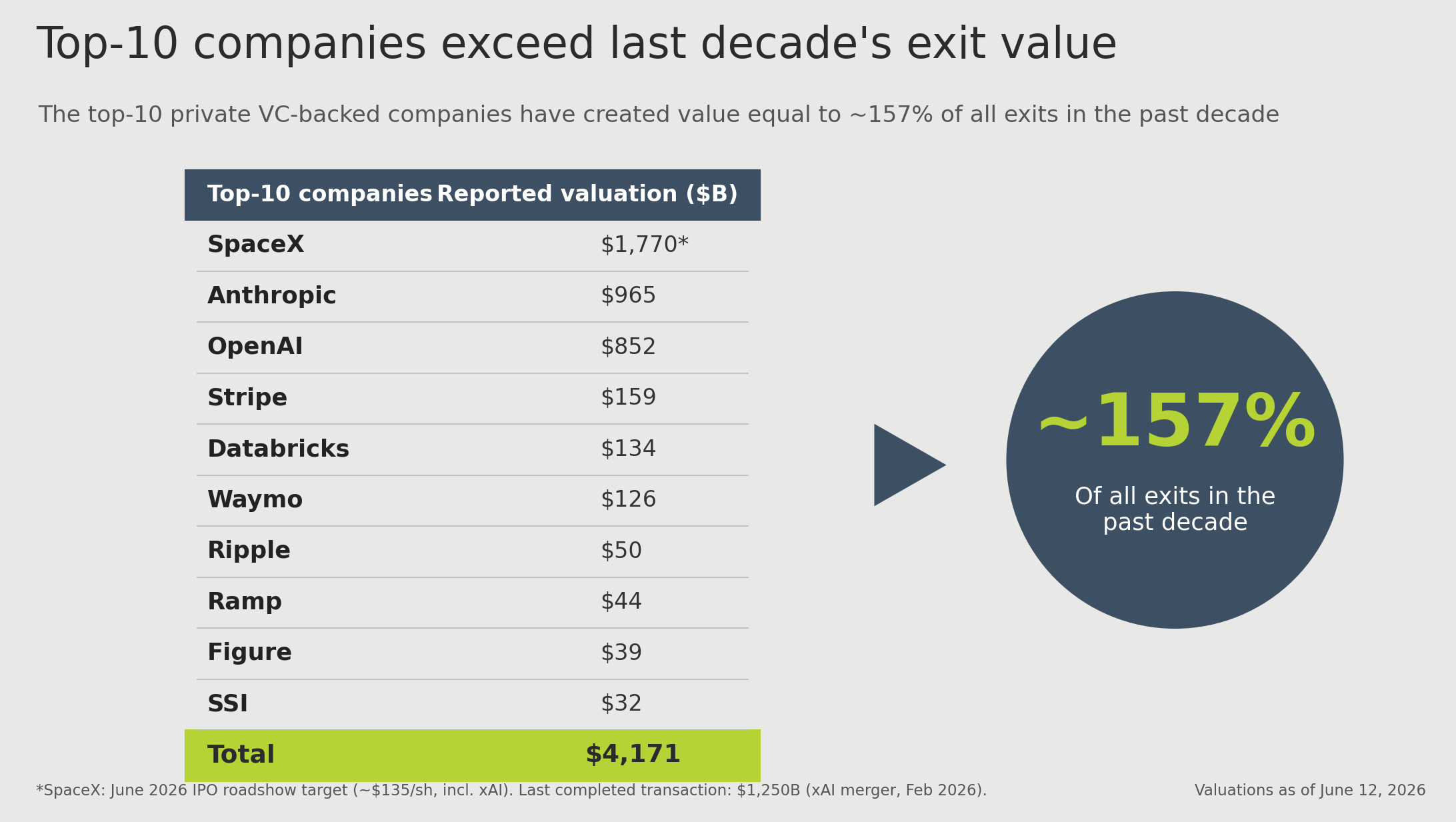
→ Why does it matter? Live and die by the Power Law.
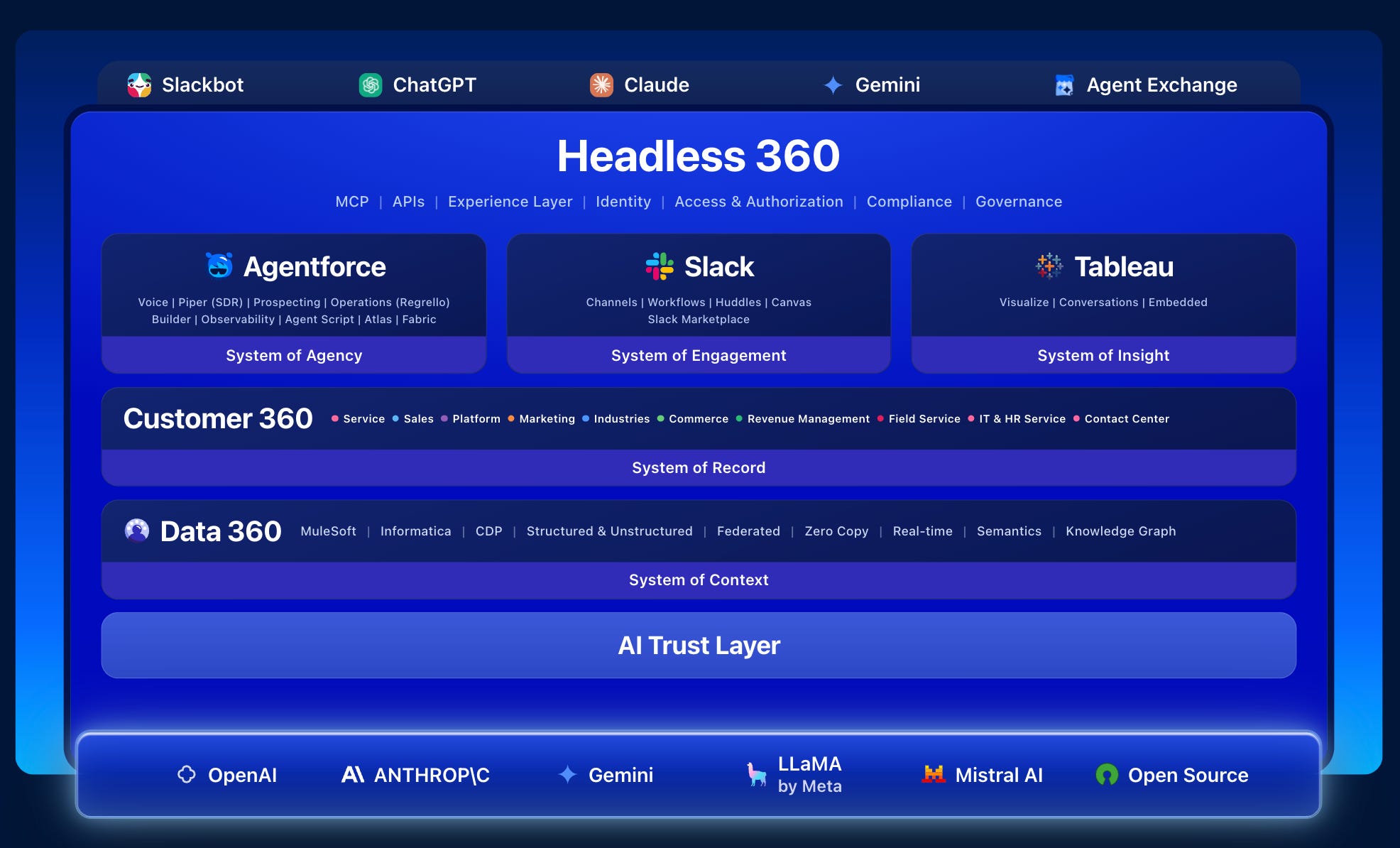
→ Why does it matter? SalesForce.com’s Headless 360 architecture.

Tweets that stopped my scroll:

→ Why does it matter? Hello, open source. Or, technically, open weight. It’s incredible that a model almost nobody had heard of can shoot up the leaderboard this quickly. These charts can be easy to game, but the broader point still stands: open source is catching up fast.
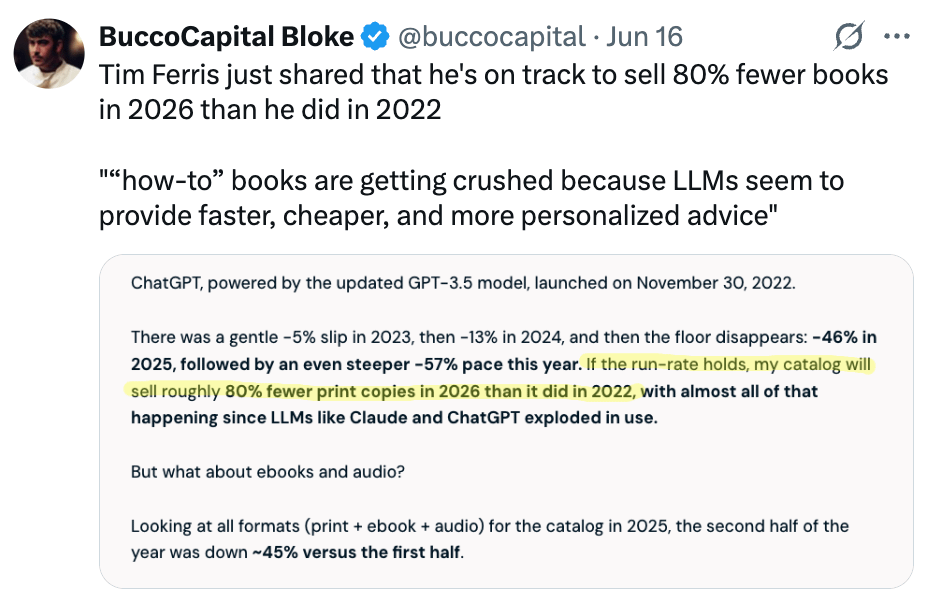
→ Why does it matter? This is a wild stat. Tim’s book sales are down 80% because people are going to LLMs to get what they need. OpEd by Bernie Sanders in the NYT a few weeks ago illuminates this issue. Where do you think all the intelligence came from in the first place?

→ Why does it matter? Yes, this is financial advice.
Worth a watch or listen at 1x:
→ Why does it matter? A complete guide to Nick Milo’s AI OS for personal notetaking and knowledge management. I have been a part of the second brain movement for years. LLMs are a game-changer. The beauty of Nick’s approach is that you own the underlying data.
→ Why does it matter? At Harvey, token usage jumped from 1 trillion in January to a projected 12-13 trillion this month. Molly O’Shea in conversation with their CEO, Winston Weinberg.

Quotes & eyewash:
“You cannot be successful without failure.” — John F. Kennedy
→ Why does it matter? It is how you respond from that failure that is most important.
The mission:
The Wall Street Journal once used “Read Ambitiously” as a slogan, but I took it as a personal challenge. Our mission is to give you a point of view in a noisy, changing world. To unpack big ideas that sharpen your edge and show why they matter. To fit ambition-sized insight into your busy life and channel the zeitgeist into the stories and signals that fuel your next move. Above all, we aim to give you power, the kind that comes from having the words, insight, and legitimacy to lead with confidence. Together, we read to grow, keep learning, and refine our lens to spot the best opportunities. As Jamie Dimon says, “Great leaders are readers.”
Disclaimer: This content is for informational purposes only and does not constitute financial, investment, or legal advice. Readers should do their own research and consult with a qualified professional before making any decisions.
OpenAI is my go-to. I leverage codex, but I use Gemini to challenge my Codex outcomes. My wife is using Claude. The pie is still getting bigger for them all I think. 😆