



The big idea: AI Sovereignty
Reading time: 6 minutes

Thinking Machines, founded by former OpenAI CTO Mira Murati, has built an AI product with an unusual feature: the customer can leave after using it. One of its first public customers is Bridgewater Associates, a secretive hedge fund.
Using the Thinking Machines Tinker platform, Bridgewater started with an open-source model and trained it on its own data. Bridgewater says the result beat models from OpenAI and Anthropic at triaging financial documents while cutting computing costs 13x. When the work was done, Bridgewater could download the finished model weights and run them anywhere.
A hedge fund like Bridgewater lives on judgment accumulated over decades. You think they might want to own that?
This sounds technical, but we already understand the arrangement. We license database software from one vendor and rent servers from another. We still expect to control the database and move our data if either relationship changes. That expectation is so normal we barely think about it.
AI is testing that assumption. Every time we correct one of these systems or explain a decision, it learns something about our business. If the provider changes its price or policy, do we own what it has learned?
That question has a name: AI sovereignty.
Alex Karp is going nuts about it on CNBC. Satya Nadella, in a more Satya way, has written two thoughtful essays. Governments and technology companies are building whole strategies around it. I nodded along for weeks before I admitted I did not fully understand it.
So I dug in. And kept coming back to one test: do you have the right to leave? And take the learning with you?
What sovereignty means
Sovereignty is authority over our own affairs. It still allows for dependence. Nations trade, borrow money, and run on technology built elsewhere while retaining control of the decisions and assets that shape their future.
My working definition for a company is this:
AI sovereignty is control over the knowledge its AI systems accumulate and the freedom to take that knowledge elsewhere.
We will never own every model, chip, and data center we use, and we should not try. Owning all of it would be prohibitively expensive.
The decision is where to draw the line. We can rent the model while keeping control of what it learns about our company.
That is Karp’s argument. Once AI gets close to our means of production or source of alpha, we are teaching it how our company creates value.
What compounds
Today’s AI models know a lot about the public internet and almost nothing about our businesses.
Friedrich Hayek understood this: much of the knowledge that produces results is local and held by the people who learned it through the work.
Inside our companies, AI becomes useful when we teach it why one customer got an exception, why a forecast changed, and what good work looks like. Each correction hands it a piece of knowledge that was ours. If that learning stays locked inside the provider’s system, every improvement deepens our dependence.
We are paying to teach another company’s system what makes ours work.
Multiply that across millions of customers, and a handful of providers could accumulate an extraordinary amount of knowledge about how the world’s companies operate. Taken to its extreme, this is why some are so passionate about the topic.
Closer to home, our learning has to survive the model.
Can we take it with us?
I believe so. Selectively.
The model is only one layer of an AI system. We could download the weights and still leave behind most of what made them useful: the learning held in memory, evaluations, and the workflows around the model.
Satya calls all of this “the exhaust.” Keep that learning in systems we control, and the models and computing power can come from anywhere.
One of the hardest parts right now is memory. Changing models is getting easier. Moving years of context, corrections, and decisions is not. But if that memory sits in systems we control, we can switch models without starting over.
Somebody is going to build the VMware of the AI era and do very well.
Soon enough, the harder question will be whether we want to leave. Control has a price. Products from OpenAI and Anthropic are often more capable and easier to use, much like the best SaaS today. The provider runs the system and keeps improving it. A clean exit is worth little if it means using a worse product every day. For much of our work, paying for the best product available is simply the right call.
The trick is knowing when it is not.
Bridgewater wanted control over one narrow, repeatable task. A model it owned and could tune beat OpenAI and Anthropic at that task for a fraction of the cost.
The mosaic
In the dot-com era, Sun Microsystems pushed for a more open computing world and gave us Java. Microsoft built a far more controlled computing system.
History declined to choose only one.
Windows won the desktop. Java and Linux became the backbone of business software and the internet. Companies used all of them.
I suspect AI will go the same way. We will use closed models where performance wins, open models where control wins, and a blend wherever the tradeoff is unclear.
A right to leave requires real alternatives. If a handful of companies own both the frontier models and the learning built around them, switching providers only trades one dependency for another. Those alternatives stay real only if we keep choosing them.
Drawing the line
We cannot predict whether open or closed models will win, or which lab will come out on top. We can decide what our company must keep.
I would start with four questions:
What are we teaching our AI systems?
Where does that learning live?
Can we take it with us in a usable form?
What stops working if we change providers?
If nobody can answer them, the dependency is already forming.
Thinking Machines download button may look like a technical feature. I suspect it is a preview. Oracle will export our data too, if we ask. The lock-in comes from everything built around the database: the cost and pain that make leaving unthinkable.
Nobody migrates a database for fun. Larry Ellison built an empire, and a superyacht or two, on exactly that.
Now the learning has to come with us too. The right to leave with both is what makes staying a choice.
Stay ambitious.

Best of the rest:
✊ GRIP STRENGTH — Jerry Seinfeld’s devotion to the work, contrasted with Orny Adams’s desperate pursuit of recognition, is a powerful reminder that greatness comes from staying in the game, not gripping the outcome. — Jeremy Giffon
🤖 The next operating model - AI-native tools like Buzz collapse tasks, context, collaboration, and agent coordination into one interface, shifting the real challenge from managing workflows to inventing entirely new ways of working. - Lucas Isaza
🎯 Sarah’s Wager - Sarah Guo is betting that OpenAI and Anthropic cannot own the entire AI stack, leaving a massive opening for startups that turn frontier models into enduring companies. - Colossus
🧠 Maybe Intelligence Ain’t All That — Superintelligence may feel incremental because reasoning was never the ultimate constraint; progress still depends on testing ideas against a messy, complex reality that cannot be shortcut. — Clifford Sosin
🧭 An opinionated guide to which AI to use to do stuff - Ethan Mollick argues that the real leap is not better chatbots but agents that can use tools, access computers, and complete meaningful work, with ChatGPT and Claude currently leading the way. - One Useful Thing
🏗️ 2026 State of AI Report: The Builder’s Economy - AI is moving from experimentation to execution as builders converge on the application layer, improve unit economics, redesign pricing, and reshape their organizations around agents. - ICONIQ

Charts that caught my eye:
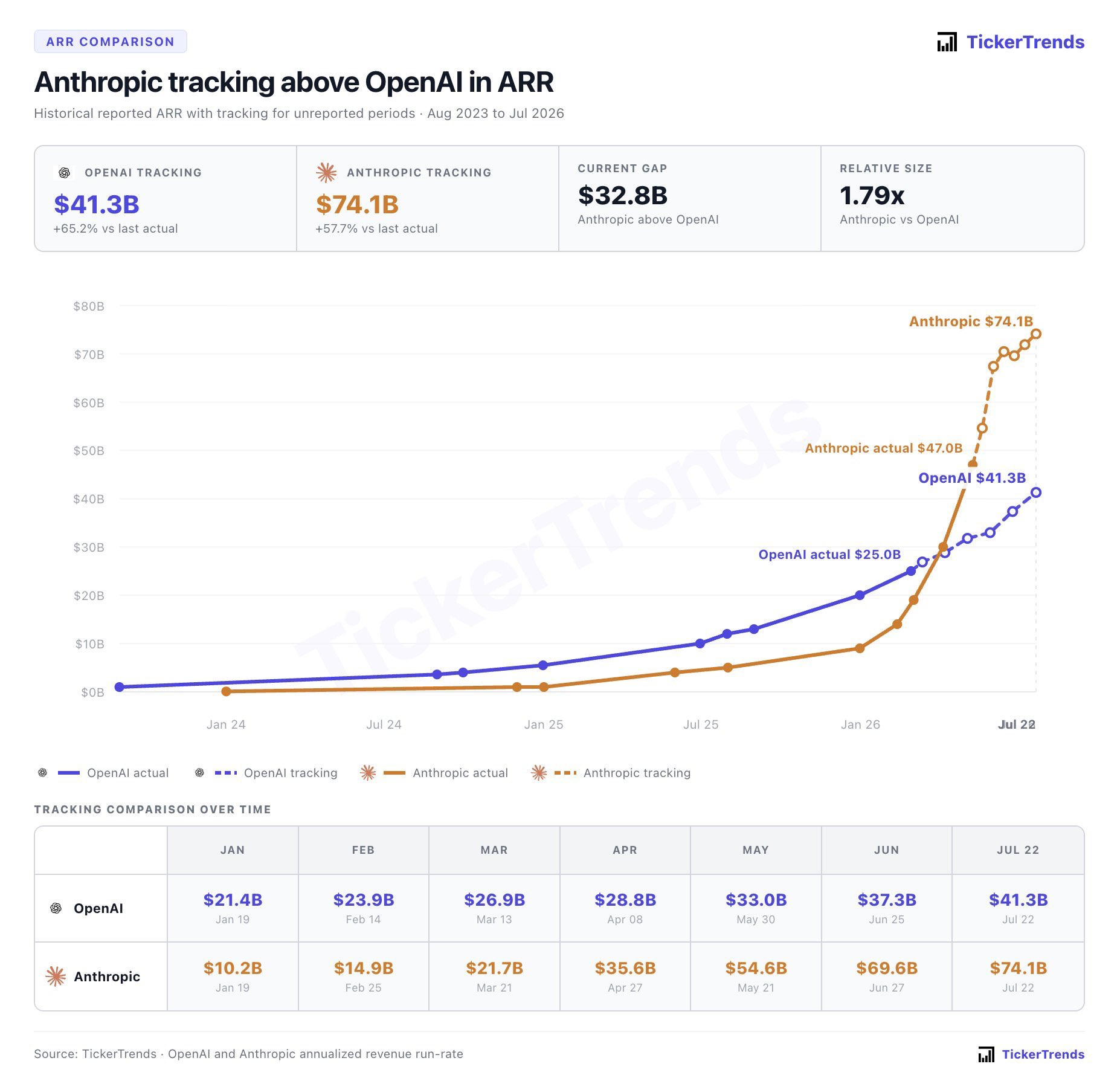
→ Why does it matter? Wow. Unofficial revenue figures for OpenAI & Anthropic. Likely accurate and unprecedented!
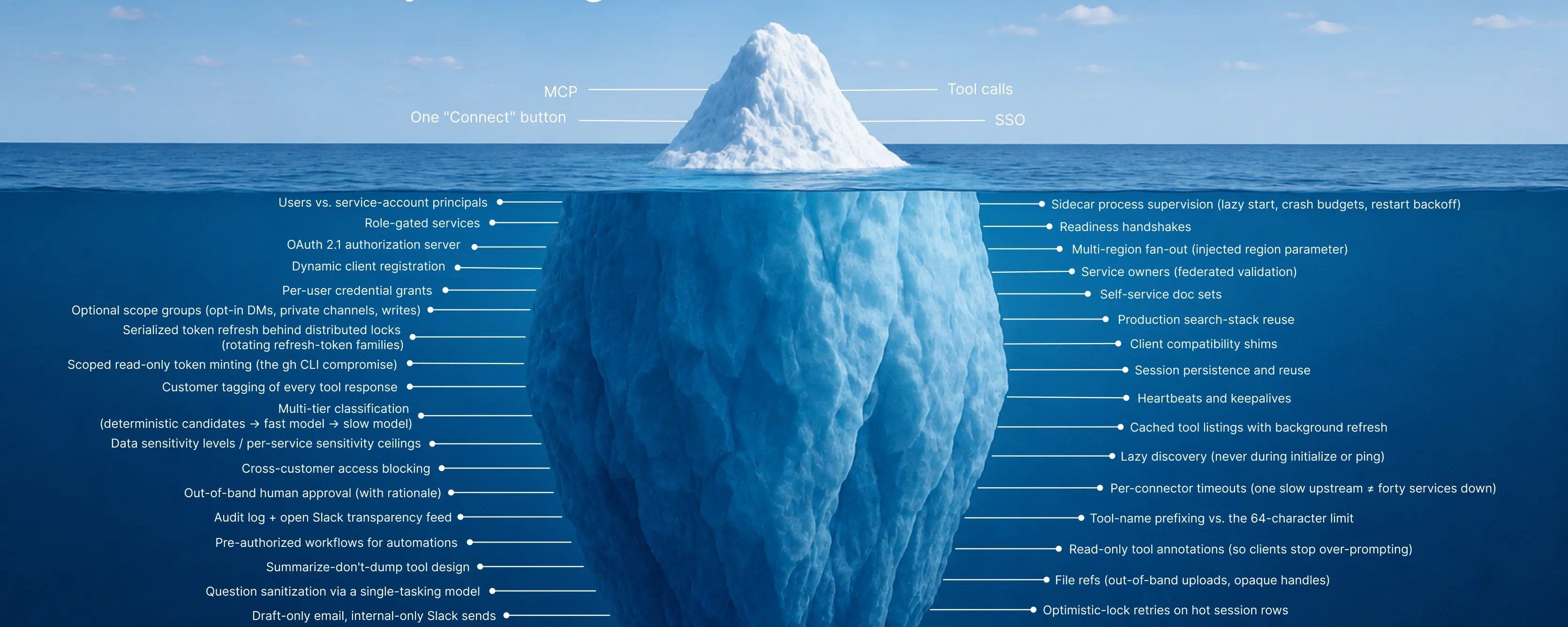
→ Why does it matter? Ah, yes. It’s one thing to build a prototype, another to get that into production. This chart is from Sierra’s guide to building their MCP gateway.
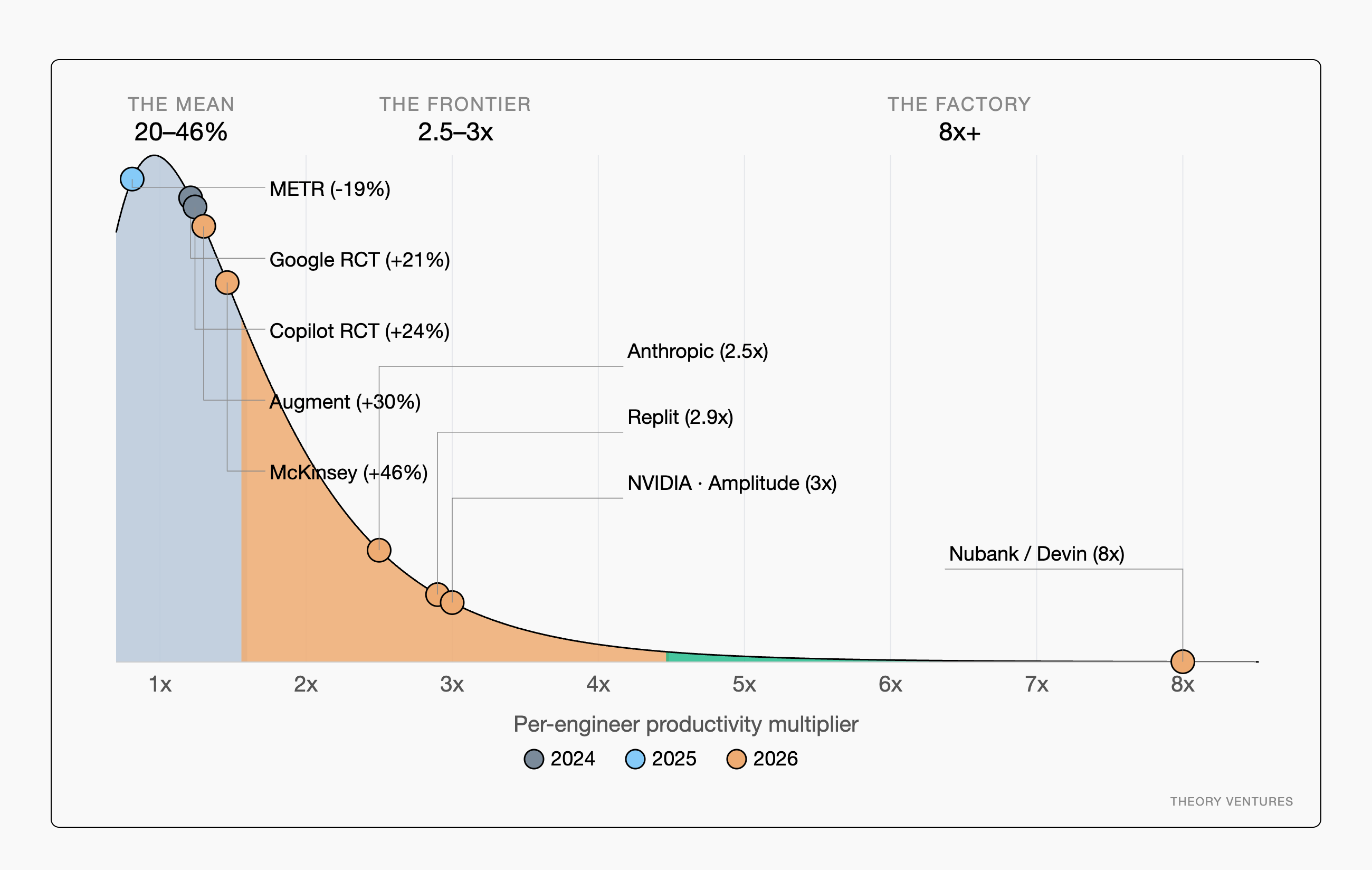
→ Why does it matter? Interesting data here on the stated impact of AI on engineering productivity. Engineering leaders went into AI expecting 2-3x productivity gains but are landing closer to 30%. More here.
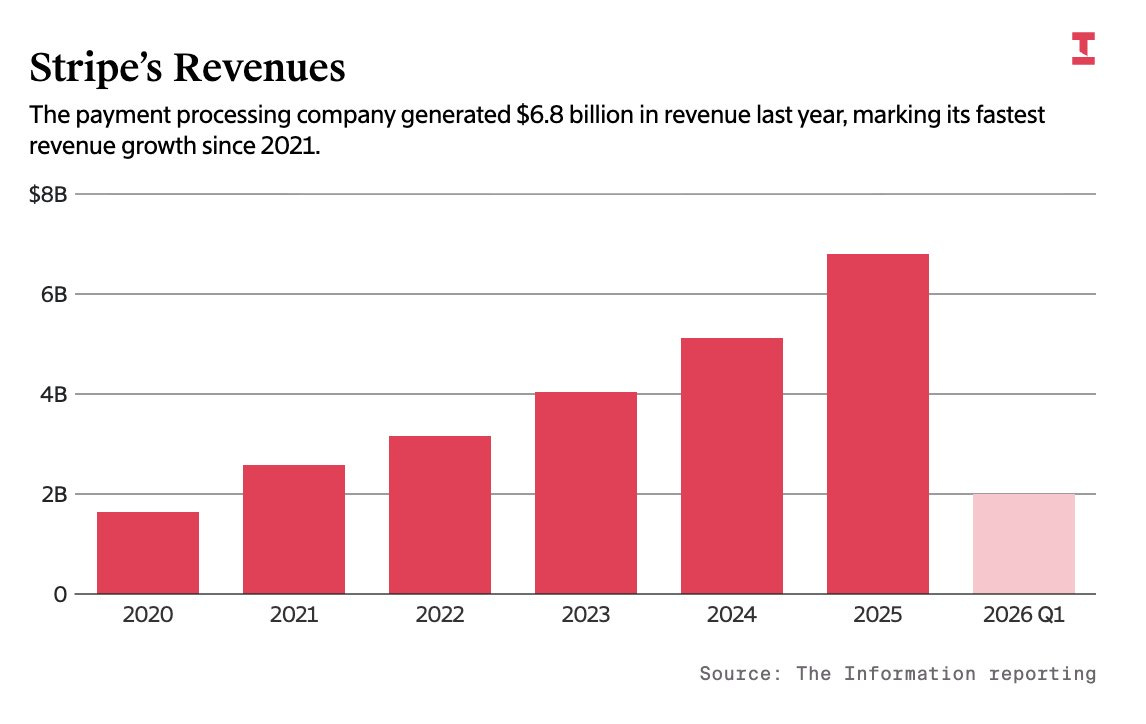
→ Why does it matter? Stripe is on a tear. Revenue grew 33% to $6.8B in 2025 its fastest growth since 2021... and $2B already in Q1!
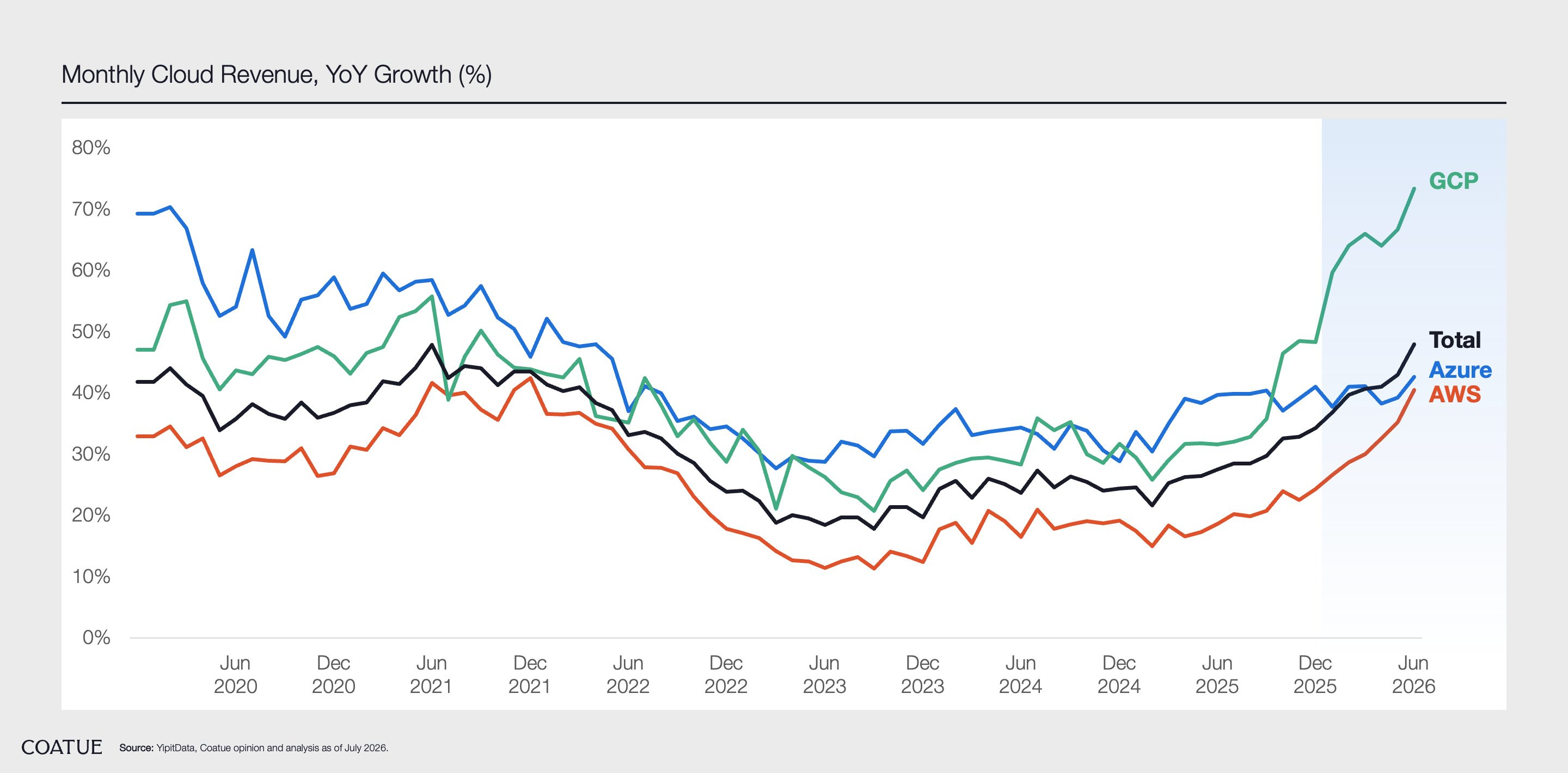
→ Why does it matter? Hyperscalers are starting to see reaccelerated growth!
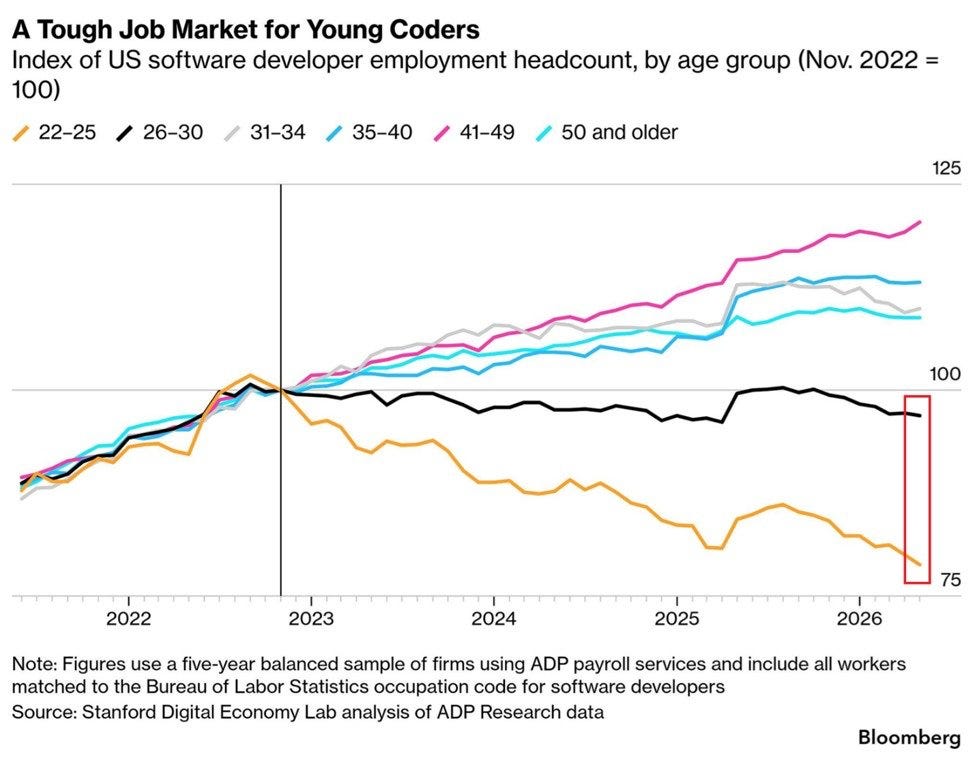
→ Why does it matter? According to TKL, US software developer employment for those aged 22-25 has declined by 23% since November 2022, when ChatGPT was launched.
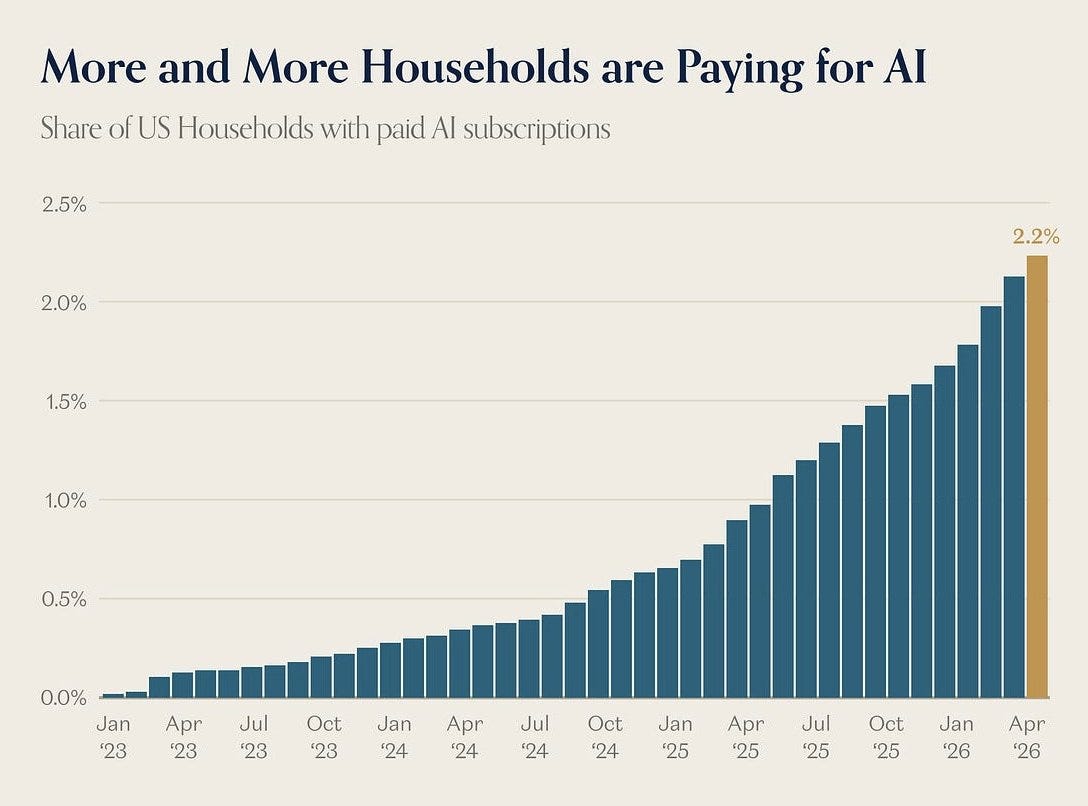
→ Why does it matter? About 2% of US households have a premium subscription for AI. Think about that compared to Netflix? Or maybe someday your electric bill. Still early.

Tweets that stopped my scroll:

→ Why does it matter? This is one of the wildest stories you’ll read all week. Hugging Face had to use a Chinese open-source model to fight back because the American closed-source models refused to perform the advanced cybersecurity prompts to go on defense.

→ Why does it matter? Dean is Head of Strategy Futures at OpenAI, and this tweet has 11M+ views as he comments on Kimi K3’s launch. Quite an interesting argument for a closed future.

→ Why does it matter? Fable disproves the Jacobian conjecture. The Jacobian conjecture was first stated in 1939, and proofs and disproofs have been attempted by many mathematicians since.
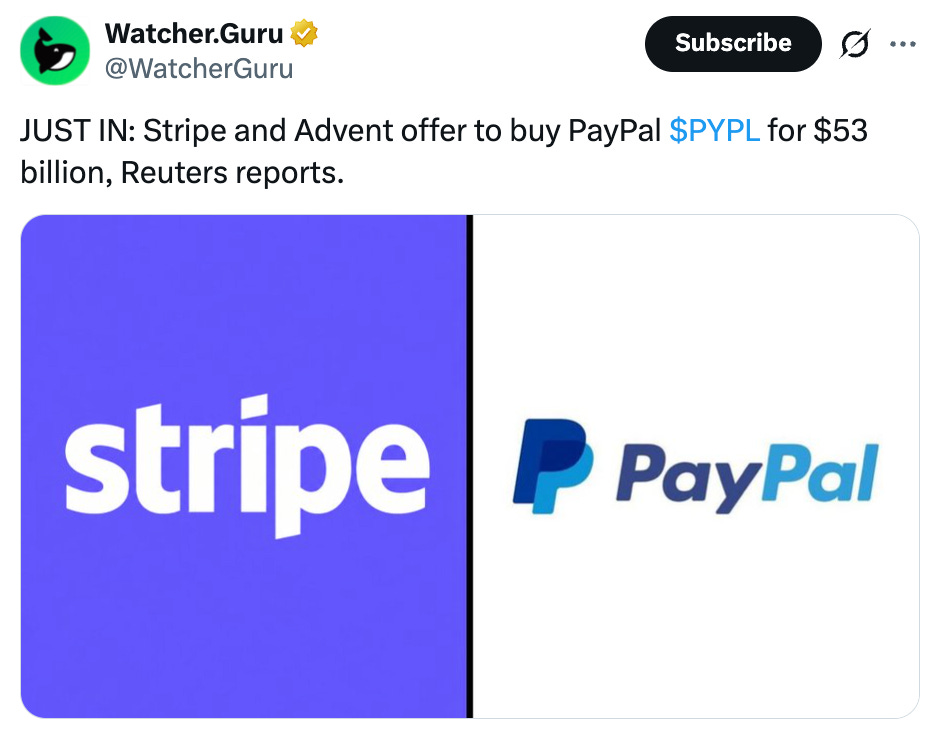
→ Why does it matter? PayPal was once one of the most valuable internet companies in the world. At its peak in July 2021, PayPal was worth roughly $350 billion.
Worth a watch or listen at 1x:
→ Why does it matter? Bret Taylor is one of the clearest and most thoughtful enterprise voices in AI today. Great perspective on where the real business value will come from: outcomes. Some have publicly called for Bret to be OpenAI’s future CEO.
→ Why does it matter? Having been a Tim Ferriss listener for 10+ years, I never miss The Random Show episode with his good friend Kevin Rose.

Quotes & eyewash:

→ Why does it matter? The OpenAI Codex “micro” is a futuristic AI keyboard you can buy today for the low price of $230! If that doesn’t do it for you, you can go with this tongue-controlled alternative instead! 🤪
The mission:
The Wall Street Journal once used “Read Ambitiously” as a slogan, but I took it as a personal challenge. Our mission is to give you a point of view in a noisy, changing world. To unpack big ideas that sharpen your edge and show why they matter. To fit ambition-sized insight into your busy life and channel the zeitgeist into the stories and signals that fuel your next move. Above all, we aim to give you power, the kind that comes from having the words, insight, and legitimacy to lead with confidence. Together, we read to grow, keep learning, and refine our lens to spot the best opportunities. As Jamie Dimon says, “Great leaders are readers.”
Disclaimer: This content is for informational purposes only and does not constitute financial, investment, or legal advice. Readers should do their own research and consult with a qualified professional before making any decisions.