



The big idea: The window was the way out
Reading time: 5 minutes

When I was about six, my dad pushed me out of a basement window in the middle of a major thunderstorm.
Our basement was flooding. My job: run a hose to the street so we could pump the water out.
Had he told me the day before, I would have said no way.
At that moment, there was no time to negotiate with myself. The window was the way out, so I climbed.
Decades later, our power in the Chicagoland area has been out for 48 hours.
Similar storms rolled through the Midwest, including an EF3 tornado near Appleton, Wisconsin. The AI-powered ComEd Storm Center tells me they’re “assessing the situation.”
At some point, we packed it up and left the house after firing up the circa-1990s generator in hopes of saving the chicken nuggets.
Honestly, I thought about taking a rain check on Reading Ambitiously this week. It would be easy. Readers would understand.
I called a couple of our diehards and started telling them what was happening. Secretly, I was hoping for permission. The conversations changed that.
Everyone I spoke with immediately told me about a blackout they remembered. One person recalled a tornado coming through the backyard. Another remembered sleeping bags on a friend’s floor. Someone else remembered candlelight and extension cords running across the street.
In every story, the plan disappeared and the person did what came next. Years later, they remembered being afraid, then discovering they could handle it.
As they talked, I could see my own story inside theirs. I had been afraid too. The only way out of that flooded basement had been through the window. I did what needed to be done before I had time to decide whether I could.
Often, the only way out is through.
That right there is the human truth.
After nearly three years of writing Reading Ambitiously every week, this is the lesson I keep returning to: the creator’s job is to seek the human truth in whatever gets made.
Human truth is the thing underneath the story that another person has already felt but could not quite name.
It is almost never there in the beginning. You find it by doing the work.
When you find it, you feel it. Then you strip away anything that competes with it.
What I did not understand when I started Reading Ambitiously was how much work happens before the reveal.
I am not sure my brain would do that work without the Friday deadline. We come here every week to tell you about a big idea. The deadline keeps me from stopping there. It keeps the question alive until I find the human truth underneath it.
That recognition is the part of the process AI cannot do for the creator.
AI is not human.
In Several Short Sentences About Writing, Verlyn Klinkenborg warns about sentences that “volunteer.” A volunteer sentence shows up already polished, before you have finished thinking.
The danger of a volunteer sentence is that it offers an early exit. It sounds finished, so you stop before discovering what only you could say.
AI can become a volunteer-sentence engine by design. Every word can be competent while the sentence still belongs to anyone.
AI is incredibly useful throughout the process. It can help shape and sharpen what I have found. It has no life in which one moment can call back to another.
That discovery belongs to the creator. I would not want to give it away even if I could.
Few moments are more satisfying than when two seemingly unrelated things touch and reveal what the piece was really about.
Writing my way through this story showed me why I still remembered that window.
If I did my job, you are now asking what human truth sits underneath whatever you are making.
Go through the work until you find it. When you do, the work becomes unmistakably yours, and someone else can find themselves in it.
Stay ambitious, my friends.

Best of the rest:
📉 Citadel Buys Situational Awareness’s Stock Portfolio After Big Losses in AI — Leopold Aschenbrenner’s high-flying hedge fund sold most of its public-stock portfolio to Citadel after leveraged bets on AI infrastructure and against software companies moved sharply against it. — The Wall Street Journal
🏇 Aftermarket Harnesses — AI coding performance increasingly depends on the harness surrounding the model, which controls context, caching, cost, and whether a frontier model reaches its full potential. — Tomasz Tunguz
🛠️ You Probably Don’t Need to Build Your Own Coding Agents — Stripe and Sierra are exceptional cases; most companies will move faster by adopting existing agent platforms instead of recreating the infrastructure themselves. — David Pan
💥 Let It Crash: How to Steer What Comes After — An AI crash could sober capital, preserve valuable infrastructure, and clear the way for a golden age—but the institutions, safety net, distributed ownership, and shared vision needed afterward must be built beforehand. — Vijay Pande
✈️ Qantas plane flies for more than 24 hours in record-breaking flight – Qantas’ 24-hour test flight proves nonstop travel from Australia to London is no longer an aviation fantasy, with commercial service scheduled to begin in 2027. – The Guardian
🛡️ The calculus of AI sovereignty — IBM argues that enterprise AI sovereignty is not about owning the entire stack, but preserving the freedom to move data, swap models, and shift workloads as vendors, regulations, and economics change. — IBM Institute for Business Value

Charts that caught my eye:
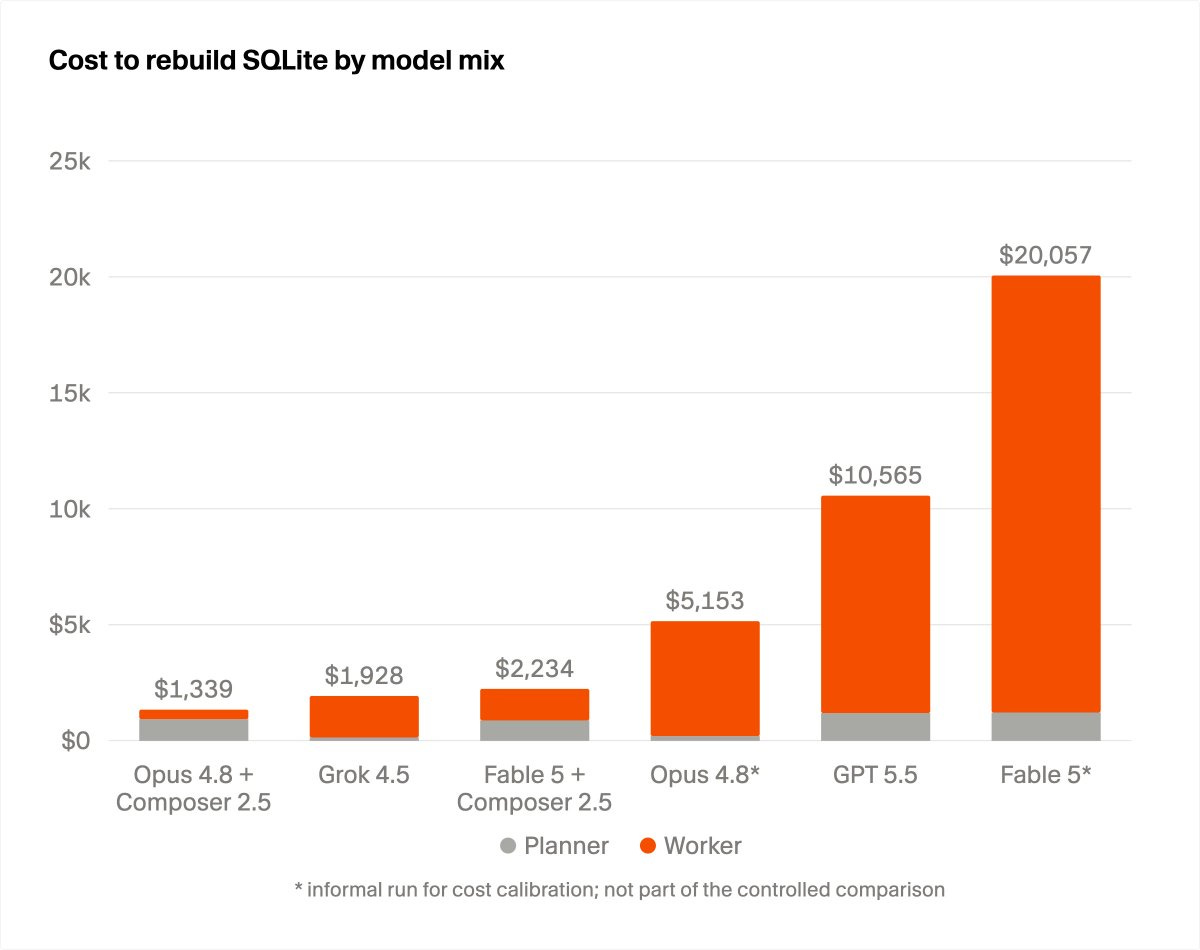
→ Why does it matter? Cursor had a team of agents rebuild SQLite from its 835-page manual. It created a replica in Rust which passed 100% of a held-out test suite. Interestingly, cost varied 15x depending on the model mix. The same outcome was achieved for $1,339 with Opus 4.8 + Composer 2.5 and for $20,057 with Fable 5. More here.
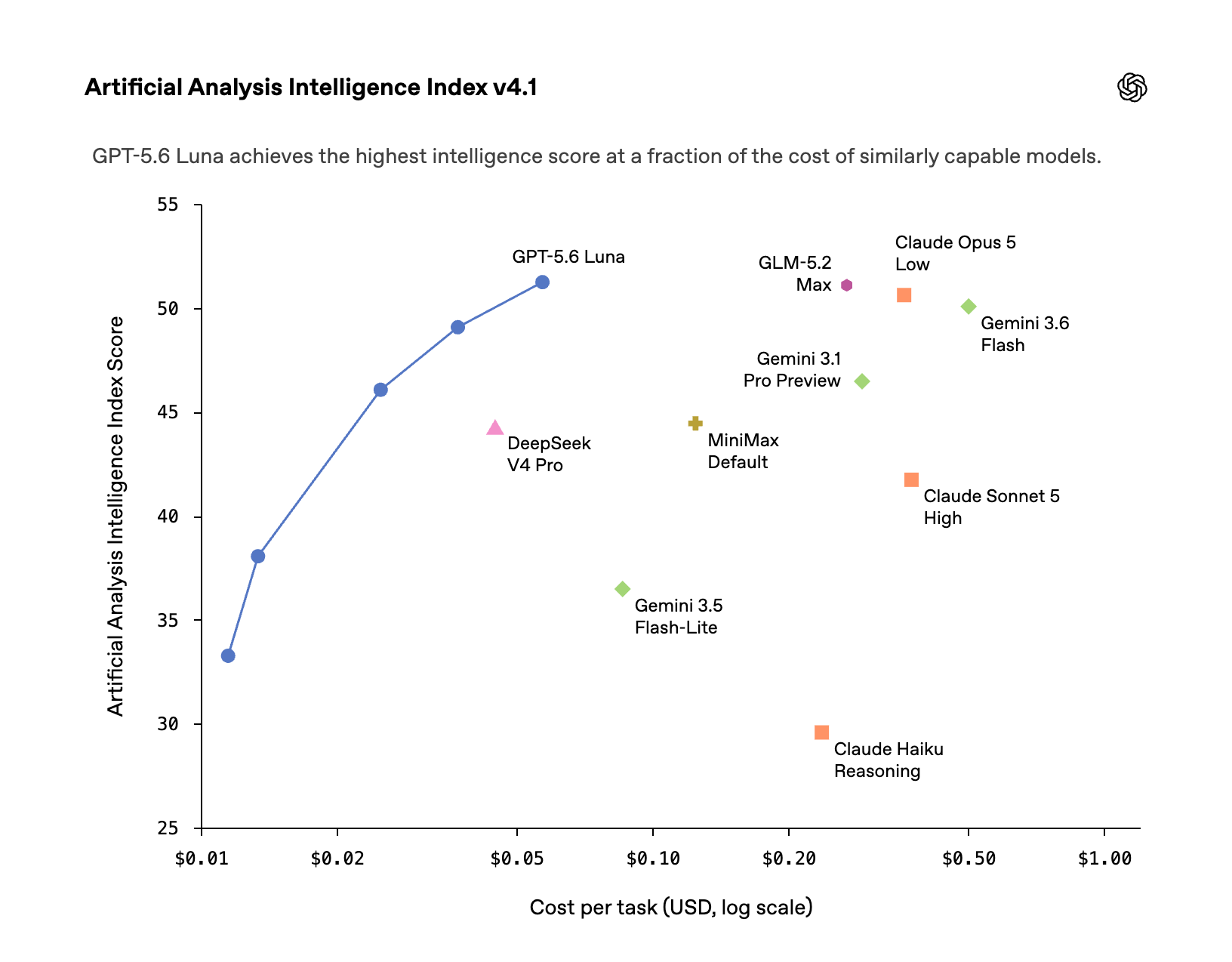
→ Why does it matter? OpenAI has slashed prices in some cases 80%. Luna can absorb the boring, high-volume jobs that quietly eat an AI budget: CSV imports, browser tasks, background agents and second tries. Terra covers everyday implementation. Sol gets the stubborn problems, with a fast lane for the moments when the clock costs more than the tokens.

Tweets that stopped my scroll:

→ Why does it matter? South Korea’s stock market became one giant bet on the AI memory boom. Samsung and SK Hynix grew to more than half the KOSPI, then investors poured leverage on top. Worth understanding what’s going on here.

→ Why does it matter? Jensen Huang waited until his first-ever post on X to make the case for open models. Of course NVIDIA likes this future. Every company and country that can run its own models needs more chips. But I think his deeper point is what we’ve been talking about. If you cannot move the model or keep what it learns, you do not really own what you are building.

→ Why does it matter? AI can build the tip of the iceberg. Underneath sit SSO, permissions, security reviews, integrations, compliance and the team who has to keep everything running. That hidden work is why internal tools feel wide open and replacing leading SaaS solutions feels more risky.
Worth a watch or listen at 1x:
→ Why does it matter? Altman said he is testing an AI that watches everything on his computer and remembers the email he read six weeks ago exactly when he needs it!
→ Why does it matter? If you haven’t watched an Alex Finn video yet, be prepared to meet the AI hype man. Seriously though, this new advanced voice mode from OpenAI is incredible. In order to use it on your iPhone, you do need to set up a computer with ChatGPT Work (previously known as CODEX). I have a Mac Mini for that purpose. You could repurpose any old laptop.

Quotes & eyewash:
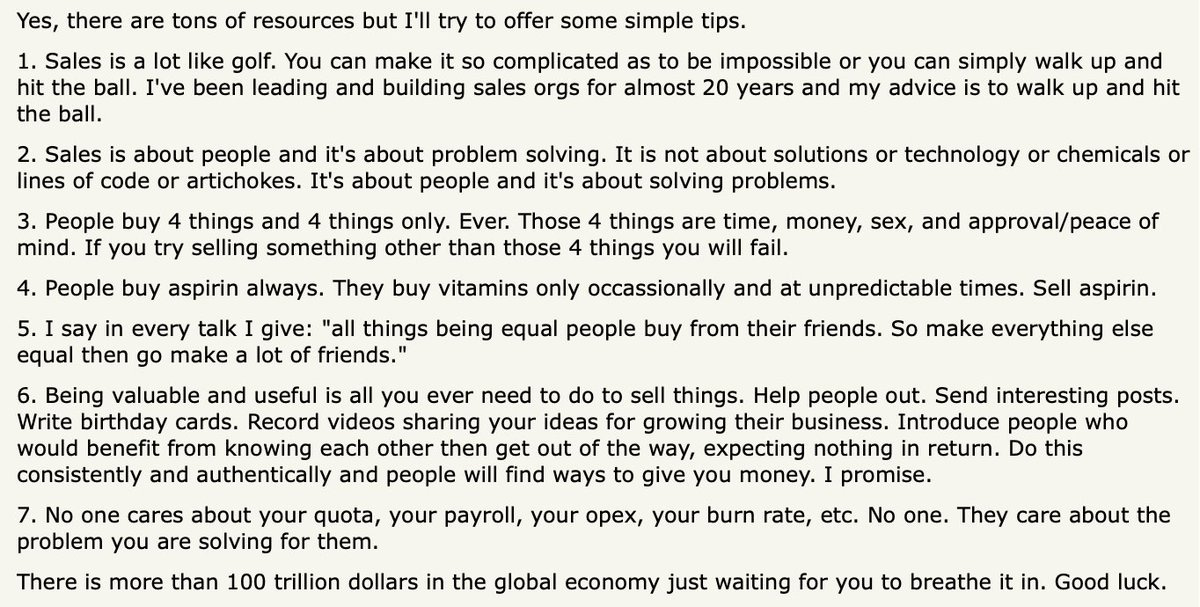
→ Why does it matter? Rarely do I repost content, but this one is one is an exception.

→ Why does it matter? Oh my gosh. The Open vs. Closed debate with fruit.
The mission:
The Wall Street Journal once used “Read Ambitiously” as a slogan, but I took it as a personal challenge. Our mission is to give you a point of view in a noisy, changing world. To unpack big ideas that sharpen your edge and show why they matter. To fit ambition-sized insight into your busy life and channel the zeitgeist into the stories and signals that fuel your next move. Above all, we aim to give you power, the kind that comes from having the words, insight, and legitimacy to lead with confidence. Together, we read to grow, keep learning, and refine our lens to spot the best opportunities. As Jamie Dimon says, “Great leaders are readers.”
Disclaimer: This content is for informational purposes only and does not constitute financial, investment, or legal advice. Readers should do their own research and consult with a qualified professional before making any decisions.