

Enjoy this week’s Big Idea read by me:

The big idea: technology is a means, not a purpose

On December 5, 1996, Alan Greenspan stood before a room of economists and asked a question that echoed far beyond Washington:
“How do we know when irrational exuberance has unduly escalated asset values…?”
This question would be prophetic. One I think about often today. With the amount of money being spent on AI, does the dotcom past guide the present?
The Dow closed at 6,437 that day in 1996. By 2000, the Nasdaq had more than quadrupled before its ultimate collapse. Altavista, Pets.com, Webvan were wiped out. My good friend Cole Smead, CEO of Smead Capital Management recently pointed out that many of the markets favorite stocks never returned to their 1999 highs.
Asset values became dislocated, but, ultimately, the internet did change everything in the long term.
It was the technology that ushered in the possibility for change. But remember, technology is a means, not a purpose.
So are we irrationally exuberant with AI?
Markets are exuberant, yes. Earlier this week, I got a push notification from the Robinhood Casino inviting me to get ready for “Bullish”. Yes, that’s a real company name, specializing in cryptocurrencies and their upcoming IPO. The ticker even sort of reads as “bullshit”. Ok, so that’s maybe a sign of exuberance.

Last week a software company called Figma, IPO’ed. It opened at $33 and traded to $93.50 before trading was halted ultimately closing at $115. Figma had an implied market cap of $59.5 billion with one-tenth the revenue of any other software company that size.
So yes, financial markets are exuberant and speculators are certainly gambling in them.
But is their exuberance irrational? AI unlocks a once-in-a-generation multi trillion dollar opportunity to automate the global economy.
If you're an investor, trying to time the markets is important. Unfortunately, I cannot help our readers do that. But if you’re building a company, studying the timeless lessons of the greats who won in the previous paradigms is something we can do.
Because AI is your means, and now you need to get extraordinarily clear on why you exist.
The installation phase
My spirit guide to understanding technology revolutions is world renowned economist, Carlota Perez. Carlota and her team have studied every major paradigm shift going back 250 years and determined they all follow a similar pattern.
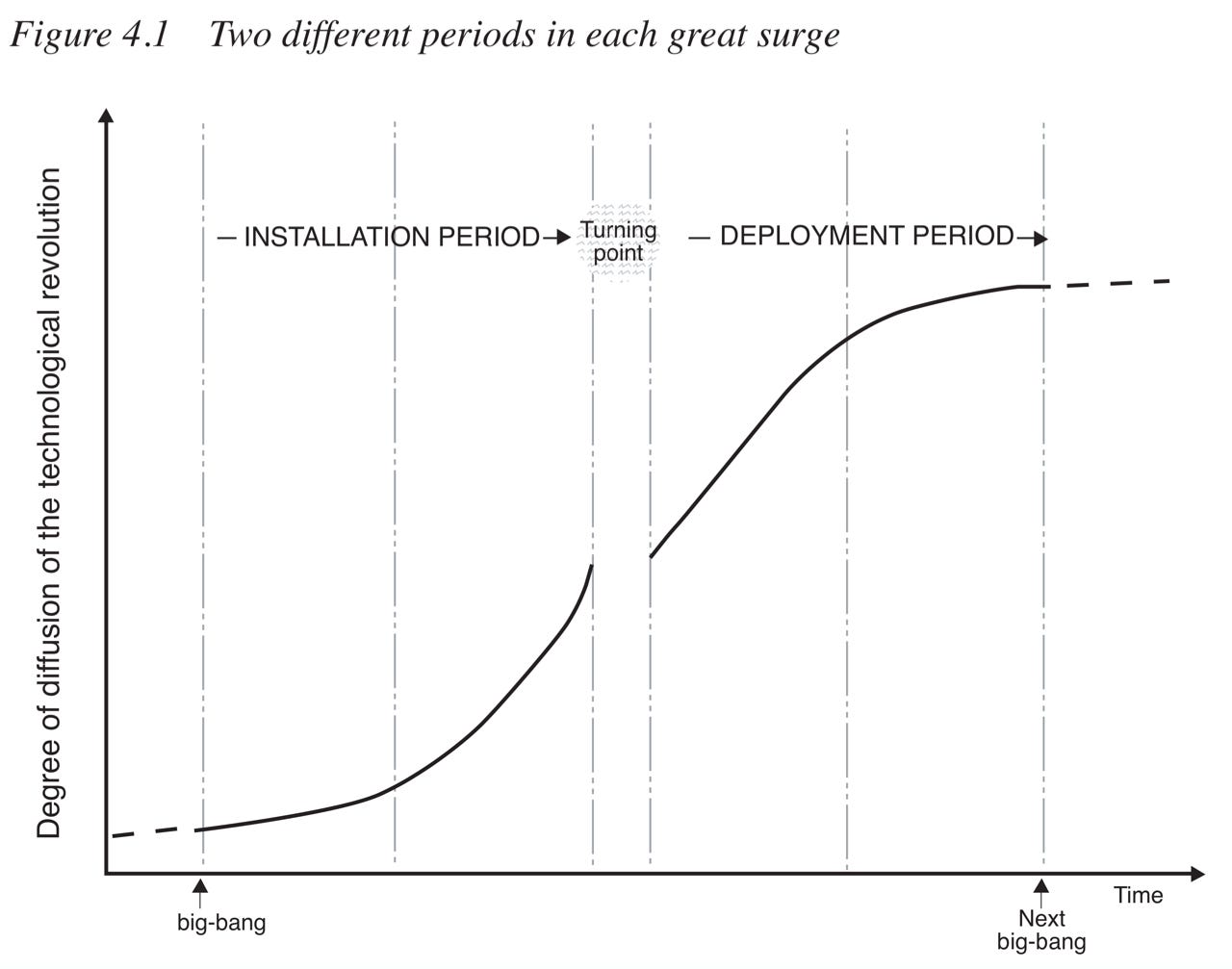
First, the installation phase. Breakthrough technologies emerge. Capital floods in. Infrastructure gets built quickly. Expectations run ahead of outcomes.
Then, a turning point. A correction or crisis forces a reset. Capital gets reallocated. The speculative phase ends.
Finally, the deployment phase. The technology matures. It spreads more evenly across the economy. Real productivity gains show up.
This year alone, hyperscalers are expected to spend more than $400 billion on AI-related infrastructure. That includes data centers, custom silicon and energy. The number has doubled in the last 18 months.
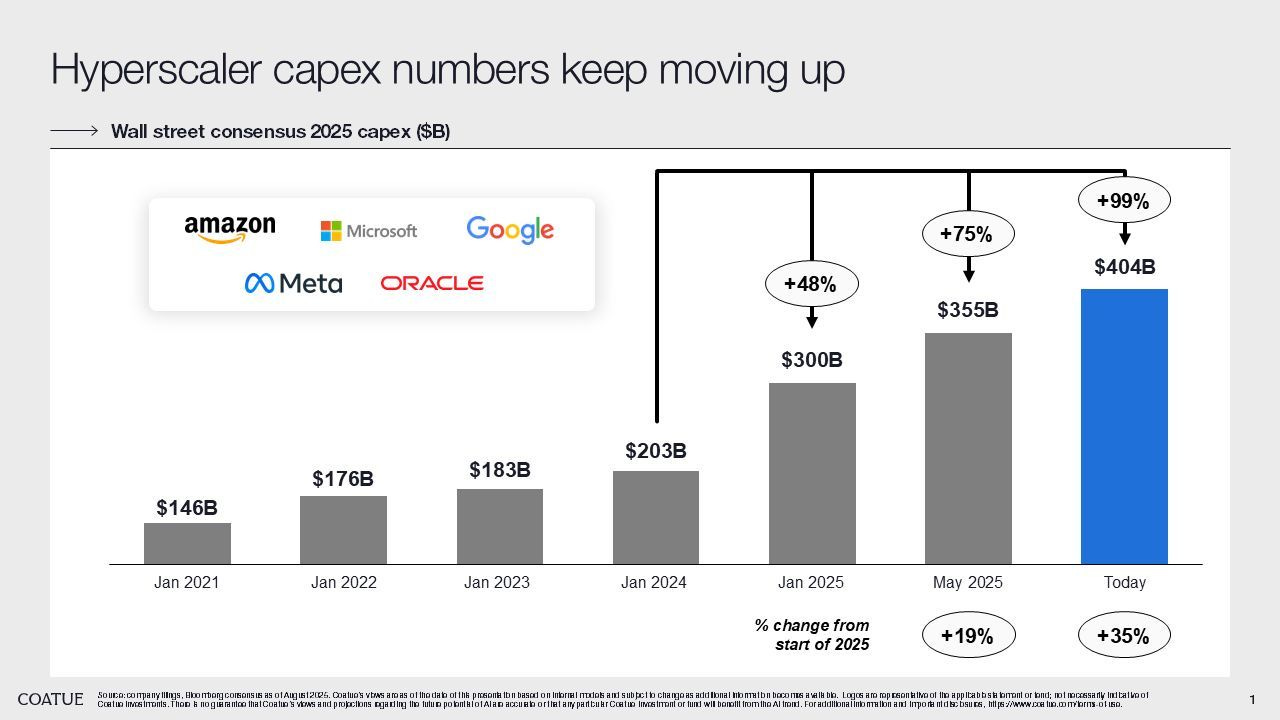
To put it into perspective, the scale of investment has already surpassed the peak of the telecom era and now rivals that of the railroad boom, the largest infrastructure project in history.
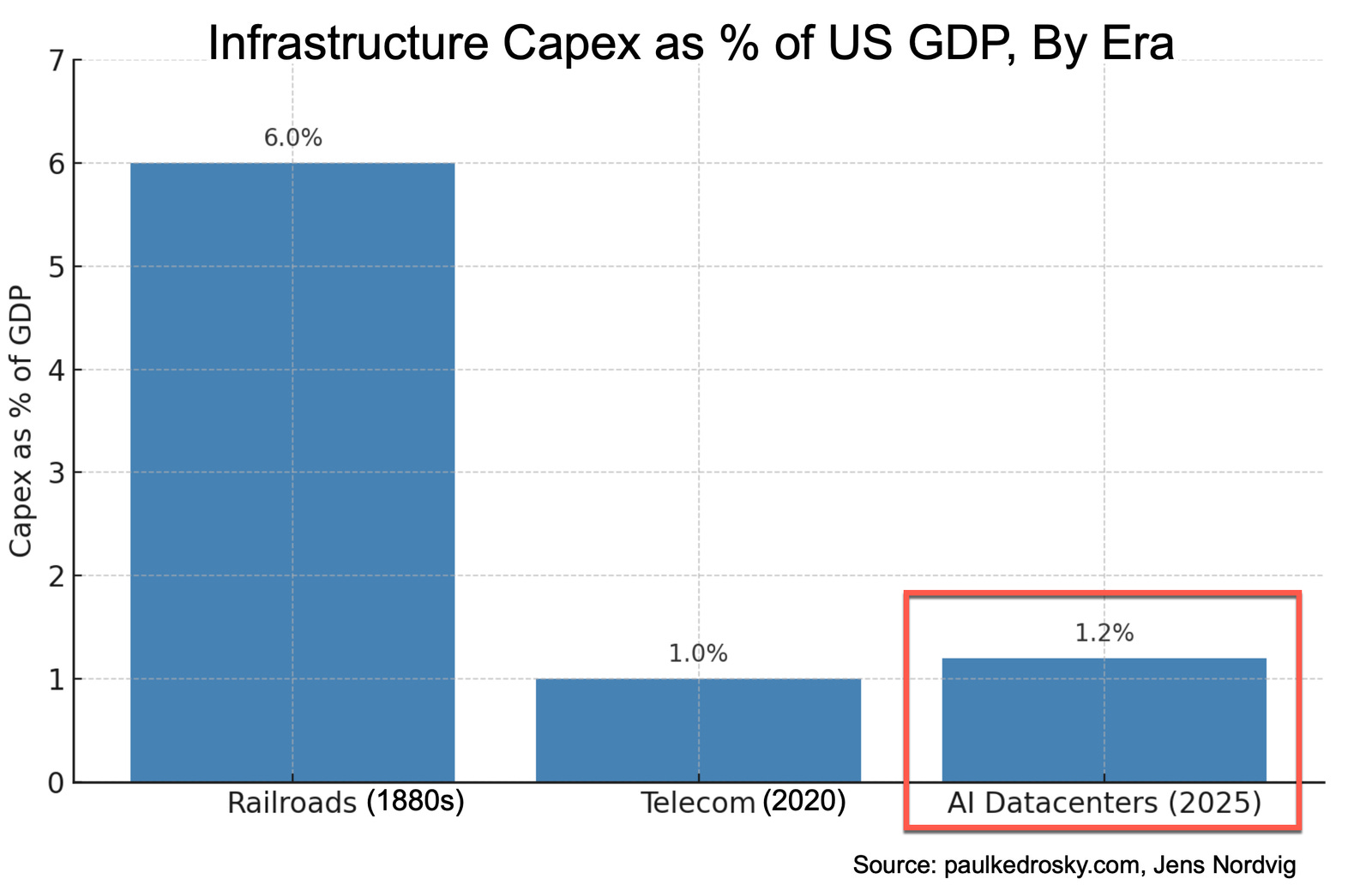
Paul Kedrosky describes it as a private stimulus program larger than any historic government stimulus of its kind. He estimates AI infrastructure spending now accounts for more than one percent of U.S. GDP.
As this infrastructure comes online, it’s an incredibly good time to be a builder. The world does typically reorder itself during the deployment phase as incumbents will protect the past, what Clay Christenson calls the Innovators Dilemma and they will face the threat of disruption by startups.
But remember, technology is a means, not a purpose.
Technology for technologies sake
Knowing exactly where we are on the S-curve is incredibly difficult. But knowing why your company exists? You’re in control of that today.
That sounds like a deceptively simple question but it is not.
I was listening to Patrick O’Shaughnessy interview Ramtin Naimi from Abstract Capital last week. Ramtin said that when one technology company gets hot, within two weeks he’ll hear from 15 others pitching the exact same idea. He finds it off-putting.
Do you think those companies know why they exist? Or are they caught up with technology for technology's sake?
At the heart of any great company is a clear reason for being. Great companies have always understood their purpose.
AltaVista flamed out by the early 2000s, but Google endured with a powerful purpose: to organize the world’s information and make it universally accessible and useful. Most e-commerce companies collapsed during the dot-com bust, but Amazon survived by relentlessly pursuing its purpose to be earth’s most customer-centric company.
If the free pizzas stop showing up in the Stanford computer science labs, again, your purpose will be what gets you through to the other side. It underpins everything. And it shapes the problems you exist to solve for your customers. Which they ultimately need to pay you for!
Simon Sinek reminds us, “your customers don’t buy what you do, they buy why you do it”
Purpose to Value Creation
One of the earliest Ridgeline meetings I recall was with legendary technology banker, James Redfern. James’s team at MorganStanley had led the IPOs for multiple SaaS market leaders including Workday, Splunk, & Tableau.
You’d think James would have had all sorts of advice on defining our target market, cloud technology and preparing a financial plan, which he did. But where he started was with purpose and culture. A common pattern he’d witnessed working with those great companies was that their purpose could ultimately be translated into the long-run free cash flow per share they created for their investors.
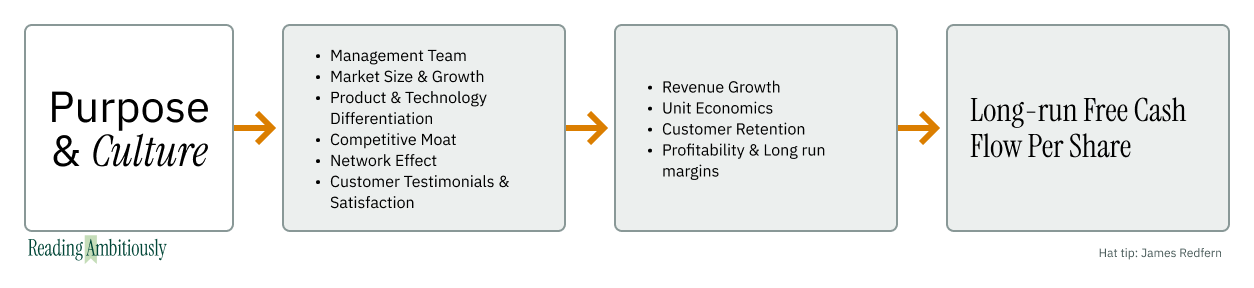
The value creation could be tied all the way back to purpose. According to James, great companies are bought, not sold. For the ones who understood their purpose, the IPO was simply another financing event that provided what they needed to continue their endeavor to fulfill it.
Understanding your purpose sets the stage for greatness
As the spending keeps surging and the technology gets ever better (GPT-5 is expected this month), the goal isn’t to chase, it’s to be around in 100 years.
Thomas Watson, Founder of IBM who celebrates their 115th birthday next year offers some solid advice:
“Consider any great organization – one that has lasted over the years – and I think you will find that it owes its resilience to the power of what we call beliefs, and the appeal these beliefs have for its people … The basic philosophy, spirit, and drive of an organization have far more to do with its achievements than resources, structure, innovation and timing”
While we cannot know where we are in the cycle, we can all get clear on why we do what we do. Because this new technology opens a once in a lifetime opportunity for builders, it’s up to us to decide our organization's purpose. And purpose is the fundamental reason for the organization's existence. Like a guiding star, always worked towards but never fully attained.

Best of the rest:
🤖 Inside the Fastest-Growing AI Startup in History — Lovable reached $100M in ARR with just 45 people in eight months. Carilu Dietrich shares six grounded lessons from the inside on what it takes to build, scale, and lead in the age of AI. – Carilu Dietrich
🧠 How I Practice at What I Do — Tyler Cowen lays out his personal regimen for intellectual training, from writing daily and rehearsing better answers to decoding culture and asking himself what he learned each day. Offering a model of deliberate practice for knowledge workers. – Marginal Revolution
🐘 Figma’s Drunk Elephant Room — A massive first-day IPO pop has put pressure on CEO Dylan Field to navigate falling stock prices, manage investor expectations, and prove the company’s fundamentals can justify its early hype. – The Information
🦾 OpenAI launches two ‘open’ AI reasoning models — In its first true open-weight release since GPT-2, OpenAI unveils two models—gpt-oss-120b and gpt-oss-20b—designed to rival China’s open AI surge and reassert U.S. leadership in democratized AI tools. — TechCrunch
🔄 The Second Half — After decades focused on building better models, AI enters a new era where defining tasks, evaluating real-world utility, and rethinking assumptions matter more than benchmark scores. — The Second Half

Charts that caught my eye:
The Magic Loop (Lenny’s Newsletter)

→ Why does it matter? Whenever I’m asked for career advice, I say, do 100% of what you’re being asked to do, and then go ask for that extra 10% that’s a bonus and crush that too, then ask for more. I’d never heard of the Magic Loop but this does an even better job at explaining it!
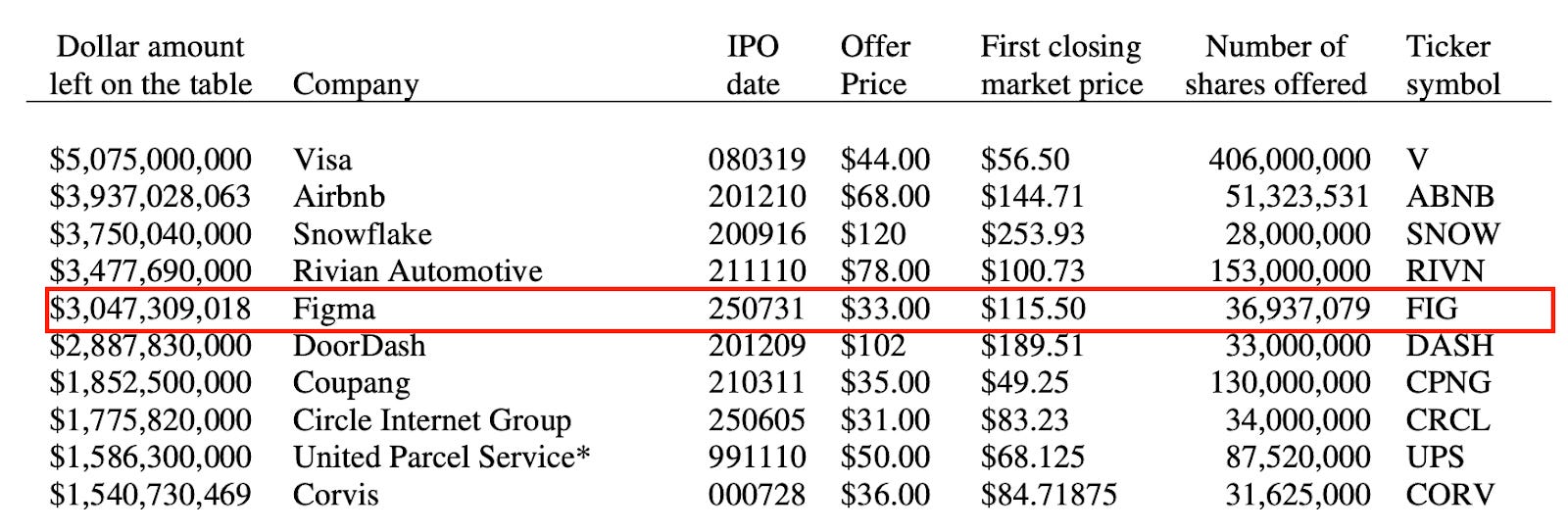
→ Why does it matter? According to Jay Ritter at the University of Florida, Figma was the 5th most underpriced IPO of all time.
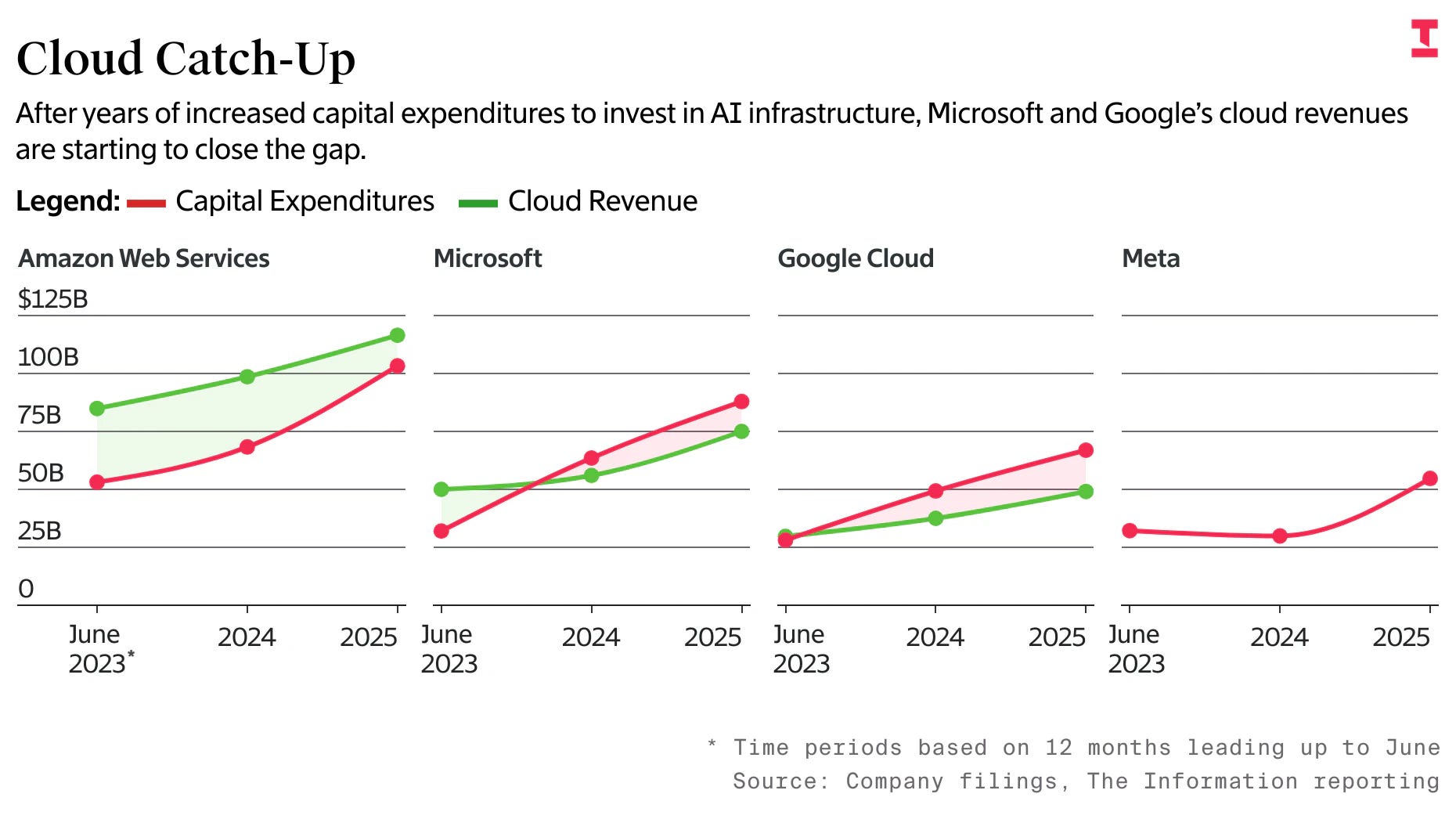
→ Why does it matter? Cloud revenues from the hyperscalers are starting to catch up to capital expenditures.
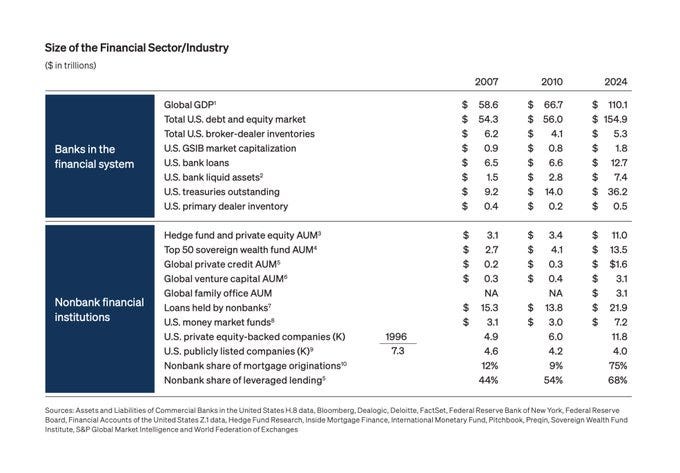
→ Why does it matter? Incredible growth in Venture Capital as an asset class which is up 10x in 17-years. Private credit too.
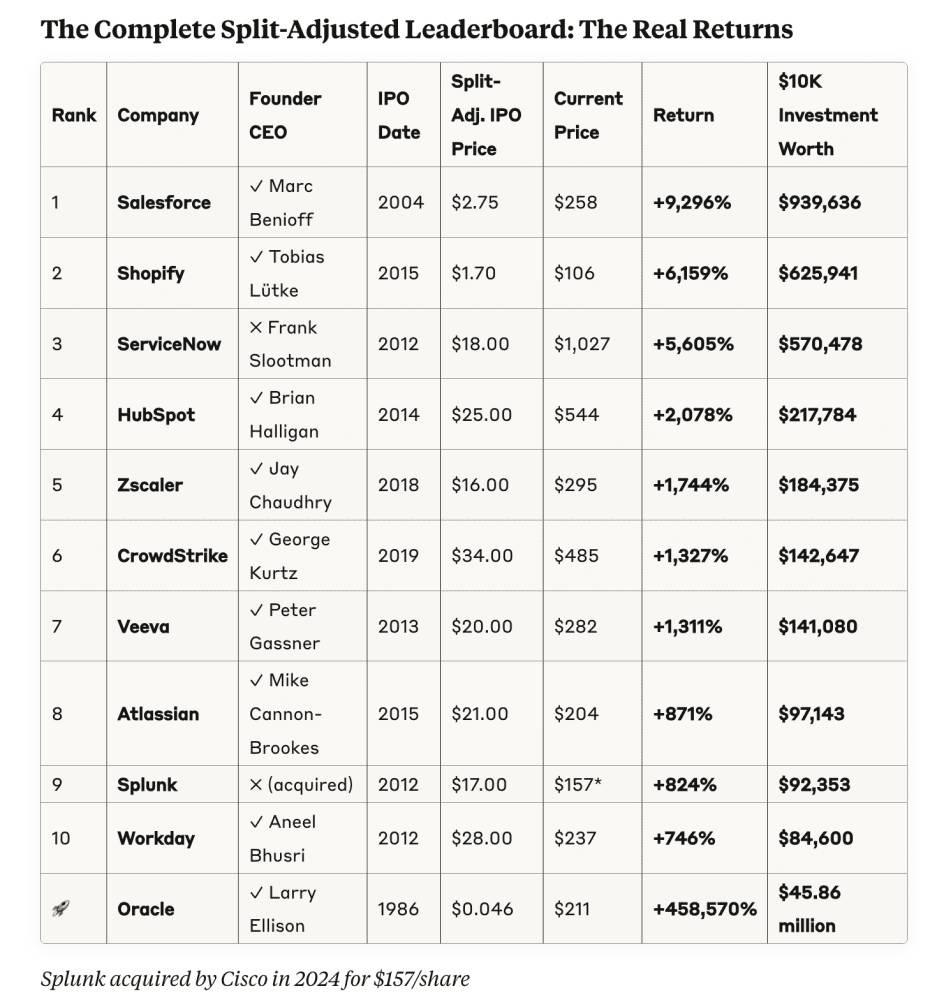
→ Why does it matter? Since we’re talking about IPO’s - here is the enterprise software leaderboard.

Tweets that stopped my scroll:
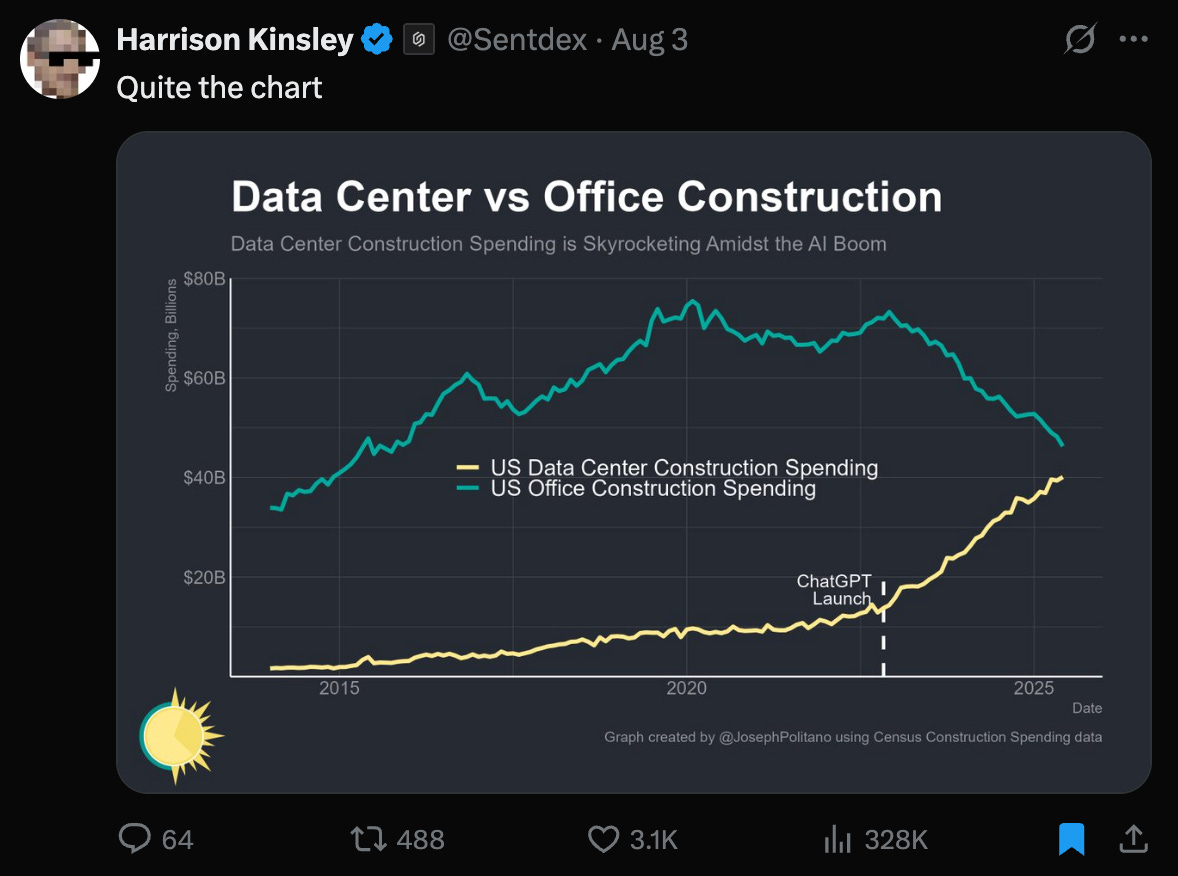
→ Why does it matter? Capital is shifting from people to machines. Office construction, long tied to the expansion of white-collar labor, has been declining since the pandemic. Is this a deeper shift in how companies think about productivity? Instead of hiring more workers and building more office space, they're investing in compute infrastructure to scale AI.
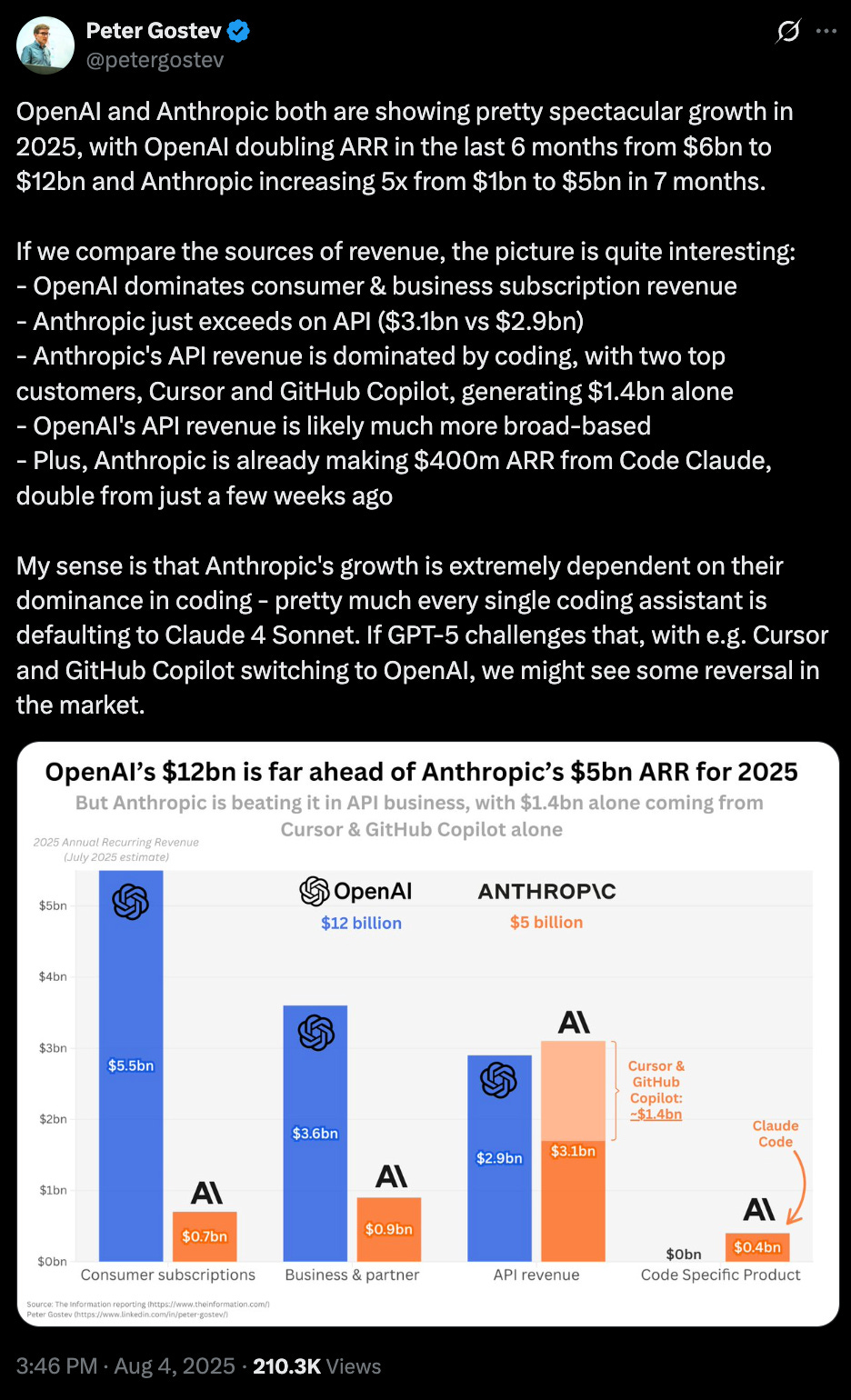
→ Why does it matter? Interesting to note that almost 50% of Anthropic’s API revenue comes from Cursor & Github Copilot.

→ Why does it matter? A lot of incumbents see AI as a “feature” whereas startups can use AI as an operating system and make it a reflexive part of their culture. While startups have to design their organizations too, it’s much easier when there isn’t a ton of existing process and structure.

Worth a watch or listen at 1x:
→ Why does it matter? Introducing GPT-5!
→ Why does it matter? Davis Advisors Chairman and Portfolio Manager Chris Davis speaks to David Rubenstein about his investing discipline, his role as the third-generation Davis to run the firm, and shares what he learned from his value investing mentors Warren Buffett and Charlie Munger.

Quotes & eyewash:
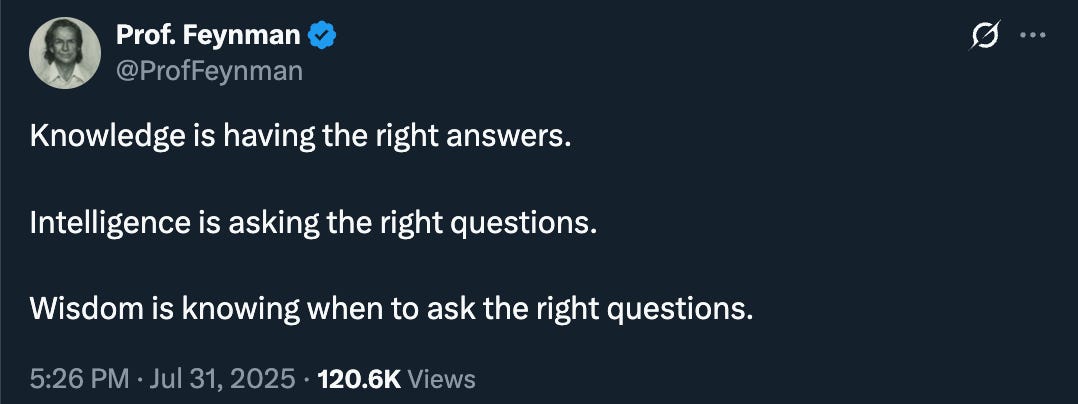
“The pursuit of detail is the religion of success.” - Napoleon
The mission:
The Wall Street Journal once used ‘Read Ambitiously’ as a slogan, but it became a challenge I took to heart. We aspire to give you a point of view in a noisy, ever-changing world. To unpack the big ideas that sharpen your edge and show why they matter. To fit ambition-sized insight into your busy life. And to channel the zeitgeist into the stories, signals, and substance that fuel your next move as leaders. Together, we can read with an intent to grow, always be learning, and refine our lens to spot the best opportunities. As Jamie Dimon says, “Great leaders are readers.”