



The big idea: AI has an agency problem
Reading time: 4 minutes

I’ve had some version of the following conversation more than once lately.
“How are things going with AI?”
“Honestly, pretty well. We have access to the latest technology from OpenAI, Anthropic, and Google. People are excited. We’re all in.”
I believe it. Giving people access and permission to experiment is real progress.
Then I ask about a specific workflow.
“How is the change management going across your teams?”
“Well, people are mostly using Microsoft Copilot. We have some exciting areas where we think AI could make a big difference, like RFPs.”
“Totally. How’s that going?”
“Well, the team that runs that process today does it really well. They aren’t using much AI yet. In fact, they just requested an additional headcount in next year’s budget.”
There is a gap between those answers. The enthusiasm is real, and the change inside the business is still small.
I am not saying this is a bad thing. But I think it’s a thing.
I recognize the impulse in myself. I now have a dedicated AI lab built around my own work. It’s about as close to AI-native as I know how to make knowledge work. Still, when something very important comes through, I frequently return to the tried-and-true methods that have worked for me in the past. There is comfort in manufacturing work in a way that lets me know what is coming out the other side.
I own the upside if the new ways work. Yet I still find myself coming back. Apparently, Sam Altman does too.
If I do it, what should we expect from someone who suspects that successful reinvention could reduce the value of their job?
Microsoft recently surveyed 20,000 AI users. 45% say it feels safer to focus on their current goals than to redesign their work with AI, and only 13% say they are rewarded for reinventing their work when the intended result is missed. According to Pew, only 6% of American workers expect AI to create more opportunities for them over the long run.
Yikes.
An employee can believe that AI is incredibly powerful and still remain uncertain about where that power leaves them.
The agency problem
I think we have an agency problem. The classic agency problem appears when one party wants an outcome, another party holds the information needed to produce it, and their interests do not fully align.
AI makes the idea almost uncomfortably literal. The human agent is being asked to deploy a digital agent that may absorb part of the human’s work. The executives asking for the redesign rarely know the work well enough to redesign it themselves. The employees who possess that knowledge cannot see how they participate in the upside.
So the AI mandate travels down the organization, and inertia travels back up.
The central economic question is whether AI will substitute for labor or accelerate growth. I suspect we will see both.
At the company level, each outcome already has clear beneficiaries. Investors have an AI incentive plan. It’s called equity. CEOs have one too. Just look at all that equity in their compensation plans.
Whether AI expands margins or creates growth, an employee can ask the same question: Where am I in this?
Charlie Munger had a line I love: “Show me the incentive and I will show you the outcome.” It sent me down a rabbit hole.
Incent the change
I went looking for companies where the people doing the work earned something tangible for finding a better way. That search led me to Nucor and its longtime leader, Ken Iverson.
When Iverson took control of the company that would become Nucor in 1965, it was near bankruptcy. Nucor went on to challenge integrated steelmakers with smaller mills, fewer layers of management, and a direct bargain with the people making the steel.
Production workers operated in teams. Each team earned a weekly bonus based on how much quality steel it produced above an agreed standard. John Correnti, a later Nucor CEO, put it plainly: “We put each bonus group into business for itself.”
Each group’s pay rose or fell with its output. By 1997, the average hourly employee earned a base wage of about $10 an hour. Productivity bonuses running between 150% and 200% helped bring average annual earnings to $60,000.
The people standing beside the furnace knew where time and steel were being wasted. Nucor turned that knowledge into a competitive advantage by sharing the gain. At Nucor, an employee did not have to wonder, Where am I in this? The answer showed up in Friday’s paycheck.
This is generally called gainsharing: when employees create a measurable improvement, some of the gain returns to them. That exact formula will not work in every situation, but we can still make the employee side of the bargain to drive change visible.
A helpful question
Before our next AI operating review, we should add one sentence to every serious workflow proposal:
If this team uses AI to create _____________, the people who create it will receive _____________.
The answer may involve money, time, ownership, or a path into the work being created. The blank cannot remain empty.
If we want to stop protecting the downside, we have to incent playing for the upside. If the ask is to make AI work for the organization, the team needs an opportunity to share in the upside they help create.

Best of the rest:
🧠 Intelligence is the Primitive. Applications are the Diffusion Layer. – As model intelligence becomes more abundant, the durable value shifts to AI-native applications that turn raw model gains into industry-specific products, workflows, pricing, and distribution. – a16z
🌎 Anthropic Expected to Tell Investors It Sees Over $30 Trillion in Potential Revenue — Anthropic plans to pitch IPO investors on a $30 trillion-plus market by counting the full scope of work AI could perform, a sweeping vision meant to justify its valuation, infrastructure spending, and growth ambitions. — The Wall Street Journal
🧭 The turbulent AI era is here. The choices we make now are critical. — Bill Gates argues that AI’s rapid advance will reshape work, security, and economic opportunity far faster than past technological shifts, making the choices we make now critical to whether it becomes a historic equalizer or a powerful force for inequality. — Gates Notes
🌊 Moats in the Age of Floods — Aatish Nayak argues that AI’s flood of intelligence will not kill the application layer; it will reward companies that channel raw models into real-world outcomes by owning coordination, workflow data, customer transformation, and indispensable industry infrastructure. — Aatish Nayak
🤗 Nvidia agrees to buy Hugging Face for $12.9 billion, report says — Nvidia’s reported acquisition of the open-source AI hub would push the chipmaker further up the stack, giving it a strategic foothold in the developer ecosystem while helping defend its hardware dominance against frontier labs building their own chips. — CNBC
🤖 Nvidia’s Profit Doubles to $59.69 Billion Thanks to A.I. Spending – Nvidia’s quarterly revenue surged 106% to $96.2 billion as AI infrastructure spending continues to accelerate, another powerful signal that the massive buildout of AI compute is still gaining momentum. – The New York Times

Charts that caught my eye:
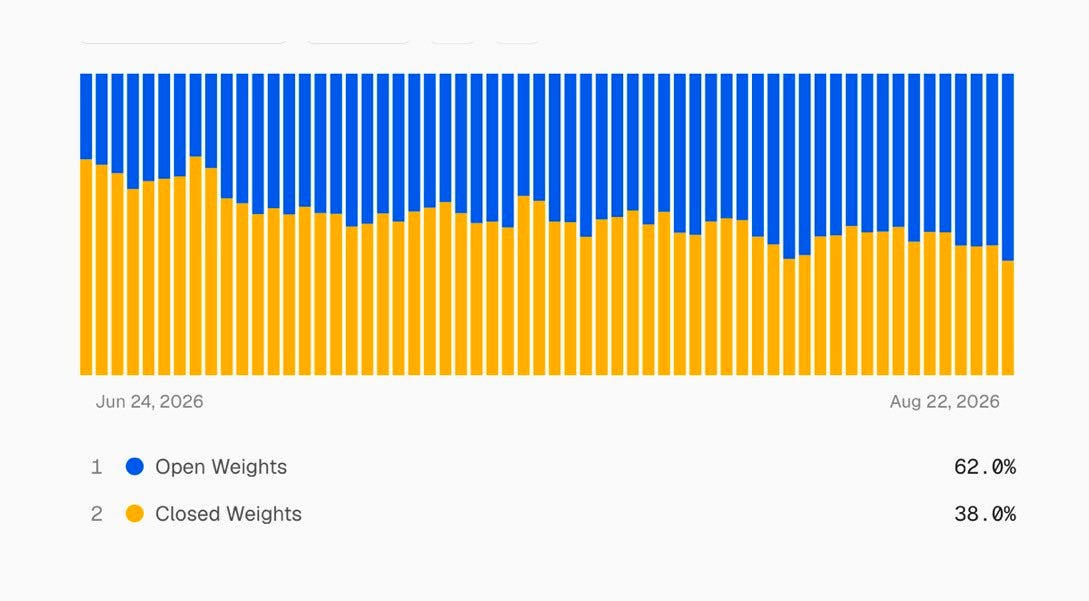
→ Why does it matter? On Vercel, open-weight models went from 28% to 62% of token share in two months. If that shift holds, closed providers will have less pricing power and more of the value may move toward the products built on top.
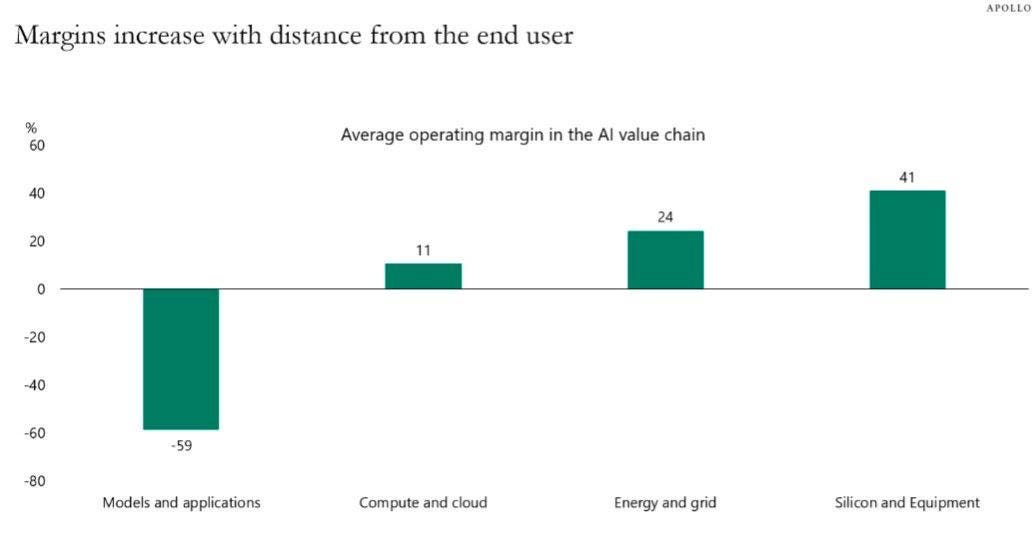
→ Why does it matter? Right now, the best economics in AI sit farthest from the end user. Apollo shows 41% average operating margins in silicon and equipment and negative 59% across models and applications. The early internet eventually shifted value toward software. A lot of AI investing rests on the belief that this chart will flip too.

Tweets that stopped my scroll:

→ Why does it matter? Perplexity just fit the orchestrator, subagents, harness, tools, and sandbox onto an Nvidia DGX Spark. Harder work reaches the cloud only after the user approves it. Apple is now positioning its new Mac mini for “always-on, deskside agentic computing” too. The personal AI server is starting to look like a product category.

→ Why does it matter? I can’t remember seeing anything like this: 666 teams and more than 2,000 humanoid robots competing in one event. China is turning robotics progress into a spectator sport.
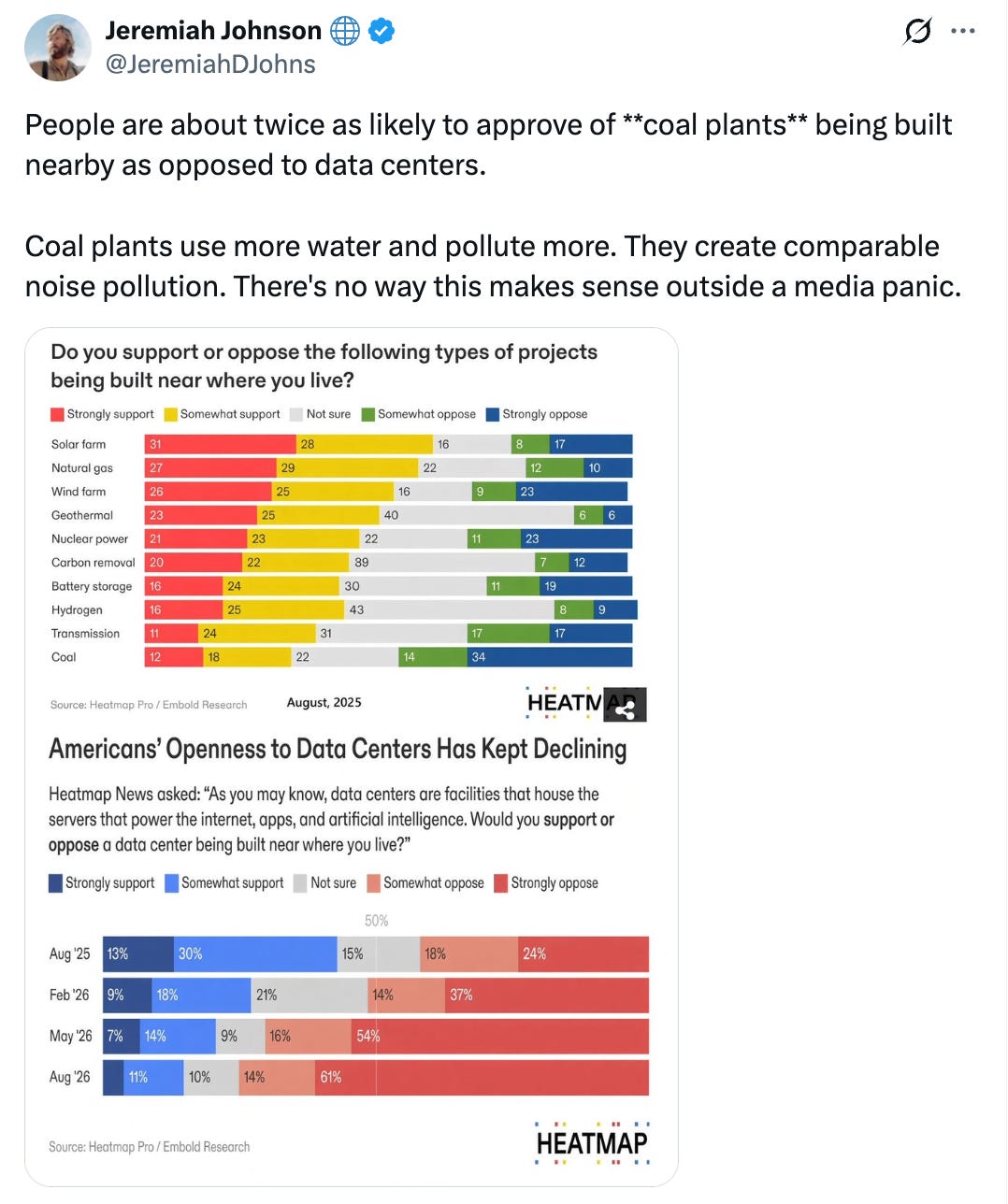
→ Why does it matter? AI continues to be less popular than ICE and now apparently Coal plants, too. Obviously some major issues we need to work through here but time and time again optimism is the better bet.

→ Why does it matter? Maybe positive affirmations sound like a gimmick. I think they can work. Tobi describes using one to get over his fear of public speaking. Whether or not his neuroscience is exact, the idea is solid: rehearse an identity long enough and our behavior starts to catch up.
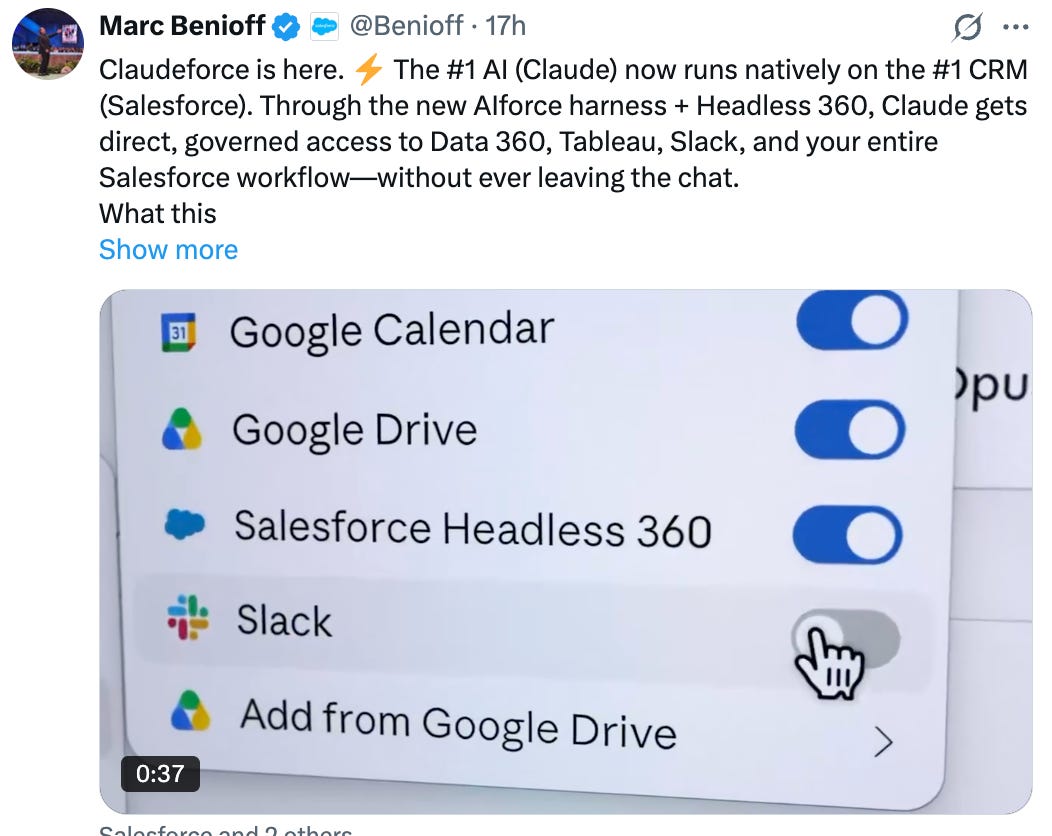
→ Why does it matter? Salesforce said earlier this year that it was going “headless,” meaning customers could use Salesforce without spending all day inside its interface. Claudeforce takes that idea further: Claude can work across Data 360, Tableau, Slack, and the CRM from inside the chat. The system of record remains Salesforce. The place we use it may be Claude.
Worth a watch or listen at 1x:
→ Why does it matter? Sam Altman makes the confession at the heart of this week’s Big Idea: despite having Codex, he still uses a computer the way he has for 20 years because clicking through email and moving between apps still feels like work.
→ Why does it matter? “We’re not interested in destroying anyone!” 🤣
→ Why does it matter? Neil Movva works backward from one unit of intelligence, a token, through everything required to produce it. If intelligence becomes 1,000x cheaper, agents can work for hours or days instead of waiting for our next prompt.
→ Why does it matter? Tibo describes today’s Codex power-user experience honestly: skills, memory, subagents, and parallel tasks still feel clunky, and we have learned to work around the rough edges. His picture of the next wave is much better: AI adapts to us, protects our attention, and moves fast enough to keep us in flow.

Quotes & eyewash:
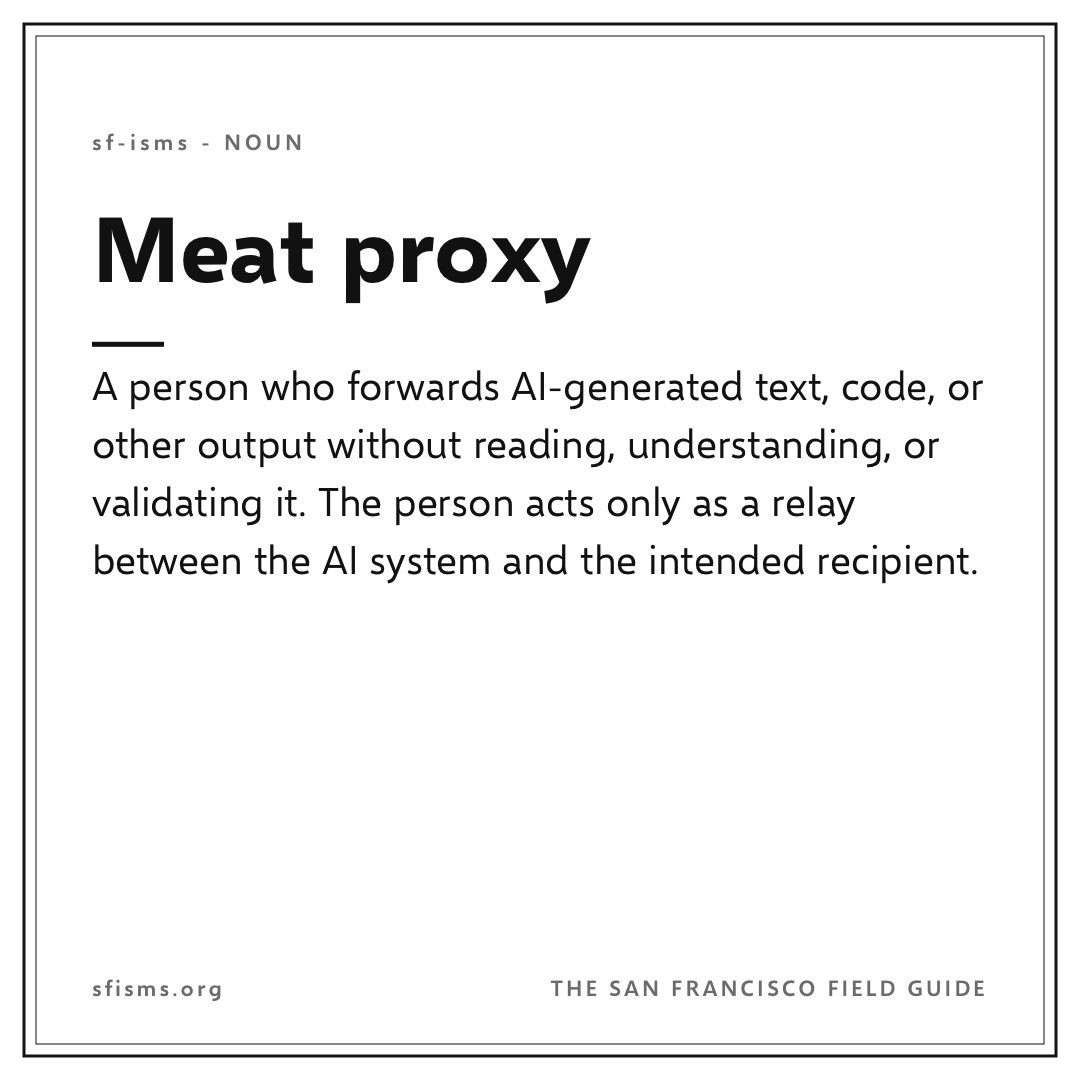
→ Why does it matter? The moment we forward something we have not read, understood, or validated, we stop being the author and become the meat proxy. Don’t be one!
The mission:
The Wall Street Journal once used “Read Ambitiously” as a slogan, but I took it as a personal challenge. Our mission is to give you a point of view in a noisy, changing world. To unpack big ideas that sharpen your edge and show why they matter. To fit ambition-sized insight into your busy life and channel the zeitgeist into the stories and signals that fuel your next move. Above all, we aim to give you power, the kind that comes from having the words, insight, and legitimacy to lead with confidence. Together, we read to grow, keep learning, and refine our lens to spot the best opportunities. As Jamie Dimon says, “Great leaders are readers.”
Disclaimer: This content is for informational purposes only and does not constitute financial, investment, or legal advice. Readers should do their own research and consult with a qualified professional before making any decisions.