



The big idea: Your margin is my opportunity
Reading time: 6 minutes

Bezos has this line I love: “Your margin is my opportunity.”
SemiAnalysis believes Anthropic could exit the year above a $100 billion annualized revenue run rate. It estimates gross margins above 80 percent on the part of the business that sells access to Claude. In plain English, one month of sales multiplied by twelve would put the company above $100 billion. Anthropic’s run rate had already been growing at roughly 10x a year. Carry that forward, and people start doing the math toward $1 trillion.
A trillion dollars is difficult to fathom. It is fair to wonder whether Anthropic can get there.
Regardless, this is a hell of a business.
Build the best AI in the world. Put it behind a meter. Customers send it work. Charge for each request.
Bam!
But the Bezos line grounds us. Margins this high attract a crowd. Can Anthropic and OpenAI hold on to them?
I see three scenarios: a closed world dominated by the labs, an open world where models become commodities, and a hybrid world where companies use a mix of both. I do not know which one wins.
To work through them, start with where scarcity sits today. I keep thinking about a data center I drive past in central Wisconsin.
The AI supply chain
For the past year, I have watched it spread across the landscape. As you drive by, it just keeps going and going. One of the dads in my daughter’s class is an electrician. He moved his family to Wisconsin because he is contracted at the site through 2029.
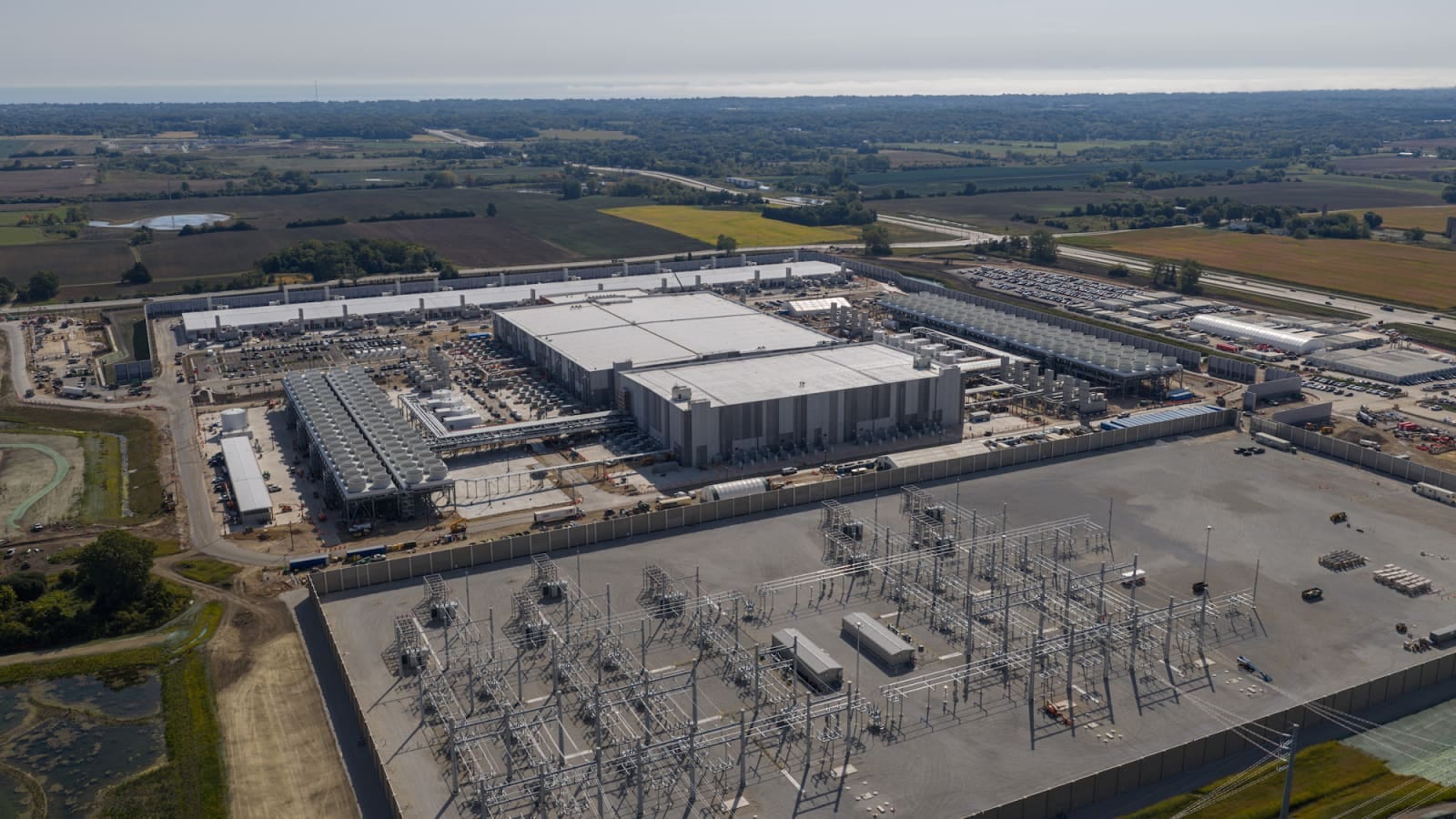
That data center is the bottom of this chart.
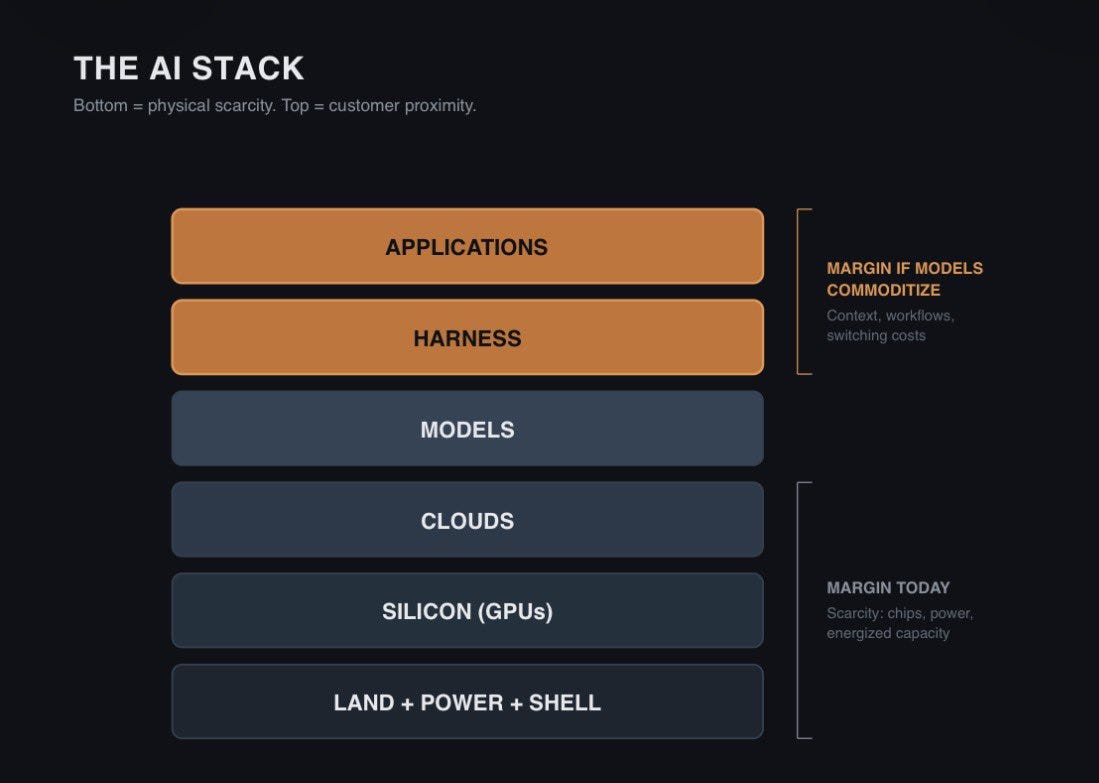
This chart reduces the AI stack to six layers. The bottom is physical scarcity. The top is proximity to the customer.
At the bottom sit land, power, buildings, and GPUs. There are only so many chips, so much power, and so many electricians available to build the facilities. Those constraints have pulled hundreds of billions of investment toward the bottom of the stack. They have also given the suppliers who control those resources unusual pricing power.
Above them sit the cloud providers: AWS, Microsoft, and Google Cloud. Then come model providers, including Anthropic and OpenAI. The labs spend huge sums at the bottom, turn that infrastructure into AI, and charge a premium for access.
At the top sit the harness and the application, the software that turns raw model intelligence into finished work for a customer. Overly simplified, but that is how it works today.
A closed world
The closed-world case is that the labs’ lead compounds. The best models attract customers. More revenue buys more compute, talent, and research. Scale lowers the cost of serving each request. Enterprise customers pay for reliability, security, convenience, and capabilities they cannot find elsewhere.
The labs are also building applications and harnesses around their own models, making the layers harder to separate. Anthropic is already pushing up the stack through Claude Code, Claude Science, and purpose-built legal and financial-services workflows.
They could run away with it.
For that to happen, frontier intelligence, the best AI available for the hardest work, needs to remain scarce. The labs must keep improving quickly enough that open alternatives never become credible substitutes.
An open world
We often call it open source. Open-weight is usually more accurate: the model’s learned parameters are available for others to run, even when the training data and full development process remain private.
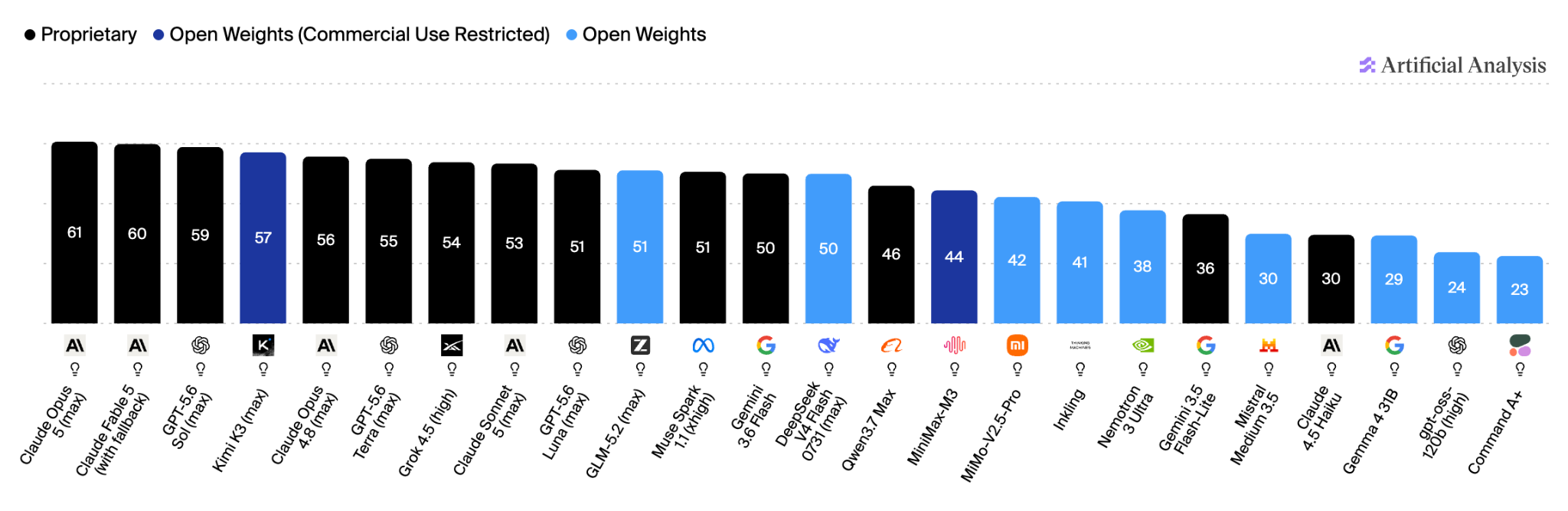
Several of the highest-scoring open-weight models on this chart, including GLM, Kimi, and DeepSeek, come from Chinese labs. If they become as capable as the leading closed alternatives, Anthropic and OpenAI would face pressure to win at the application layer. Access to the model would command less of the total margin.
But free weights are not free intelligence.
The models still need somewhere to run. Frontier-size open models require expensive chips, large amounts of memory, and plenty of power. A company may avoid paying the model provider and discover that it has become its own cloud provider instead.
That leaves two open questions: whether open models can keep pace, and whether running them is actually cheaper once the full system is counted.
They may not need to get all the way there. Open models capable enough for the job at hand could change the economics well before they reach the frontier.
A hybrid world
Using the most expensive model in the world for every task is like using a Ferrari to deliver the mail.
If open models become capable enough for high-volume work, the labs could retain the hardest problems and still face pressure in the broad middle. Applications and enterprises would have somewhere else to go.
OpenAI’s own lineup already separates frontier from volume: Sol for the hardest work, Terra for everyday work, and Luna for fast, cost-sensitive volume. Only weeks after launch, OpenAI cut Luna’s price by roughly 80 percent and Terra’s by 20 percent.
Now imagine a company keeps Sol for frontier work but replaces Terra and Luna with cheaper open alternatives. A model router assigns each request according to the task, expected quality, control and cost. The customer asks for work. The router decides which model should do it.
OpenAI would still own the frontier and charge a premium for it. It simply would not collect the toll on everything else. The labs could begin to look like Intel Inside: a critical component in someone else’s finished product.
The application
It is called a harness today. I suspect we will call it the AI-native application tomorrow.
When you give an AI a job, the model is only one part of the system. The harness finds the right files, gives the model tools, chooses which model should work, checks the result, and knows when a human needs to step in. Engineers call those pieces context, connectors, tests, and guardrails. Customers experience them as a product that works.
ARC-AGI-3 asks AI agents to learn unfamiliar puzzle games without instructions. OpenAI recently tweaked the harness, and the same model scored nearly three times better while generating one-sixth as much output.
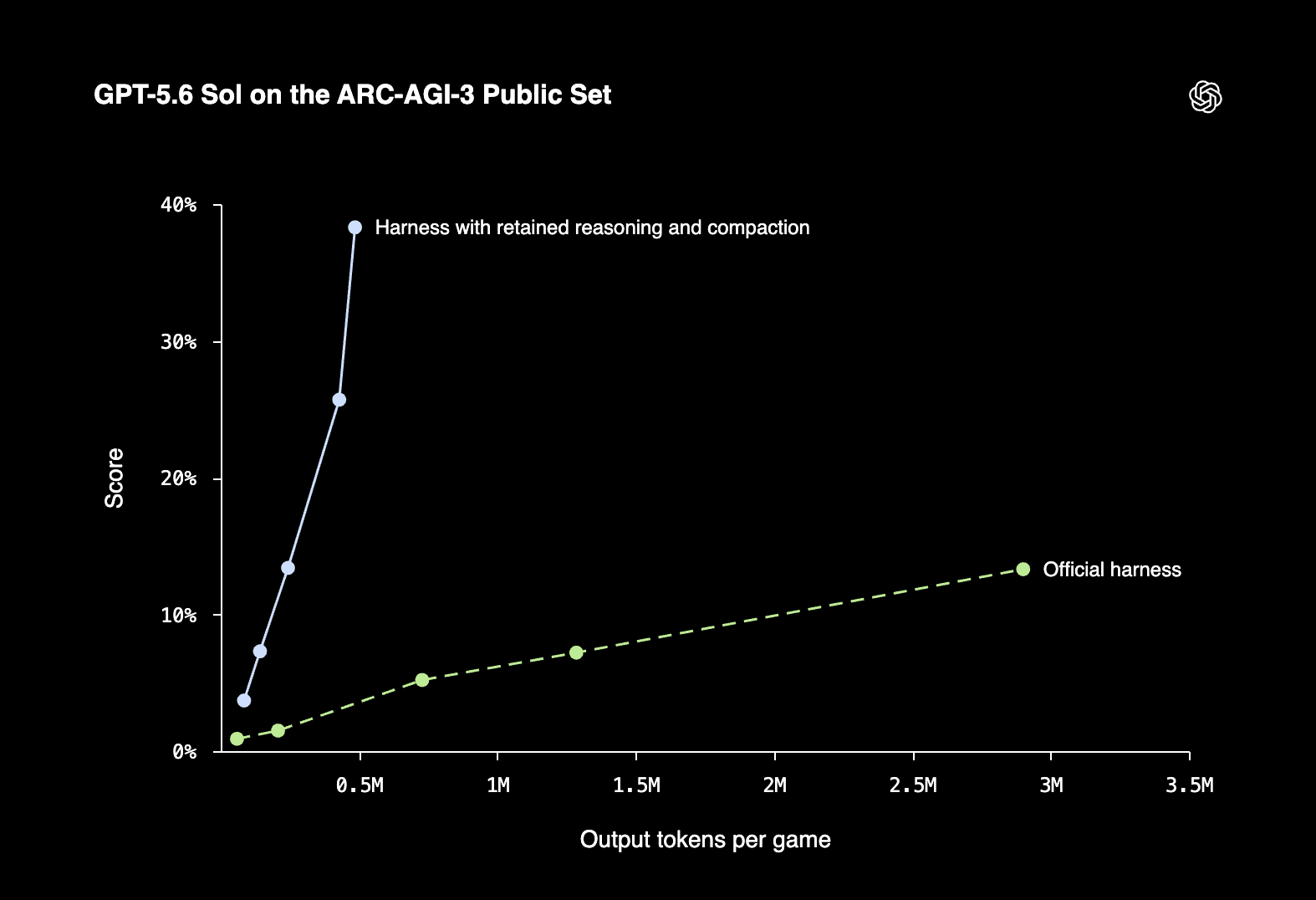
The model did not wake up better. Its harness changed. And that’s how important a role it can play in generating the outcome.
Anthropic engineer Jess Yan argues that harness design depends on the model. Every part of a harness is built to compensate for something the model cannot reliably do (yet). As the model improves, some of those supports become unnecessary.

If the labs keep the model and harness tightly coupled, more of the margin may stay with them. If applications can switch among several capable models, more of the margin may move toward them because they sit closer to the workflow and the customer relationship.
Cursor shows what that path could look like. Its customers use the product to write code. Cursor routes work across model providers and has trained its own coding model on top of an open-weight base. Each move reduces its dependence on OpenAI and Anthropic.
If Cursor produces the best coding product while controlling which models its customers use, more of the value may stay with Cursor.
That is still an if.
Where will scarcity live?
Today, scarcity lives in power, chips, data centers, and frontier AI produced by a small number of companies.
Years from now, the supply chain may look much the same. Anthropic and OpenAI may still lead at the model layer and have built the applications above it.
Or the stack may split. Frontier intelligence remains scarce, while enough everyday intelligence becomes interchangeable that some of the margin moves closer to the customer.
The harder thing to build may sit somewhere we cannot see from I-94 in central Wisconsin: an application that understands the job and knows what finished work looks like.
Bezos does not tell us where the margin will end up. He reminds us that once you have it, competing it away becomes someone else’s mission in life.

Best of the rest:
💸 Why compute might get 10x+ more expensive in coming years — As smarter AI generates more economic value from every GPU, compute demand could overwhelm constrained supply, driving prices sharply higher, strengthening the frontier labs, and pricing lower-value applications out of the market. — Dwarkesh Patel
🌍 The Actual Reason Why Google “Fell Out” of the AI Race Changes Everything – Google may not be losing the AI race so much as running a different one, betting that world models and a deeper understanding of reality will matter more than the coding agents and recursive self-improvement pursued by OpenAI and Anthropic. – The Algorithmic Bridge
⚡ Speed Above All Else — Alfred Lin shares Commure CEO Tanay Tandon’s argument that speed and rigor are not tradeoffs: exceptional teams plan carefully, raise their standards, and execute in intense, focused sprints that make seemingly impossible timelines possible. — Alfred Lin

Charts that caught my eye:
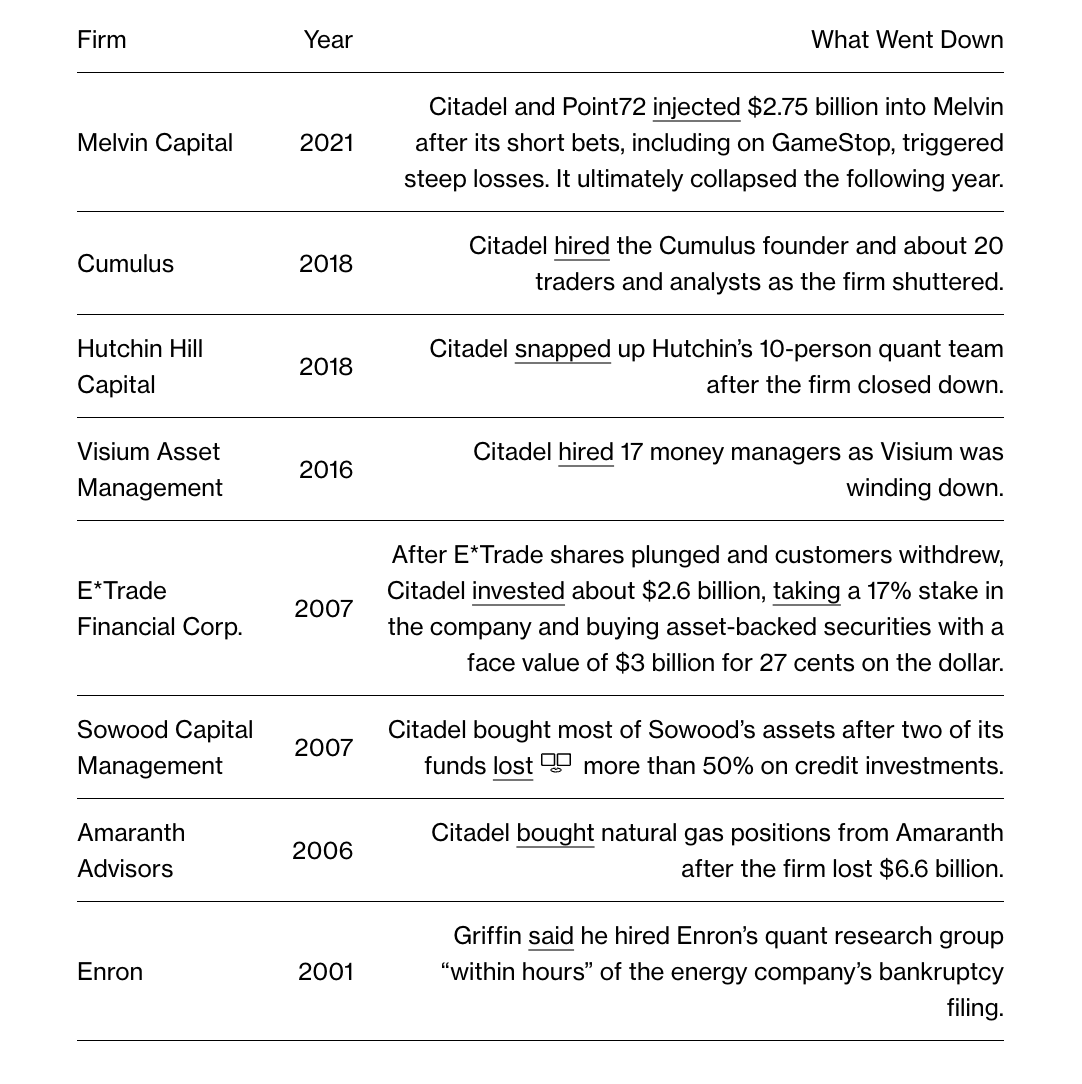
→ Why does it matter? See a pattern? "Good things may come to those who wait - but only those things left by those who hustle" - Ken Griffin
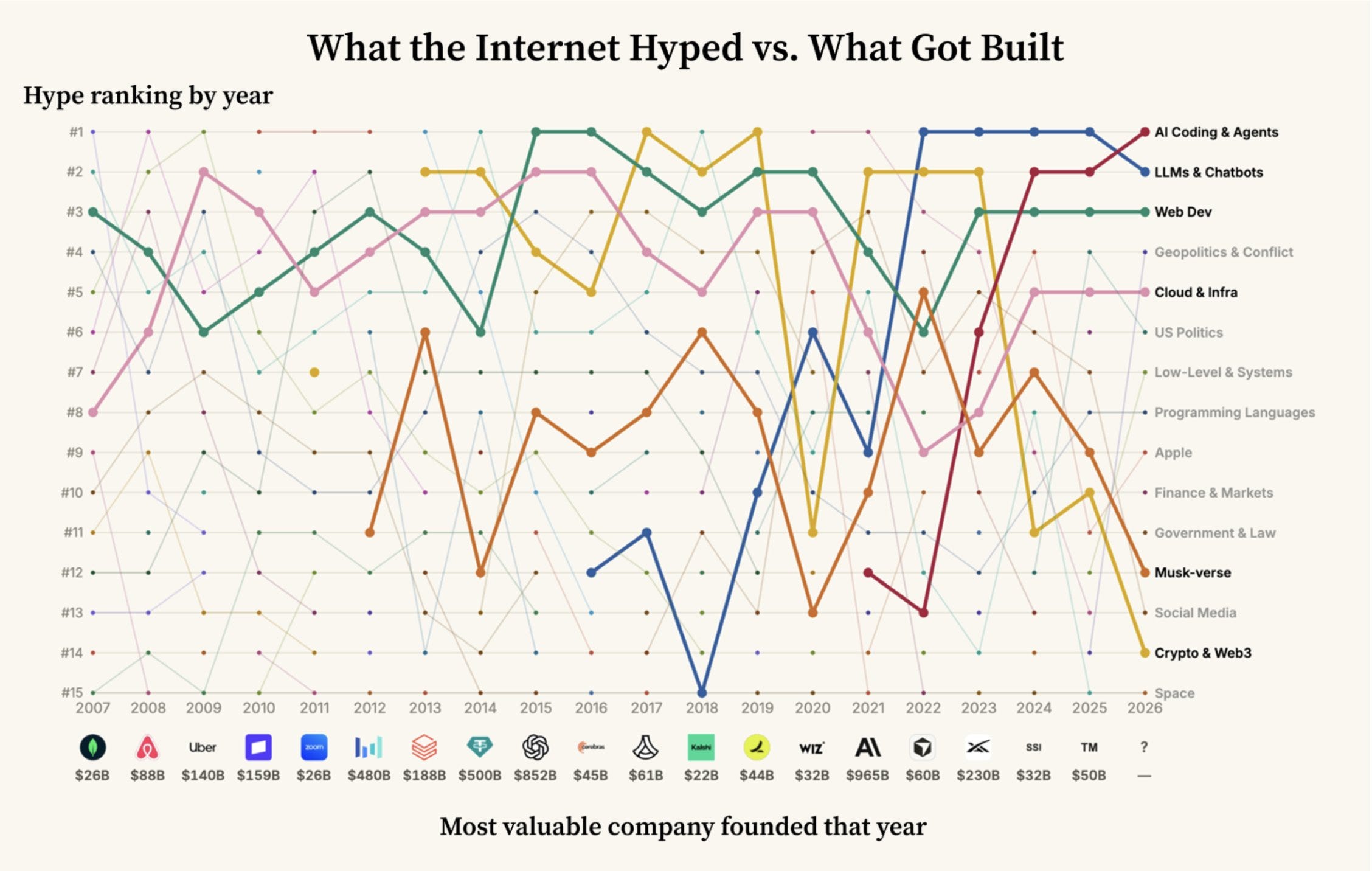
→ Why does it matter? Sequoia dug into 20+ years of Hype data. This chart ranks the most hyped topics on Hacker News for every year since 2007. Under each year sits the most valuable company founded that year.
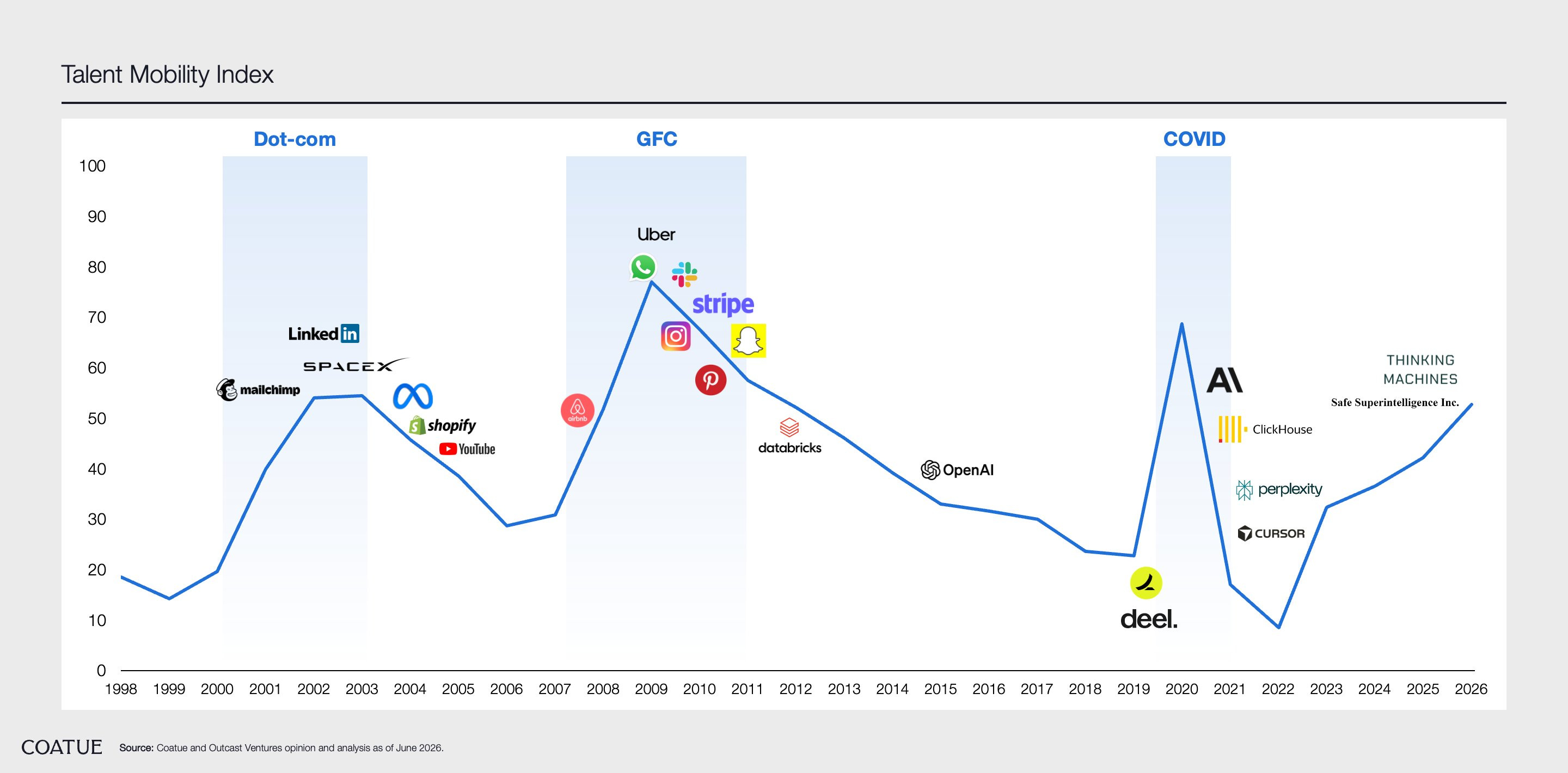
→ Why does it matter? This chart sorta lives rent-free in my head. What it says is that yes, technology plays a role in new value creation, but the larger role is that people change jobs. Thinking about this in the context of what’s going on at Google this week.
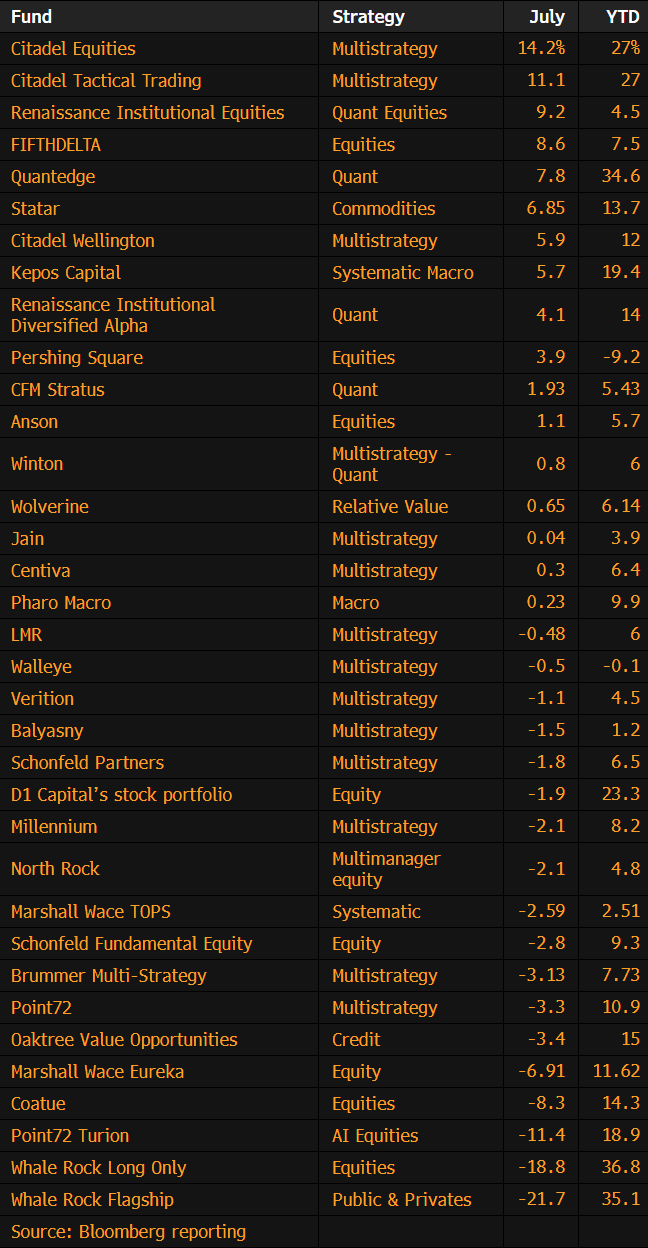
→ Why does it matter? Current scoreboard in H/F land.

→ Why does it matter? Wow!

Tweets that stopped my scroll:

→ Why does it matter? All things considered, this is a very good letter from Leopold sent to his LPs just a few days before his wedding. Humbling. “We took the steps necessary to fight another day”

→ Why does it matter? Dwarkesh offers a thoughtful PoV here on what would need to be true about the world if the trendline continues and leading labs hit $1T in revenue by the end of next year.

→ Why does it matter? A lot of talk this week on Airtable being acquired for $1.285B when they raised money in 2021 at an $11B valuation. Imho, what’s most interesting about this story is Bending Spoons (who IPO’ed earlier this year). Bending Spoons attracts some incredible talent that would traditionally pursue different opportunities but then is able to seed that talent back into their portfolio to help run companies like this one. Earlier this year, Bending Spoons acquired AOL, where they’re doing the exact same thing!

→ Why does it matter? A lot of debate over the years about whether an LLM could generate new findings vs. recycle previous ones. Some major breakthroughs here.

→ Why does it matter? Big changes at Google as Jeff Dean is moving on (with a lot of the Google AI team) to start a new public benefits corporation called Discovery Loop. And Demis is taking over as Google’s head of AI.

→ Why does it matter? Seems Michael Burry is still quite bearish.

→ Why does it matter? Somebody has to launch the “Android” open-source competitor. Could it be Zuck? Google after this week?
Worth a watch or listen at 1x:
→ Why does it matter? Micky Malka rarely does interviews, and few better than David Senra to bring out his very best.
→ Why does it matter? Gavin is the official all-time most returned guest on ILTB! Love how he just walks you through the “model” in his head on the AI economy. And also that his visits on ILTB are timed with local market peaks. Ha!

Quotes & eyewash:
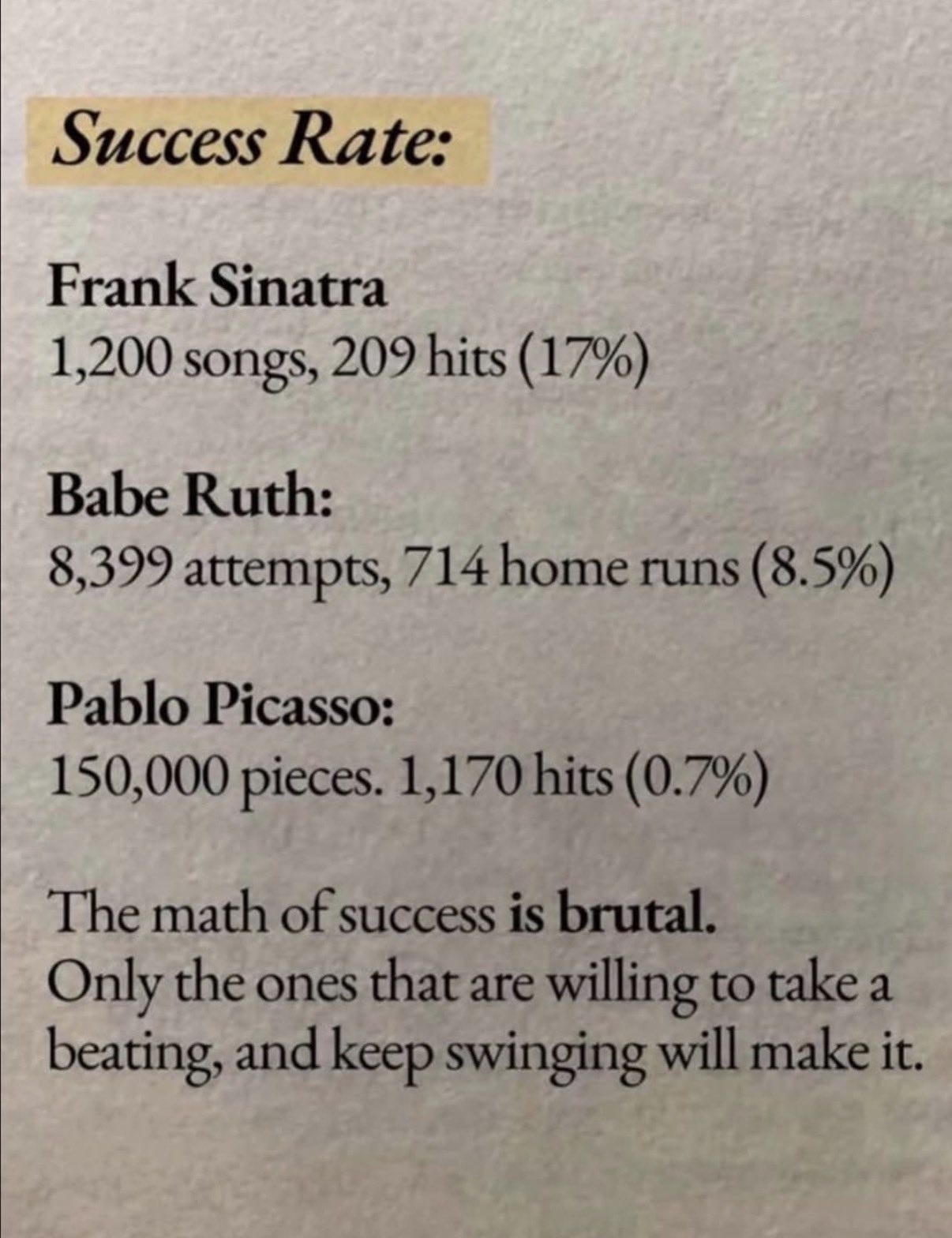
→ Why does it matter? Keep swinging!
The mission:
The Wall Street Journal once used “Read Ambitiously” as a slogan, but I took it as a personal challenge. Our mission is to give you a point of view in a noisy, changing world. To unpack big ideas that sharpen your edge and show why they matter. To fit ambition-sized insight into your busy life and channel the zeitgeist into the stories and signals that fuel your next move. Above all, we aim to give you power, the kind that comes from having the words, insight, and legitimacy to lead with confidence. Together, we read to grow, keep learning, and refine our lens to spot the best opportunities. As Jamie Dimon says, “Great leaders are readers.”
Disclaimer: This content is for informational purposes only and does not constitute financial, investment, or legal advice. Readers should do their own research and consult with a qualified professional before making any decisions.