



The big idea: Top 5 lessons learned vibe coding AmbitiousOS
Reading time: 6 minutes

Fourteen days ago, AmbitiousOS was a Friday-night idea. Today, it is live in production, running a private beta with about 20 subscribers. Two weeks from idea to production would have sounded unrealistic not long ago. With Claude Code, it is the new normal.
Here are the top five lessons I learned building AmbitiousOS with Claude Code over the last two weeks.
The AI is a shadow of its creator
“An institution is the lengthened shadow of one man.” - Ralph Waldo Emerson
AI output is downstream of a dataset, and datasets are curated by humans first.
The intelligence is not new, at least not yet. It is relocated, packaged, and distributed through LLMs.
AmbitiousOS is constrained exclusively to my personal research and writing. Over the last two years, I’ve curated thousands of pieces of material that make up the dataset the model retrieves from. Before a single token is spent, the dataset has already been filtered and weighted by my human brain.
This matters because the “artificial” intelligence is an extension of the curator. It is both surprising and not surprising that AmbitiousOS ended up resembling its creator. Growing up, I was the person family members asked to set up their computers. I’ve always gotten joy out of explaining technology to others. Reading Ambitiously is that impulse in newsletter form, and AmbitiousOS is what it feels like when you turn that same impulse into an AI.
This is a lesson for anyone building or investing in AI. “AI for [insert your best idea]” is exciting, but you should look even harder at the team behind it. The best systems are built in the image of creators who care deeply about why the system exists in the first place.
The full power of a database, and I love it
I am not a trained database analyst. Claude built AmbitiousOS on Postgres, and it is astonishingly powerful. If Excel is one way to interact with data, this is a different category entirely.
Query, transform, validate, and refactor schema. I can do it all by talking to Claude with my voice. Databricks reported that AI agents now create 80% of new databases in Neon (their Postgres offering) and 97% of database branches. No surprise to me.
Working in the terminal, while intimidating at first, might be the most pleasurable UX I’ve ever used. Claude Code with direct database access, programmatic access via APIs and MCP to other systems, and the ability to speak in English and build highly personalized software. That is awesome.
Vibe coding a dashboard is one thing, getting to production is another
It is one thing to vibe code an HTML front end. It is another thing to ship software.
At one point, Claude said, “Let’s check the logs.” I went looking and realized I didn’t really have logging infrastructure. There is a lot of work that goes into manufacturing software. Yes, I could ask Claude to invent something, wire it up, and ship it. But there is a big difference between a prototype and a product.
And once you get to a product in production, it is a lot of work. I spent 2 days on the sexy features and 12 on security, deployment, maintenance, and bugs.
If you’ve spent your career in enterprise software, you already know the iceberg. AI compresses the visible work, but it does not eliminate the invisible work.
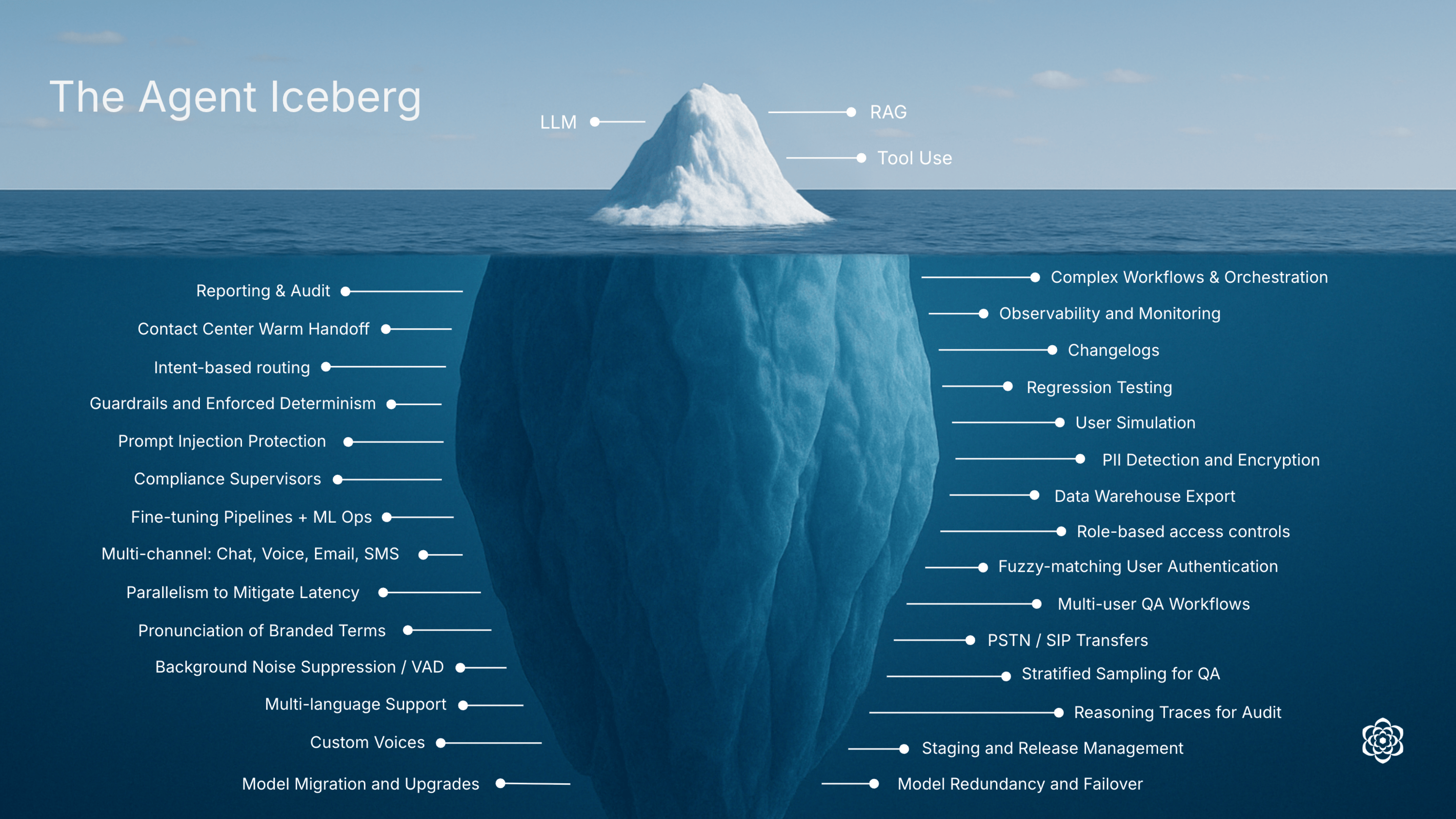
A lot of what we see AI producing is incredible demos, parlor tricks, and the “wow” moments.
What most people do not see is the manufacturing line required to get to production: security and permissions, secrets management, environments, deployments and pipelines, observability, auditability, regression testing, incident response, rollback, and the daily maintenance that starts the moment real users show up.
Most of my feature development happened last week. This week has been dominated by ensuring a safe transition to production. Claude has been a coding partner, but also something closer to a CISO and SDLC partner, pushing on infrastructure assumptions, reviewing flows, and helping test the deployment, not just the sexy features that’ll drive sign-ups.
35,000 feet
Earlier this week, one of our private beta testers wrote in to say they couldn’t log in via our authentication workflow. They sent an email with details, plus a screenshot. I happened to be on an airplane, and I fired up Claude Code at 35,000 feet on United’s Wi-Fi. I gave Claude the email and the bug.
It took a couple of iterations, but Claude quickly identified the changes we needed to make. We wrote a fix, pushed it to GitHub, and redeployed the application in a matter of minutes, all from 35,000 feet.
Then Claude drafted the reply, and I sent it to the user to let them know the fix was in. They were able to log back into AmbitiousOS.
It’s a wild time to be alive. At the same time, now that we’re live, we have an obligation to our users.
The roadmap is more AI-native, without getting sloppy
What comes next for AmbitiousOS is more AI-native capability.
I want to give it a voice. I want to give it a phone number. I want you to talk to it on WhatsApp without logging into a browser. On the roadmap are things like an MCP server and a more conversational interface, plus the less glamorous work that makes those experiences safe: persistence infrastructure, chat history, stronger security controls, and a lot more hardening.
There is an old trap in software. People assume all progress is feature progress. But once you ship, you cannot spend 100 percent of your budget on features. You are now running a software company. Focus on the visible work that excites users, while also focusing on the invisible work that keeps them safe, in a reliable, available way that brings them back.
It’s a new world. Be safe out there.

Best of the rest:
🙈 Anthropic Quietly Dropped Its Hardest Safety Commitment – The most safety-conscious AI lab just scrapped its core pledge to never release models without guaranteed risk mitigations in place. – TIME
🎙️ Robert Caro on Power, Process, and the Man Who Reshaped New York – The author of The Power Broker joins 99PI’s epic mini-series breakdown of his masterpiece. Caro on Robert Moses is worth every minute. – 99% Invisible
🔗 Block shares soar as much as 24% as company slashes workforce by nearly half – Jack Dorsey cut nearly half his workforce, 4,000 people, because “AI” can now do the work. Or maybe he just way overhired during COVID. Shares soared 24%. – CNBC
💾 AI Is Bringing the Thin Client Back, and This Time It Might Stick – The PC and mobile era favored thick clients, but AI flips the logic: intelligence lives in the cloud, not the device. – Stratechery by Ben Thompson
👨💻 The Future of Software Engineering – A look at how AI is redrawing the boundaries of what it means to build software, and who gets to do it. – ThoughtWorks

Charts that caught my eye:
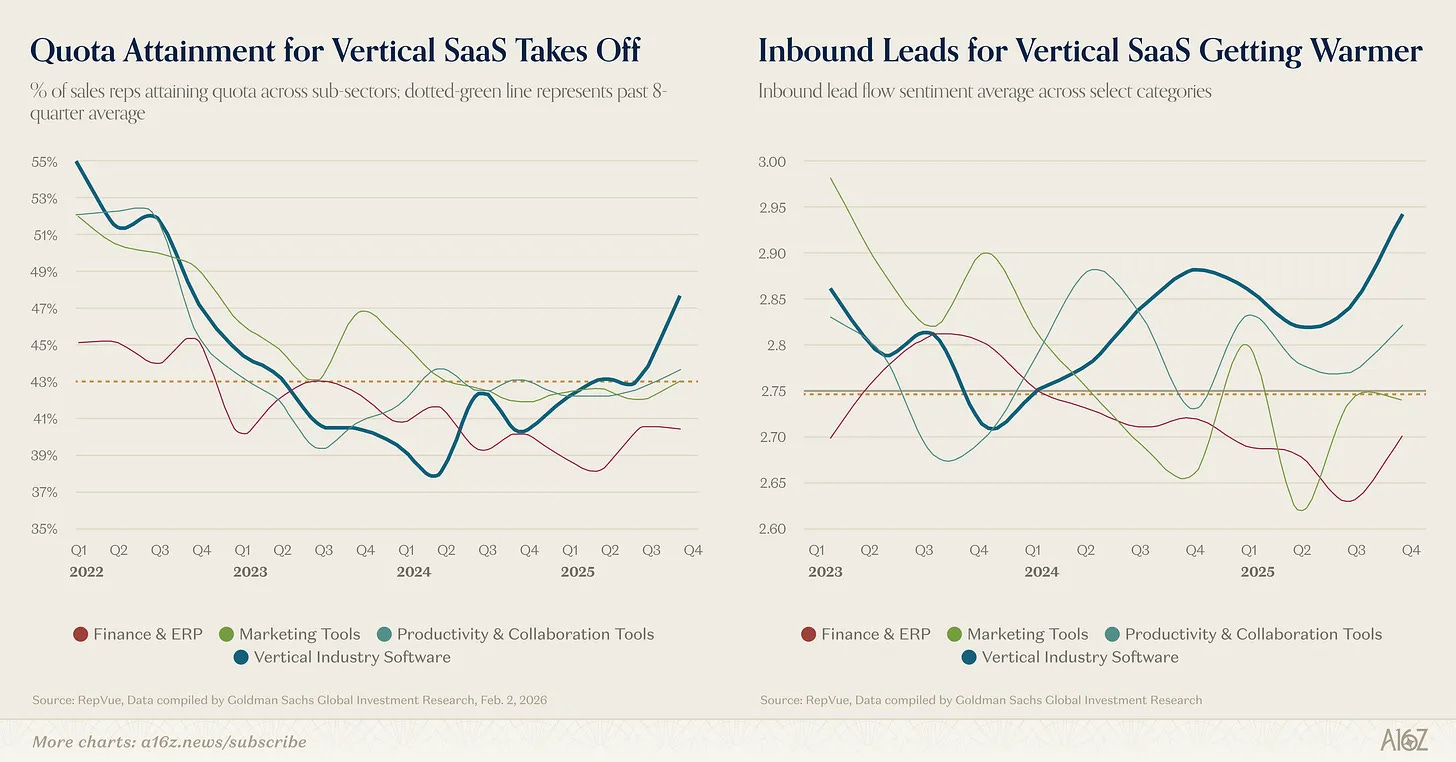
→ Why does it matter? Vertical Industry Software is the only category breaking above its 8-quarter average on both quota attainment and inbound lead sentiment. At the same time, everyone is debating whether vertical software has a future. The numbers say the opposite of the bear case: reps are hitting quota at rates not seen since early 2022, and inbound lead flow is at a multi-year high heading into Q4 2025. This is what a category looks like when the market starts to believe the moat is real, not theoretical.
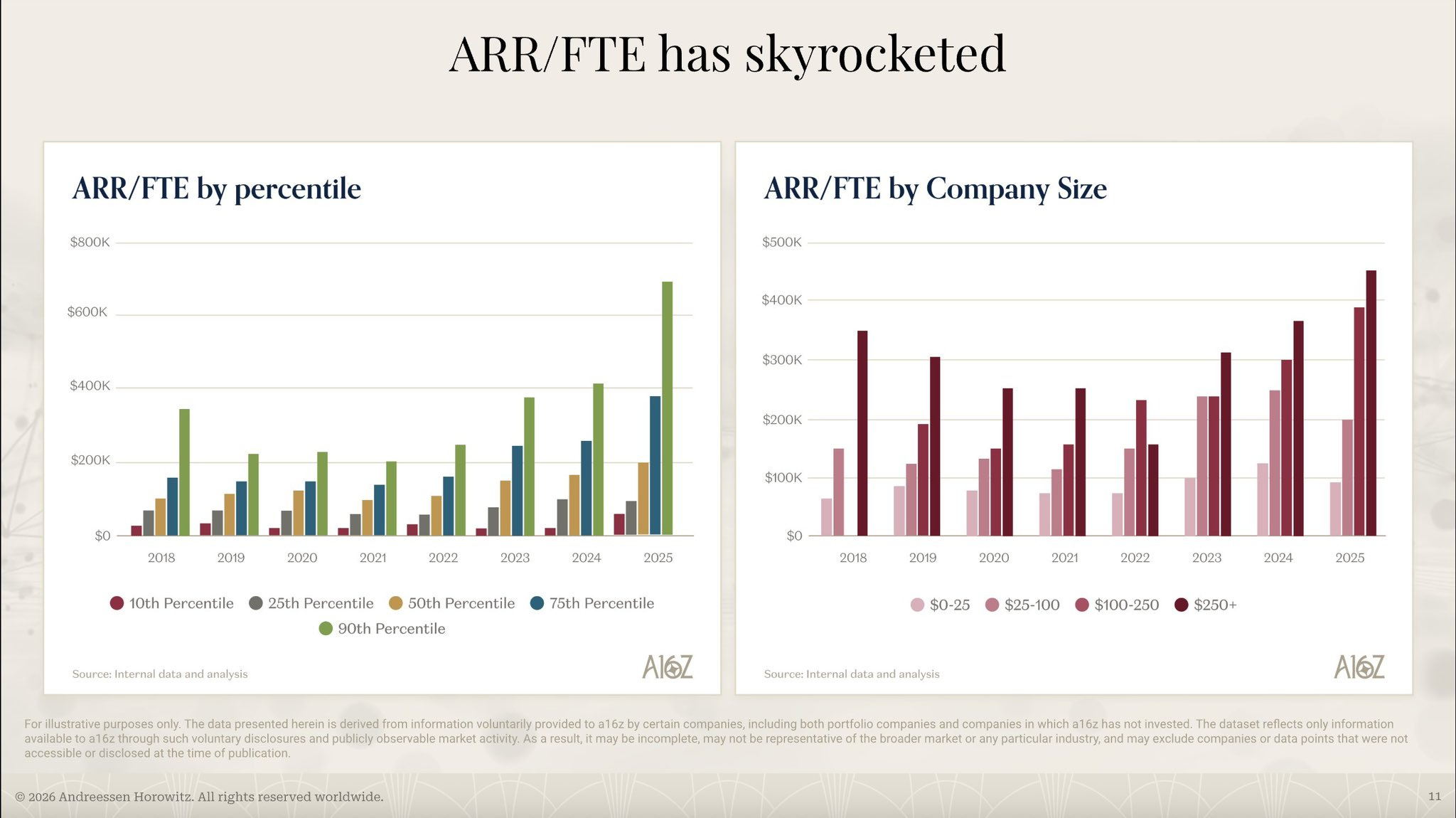
→ Why does it matter? The top decile of AI-native software companies now generates roughly $650K in ARR per employee, up from under $400K just a year ago. Productivity gains from AI?!

Tweets that stopped my scroll:
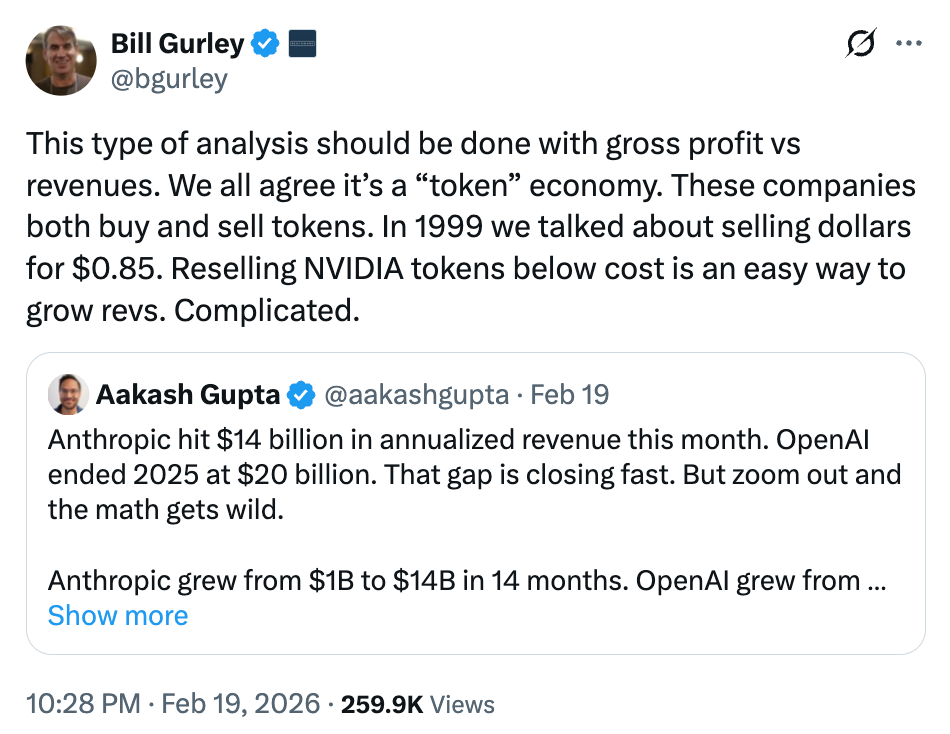
→ Why does it matter? Bill Gurley is flagging the same trap that burned investors in 1999: revenue growth that looks spectacular until you ask what it actually costs to generate. If AI companies are buying compute from Nvidia and reselling it at a loss to win customers, the top-line numbers are a mirage.

→ Why does it matter? Perplexity Computer orchestrates multiple agents from OpenAI & Anthropic. GPT-5.2, Claude Opus, Claude Sonnet, running in parallel on a single financial workflow, each assigned to the task it handles best.

→ Why does it matter? As we wrote in RA (Feb 6, 2026), I think Konstanine is right: we will see consolidation and the biggest players will get bigger. But at the other end of the barbell, a key group of domain experts will matter even more, especially in fields where 90% accuracy is not good enough.

→ Why does it matter? This is Salesforce acknowledging something important. And sharing a glimpse into SalesForce, Slack & Claude working together. But where is AgentForce?!

Worth a watch or listen at 1x:
→ Why does it matter? Dan Sundheim is one of the all time greats in investing today. In this episode of ILTB, he lays with Patrick O’Shaughnessy exactly why he is making concentrated bets on Anthropic, OpenAI, and SpaceX. He talks about how his firm effectively invests across both public and private markets.

Quotes & eyewash:
"The older I get, the more I think outstanding taste in people is the only real alpha." - Brian Halligan
→ Why does it matter? Silicon Valley was so far ahead of its time. Must watch.
The mission:
The Wall Street Journal once used “Read Ambitiously” as a slogan, but I took it as a personal challenge. Our mission is to give you a point of view in a noisy, changing world. To unpack big ideas that sharpen your edge and show why they matter. To fit ambition-sized insight into your busy life and channel the zeitgeist into the stories and signals that fuel your next move. Above all, we aim to give you power, the kind that comes from having the words, insight, and legitimacy to lead with confidence. Together, we read to grow, keep learning, and refine our lens to spot the best opportunities. As Jamie Dimon says, “Great leaders are readers.”
Disclaimer: This content is for informational purposes only and does not constitute financial, investment, or legal advice. Readers should do their own research and consult with a qualified professional before making any decisions.