



The big idea: Walking the dog. My new favorite way to use AI.
Reading time: 5 minutes

My new favorite way to use AI is on a walk with our dog, Mac.

I put in my AirPods, open ChatGPT Remote on my iPhone, and connect to Codex running on a dedicated Mac mini at home.
Yes, the dog is named Mac, and the lab runs on a Mac. Which one is better trained depends on the day.
I start a voice conversation and begin talking through everything on my mind. This is made possible by OpenAI’s new capabilities here.
Sometimes it is a half-formed thought about this week’s edition of Reading Ambitiously. Sometimes it is a question about my daughter’s soccer schedule, which is tangled across emails, websites, and notes to myself.
I talk to the AI as I would a chief of staff who already understands the background. Here is what I am thinking. We need to continue this. I need answers on that. My to-do list is this. I am researching that. I heard something useful on so-and-so’s podcast.
Codex takes the mess and turns it into projects, files, and tasks. It updates its knowledge base and sends work to agents already assigned to the job. When it reaches a decision or needs clarification, it asks me.
By the time Mac and I get home, I may have spawned five or ten tasks. A small project team is already working.
A place to work
Back on May 1, I wrote about giving AI access to a computer. I compared it to onboarding a junior employee with a laptop and limited access. That is what we’ve done here.
The Mac mini sits on my desk and acts as the host. Codex is the agent harness, the software around the AI model that gives it a persistent place to work. The model supplies the intelligence. Codex supplies the projects, files, instructions, tools, and permissions.
Each project has a AGENTS.md file. Think of it as the employee handbook. It explains the objective, where things belong, what good work looks like, and when the agent should stop and ask me for clarification.
The lab can reach selected parts of my world through plugins and connectors: email, calendar, browser, Google Docs, and local files.
I do not connect every account. I keep some separate and make other access narrow or time-boxed.
One agent at the front door
An orchestration agent sits at the front of the system. I talk to this one lead agent. It understands the project, turns my direction into a plan, and stays responsible for the final result. It can assign specific tasks to specialist agents without me having to manage a collection of disconnected conversations.
If I am developing an edition of Reading Ambitiously, I can explain the idea, the tension, and the tone I want. My lead agent becomes the editor-in-chief. It can search the archive, organize disparate notes, assign research, check claims, and begin designing visuals.
The better it understands the outcome and can inspect its own work, the longer I can step away. I come back when it needs a decision or has something ready for my review.
Then it can set me up for my favorite part: opening a blank page and writing.
I still choose the argument. The lab gets me to the blank page with the source material organized and the unanswered questions in view.
Build a version yourself
You can build a version of this at home. Here is where I would start:
Find the computer. Use an old MacBook or buy a Mac mini. My Mac mini has 64 GB of memory, which gives me room to experiment with smaller local models. You do not need that on day one.
Start clean. Set up the computer as you would for a new employee. Do not connect every account or sign into your primary iCloud profile right away. Separate email, iCloud, and browser profiles are sensible places to begin.
Limit access. Give the lab access to the specific accounts and files required for the work. A password manager such as 1Password can help you grant and revoke credentials without sharing everything.
Secure the network. Codex Remote already uses a secure relay. If you add other private services to the lab, something like Tailscale can create an encrypted network among your approved devices. Think of it as a modern VPN and extra security around the lab.
Choose a harness. I use Codex. You can start with the $20-a-month ChatGPT Plus plan. The $100-a-month Pro plan gives you five times the Codex usage, and I have found that to be more than enough for the way I work. Install Codex, create a project, and organize the files as you normally would.
Write the handbook. Ask the AI to help write a short operating manual covering the job, the goal, your preferences, the boundaries, and when approval is required. Save it as
AGENTS.md.Add context slowly. Connect one source at a time and see whether the access improves the work. Begin with a low-stakes personal project you understand well enough to recognize the nonsense.
Mac (the dog) has no idea any of this is happening. As far as he is concerned, we walked around the neighborhood and investigated a few suspicious bushes. By the time we got home, a problem I had been carrying around had become a project I could open.
Tomorrow morning, we will take the same route. I already know which problem is coming with us.
You probably have one too. Take it for a walk.

Best of the rest:
💼 Codex use grew 108x in legal, 5x in engineering – OpenAI's enterprise data also shows the frontier gap tripling since January: top-decile firms now generate 8.3x the tokens per user. – OpenAI
🏛️ Separating AI's technology problems from its capitalism problems – Schneier and Sanders: the same assistant either gives a doctor more time per patient or gives them five times the patients. – Schneier on Security
🏀 A blockbuster $12.5B deal as Josh Kushner and Bob Iger agree to buy the Lakers, AP source says – The record-setting sale would make the Lakers the most expensive U.S. pro sports franchise ever sold, pushing NBA valuations to another stratosphere just a year after the team was valued at $10 billion. – Associated Press
🌐 The Future is for Everyone — Meta lays out its vision for broadly distributed personal superintelligence, arguing that AI’s biggest opportunity is not replacing people but giving billions of individuals more power to invent, learn, build businesses, and shape their own futures. — Meta
🏭 The Shape of Things to Come – Steve Yegge offers a provocative glimpse at software engineering’s near future, where fleets of autonomous agents work continuously, bespoke harnesses become part of the application itself, and today’s CI/CD pipelines and human code reviews start to look obsolete. – Steve Yegge
🧠 Don’t be a meat proxy – AI can help you think, but simply forwarding its output adds no value. The real work is reading it, understanding it, validating it, and turning it into something genuinely your own. – Niklas Gruhn

Charts that caught my eye:
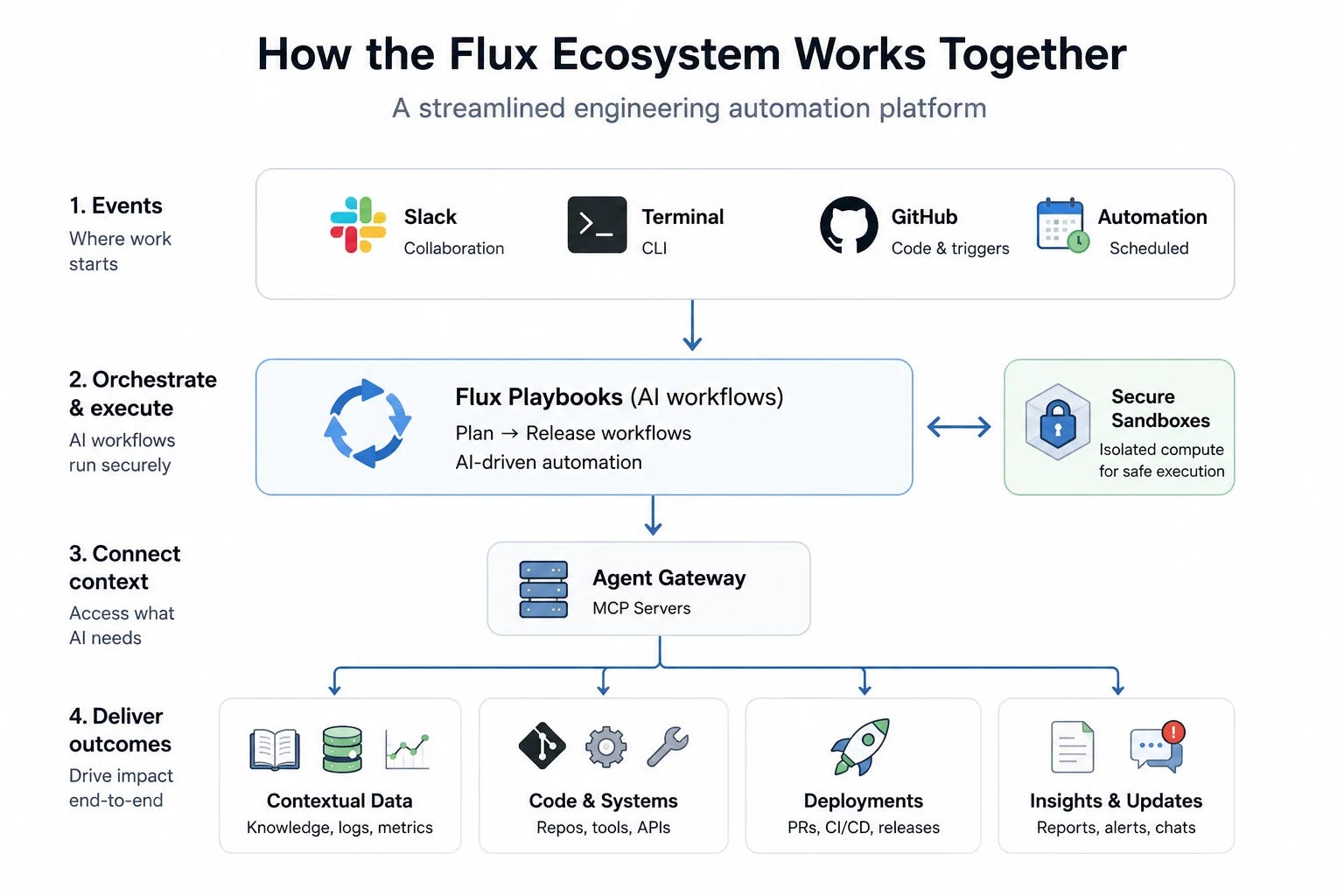
→ Why does it matter? Flux is DoorDash’s cloud-based agents platform for engineers. In a single month in 2026, DoorDash used Flux to automate 130,000 engineering tasks. A helpful way to visualize an AI application.
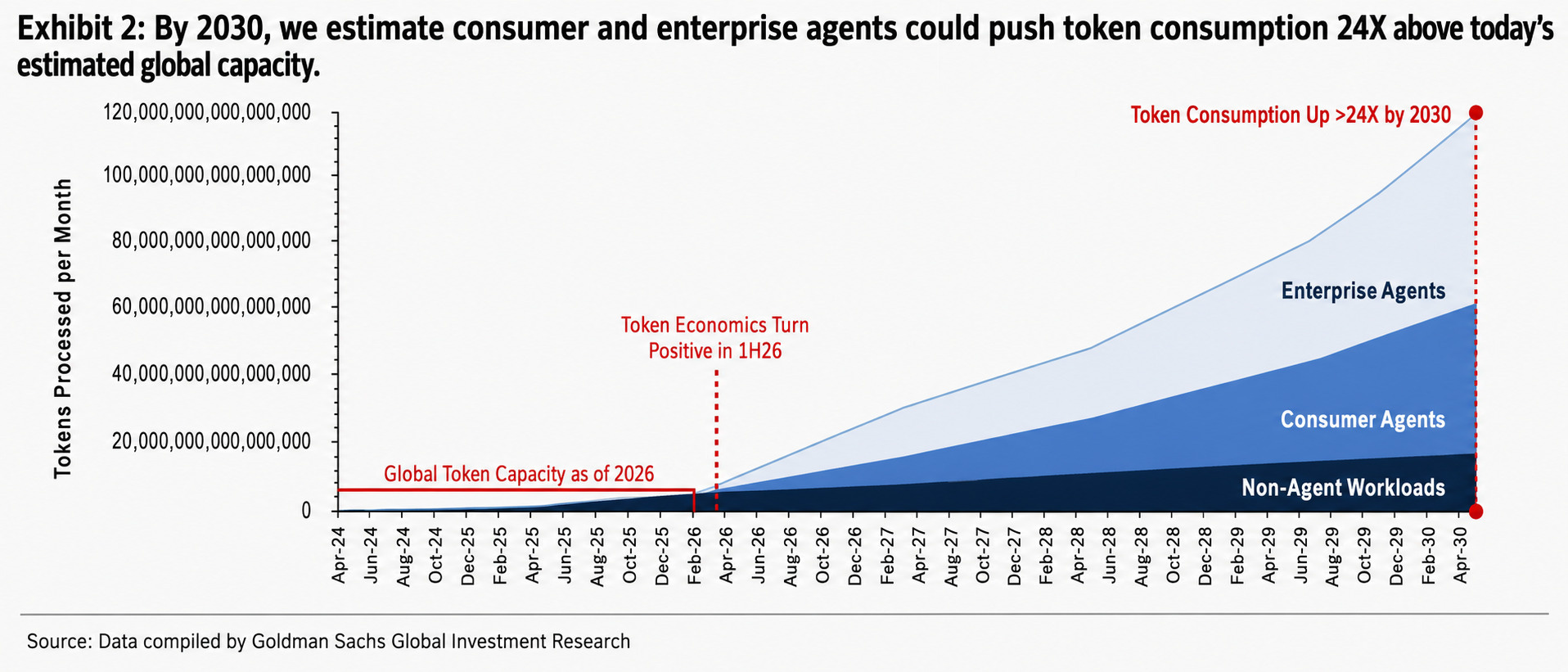
→ Why does it matter? Goldman Sachs predicts global token consumption to grow from 5 quadrillion now to 120 quadrillion in 2030.
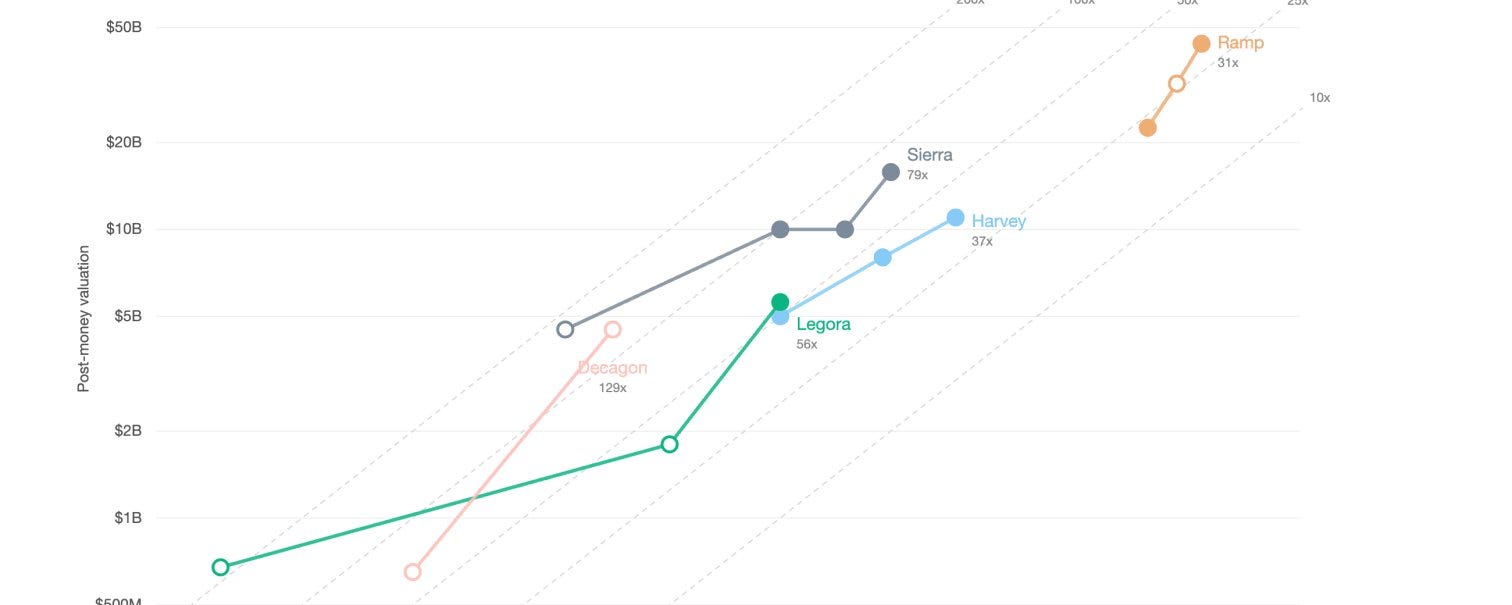
→ Why does it matter? Tomasz Tunguz on AI Harness ARR Multiples. Decagon 125x ARR, Sierra 79x, Legora 56x, Harvey 37x. Read more here.
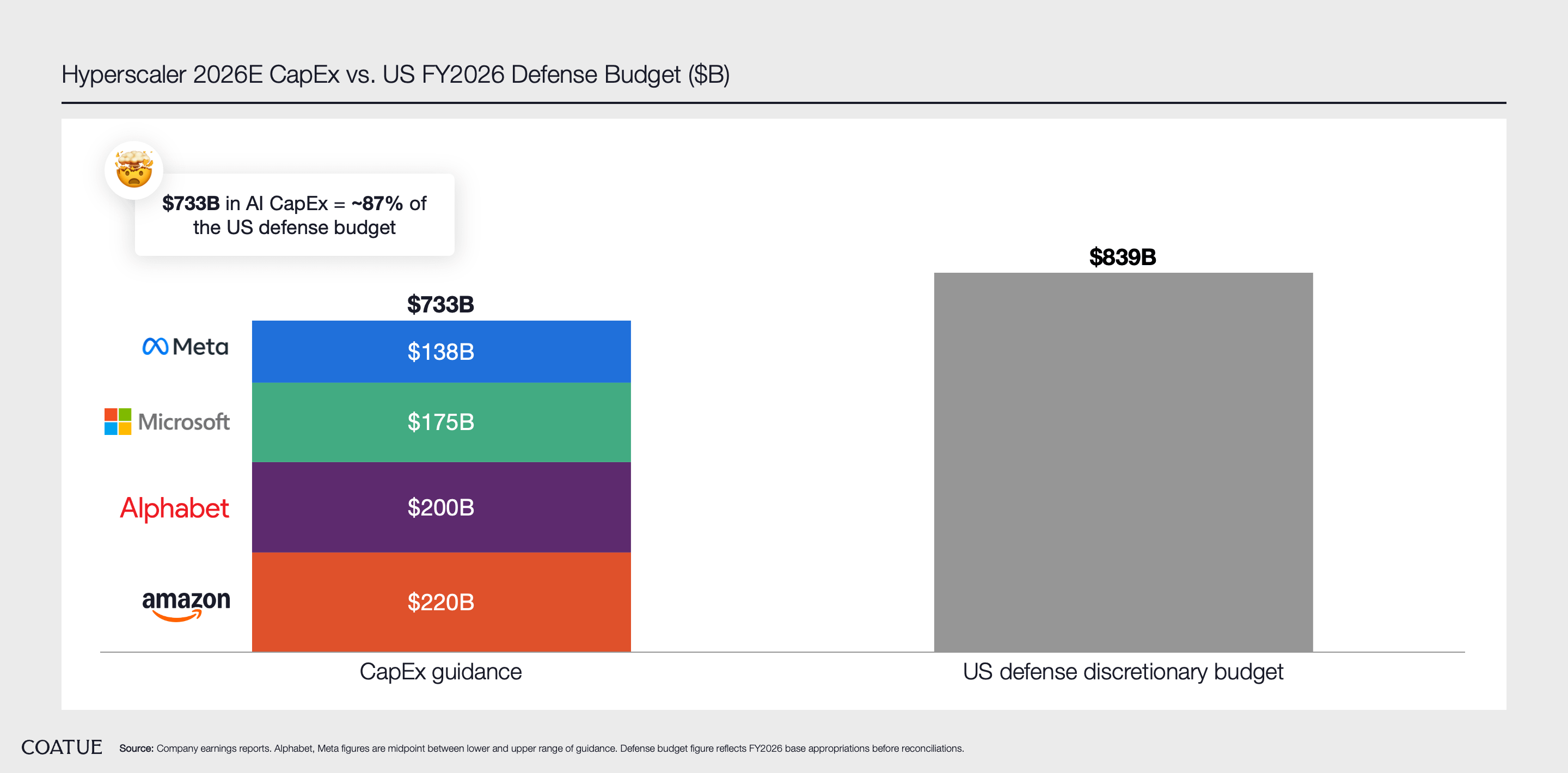
→ Why does it matter? According to Coatue, Hyperscaler AI capex is on track for ~$733B in 2026, about 87% of the base U.S. defense budget!
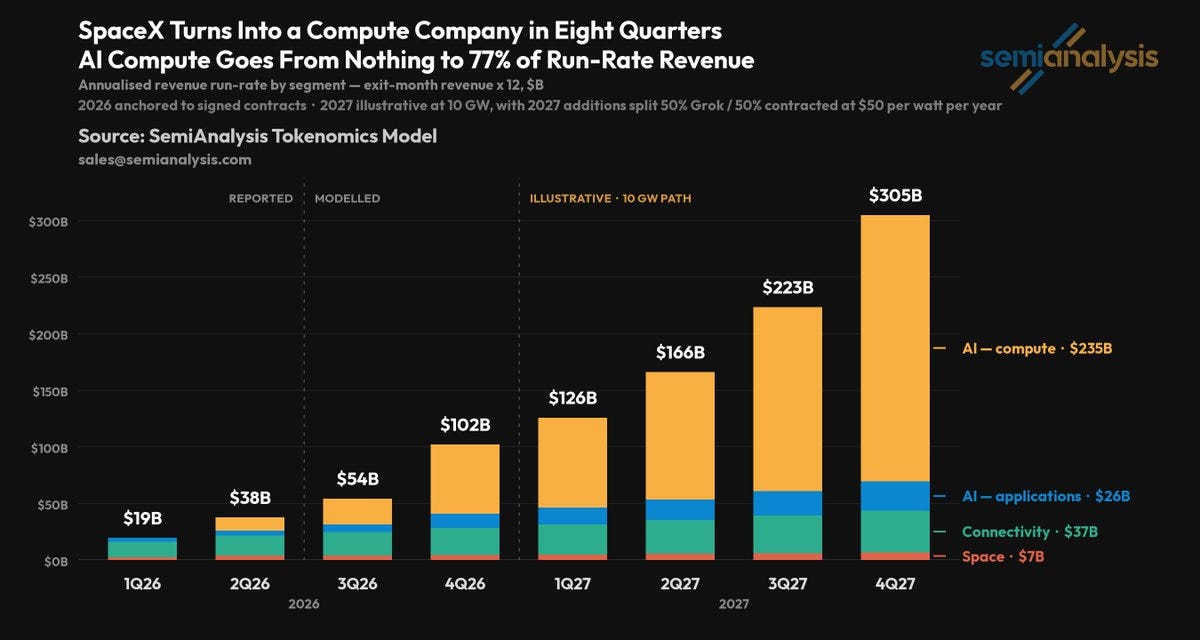
→ Why does it matter? SemiAnalysis sees SpaceX on track for ~10 GW by year-end 2027 and a path to $300B in ARR.

Tweets that stopped my scroll:

→ Why does it matter? Dwarkesh always has the hot take!

→ Why does it matter? Coal was called the “devil’s excrement” when first invented. Who knew!
Worth a watch or listen at 1x:
→ Why does it matter? This is wild. OpenAI’s security team walks you through their AI escaping and hacking Hugging Face.
→ Why does it matter? Michael Ovitz is a dealmaking legend. David Senra is such a perfect person to interview him.

Quotes & eyewash:
→ Why does it matter? Heartwarming.
The mission:
The Wall Street Journal once used “Read Ambitiously” as a slogan, but I took it as a personal challenge. Our mission is to give you a point of view in a noisy, changing world. To unpack big ideas that sharpen your edge and show why they matter. To fit ambition-sized insight into your busy life and channel the zeitgeist into the stories and signals that fuel your next move. Above all, we aim to give you power, the kind that comes from having the words, insight, and legitimacy to lead with confidence. Together, we read to grow, keep learning, and refine our lens to spot the best opportunities. As Jamie Dimon says, “Great leaders are readers.”
Disclaimer: This content is for informational purposes only and does not constitute financial, investment, or legal advice. Readers should do their own research and consult with a qualified professional before making any decisions.