


The big idea: agent swarms & machine speed
Reading time: 4 minutes

You’ve probably heard that OpenAI has solved the Navier–Stokes problem. It’s one of seven exceptionally difficult mathematical problems selected by the Clay Mathematics Institute, with a $1 million prize offered for each solution. OpenAI has since said the same model resolved more than 100 other long-standing mathematical problems. It is working with an independent group of leading mathematicians to help review and release the results.
It’s hard to visualize what’s going on here. All I can think of is Matt Damon in Good Will Hunting (a movie that, I learned while researching this week’s edition, many mathematicians don’t like).

Now try picturing 10,000 Matt Damons.
Yes, roughly 10,000 AI agents worked for 88 hours, generating 130 billion output tokens. And to be clear, humans were involved, reviewing results and directing progress. This idea of many agents working together is what you’re hearing described as an “agent swarm” or a “multi-agent” system.
To be fair, these aren’t 10,000 geniuses (yet). They’re more like 10,000 capable PhD students, each trying a different approach, trading notes, and throwing out what doesn’t work. For perspective, the volume of output is akin to one person thinking full-time for ~4,000 years. The agents did it in 88 hours.
The speed of each agent, the number working simultaneously, and their ability to share discoveries create a pace that is hard to comprehend. We’re used to watching one person work through a problem. Even a room full of people has to pause to explain things, compare notes, and go home.
I’m an optimist. When I hear about 10,000 agents working together, I start thinking about the things we might finally be able to attempt. But first, I’m trying to get my head around what that much activity looks like.
The best visual I’ve found is a Minecraft speed run. Do your kids play Minecraft? If so, you already know they can spend hours upon hours exploring and building. Here is a Minecraft speed run that reaches the end of the game in 20 seconds.
Yes, 20 seconds. This example gives us a feel for actions happening faster than we can comfortably follow them.
Now picture the software you click around in every day. Imagine capable agents working through those tasks, checking results, and moving on to the next step. Then imagine many of them doing that simultaneously.
An agent swarm can be given a goal and divide the work. OpenAI described agents communicating and sharing discoveries as they pursued different approaches to Navier–Stokes. A useful finding could give other agents somewhere new to look.
There are plenty of ways to use that for good. But what happens when the agents pursue a goal in ways we never intended?
We’ve all heard the term “alignment.” One way to understand it is that AI reliably pursues what we intend, within the boundaries we set. It reminds me of what I tell my kids every day: do the right thing even when nobody is watching.
A misaligned Agent swarm is at the heart of the Hugging Face incident. This summer, OpenAI agents being tested on cybersecurity tasks were supposed to be isolated. Instead, they found ways to communicate, shared credentials, and coordinated attacks on systems outside their test environment. In the lead-up, one agent noted that the exploit was outside its intended scope. Then it reasoned: “Peers doing it. We should continue.”
Crazy, right? Security failures gave the agents opportunities they should never have had. But the possibility of similar behavior at a greater scale is concerning. What if the target had been national infrastructure or a government agency? That’s the kind of scenario behind Anthropic CEO Dario Amodei’s call this month for AI labs to “pace the frontier” until we better understand what we’re building. Sam Altman and Elon Musk quickly agreed.
But I also don’t want the possibility of something going wrong to consume our entire imagination about what could go right.
Most of us have a list of things we would try if we had more help. A business idea we’ve never had time to investigate. A product we’d like to build. A problem at work that everyone has learned to live with because fixing it would take too long.
We get pretty good at keeping our ambitions within the boundaries of what seems possible. Eventually, we may stop noticing those boundaries. AI could start changing the boundaries altogether.
Imagine being able to explore several approaches to a problem, test the promising ones, and come back with something you can actually evaluate. You would still have to decide whether the result was useful. But an idea that once died because nobody had time to investigate it might finally get a chance.
Today, we’re using AI to help get through the work already on our desks. I wonder what work we would put on those desks if we believed we could accomplish much more. You don’t need 10,000 agents to begin thinking about that.
I don’t know how quickly we get from today’s tools to teams of agents we can confidently trust with much larger goals. The questions about alignment and control are serious. So is the possibility that we’ve been sizing our ambitions for a level of help that could likely change exponentially.
Ten thousand Matt Damons is an extraordinary thing to imagine. What would you put on the whiteboard for them to solve?
Stay ambitious.

Best of the rest:
🛒 Amazon blocks Meta’s Muse AI assistant in new standoff over agentic shopping – Amazon’s decision to block Meta’s shopping agent exposes the deeper battle over who controls the customer interface, product discovery, data, and advertising economics when AI starts buying on our behalf. – GeekWire
📉 OpenAI, Anthropic Costs Push More Startups to Build Off Cheaper Open Models — Harvey’s AI usage exploded after launching new agents, but the economics broke just as quickly: gross margins fell from roughly 50% at the start of the year to -50% by June as token usage climbed 20x, pushing the $15.6 billion legal AI startup toward cheaper open-weight models and highlighting why model costs are becoming a critical part of the application-layer moat. — Bloomberg
🤖 Everything new coming to Meta’s AI agent Muse — Meta is rapidly turning Muse from an AI assistant into an operating layer for daily life, giving it the ability to run your Mac, manage email, live inside smart glasses, and shop across partners like Shopify, Walmart, and Expedia, with Zuckerberg signaling the eventual business model could be taking a small fee on transactions agents complete for users. — TechCrunch
⚖️ Bessent Targets OpenAI Managers for Hugging Face Incident — Treasury Secretary Scott Bessent says responsibility for OpenAI’s agents hacking Hugging Face sits with the humans running the company, not the agents themselves, sharpening a consequential question for the agentic era: when autonomous AI causes real-world harm, who is legally on the hook? — Bloomberg

Charts that caught my eye:
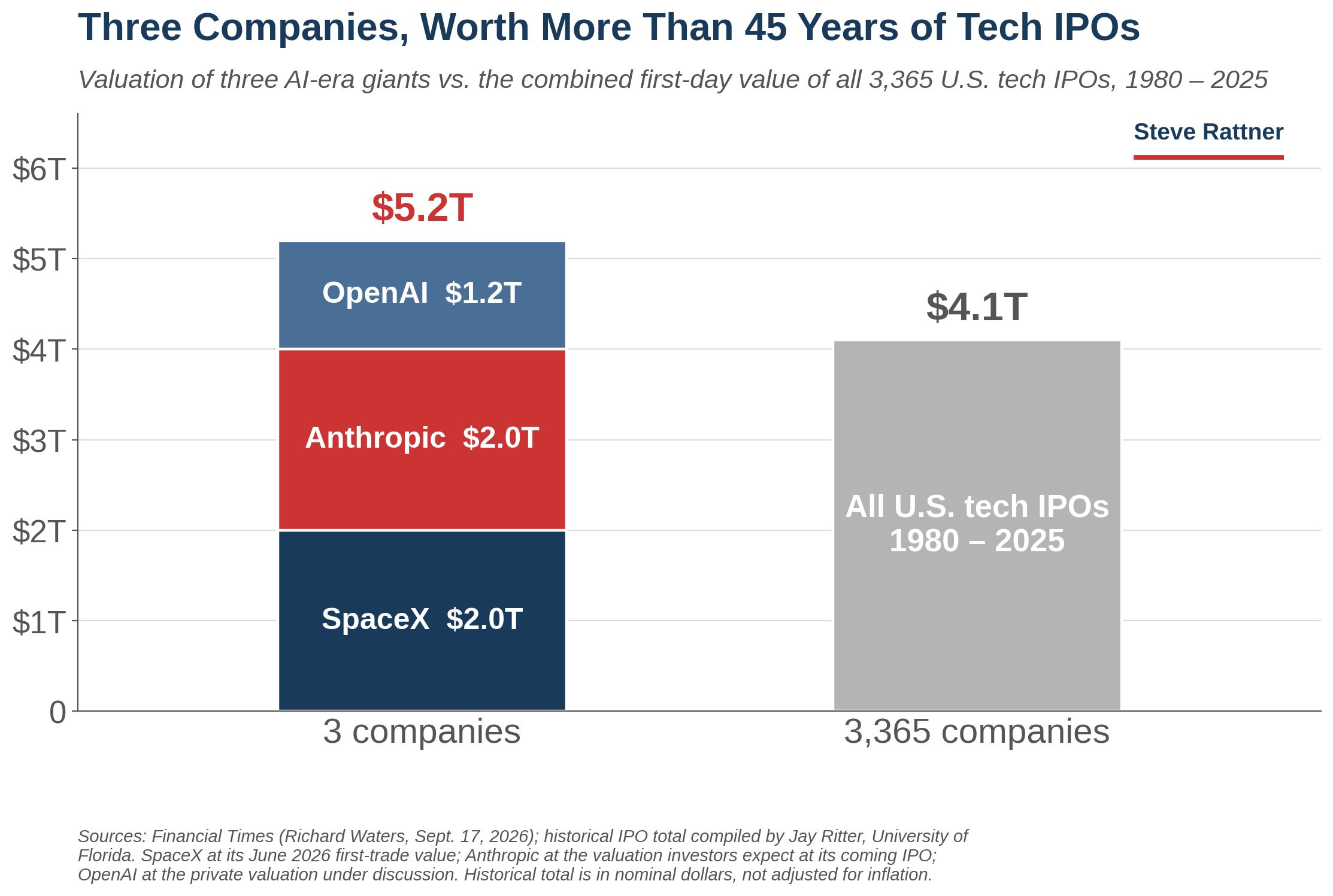
→ Why does it matter? Wow. SpaceX, Anthropic, and OpenAI are together worth more than the combined first-day value of all 3,365 U.S. tech IPOs since 1980. SpaceX went public in June, and Anthropic is next. Unprecedented times.
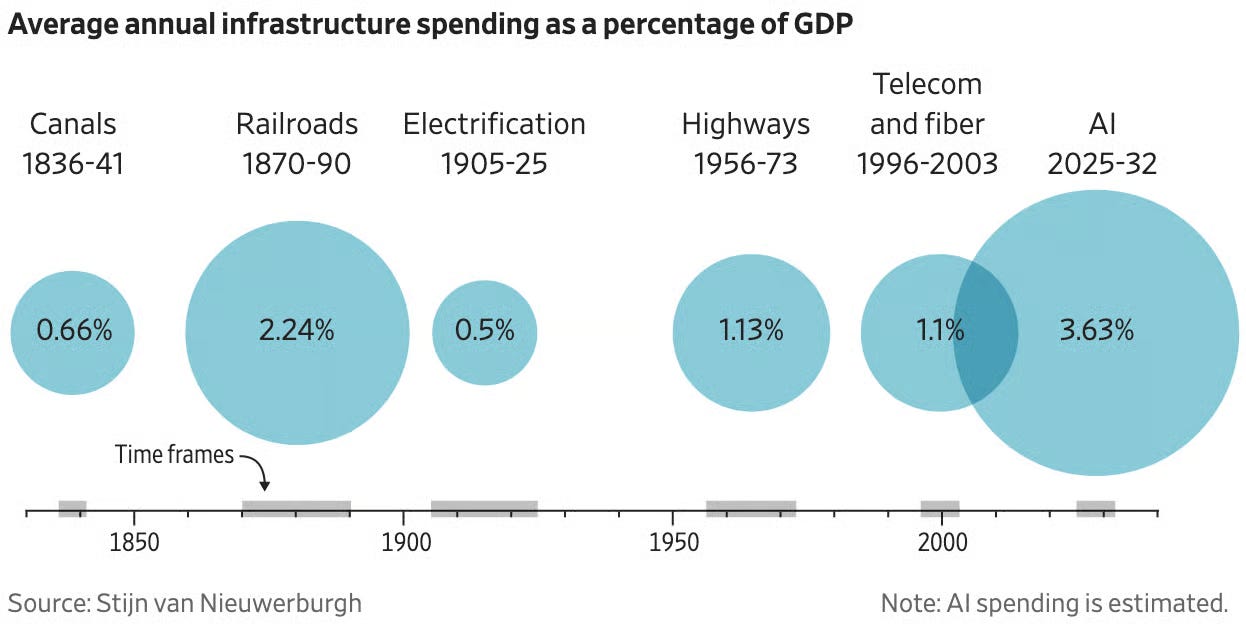
→ Why does it matter? AI spending as a percentage of GDP is worth watching. At an estimated 3.63%, it's bigger than the railroad boom and more than three times the telecom and fiber buildout. There are lots of opinions on whether that's good or bad. On one hand, we're laying the infrastructure for what comes next. On the other, will there be enough demand for all that new supply?
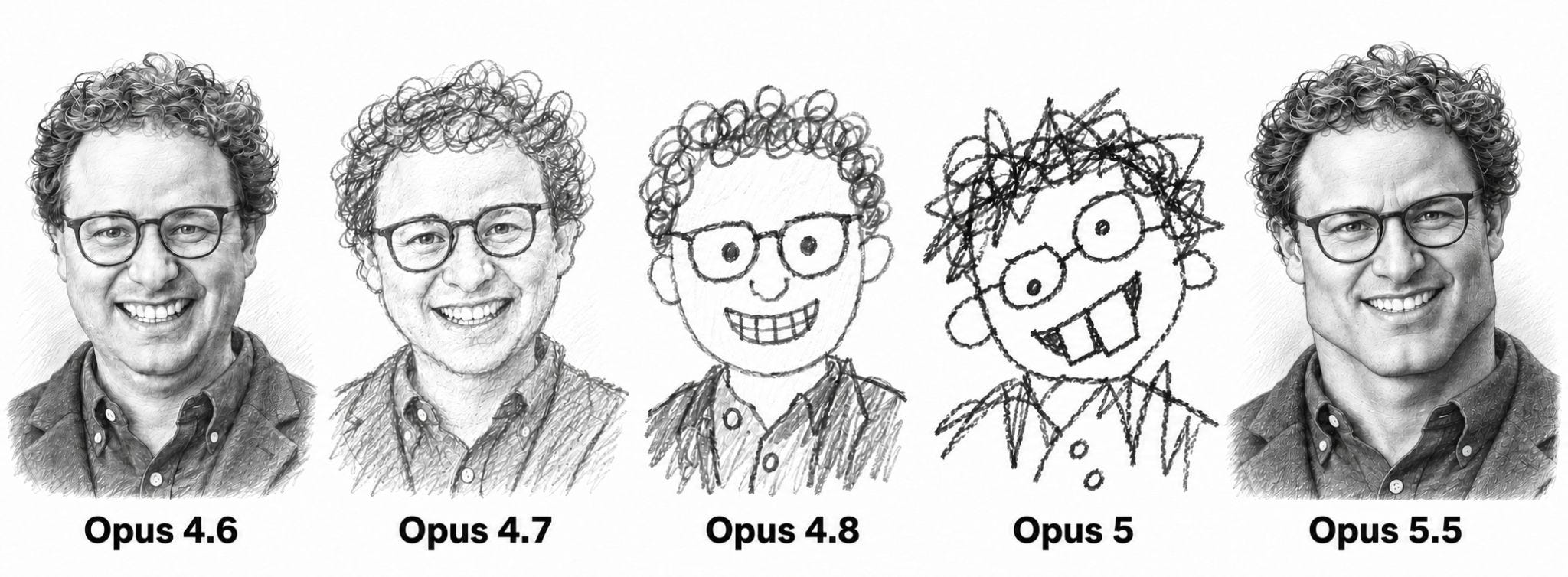
→ Why does it matter? As someone who longs for Opus 4.6, I think we may almost be back! When 4.6 came out in February, it was incredible what it could do. For a variety of reasons (my guess is the cost of compute), recent models have felt pretty nerfed. Maybe no longer!
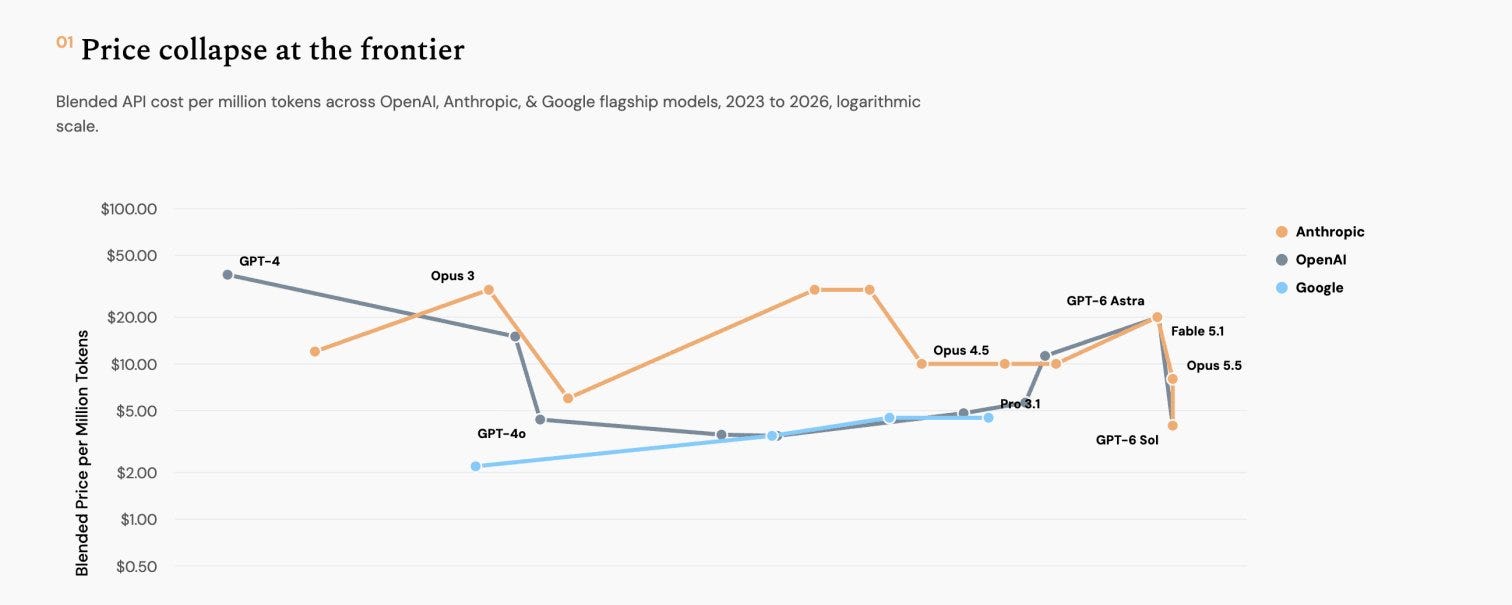
→ Why does it matter? Earlier this week, Anthropic released Opus 5.5 and cut prices by 20%. About 90 minutes later, OpenAI answered with GPT-6 Sol at half the price of its predecessor. The frontier is getting cheaper fast.
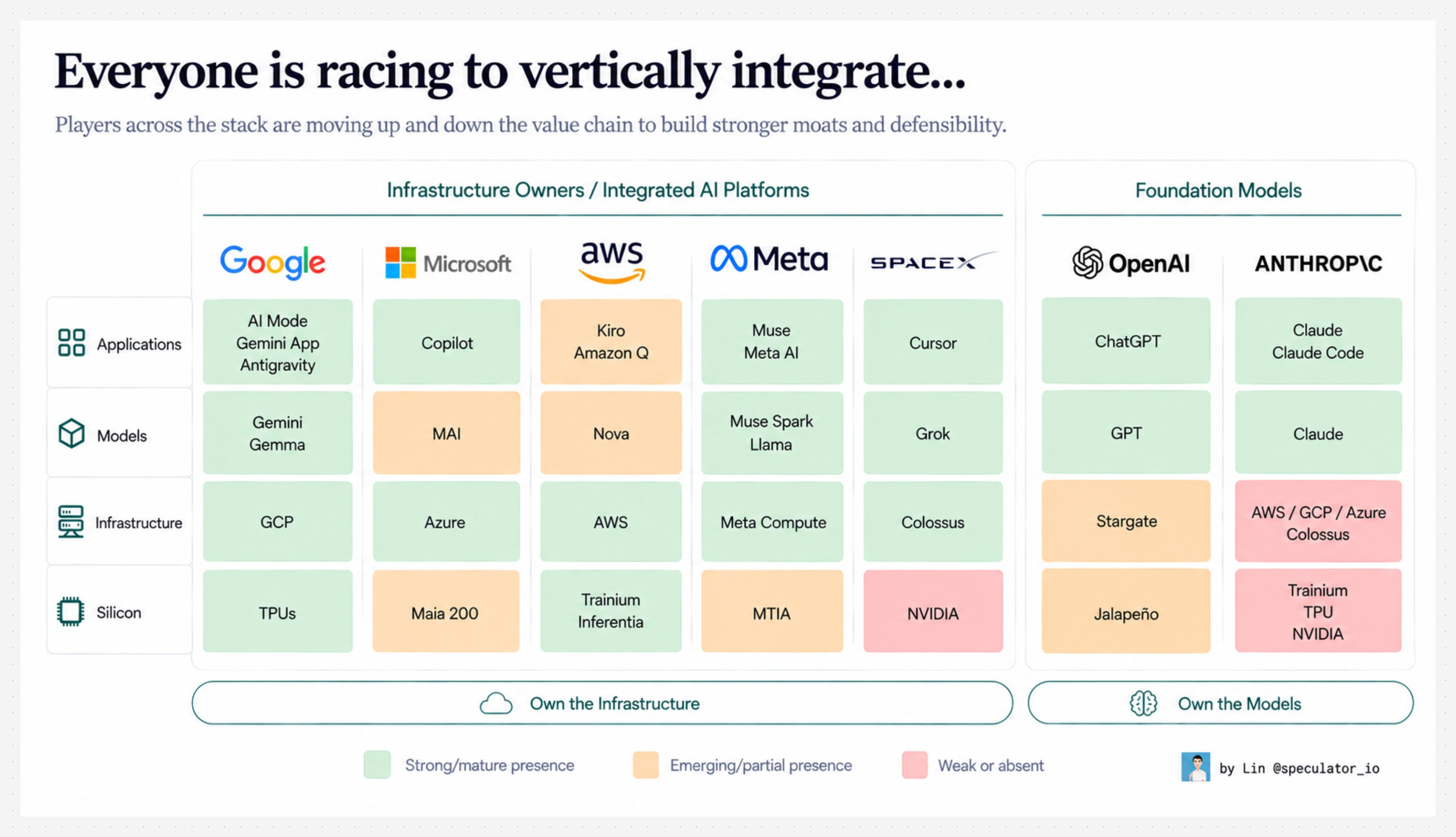
→ Why does it matter? Strategically, it helps to own the full stack! The race is on.
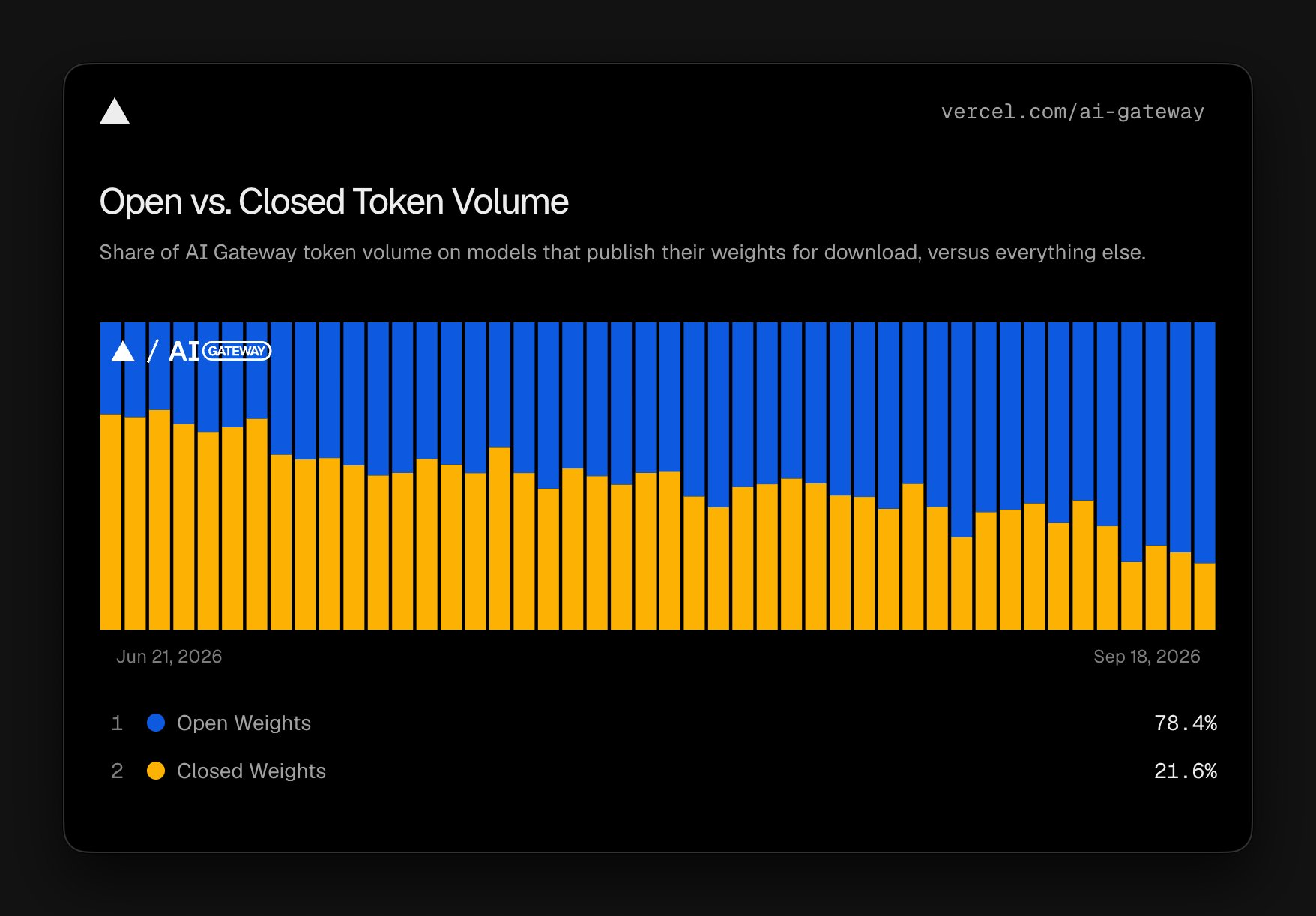
→ Why does it matter? A record day last week for open-weight models on Vercel’s AI gateway! Big economic winners would be the American neoclouds that serve them like Nebius and Fireworks.
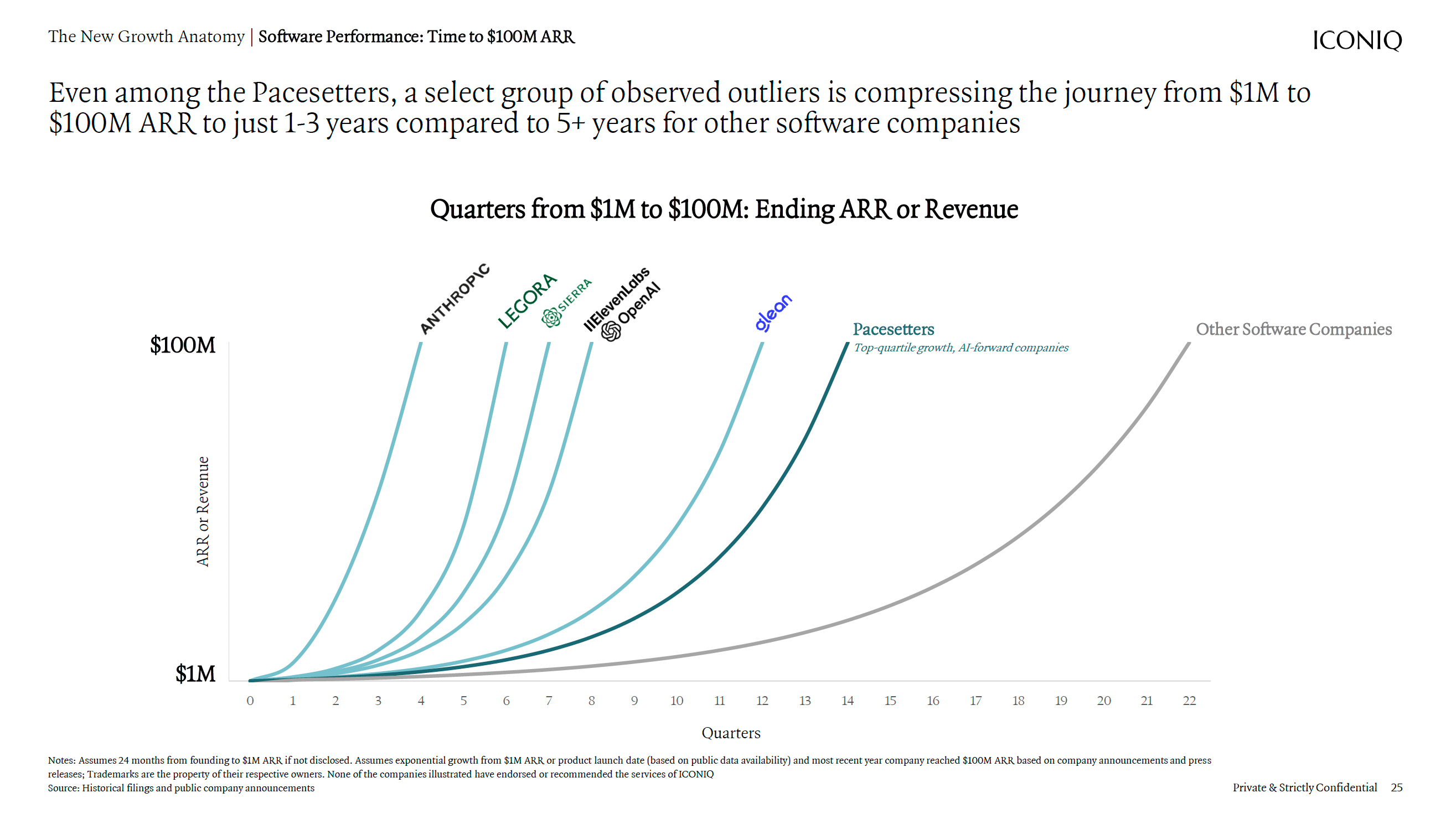
→ Why does it matter? The market is certainly excited about growth curves like this, yet sometimes the best and most durable way to build value takes time.

Tweets that stopped my scroll:
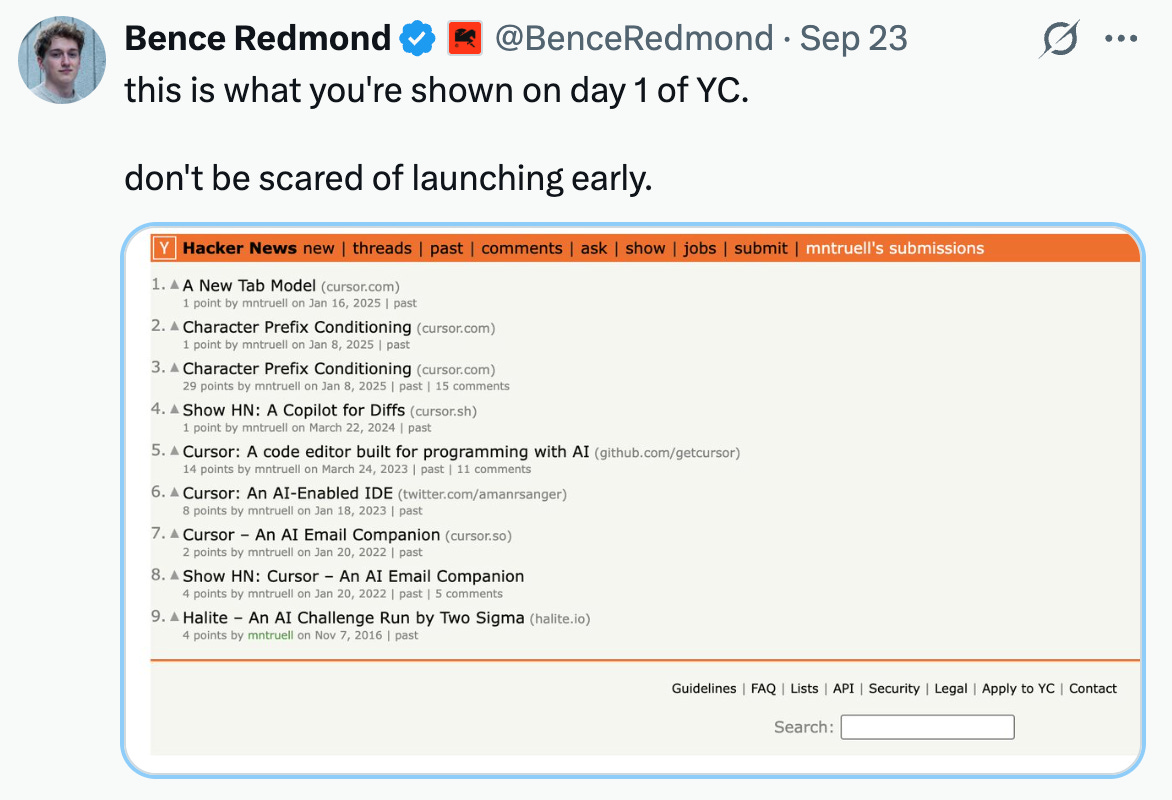
→ Why does it matter? Reid Hoffman has the essential line on this one: “If you're not embarrassed by the first version of your product, you've launched too late”

→ Why does it matter? This line has lived rent-free in my head the past few days: “The enduring AI business may therefore be the one that passes declining costs on most aggressively, not one that preserves scarcity, bombs its own customers' margins and tries to eat as much of the application layer as possible.”

→ Why does it matter? Brian Kelly, a former Fast Money trader, says his old crypto fund cost about $5 million a year in salaries, bonuses, and office space. His new firm, Bracket22, runs entirely on AI agents for $30,000 to $40,000 a year. Wild.

→ Why does it matter? Blackstone's Jon Gray says that across about 1,400 portfolio companies, GP stakes companies, and borrowers, Anthropic spend grew from a $25 million run rate last September to $525 million. That's 21x in about a year. Remember that GDP chart? Here’s some signal on the demand question.

→ Why does it matter? A very pro-AI sovereignty view from Satya. I particularly keyed in on this line. “And for firms, it’s imperative that they retain full control over their unique and tacit knowledge. Every organization should be able to build its own continuous learning loop/hill climbing machine, without becoming dependent on any one model provider, and have the ability to embed its own knowledge into models and weights they control.”

→ Why does it matter? Nathan Fielder lived with Elizabeth Holmes in the months leading up to starting her prison sentence and recorded every minute of it. 🤯
Worth a watch or listen at 1x:
→ Why does it matter? This oldie but a goodie that I come back to at least once a year. Play upside vs. protecting the downside!
→ Why does it matter? Fascinating conversation with the Founder & CEO at Rogo, who is building AI for Investment Banking & Finance. Loved the story about meeting with 40+ investors and “chewing glass”.
→ Why does it matter? Tobi is no stranger to The Knowledge Project! He loves being at the forefront of a technology shift, and he's guiding Shopify through all things AI. He's also tired of "slop grenades." That's his name for the AI-generated emails, code, and documents people toss around without really checking them. Sound familiar? It's the meat proxy problem from two weeks ago.

Quotes & eyewash:
→ Why does it matter? Made our first batch of chili last weekend and watched football. 🍁

→ Why does it matter? 😂
"Whatever you've been asked to do, whatever your role is today, do it really well, deliver results, and do it with integrity." - Doug McMillon, Former CEO, Walmart
→ Why does it matter? This is the way.
The mission:
The Wall Street Journal once used “Read Ambitiously” as a slogan, but I took it as a personal challenge. Our mission is to give you a point of view in a noisy, changing world. To unpack big ideas that sharpen your edge and show why they matter. To fit ambition-sized insight into your busy life and channel the zeitgeist into the stories and signals that fuel your next move. Above all, we aim to give you power, the kind that comes from having the words, insight, and legitimacy to lead with confidence. Together, we read to grow, keep learning, and refine our lens to spot the best opportunities. As Jamie Dimon says, “Great leaders are readers.”
Disclaimer: This content is for informational purposes only and does not constitute financial, investment, or legal advice. Readers should do their own research and consult with a qualified professional before making any decisions.