


The big idea: Meat proxies and AI slop
Reading time: 3 minutes

You ask a coworker a question, and a few minutes later, a fully polished document appears. By now it’s obvious to most of us that it was written by AI. More and more, we’re not even sure the person read it. And now, you’re responsible for deciphering what it says.
A new term is entering Silicon Valley lingo to describe this experience: a meat proxy.
Coined by software engineer Niklas Gruhn, a meat proxy is someone who passes along AI-generated text without reading, understanding, or validating it.
The receiver has the same access to AI as the sender, yet a proxy now sits in the middle, pasting AI’s response nearly verbatim.
So what? Well, privately, a lot of people are asking me whether the meat proxy problem is a temporary learning curve or a performance problem.
Early on, it is probably a learning curve. Every new tool develops an etiquette. AI has one too, and it doesn't come with a rule book.
I watched this with my kids last Christmas when they were gifted a landline telephone. They had literally no idea how to use it. They’d call someone and then sit silently on the line, they didn’t know to let the person know who it was, or what to say when the person said “Hello”. Ten months later, they’re much better, but there is still room to improve.
Like the telephone, AI etiquette can be coached. I think?
What I am about to say is “Hey, you should read the output from AI before you send it around”. But isn’t that odd to say? So the coaching is: read what AI generated and seek to understand it first? Maybe rewrite it with your own thinking applied?
You might say, well, that’s obvious, and this is where it gets confusing fast. I guess you would assume people are doing that. Thus, isn’t it natural to judge when they don’t? And furthermore, does that mean they simply don’t care? You can follow this thread and see how easy it is to arrive at performance.
We’re all starting to develop a filter for AI slop. Back in August ’25, we predicted slop would be Merriam-Webster's word of the year. Turns out it was!
They went with a simple definition:
“digital content of low quality that is produced usually in quantity by means of artificial intelligence”
AI-generated slop has made us question whether what we’re looking at was created by a human or AI. And we’re not sure, once we’ve determined AI’s assistance, whether or not that’s something we’re OK with.
Two weeks ago, WSJ readers noticed some clear AI assistance in Stanley Druckenmiller’s op-ed on the bond market. Druck immediately owned it. He said:
“At 73, I’m kind of proud of using it… I was a B student in English, but an A+ in economics. These are my ideas and I’ve been speaking about them for 15+ years. As anyone who knows me knows, I would prefer that I was a great writer, but that’s not who I am.”
There is no doubt that Mr. Druckenmiller is a global authority on macroeconomics. The ideas were definitely his, and AI helped him with the words.
By now, if you haven’t figured it out, I too use AI to help me write Reading Ambitiously. But no matter what, I read every word dozens of times before you do. I have a personal sense of pride knowing that whatever goes in front of you is the highest quality content that I’ve had the time to produce. If I don’t love what gets created and feel a sense of pride when I hit publish on Friday mornings, I am seriously disappointed, not just for myself, but for our readers.
That's where the answer to this conundrum lies. AI can assist and help, it should not replace the sense of pride we have in our work to deliver high quality output. And that’s why leaders are starting to question performance. What does it say when someone sends you something that makes you feel as if they avoided the thinking, pride, and quality altogether?
For now, let’s chalk it up to a learning curve. It’s early, and AI etiquette is just starting to emerge. In the interim, before you hit send on something AI helped you generate, think about your receiver. Will you feel pride and ownership in what you deliver? Will they experience that too?
Strive for that. Don’t be a meat proxy!
Stay ambitious, my friends.

Best of the rest:
💳 Ramp in Talks for New Funding at $60 Billion Valuation — Ramp is exploring a $1 billion raise at a $60 billion valuation, up from $44 billion just three months ago. — Bloomberg
🧮 On the Navier–Stokes Millennium Prize Problem – OpenAI says an internal model significantly more capable than GPT-6 Astra, coordinated across roughly 10,000 agents and verified in Lean, produced a proof resolving one of mathematics’ seven Millennium Prize Problems, a striking demonstration of AI moving from solving known problems to generating original scientific breakthroughs. – OpenAI
🙋 I Study Successful People. They Have One Habit in Common. — Angela Duckworth argues that high achievers are not relentlessly self-sufficient, they are unusually good at asking for help, tapping their networks, and creating the support systems that help them succeed. — The New York Times
🏦 Introducing ChatGPT for Financial Services – OpenAI is going vertical in finance, combining GPT-6 Astra with built-in premium datasets, financial workflows, firm templates, and enterprise controls to move ChatGPT closer to the core research, modeling, and client work done inside banks and investment firms. – OpenAI

Charts that caught my eye:
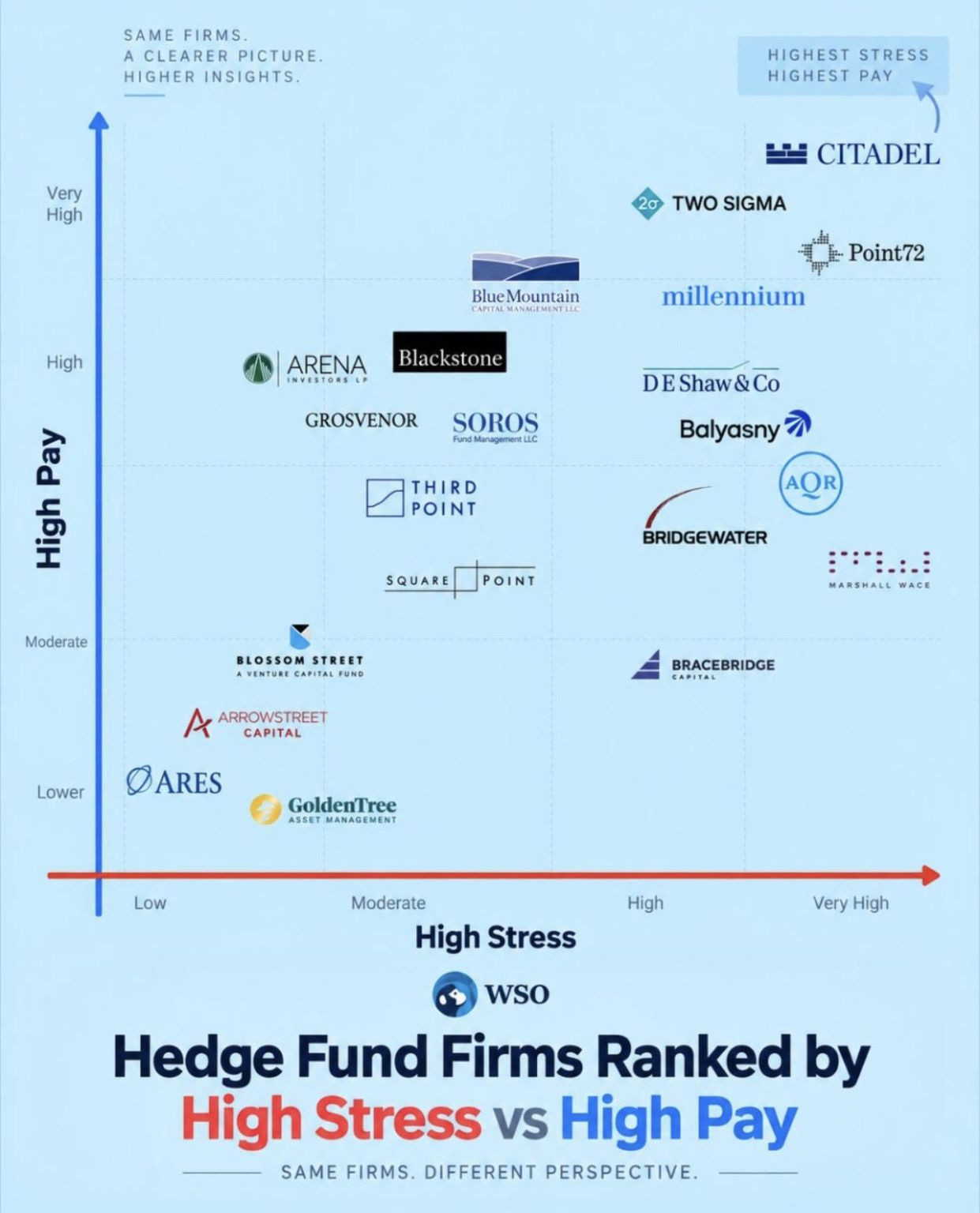
→ Why does it matter? I’d never seen this before. Major Hedgefunds plotted against highest pay and highest stress.
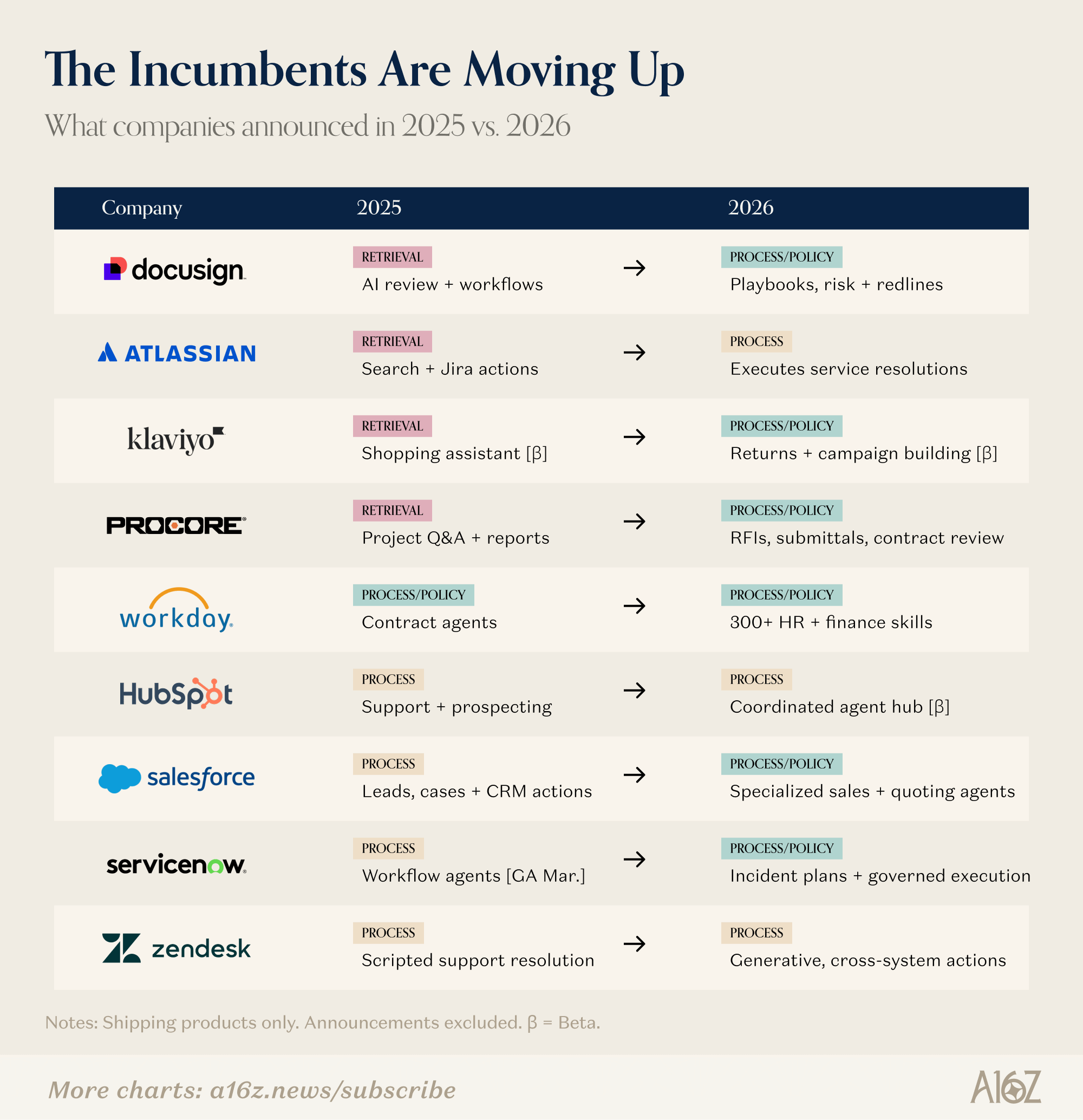
→ Why does it matter? Leading SaaS companies are releasing increasingly advanced AI capabilities, and they have a major superpower: distribution. They can put these features in front of customers who already use their software every day. That’s a pretty good head start.
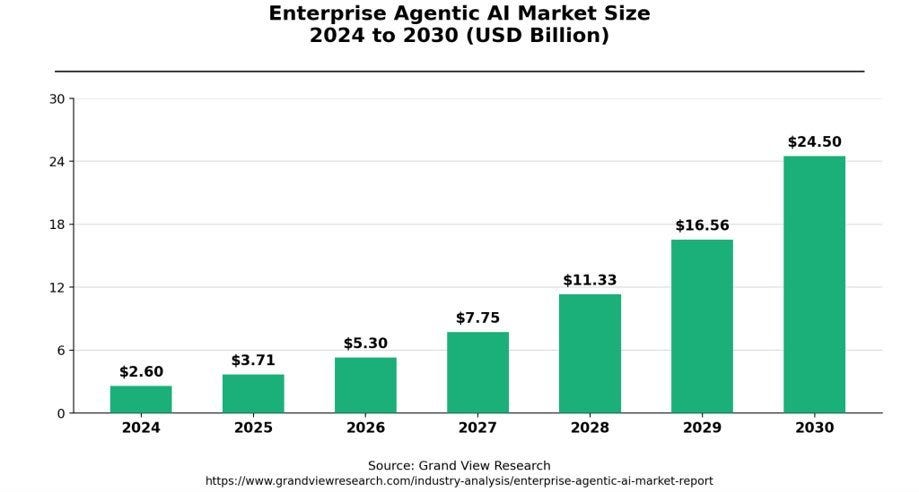
→ Why does it matter? Grand View Research projects the enterprise agentic AI market will grow almost 5x between this year and 2030.

Tweets that stopped my scroll:

→ Why does it matter? 152m views on this tweet. My gosh. You’ve probably seen it already, and the theories about his motives are all over the place. One detail worth paying attention to: Axios reports that he resigned from Anthropic before vesting any of his equity.

→ Why does it matter? Muse is the new personal AI assistant from Meta. Earlier this week, I asked it to find me a new dress shirt. It did the research, read the reviews, and then purchased it for me. We’ll see on September 16th when it arrives how it did! This is what we were getting at with Grok Bot: great products make the technology less visible and the benefit more tangible. Very cool!

→ Why does it matter? Bending Spoons is on a tear acquiring SaaS companies. Miro was once valued at $17B+ and is doing around $600M in ARR. Its digital whiteboard became incredibly popular during COVID. This brings us back to last week’s edition: how much of a customer’s business depends on what’s underneath that whiteboard? That’s what I’d want to know before calling it a nice-to-have.
Worth a watch or listen at 1x:
→ Why does it matter? Great interview with Base Power’s founder Zach Dell (son of Michael Dell). I particularly enjoyed the way Zach talks about “working in the business” vs. “working on the business”
→ Why does it matter? Good to catch up on Zuck’s recent thinking. I’ve only had Muse for three or four days, but I like how much of it is built around everyday life. It let me know about a family festival in my town this weekend. Pretty useful! Here come the incumbents, and gosh do they have distribution.
→ Why does it matter? When are you showing conviction, and when are you just refusing to admit you’re wrong? Easy to answer once you know how the story ends. Shane Parrish and Geoffrey Cain look at the years when Jobs was out of Apple and his eventual comeback was far from obvious.

Quotes & eyewash:
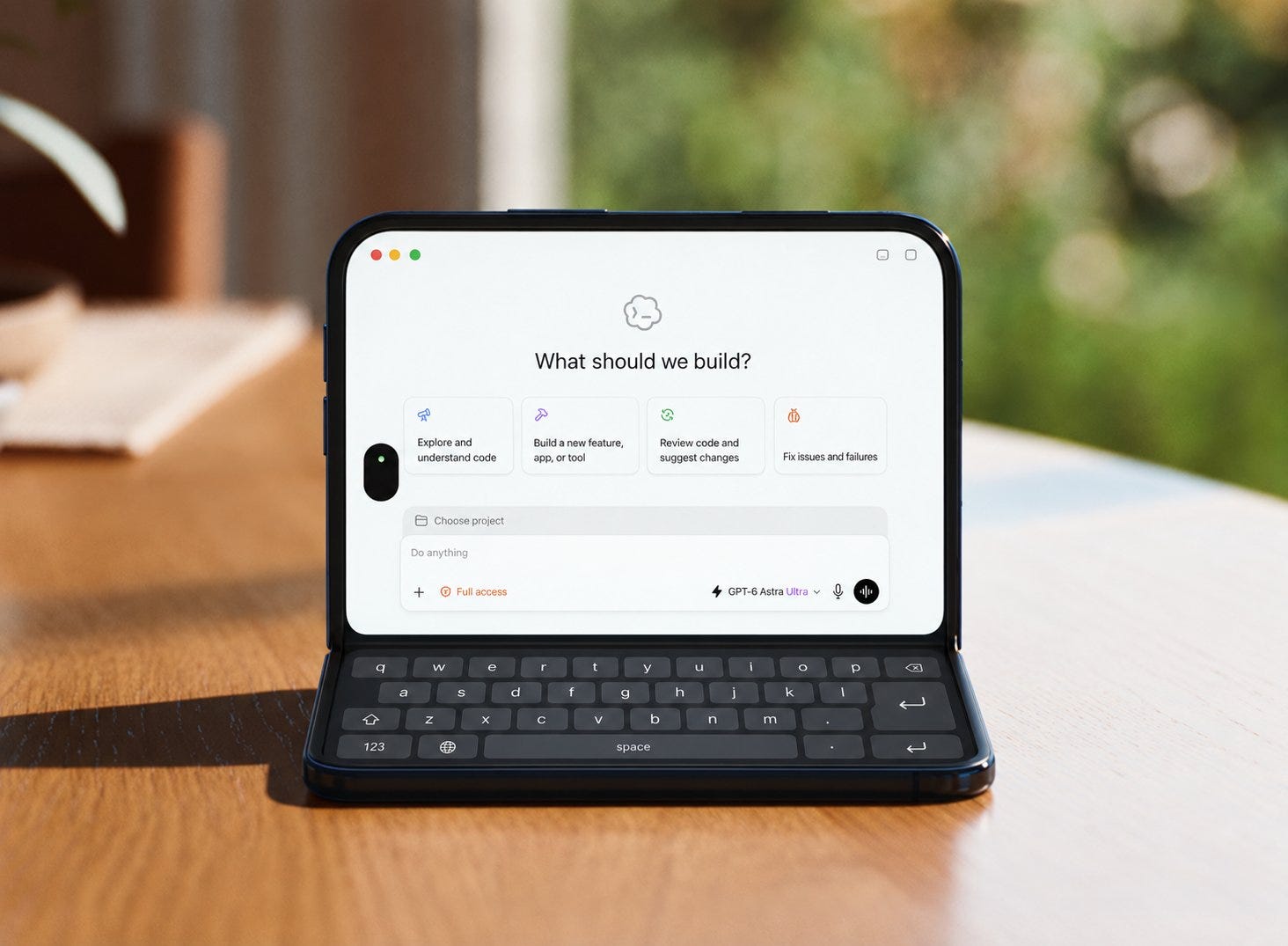
→ Why does it matter? 😍
The mission:
The Wall Street Journal once used “Read Ambitiously” as a slogan, but I took it as a personal challenge. Our mission is to give you a point of view in a noisy, changing world. To unpack big ideas that sharpen your edge and show why they matter. To fit ambition-sized insight into your busy life and channel the zeitgeist into the stories and signals that fuel your next move. Above all, we aim to give you power, the kind that comes from having the words, insight, and legitimacy to lead with confidence. Together, we read to grow, keep learning, and refine our lens to spot the best opportunities. As Jamie Dimon says, “Great leaders are readers.”
Disclaimer: This content is for informational purposes only and does not constitute financial, investment, or legal advice. Readers should do their own research and consult with a qualified professional before making any decisions.