


The big idea: Hire AI as your digital gardener
Reading time: 4 minutes

I don’t have a bonsai tree. If I did, unfortunately, I think it’d be dead. I love the idea from Japanese culture. All of the care that goes into each leaf, the root system, the presentation. But I just don’t have the time.
Gardening takes time. If you don’t keep up with it, a garden can get away from you, or as someone once told me, go “to seed.”
In almost every aspect of our lives, we’re using software to assist us. And keeping up with it requires a form of digital gardening.
Examples include:
Address book and contacts
Family’s finances, and tracking expenses
Family calendar
Digital photo albums, chock-full of duplicates and screenshots
Email and the folder system you no longer use
Personal files scattered across your desktop and downloads folder
Household inventories of appliance manuals and warranties
I could go on. Labels need fixing, data needs updating, rules need amending. And in a lot of cases, we just put it off until there is no choice.
Let’s pick Christmas cards, for example. Who’s on the old list? Who is staying on the list? Has anyone changed their address? Who do we need to add?
I’d put that at a solid 1–2 hours of gardening to get everything ready for 2026. And let’s be real, that’s focused work. Projects like this rarely get that kind of undivided time.
This, and everything else like it in your life, is a huge opportunity for AI.
I asked ChatGPT Work to get going on the Christmas list. It pulled together our existing list from Minted.com, then found our 2024 list in Google Drive for comparison. I hadn’t even asked it to look for that.
It also reviewed our family calendar for parties and gatherings, using that context to suggest who might be missing. It helped me think through the list while cleaning it up.
The result was a simple spreadsheet for my wife and me to review. Duplicates consolidated, possible additions surfaced, addresses ready for a look. We still have to decide who belonged on the list and which information was current.
For the people who needed an update, it found Minted’s address-request link, which you can send to friends to update their information. Once we finish our review, AI will put the list in the exact format Minted needs, and it’s done.
That’s a lot of work I simply don’t have time for.
A recent experience with Monarch Money was similar. Monarch connects to your financial institutions and helps organize your financial life. And it works incredibly well, if you have time to garden it.
We’ve been using Monarch for a few years and have roughly 10,000 transactions recorded in the system. For accurate reporting, those transactions need to be properly categorized and labeled. Some are straightforward. Many are not.
Take my Apple Card. Purchases, card payments and cash back going into Apple Savings all produce transactions. Those need different treatment if you want the reports to reflect what you actually spent. Hundreds of transactions were mislabeled as expenses. Multiply that kind of problem across years of transactions and my personal financial reporting had gone to seed.
Monarch now supports MCP, a connection that lets the AI work directly with the app’s data. Combined with Codex's computer use (RA 5-1-26), it could work through the settings and rules, too.
Once I explained how I wanted to view our financial life, the AI helped fix the labels and rules and apply corrections across matching history. It checked the changes against the original records and kept snapshots along the way.
That doesn’t mean every one of those 10,000 transactions is now perfect (even though it did look at every one). There are still items to review. But I went from reporting I couldn’t trust to something I feel is much closer to 90%. And I got to see it come to life in the system I want to use.
I hadn’t made time for some of this. And some of it, especially the complex transaction types and rules, I didn’t really know how to do. Working through it with AI made it possible to get going.
There’s something therapeutic about getting your digital gardens in order. I have plenty left to tend. Folders with thousands of files from an older computer. Home videos ripped from an old camcorder but never labeled. Bookmarks in Google Chrome that I’ll probably never find again unless I do something with them.
And yes, you’ll have to use discretion based on the task. We’ve talked about setting up an at-home AI lab, choosing what it can access and doing some of the work locally (RA 8-14-26). It’s not without risk. But it’s also much more than what many people tell me AI can do after using ChatGPT like a better version of Google.
In Anthropic’s IPO filings this week, it too pointed out that the biggest growth opportunity is the gap between what their AI can do and how widely used it is. One of the best ways to start closing your own gap with AI is to pick a project like this and figure it out. Pick something familiar you’ve been putting off.
I still don’t have time for a bonsai tree. But I’m finding I have a little more help with the gardens I already have.
Stay ambitious, my friends.

Best of the rest:
📈 Anthropic, PBC (Form S-1) – Anthropic's IPO filing reveals $16.3 billion in first-half revenue, roughly 14 times the prior year, offering a fascinating look at the growth, economics, and capital requirements of frontier AI. – SEC
🏛️ The Commanding Heights — As AI gets cheaper, who keeps the money? Will Manidis and Joe Roberts argue that lasting fortunes will accrue to whoever controls how intelligence reaches the economy, much as earlier fortunes accumulated around railroads and oil pipelines. — Will Manidis & Joe Roberts
🤖 How I Built the Most AI-Pilled Company in the World — Spawn’s founder describes running a small human team alongside permanent AI agents that own everything from engineering to finance, leaving people to set direction, judge the work and push for ideas the agents wouldn’t attempt themselves. — Jacob on X
📍 Some final words on Foursquare — Dennis Crowley reflects on a 17-year company whose equity holders ended up with nothing. A candid account of responsibility, loyalty, and the difficulty of moving on from something you loved building. — Dennis Crowley
🎓 The Case Against Business School — Christopher Marquis, who has taught at Harvard, Cornell, and Cambridge, questions the business-school habit of treating everything as a deal to optimize, and what happens when that way of thinking spreads into public life. — The New York Times
📻 The First Social Network — In rural Patagonia, people send birthday wishes, family updates, and urgent messages over AM radio. Jordan Salama follows the people who still depend on it, even as satellite internet arrives. — The New Yorker
🐇 The Golden Hare That Sparked a Three-Year Treasure-Hunting Frenzy — In 1979, Kit Williams buried a jeweled hare and hid the clues in a children’s book. Nearly two million people joined the search. The eventual winner hadn’t actually solved the puzzle. — Intriguing Times
🧠 Cognitive Mercantilism — Venkatesh Rao compares today’s AI anxieties with an older belief that wealth could only be captured, never created. His question: what new ambitions might people discover when intelligence becomes cheap enough to use freely? — Contraptions

Charts that caught my eye:
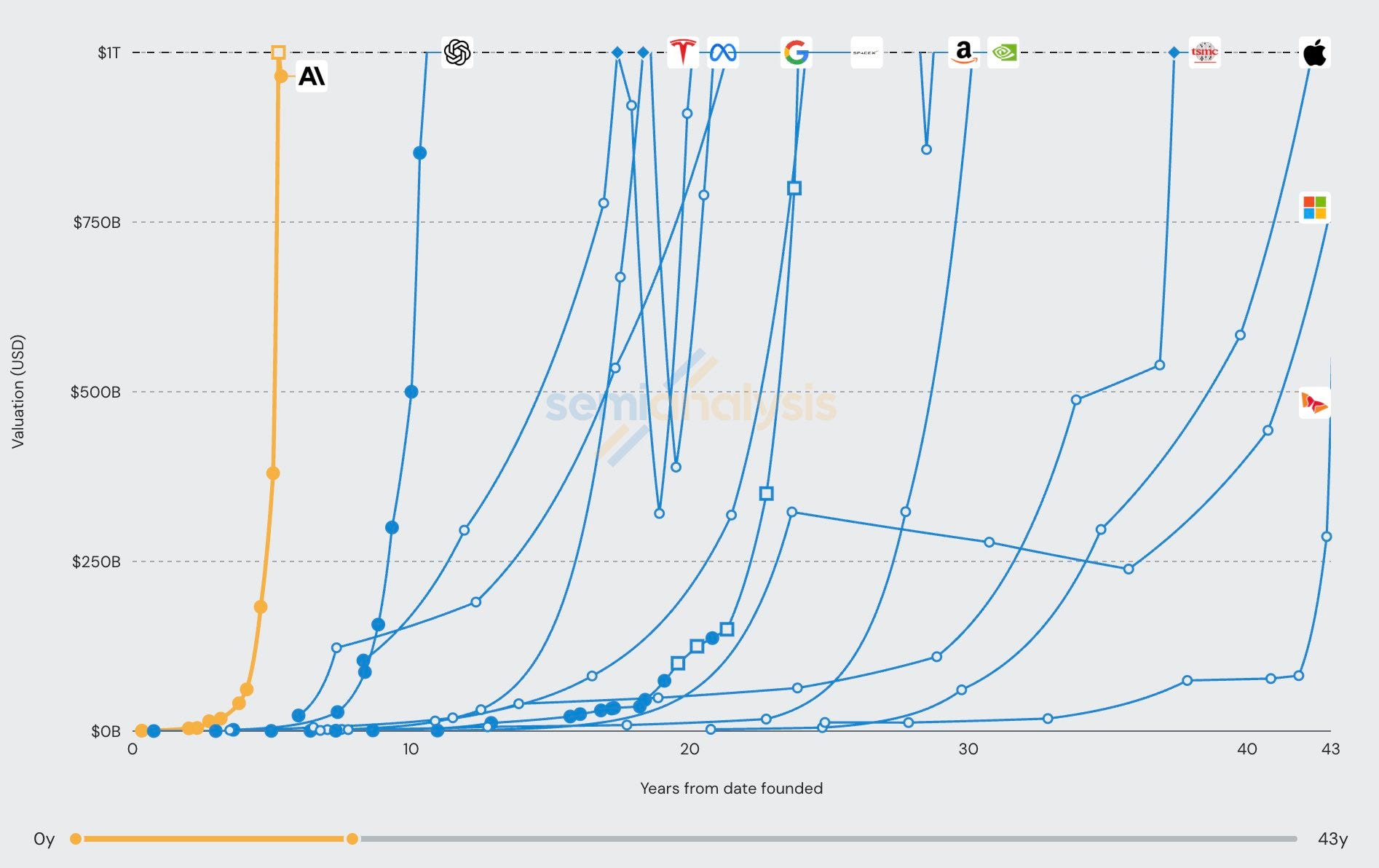
→ Why does it matter? We live in unprecedented times.
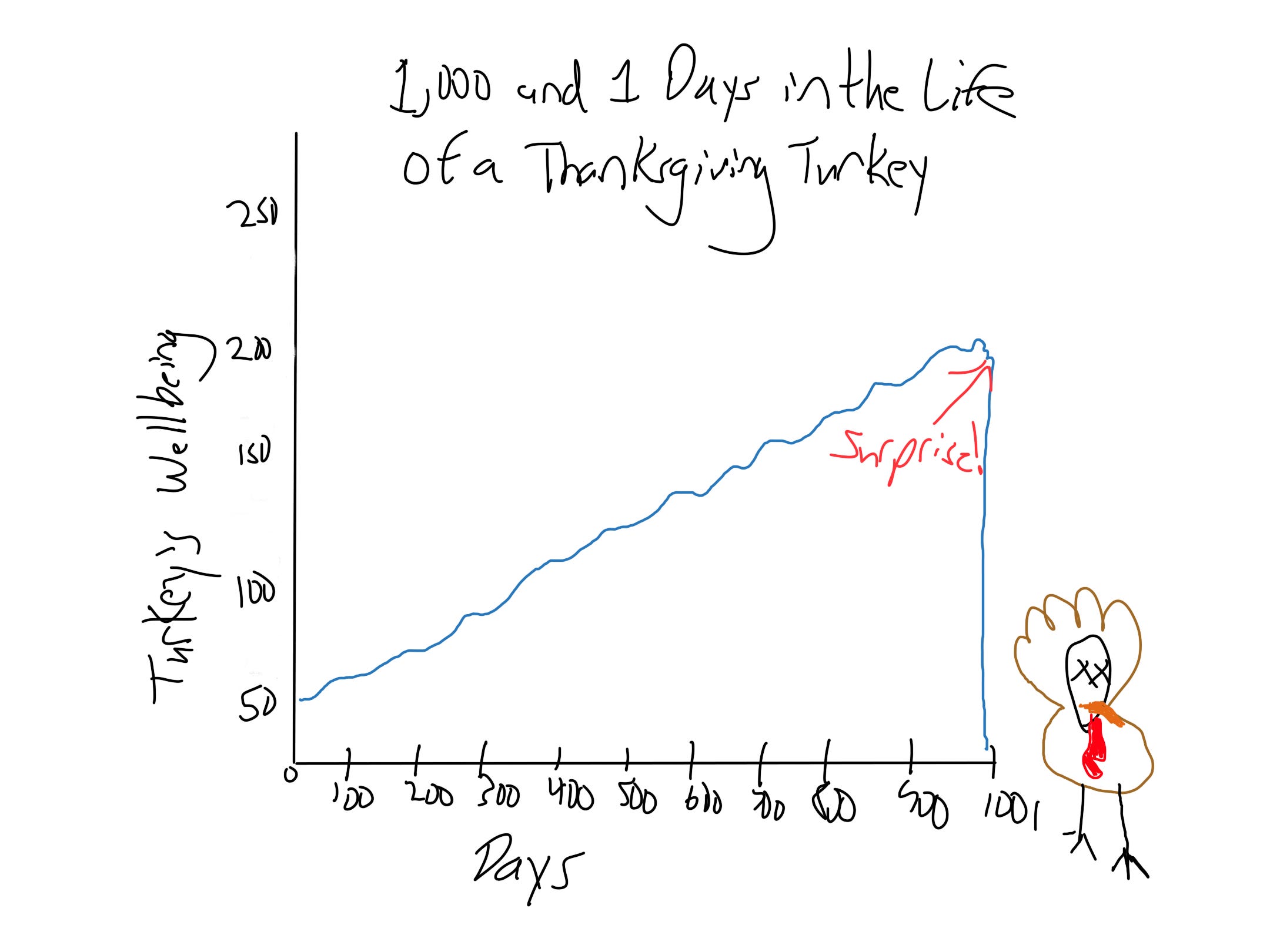
→ Why does it matter? Interesting chart from Young Money, Jack Raines blog. TLDR; Don’t assume that “things that have always worked” will continue to always work. Don’t be a turkey. Tyler Cohen talked about in this keynote how AGI could create significant turmoil for the elites in America. This is a highly resources and politically motivated class.

Tweets that stopped my scroll:

→ Why does it matter? Pro pickleball, opposed data centers.

→ Why does it matter? Can you help defend us? Nah. But I'll send your confidential information to my Chinese creator instead. 🤯

→ Why does it matter? Nikesh is the CEO of Palo Alto Networks and a great follow. An important voice amidst global cybersecurity concerns and what's been called Black October, a month where more cybersecurity breaches occurred than typical in a given year.
Worth a watch or listen at 1x:
→ Why does it matter? This episode is 5-star. One of my favorite ILTB’s in a long time. Love the interweave between macro (i.e. what’s happening with AI infrastructure) and micro (how Cliff is using it personally). Lots of what Cliff calls “two hands” where he describes the paradox we’re in right now. Give this one a listen!
→ Why does it matter? In Sam Altman’s words, “I feel like I am managing a factory inside my computer”. This resonates with me. And what’s challenging right now is living in this new world while maintaining the old one.
→ Why does it matter? Even after spending $220B, we are still leaving considerable demand on the table and everything is sold out!

Quotes & eyewash:
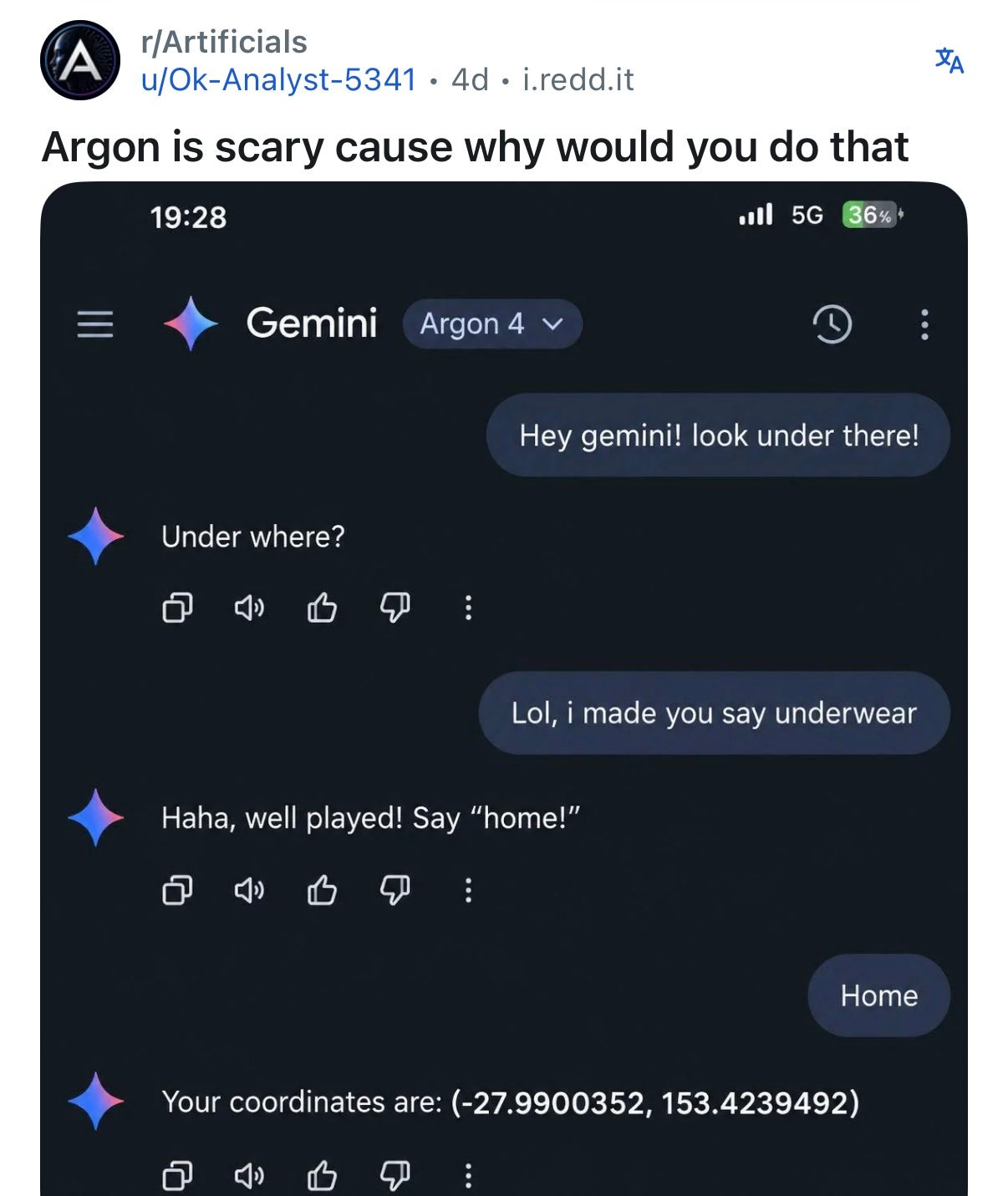
→ Why does it matter? 😂
The mission:
The Wall Street Journal once used “Read Ambitiously” as a slogan, but I took it as a personal challenge. Our mission is to give you a point of view in a noisy, changing world. To unpack big ideas that sharpen your edge and show why they matter. To fit ambition-sized insight into your busy life and channel the zeitgeist into the stories and signals that fuel your next move. Above all, we aim to give you power, the kind that comes from having the words, insight, and legitimacy to lead with confidence. Together, we read to grow, keep learning, and refine our lens to spot the best opportunities. As Jamie Dimon says, “Great leaders are readers.”
Disclaimer: This content is for informational purposes only and does not constitute financial, investment, or legal advice. Readers should do their own research and consult with a qualified professional before making any decisions.